FRIENDLY WEEDS

“They’re weeds,” my wife says. In this case, adding, “We’ll let them fight it out.”

The idea of giving permission to certain uninvited plants to push out others no longer baffles me. Yes, I still retain the definition of a weed as being “nothing more than a flower out of place,” a concept first encountered back in my Boy Scout days; experience, however, has taught that not all weeds were created equal. Feisty agression and stamina, of course, are qualities separating a weed from domestic plants we’re actually attempting to nurture.

in reality, though, some weeds are easily seen as evil – poison ivy, for instance, or bindweed or the ground ivy that would easily overrun everything else we’re trying to raise. The gout weed invading from the neighbors’ side of the fence, despite its lovely flowers, is another. Add to that the thousands of maple sprouts we uproot each spring — they’re rather victims of landing in an area we’d rather not have return to forest quite yet.

My wife and I have had more than a few disagreements over what she considers weeds and what I happen to appreciate. Mint, for instance, with associations I have with hiking in the bluegrass region of Kentucky and pausing to drink cool spring water – although I’ve now come around to understand its ability to take over a bed if left unchecked. Wild strawberries, for another. In either instance, these are things one can eat. In other examples, we’ve actually transplanted some commonly defined weeds, such as Queen Anne’s lace, to corners of the yard that could use some blooming help. Others, such as the flowering forget-me-not and dame’s rocket, are largely encouraged to spread as they will, along with any number of self-seeding plants that technically are domestic but have in their own way run wild – sunflowers and calendula, especially.

These are lessons in discernment, tolerance, and discipline. Working a piece of ground for more than a few years gives exposure to plants one begins to recognize and automatically uproot while strolling through a patch, perhaps with an intention of eventually learning its name. Somewhere in my files is a Boston Globe page of common New England invasive plants – what I remember is that we have nearly all. What I didn’t expect when we moved to this plot was that I’d perceive a hierarchy of weeds. That is, ones I’ll tolerate one year, while focusing on more troublesome species. This year, for instance, I’ve been uprooting Virginia creeper as the marsh marigold flourishes. Last year, wild roses joined the list. Our wild asters, meanwhile, go largely unchecked.

One other consideration arises in the fact that we have pet rabbits. As a consequence, we see dandelion greens no longer as weeds but rather as a voraciously favored part of their cuisine, in season. (More recently, the greens have become part of our spring diet as well.) Tall grasses gone to seed at the edge of the yard likewise fit into their salad.

Fighting it out isn’t reserved solely for our friendly weeds. There are corners of our yard where a number of species are proliferating, leaving us uncertain which ones will predominate over time. Joe Pye weed in a Jerusalem artichoke patch, for instance. At the moment, I’m anticipating their succession of blossoms, a definite improvement over what was there when we moved in. It’s not the orderly beds I once envisioned, nor the Japanese gardens I’ve long admired, but it is a style I’ve come to appreciate and even encourage, in my own small way. It’s not quite survival of the fittest, except for “fittest at the table,” as food or as a floral cutting. Fight it out, then, with a referee.
WELCOME RAIN

We’re not alone, I know, when it comes to unusual weather patterns.

In fact, I’m getting the feeling that the computerized models the forecasters rely on just don’t fit the changing realities. (One site I checked a couple of days ago had a projected high for the day of 71 F and a current reading of 76. In fact, the highs several days running before that, while we were waiting for an uncommon heat wave to break, were up to 20 degrees above expectations. Whew! ) Through much of the critical gardening season in May, our actual lows were often nearly 10 degrees below the forecast – a potentially costly error. And then there was one night a week or so ago when meteorologists changed the immediate outlook to 100 percent chance of rain overnight … and we got nada.

April, as it turned out, was slow motion – about three weeks behind our usual gardening routine. And then May, making up for the delays, allowed us to get more in the ground than usual.

The downside was that we didn’t get our usual rainfall. Officially, the month delivered a tenth of an inch. The seedlings and transplants had to be watered in a period where we’re usually concerned about root-rot and drowning. A month, typically, when I can’t keep the lawnmower wheels from sinking in the side of the yard we affectionately call the Swamp.

As I mowed the grass the other morning, I kept noticing how parched the ground is. This time of year?

Through all of this, we’re tallying up the effects of our long, nasty winter – the one that had snow cover for all but three of the coldest weeks in January. Dogwoods took a big hit, as did limbs of rhododendron and azalea. We’re missing a number of perennials, including the sage in the herb garden and salvia along the driveway.

So now it’s raining. What’s expected to be three days and more than two inches of precipitation. Welcome, welcome rain – even if it would have been much better doled out rather than dumped on us.

Oh, the joys of gardening …

50-50-50 RULE

Many folks won’t swim in the Gulf of Maine even in the height of summer. It’s just too cold, they say.

I can sympathize, though some perspective helps. Rarely is the Atlantic around here warm enough before the Fourth of July. Oh, there may be a few rare days, but nothing dependable. We’ve found that anything below 57 F is foolish – even when the air temp’s over a hundred.

Yup, 57. That’s the blue-toe limit: edge into the surf bit by bit. First, the toes. Then out. Back again, top of the foot. Out again. Back again, to the ankles. You get the idea. If you actually make it to total submersion, you come out fast. Like a bullet.

Over time swimming here, you might even get to the point where you can guess within a degree or two. Sixty’s about my bottom line for swimming. Sixty-five is where the water starts to get comfortable. And 70, a rare delight, is heavenly.

For reference, I’ve come to rely on the NOAA Northeast USA Recent Marine Data Web page, which includes readings from buoys. Lately, as the water temps have been edging 50 F – finally even a tad over before ebbing – it’s become a topic of conversation.

Which prompted this response the other day: Ever hear of the 50-50-50 Rule?

Eh?

Fifty minutes in 50-degree water gives you a 50 percent chance of drowning. (Or 50 percent chance of surviving, depending on your outlook on life.)

In light of the blue-toe limit, I had no idea the odds could be that favorable. Not that I ever intend to press them.

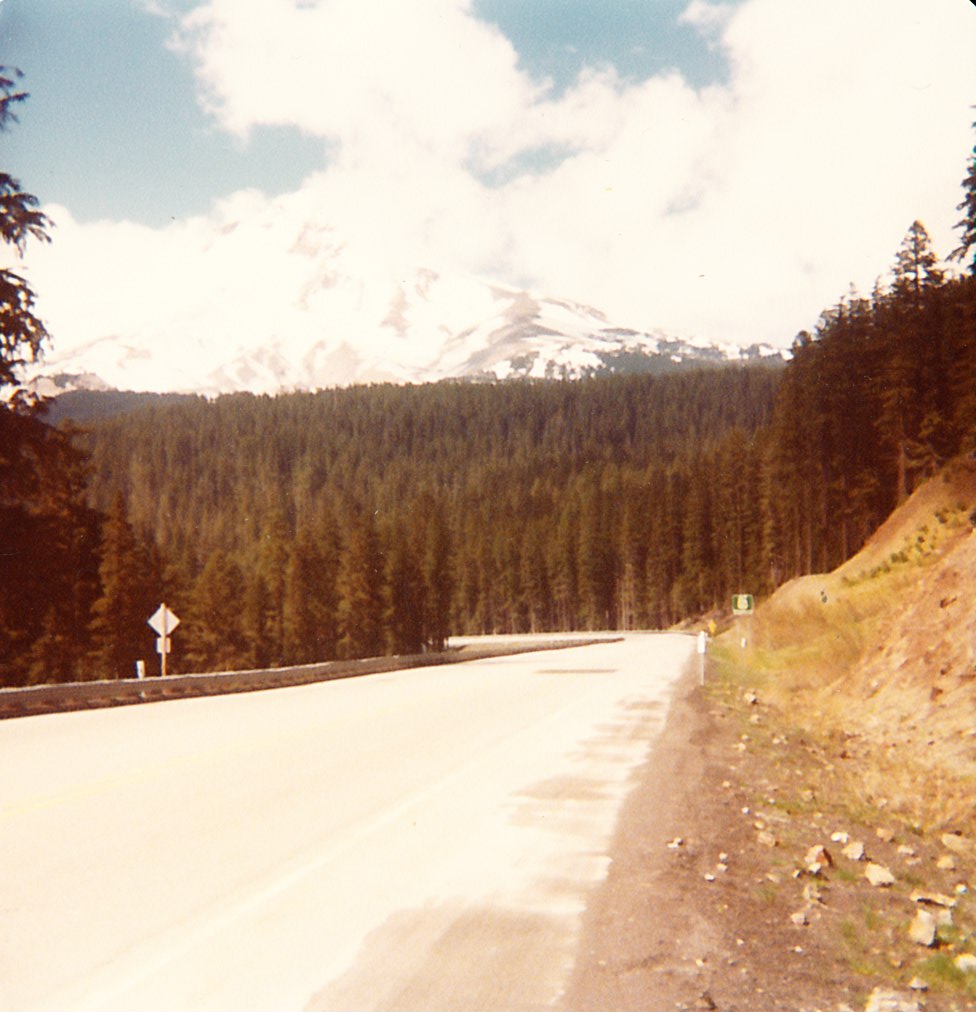
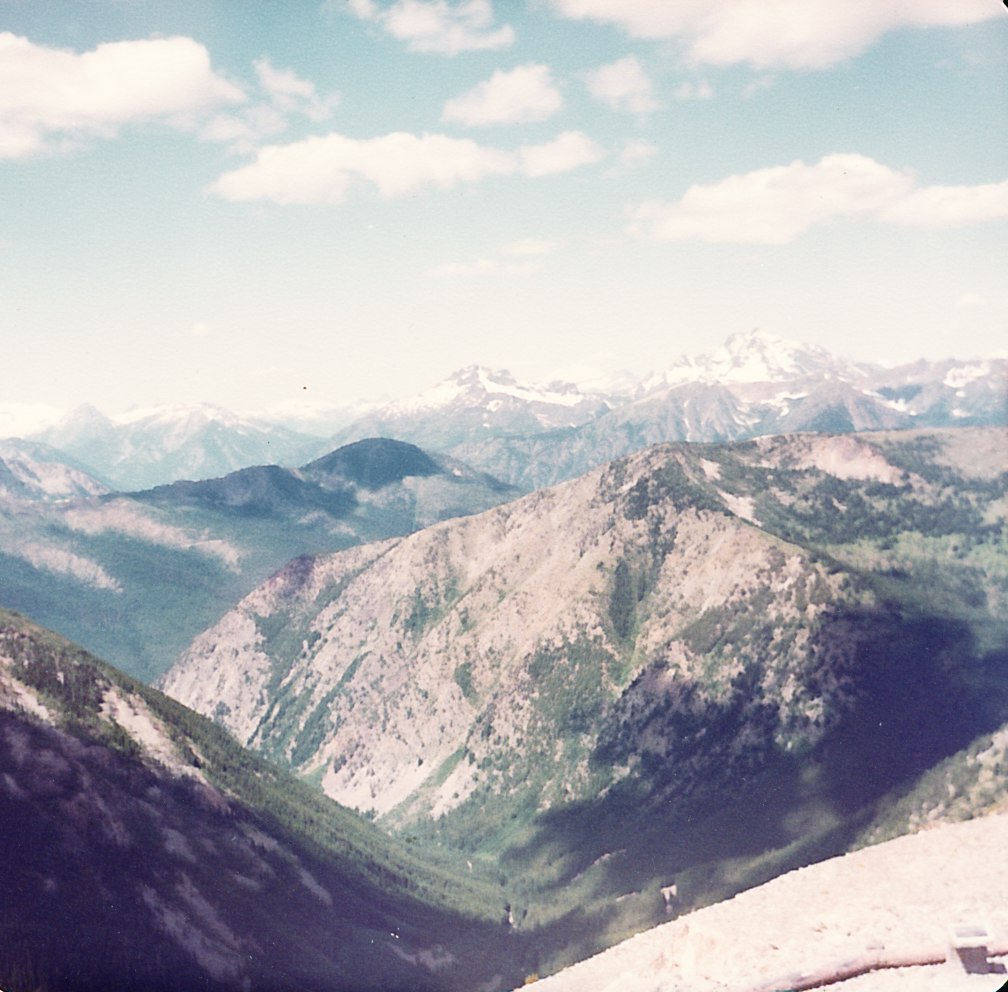
CASCADES MEMORIES

Driving toward Rainier.

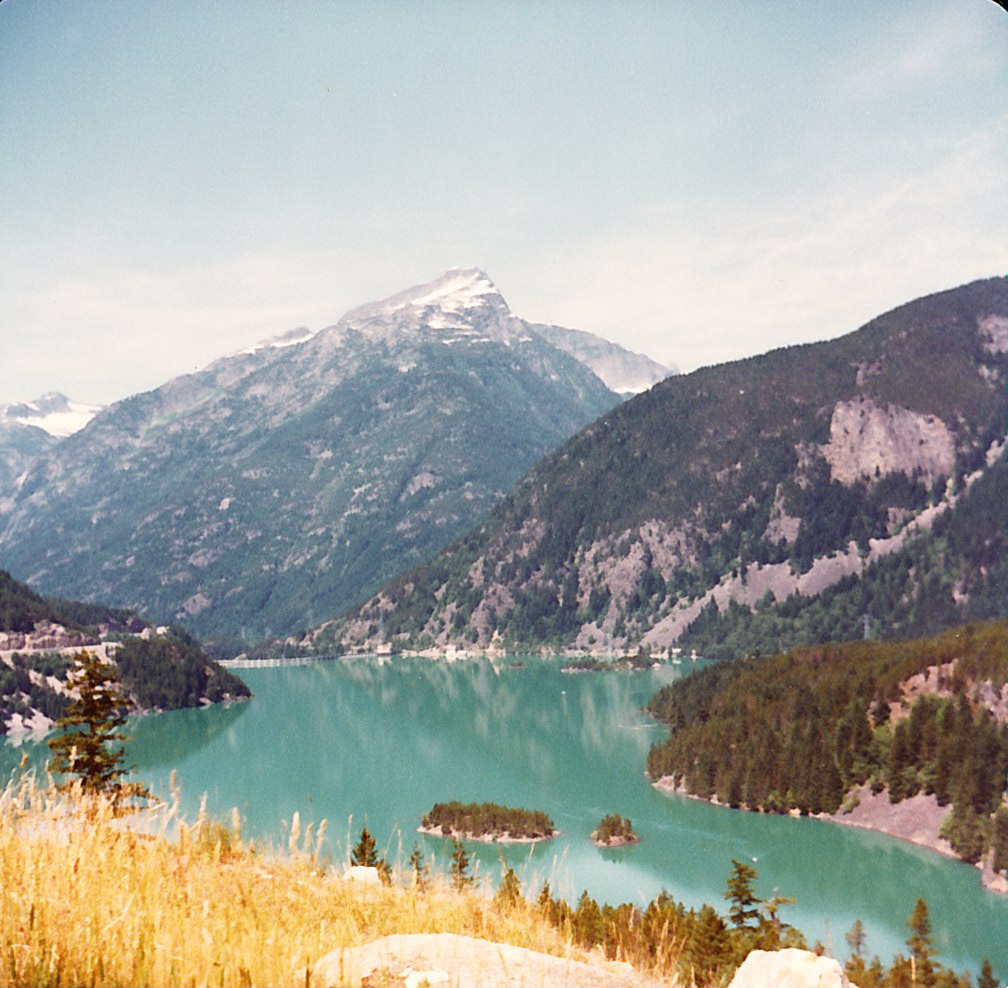
The Cascade Range in Washington state holds a special place in my heart.

It’s reflected in several of my novels and many of the poems.

In the high country, the range seems to extend forever.

Few photos, though, do the mountains justice. But they do help keep the memories vibrant.

North Cascades where Gary Snyder, Philip Whalen, Jack Kerouac, and other writers worked the remote fire lookout posts.


IN A POD

One of our first harvests each spring is the peas. The sugar snaps and snow peas, especially, soon after the asparagus kicks in. It’s a challenge, keeping up: you need to pick the vines every day or two, while racing the first heat wave. Then it’s a matter of removing the pea vines so the cosmos and cabbage coming up underneath can breathe a bit more.

What we don’t eat now or prepare for the freezer will wind up in the compost, a sorry alternative.

Do you have any idea how delightful it is to serve the survivors on a cold day in February? Priceless, as they say.

AND YOU THOUGHT TURTLES WERE SLOW?

Somehow I avoided most of the usual traffic tie-ups and wound up with some extra time to kill in the Boston area on what turned out to be the first afternoon with real spring in the air. Given the time to kill, I headed off, camera in hand, for a walk along the Charles River.

At one point, I looked down along the riverbank and saw a limb draped out into the water. Five turtles were sunning on it in a wonderful composition. The camera was in focus and I needed one more step before I aimed and clicked. Just as I did, they slipped one by one into the water.

Maybe next time.

On the way back, I came up on a couple, hand in hand, as they strolled along the pathway. Another great shot, this time of street fashion. They were in matching all black, except for his shorts, which were black with great swirls of yellow and orange. I should have taken a shot but wanted to respect their privacy.

Now I’m wishing I’d gone ahead anyway.

Two nights before, as I was heading off to a committee meeting, I saw the perfect shot of the tower on City Hall, its gold-leaf dome and golden weathervane brightly lighted by the setting sun against a slate-gray background. Unfortunately, I wasn’t carrying my camera.

That has me thinking how many great photos turn out to be like those turtles, just slipping out of sight.

Maybe it provides all the more respect for the good photos we have.

WHALE WATCH

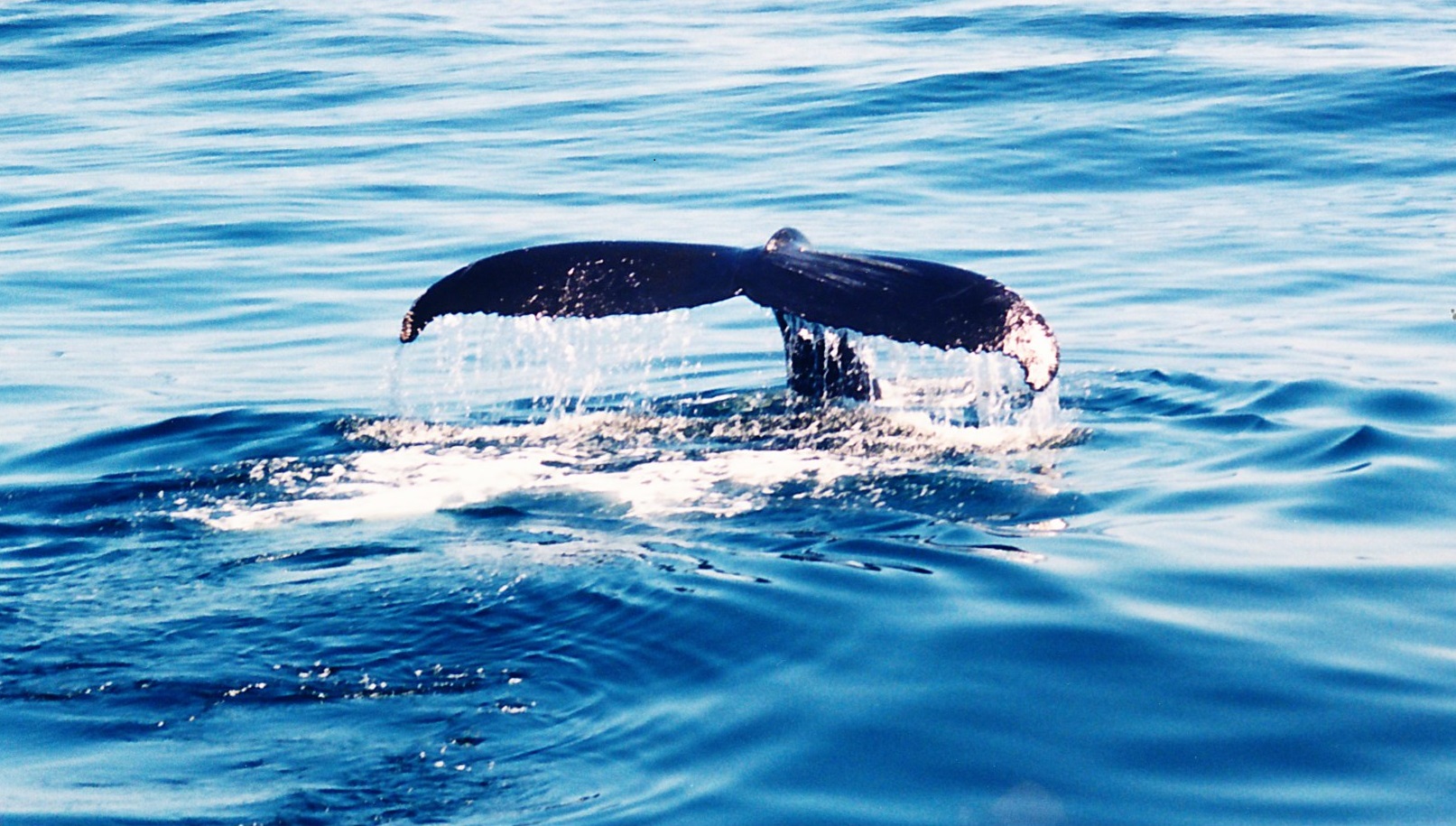
Humpback, launching a deep dive.
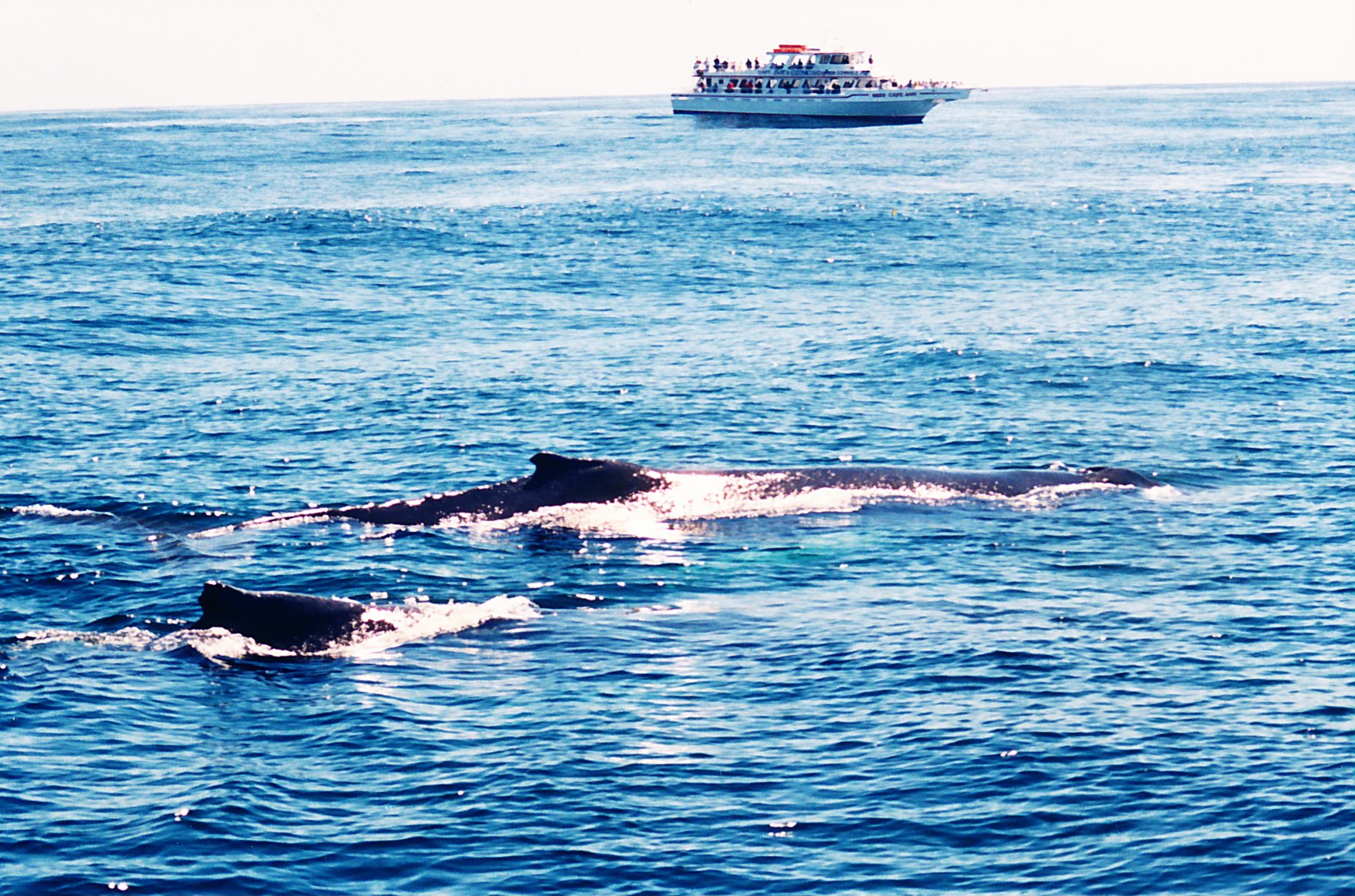
Often, several whale watch tours will circle in the same vacinity.
Often, several whale watch tours will circle in the same vicinity.

One of the traditions I established after moving to New England meant venturing out for a whale watch each year. You never know what you’ll encounter. Sometimes it’s only a minke whale or two – the smallest of the ones we have. Or, at times, it becomes more than you can count.

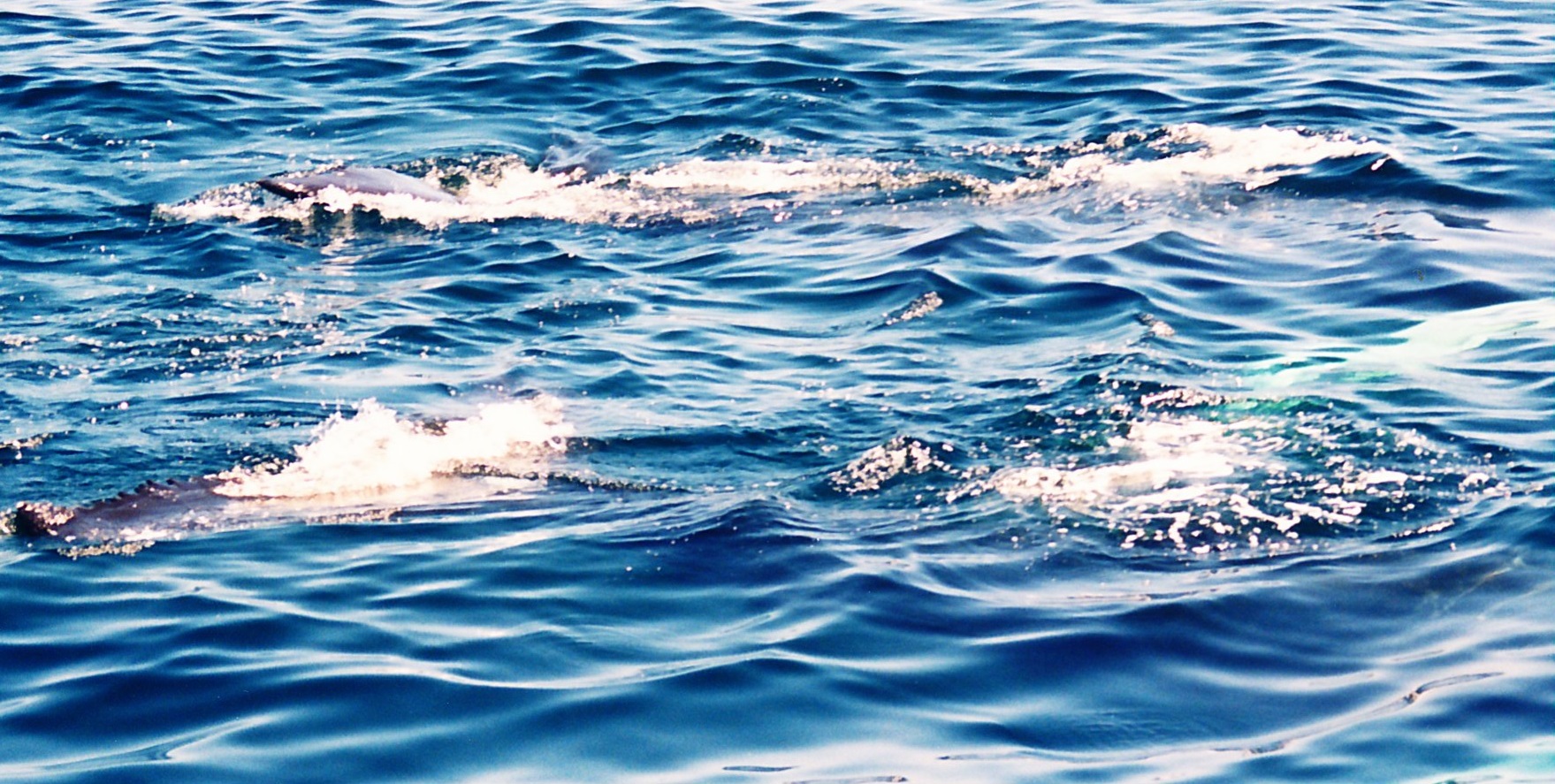
The whales have the most beautiful light blue underbellies, visible if you get close enough.

In the past dozen years, though, the custom’s fallen by the wayside. Just too much else to do – and the ticket price has gone up. But as a way of getting out to sea, it’s still a cheap cruise … and it can be very peaceful, if you don’t get seasick on the way.

ANNIVERSARY OF MY DARKEST DAY

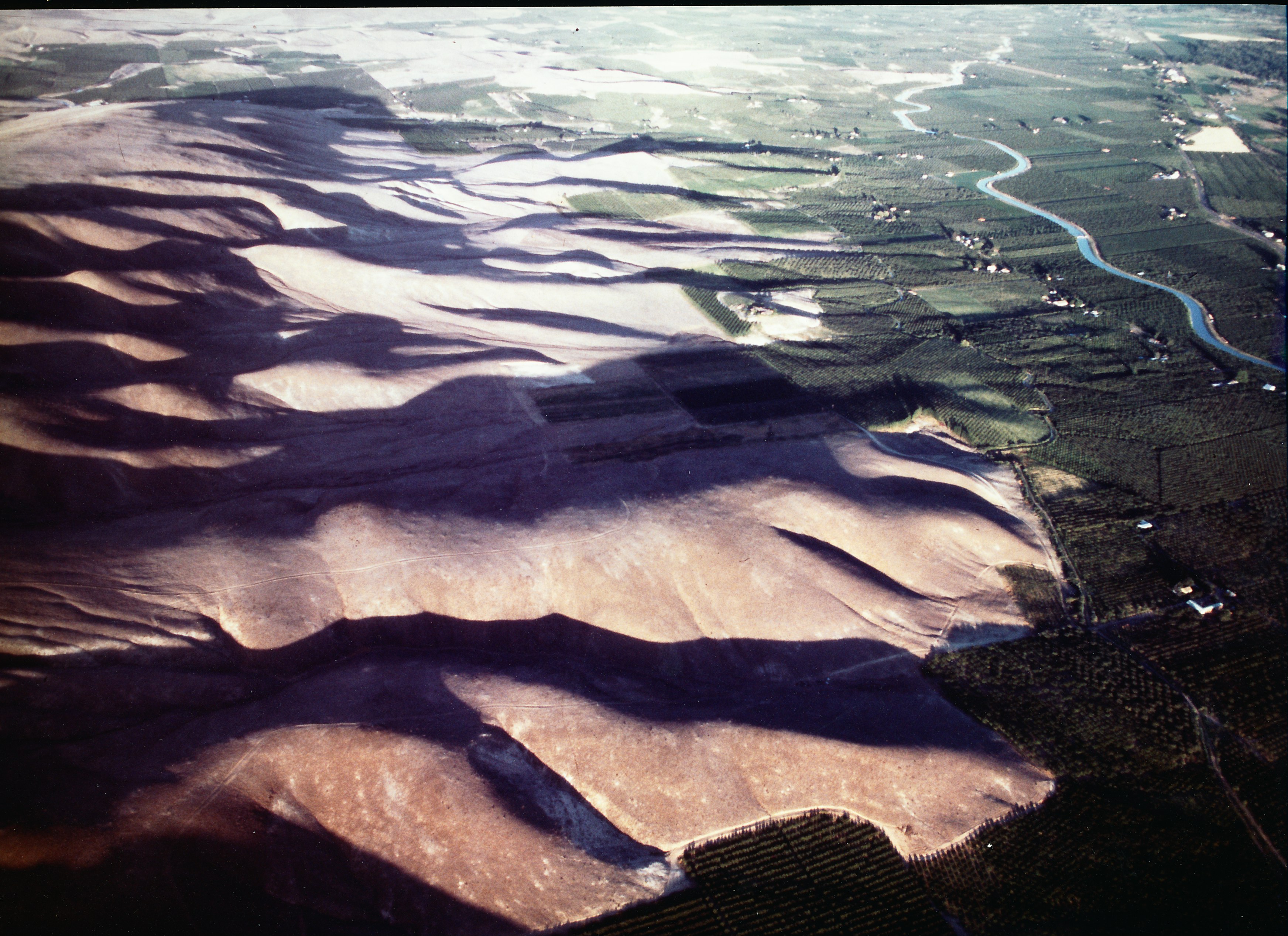
Aerial view of the desert ridge behind our the tenant shack where we where living when Mount St. Helens erupted. This is as green as it gets. The orchards are in the irrigated band close to the river.
Aerial view of the desert ridge behind our the tenant shack where we were living when Mount St. Helens erupted. This is as green as it gets. The orchards are in the  band close to the two irrigation canals seen here. With a magnifying glass, I could point out our place.

Thirty-five years ago today, we were buried in volcanic ash erupting from a summit 85 miles away. For days afterward, everything was buried in gray. Until then, it had been my Garden of Eden.

LILACS

So when did this appreciation begin? When I lived in the orchard house, we had a big lilac bush at the corner of the yard – the one where the bees swarmed from the hive that one day.

But I think the real change happened that spring after my first marriage collapsed and I was finally in love again. I crowded the house with those cut blossoms and their fragrance. It’s enough to make me picture a blue silk kimono.

That was years ago, and many miles. Yet the lilacs are more precious than ever.

As I said at the time, when I lived in that last apartment, I vowed if I ever bought my own place, I’d get cuttings from a friend whose lilacs likely descended from the first ones brought to North America. Of course, I didn’t, and the owner has since moved into a retirement center.

Even so, these days, we have our own, screening the Smoking Garden from the street. One lilac had, in fact, grown as tall as the house – but hollow. It’s been work, restoring them to flowering condition.

Still, there’s nothing more luxurious than lilac cuttings arrayed in the bedroom, with their heavenly aroma.

So quickly, they pass.