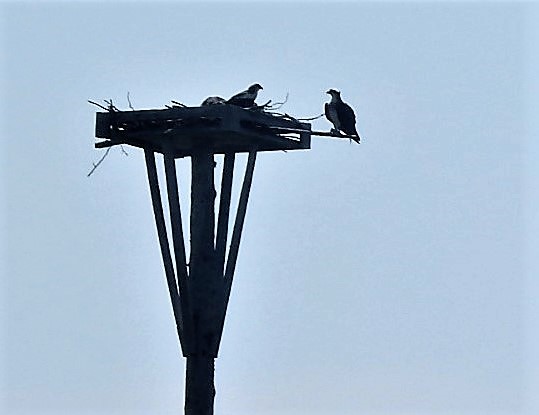
Nesting osprey

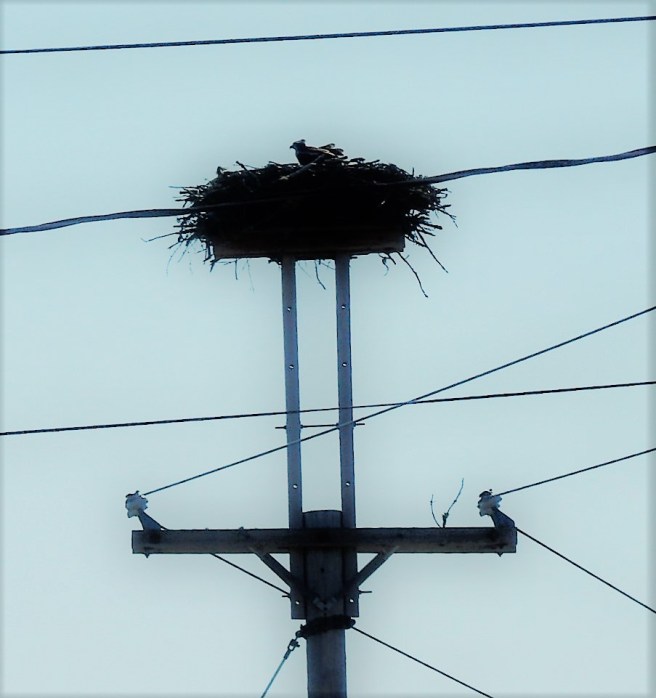
Mama’s head keeps a vigilant watch. For some reason, osprey often build their big nests atop power poles. This one is in Cutler.
Once alarmed, she’ll take flight, raise a racket, and threaten to attack. So beware. As I learned in East Machias.
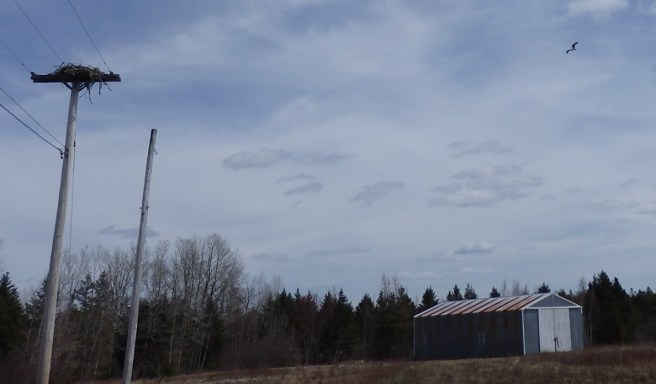
Here’s an active nest in Princeton, atop a post in a human family’s yard, actually.
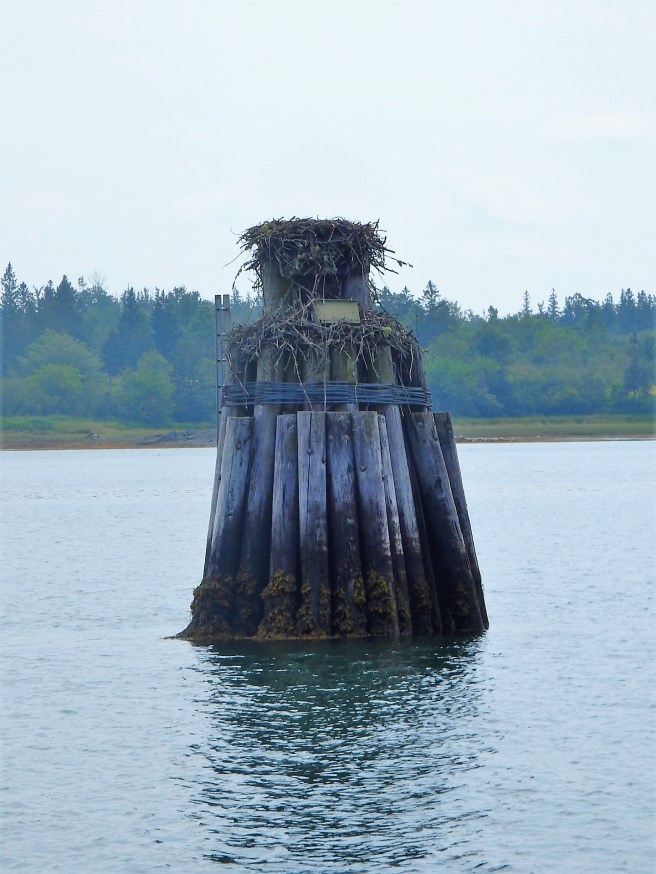
In Pembroke, there’s this impressive nest atop a piling at a landing. Almost looks like the structure was built for these majestic birds.

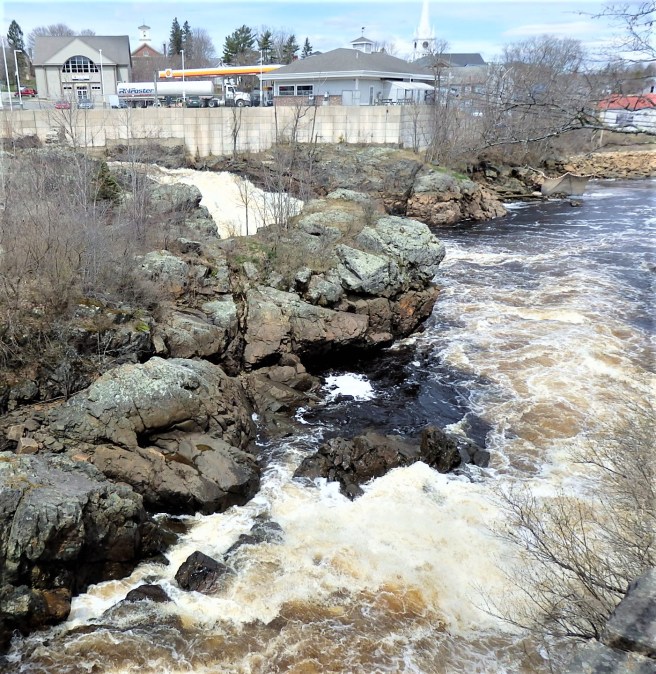
Nasty Little Falls

That’s how the Native name Machias translates.

The bridge carries busy U.S. 1 traffic that’s oblivious to the landmark below.
The water charges down in two parallel sets of falls that reunite in the tide below.
You wouldn’t want to go over these in a canoe.

The tranquil city of Machias at the falls is the Washington County seat.

In just six hours, day in and day out

Our tides vary between 15 and 25 feet, depending on the moon cycle, and half of that change occurs in just two hours, halfway between high and low. It still amazes me.
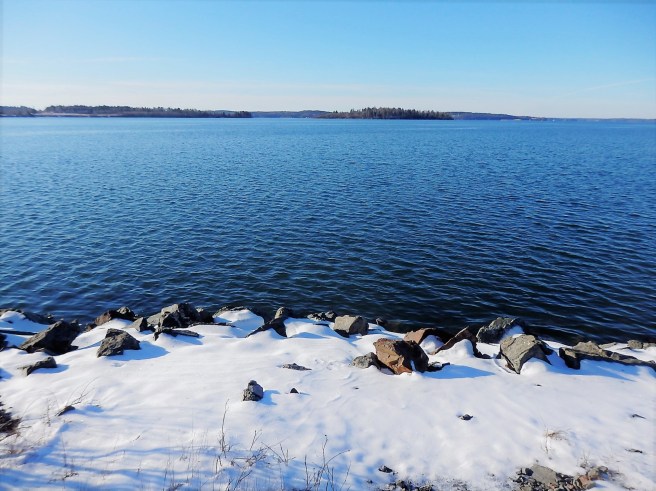
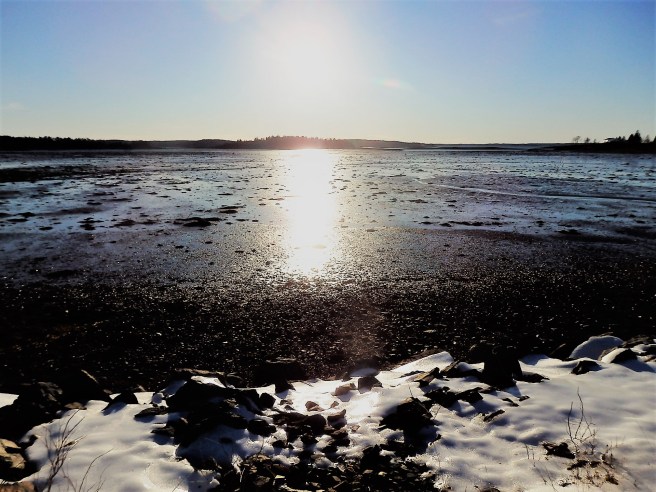
This is what you expect to see at the ocean, right? Just stick around another six hours to see what happens to our high tide.
At Carrying Place Cove, if often looks like somebody pulled the plug on the tub and let all the water out.

National parks I’ve truly enjoyed

I have to confess to how many of America’s national parks remain on my to-visit list. But I still have some favorites among the ones I’ve explored. They don’t have to be massive to still be impressive.

  1. Rainier, Washington: Most of all. It’s top of the list for reasons I’ve described elsewhere on this blog. Living a few hours away, I had four years of exposure to this glacier-clad beauty and its forests below.
  2. North Cascades, Washington: Geologically some of the most incredible mountains in the continental U.S., along with rewarding hiking and camping. Some of our best beat-era poets were forest fire lookouts on its remote summits in the ’50s and ’60s.
  3. Smokey Mountains, Tennessee-North Carolina: I was nine or ten or so when we ventured down from Ohio. We weren’t yet doing family-camping, but there were some wild experiences with cheap motels. But then, when we got to the park, how could I not be blown away? So this is what mountains were!
  4. Lowell, Massachusetts: I’ve blogged about our daytrip to this pioneering industrial community and its water-powered textile mills. Try to time it so you can also take a ride down the canals through the mills and out to the Merrimack River.
  5. Cuyahoga Valley, Ohio: This meandering swath of greenery along the Cuyahoga River in the former Connecticut Western Reserve corner of the Buckeye State is a touch of sanity within a populous region. It even includes some decent waterfalls. The Cleveland Orchestra’s summer home is nearby.
  6. Acadia, Maine: The rugged Downeast coastline starts here, more or less, and there’s nowhere else so much of it is available to the public.
  7. Olympic, Washington: It’s the heart of a unique realm worthy of a Tendril of its own, as well as a longpoem you can get at my Thistle Finch blog.
  8. Mammoth Cave, Kentucky: The world’s longest known cave system, only part of it is open to public tours, but what is shown includes spectacular geologic formations and chambers.
  9. Crater Lake, Oregon: It’s impressive but usually seen as an auto circuit around the volcanic crater of what was once mighty Mount Mazama. The lake sits at 6,178 feet above sea level.
  10. Everglades, Florida: To appreciate this ecological system, you need to take a guided boat tour into its vegetation and zoological wonders. This is the real Florida, almost surreal. Well, compared to much of the commercial development throughout the state, maybe a better adjective is needed.

~*~

There are many more, awaiting personal discovery. So what are your favorites?
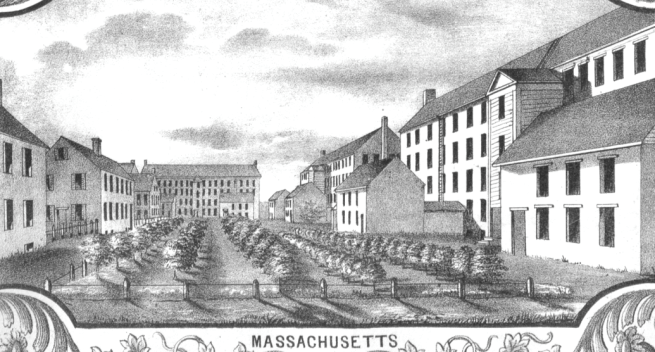
Lowell, 1850