Not all of my exploration of our new world was on foot or on wheels

My encounters with the unfamiliar terrain of the Western mountains and desert had me reading everything I could find. The public library was a good start.

As I noted:

Rainier, honeycomb mountain, radiating heat under all that ice and snow — so fragile a good explosion could level it all … a new appreciation for “the temple tops” …

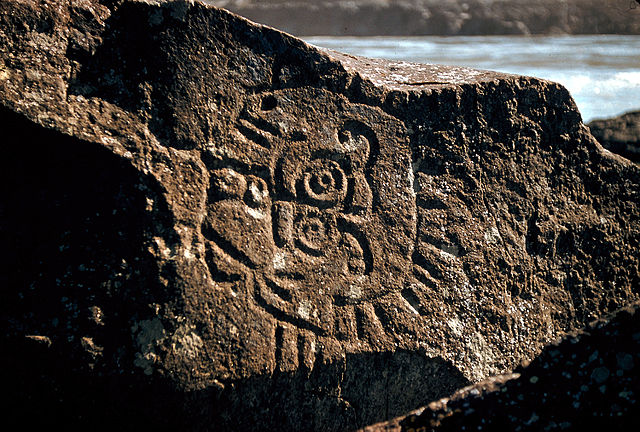
Regarding petroglyphs at the Dalles, to the south of us on the Columbia River:

“It seems impossible to decipher these inscriptions satisfactorily as it is not likely anyone except the makers and those living at the time the work was done could tell what was meant by them” — Newcombe, 1907

Also in Beth and Ray Hill’s Indian Petroglyphs of the Pacific Northwest, 1974, University of Washington Press:

“To make my name good” as a Northwest Native’s goal in life …

~*~

Petroglyph from the Columbia River at Rocky Reach Dam Museum, Chelan County Washington. Rock was rescued from the shores of the Columbia River before the dam flooded it, but many more were not saved. Photo by Thayne Tuason.


Indigenous petroglyphs in Columbia River Gorge near the Dalles Dam by U.S. Army Corps of Engineers, photographer unknown.

~*~

My explorations fill a number of poems and much of my novel Nearly Canaan and of Kokopelli in the Secret Side of Jaya. In fact, I’ve considered the place to be a central character in itself.

~*~

One book I found most useful in understanding the social differences in the Far West was Anti-California. Many of the points its author raised regarding the Golden State fit what I was seeing in the Pacific Northwest. For instance, few children grew up within a day’s drive of their grandparents or aunts and uncles. He saw that as extending into social life in general, which tended to be more polarized, using the Roman Catholic church as an example in having both one of the most conservative cardinals in the world as well as an entire order of nuns that broke away. (I could add that Quakers there came in two opposite camps, liberal “unprogrammed” meetings and pastor-led evangelical churches.) You get the idea. The author had been a correspondent for Newsweek magazine and other respectable periodicals. I didn’t recall the 1971 book’s subtitle, “Report from our first parafascist state,” or know anything about the author, Kenneth Lamott, father of novelist Anne Lamott. As I’m now hearing, he was quite a flamboyant character, to put it mildly. I do wonder how I’d see that book now.

~*~

From Spiralbound Cascadia with commentary.
 

My initial explorations in the Cascades

The primary attraction had been the mountains. We were in the foothills on the eastern flank of the Cascade Range. I was getting out into the wild probably every week from summer to the start of winter. Here are a few excerpts.

Darling Mountain

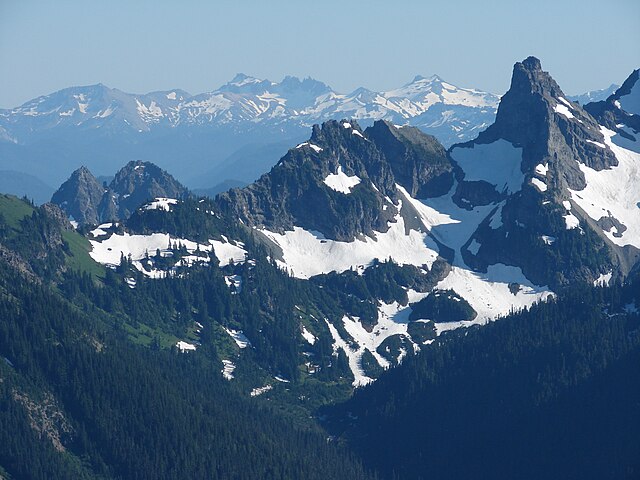
One of my first exploration, maybe the first, was on a Tuesday I had off work, when I drove up the Middle Fork from Tampico and then logging roads to Darling Mountain crest. Sheep scats and tracks around the snow and awesome meadows. Old site of forest fire lookout, since torn down. Climbed a dead tree to enhance the view. Mount Hood, above clouds. Adams, thrusting into them, closer. Goat Rocks across the way, and St. Helens’ perfect cone beyond. Straight ahead, following the road, Rainier thicker into the clouds somehow superior to the others. Then, a golden eagle sailing straight toward me, turning off perhaps 30 yards away, soaring off, circling briefly, and disappearing. With my guest status, I gave gratitude.

Deep forests were extraordinary.

I had no idea that this was on the second-highest logging road in the state.

Cowlitz Chimneys (center) with the Goat Rocks (background) from Sunrise point on Mount Rainer, photo by Steve Redman at Wikimedia Commons. 

Rainier route

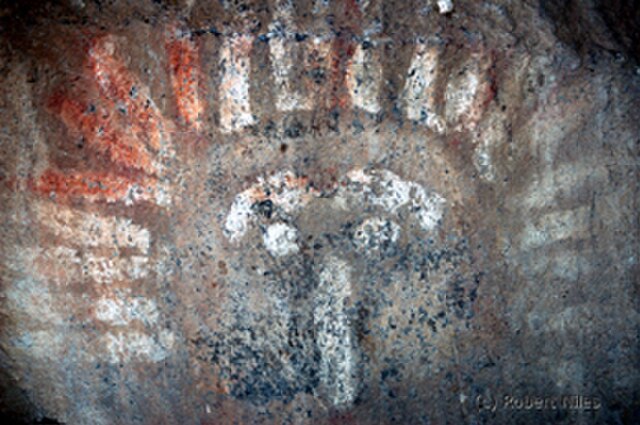
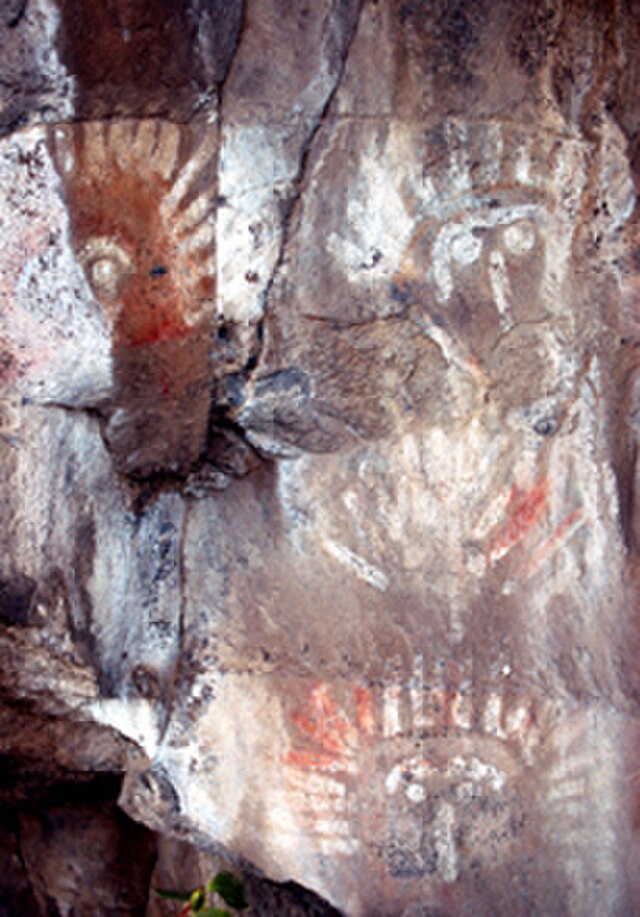
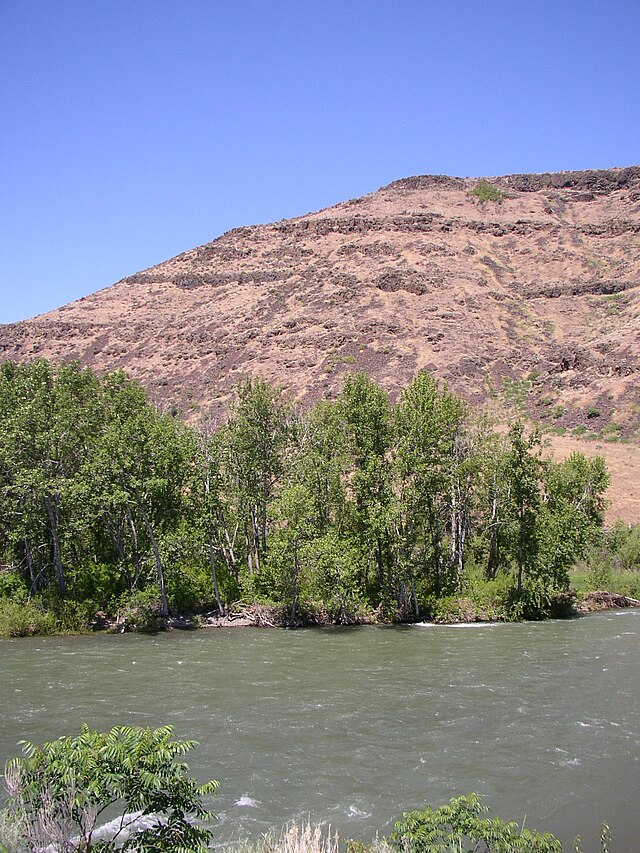
On another trip, on my way to Mount Rainier, saw my first petroglyphs (rock inscriptions) and petrographs (rock paintings) outside of Naches. The paintings looked a little faked — red and white, perhaps with a little blue or red.

They were found near where the Naches and Tieton rivers veered off westward toward the Cascade Range. Photo by William Borg.


Photographs by Robert Niles via Wikimedia Commons.

Our routes to Rainier were progressions through ecosystems that became familiar over repeated exposure as we drove from sagebrush desert into ponderosa pines and reservoirs of future irrigation waters on our way to the high country of the Cascade Crest and the rainforests beyond.

Rainier hikes inspired many poems as well as scenes in my novel Nearly Canaan.

Each day trip was intoxicating.

To the south

John Day Dam in Columbia River: fish ladder and 80-foot drop of locks: air in stomach, at man’s mass of cement: aluminum company by the RR tracks.

Steam locomotive at Maryhill State Park, reflecting Sam Hill’s source of wealth: Maryhill Museum of Fine Arts, his castle above the palisades, green lawn dropping off into clouds. The sculpture studies by Rodin the claim to fame. During the trip, pondering Mount Adams vs Rainier …

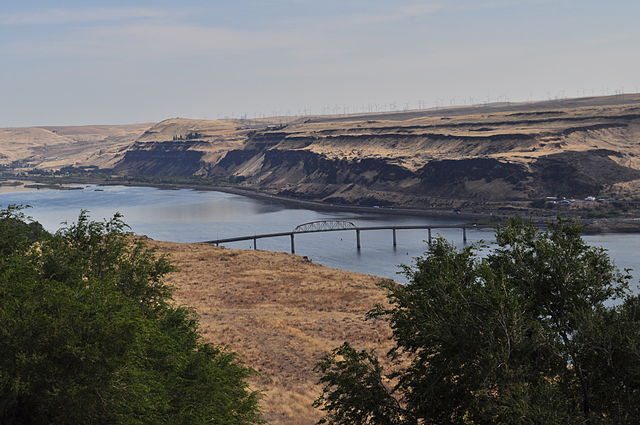
Sam Hill Memorial Bridge and Columbia River, seen from Maryhill Museum of Art, Maryhill, Washington. Oregon at top/right. Photo by Joe Mabel at Wikimedia Commons.

~*~

Along the way

Sweet vinegar smell of hay [up to 5 mowings a year in the interior Far West; the hay was grown in the sunny lands east of the Cascades, and much of it was trucked to dairy farms and other livestock operations on the rainy western side of the mountains].

~*~

From Spiralbound Cascadia with commentary.
 

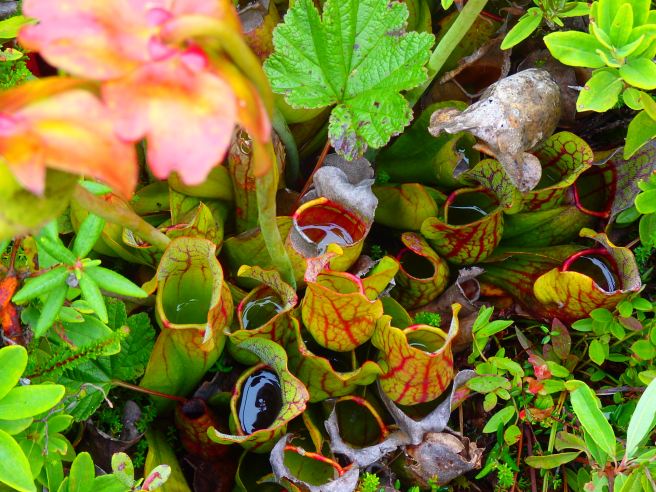
Pitcher plants after a goodly rain

An ascent of Mount Washington in New Hampshire in 1974 and then in the high country the Cascade Mountains starting two years later introduced many magical arctic flowers to my awareness, along with prickly pear cactus in the desert to the east where I lived and worked for four years.

The fly-eating pitcher plants, found in arctic peat bogs in our corner of Maine and New Brunswick, continue that exotic delight.


Among the wonders of nature

When it comes to flowers, wild or cultivated, just consider …

  1. “Those who dwell, as scientists or laymen, among the beauties and mysteries of the earth, are never alone or weary of life.” — Rachel Carson
  2. “Everything that slows us down and forces patience, everything that sets us back into the slow circles of nature, is a help. Gardening is an instrument of grace.” — May Sarton
  3. “In the spring, at the end of the day, you should smell like dirt.” — Margaret Atwood
  4. “Just living is not enough. One must have sunshine, freedom, and a little flower.” — Hans Christian Andersen
  5. “Colors are the smiles of nature.” — Leigh Hunt
  6. “The earth laughs in flowers.” — Ralph Waldo Emerson
  7. “The fairest thing in nature, a flower, still has its roots in earth and manure.” — D. H. Lawrence
  8. “Deep in their roots, all flowers keep the light.” — Theodore Roethke
  9. “The sun, with all those planets revolving around it and dependent on it, can still ripen a bunch of grapes as if it had nothing else in the universe to do.” — Galileo Galilei
  10. “Live in each season as it passes; breathe the air, drink the drink, taste the fruit, and resign yourself to the influence of the earth.” — Henry David Thoreau


So I wasn’t losing my eyesight or my mind, after all

Back when I had an hour commute home after working an evening shift at the paper, there were a few nights when I was mesmerized by what I saw in my headlights while driving the country highways in heavy rain. As the drops splashed from the shiny black pavement, they seemed to turn into frogs that were hopping wildly. That part was freaky enough, but all of the ones I saw were leaping in the same direction, say from right to left. Hundreds of them. Thousands of them. There was no way to avoid them, either. Naturally, it was difficult to see at 60 miles an hour, and I was always anxious to get home, have a martini, and hit the sack promptly.

Why one direction? Something to do with the wind? Maybe just the angle of my headlights, so I didn’t pick up on just as many hopping in the other direction?

A few miles later, I would encounter another flock (officially, a group of frogs is called a knot, a colony, or an army, go figure) all flying in the other direction, left to right.

The phenomenon didn’t appear every time I had a heavy-rain midnight, but it did happen enough times over the decade to repeat the show, something I didn’t connect to springtime.

Turns out, as a recent Sunday Afternoon presentation at the Eastport Arts Center prompted, I wasn’t hallucinating. Didn’t need my eyes checked or a pair of glasses for driving. And wasn’t losing my mind. Frogs, toads, and salamanders have a Big Night (or two) in early spring when heavy rain, an inch or more, combines with thawing ice and snow to signal the amphibians to leave their winter shelter and return to emerging ephemeral vernal pools for breading. The high, shrill chirping chorus of peepers soon fills the night air for a few weeks after.

The temporary shallow ponds are fishless, and thus free of predators in the amphibian-breeding forest wetlands. With their job done around the time summer rolls in, the pools dry up for another year.

ON STONE CLEAVED FROM RAMPART

Sometimes, in blogging, an intended post gets caught unposted. Here one of those finally appears. My, it was drafted long before I lived this close to the sea. 


however elegant, talisman bowsprits
cast gelatinous shadows
along shoreline and then blackened wharf
grappling irons of the hull or side gateway

expertly, the customs master inspects
postgraduate credentials in each captain’s script
and assesses the excise due

the crew, returning well-off in some dividend
of dexterity, superstition, and chance
fathoms contempt at the helm

some hauled fishing mesh or harpooned leviathans
or transposed merchandise from Shanghai or Liverpool
while privateers or warships are porcupines passing by

while on the other hand, coming downstream
through melting forest ignorance
deadly as any rip current, as any metropolis

with charts, rudimentary as
a canoe or kayak
traverse bitter

names for the same stars
argument or laughter, depending
on the embrace
in all that I found welcome

still, you know seasoned voyageurs
who will fear water