How much of my story is not directly my story?

Rather, so much arises in the intersections with so many others. It’s part of the role of the artist as a witness.

We could consider the death of my ex-spouse’s second husband, for example, or the death of my current spouse’s first. Some hit closer to home than others.

Even the activities of others in our own households that aren’t exactly ours individually.

Add to that the ways others would see us, in contrast to our own versions.

These are typical of things that still impact our own individual life stories. Our lives could have led to so many other possible outcomes, after all.

Let me admit that my life is enriched by what others do around me, even when I’m not actively engaged. I want to share in their glory … or whatever. The way a sports fan does.

A writer is ultimately an observer, not just a participant.

For example, as a poet and professional journalist, I found that the police radio scanner in the newsroom more accurately reflected romantic relationships in America today than any collection of English love poems. You didn’t have to sit next to a police scanner to perceive how sexual relationships had taken a peculiar turn.

Or, from another perspective, growing up in Ohio, I had thought our family had no colorful traditions or legacy. Only after moving on to both coasts and, by chance, embracing the faith of my ancestors did I come to see how much Grandpa and Grandma were discarding the very things I was reclaiming and how thoroughly they were adapting to a changing urban environment. Despite all the time my sister and I spent with them, I came to realize I really didn’t know them, after all. Just who are grandparents, anyway? Does anyone’s fit our idealized image? Only recently, learning that Grandpa proudly advertised himself as Dayton’s Leading Republican Plumber, did I find the key to unlocking their story and its place in history.

I had no idea Grandpa’s lines had been Quaker through North Carolina, Pennsylvania, Northern Ireland, and Cumbria, England. There was nothing of the pirate attack that left an orphan to arrive in the New World, where he eventually settled on the frontier of Pennsylvania and later the Carolina Piedmont. Nothing of our gold mine or the pacifism in the face of the Confederacy, either. Grandma’s lines, meanwhile, had been Dunker – another pacifist denomination – and a pioneer family settling a corner of Montgomery County, Ohio, that up until the First World War was as Pennsylvania Dutch as the Lancaster and York counties it had left. These are not the American histories we typically see.

What kind of person would describe himself as Dayton’s Leading Republican Plumber? My grandfather did, though it was only years after his death that that tidbit finally allowed me to know who he really was. It’s really a remarkable story.

As for the others who crossed my path in college or the upheavals after?

I have no idea where most of them have gone.

Of the others, the results aren’t always what I anticipated.

I do know that none of what I see around me is being faithfully examined on television or the movies, something I’ll argue is cultural impoverishment.

In the larger span of time

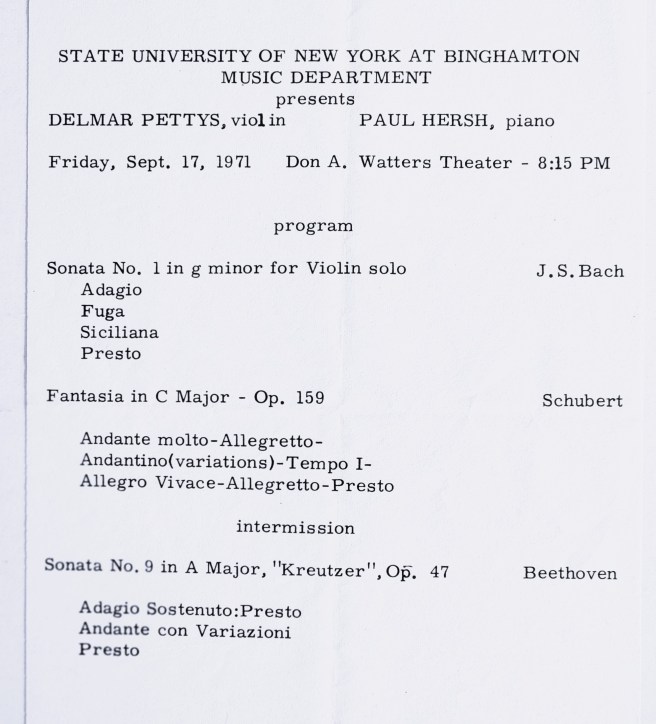
Being a classical music fan induces a peculiar sense of history. If you love fine paintings or theater or literature, you may encounter something similar.

I found some of this being stirred up while sitting through a concert where Debussy was the oldest music performed. He was still considered “modern” when I began attending concerts in 1959 or so. He died in 1918, shortly before my parents were born. Not that far back, then.

For additional perspective, some major Romantic-era composers like Tchaikovsky, who died in 1893, or Saint-Saens, 1923, or Puccini, 1924, weren’t all that distant from me at the time, though it seemed they were much more ancient, say closer to Mozart. The span between them and me at the time would fit into my own life now.

I do recall hearing a live performance of the Tchaikovsky fourth symphony under Lukas Foss and the Buffalo Philharmonic and during the rapturous applause afterward have the gentleman sitting beside me lean over and say, “You should have heard it under Reiner in Cincinnati, as my wife and I did.” That would have been only 50 years after its composition, and this was 30 or so years later.

What is striking me is how much harder it’s been for new music to catch on since then. I don’t think it all has to do with the attempt to write in more original – and often strident – styles.

There’s also a looping of generations, as would happen when a ten-year-old heard something from someone who was 80 relating something he or she had heard at age ten from an 80-year-old’s encounter at age ten with an 80-year-old from age ten. It wouldn’t be hard to have two-century span at hand.

Now, as for naming compositions from the last 50 years that have entered the standard repertoire, it would be a shockingly short list.

My literature and histories are not all about ‘back then,’ exactly

If it’s not personal, what’s the point? While I am talking about writing, in particular, let’s extend that to religion and politics and life in general, wherever we can.

Please make every effort to see those points where we may connect with mutual respect if we’re to advance the human condition. Period.

~*~

I’m left with the realization that my “serious” writing, meaning literary rather than the quickly perishable daily journalism, originated as contemporary poetry and fiction but now falls into historical.

So much has changed, it’s almost hysterical.

Photography, for instance – the career of a central character in four of my novels – no longer requires film, dark rooms and developers and enlargers, or light meters and F-stops.

As for rotary-dial telephones and thick books of people and their numbers?

Instead, I’ll start with the fact that America has never come to terms with its hippie past – positive as well as negative. At least my cool end of it. I’ll let the uptight ‘Nam side defend itself. For my side, it’s like we’re scared or embarrassed of what opened our hearts and minds. While we retreated from the general effort to push the envelope, to advance to Edge City, to demolish boundaries, we also failed to examine what we learned and carry from that experience. Instead, there was a society-wide state of denial that was bound to erupt in unanticipated ways – likely, without any sustaining wisdom. I’ll insist that’s why the nation is in the state that it is now.

For now, my novels stand as a witness to that era and experience and the root of many changes for the better we take for granted today. I do wish there were more voices to tell of that revolution, thwarted as it eventually was. Histories, whether of the scholarly sort or as the art of its time, sustain societies.

~*~

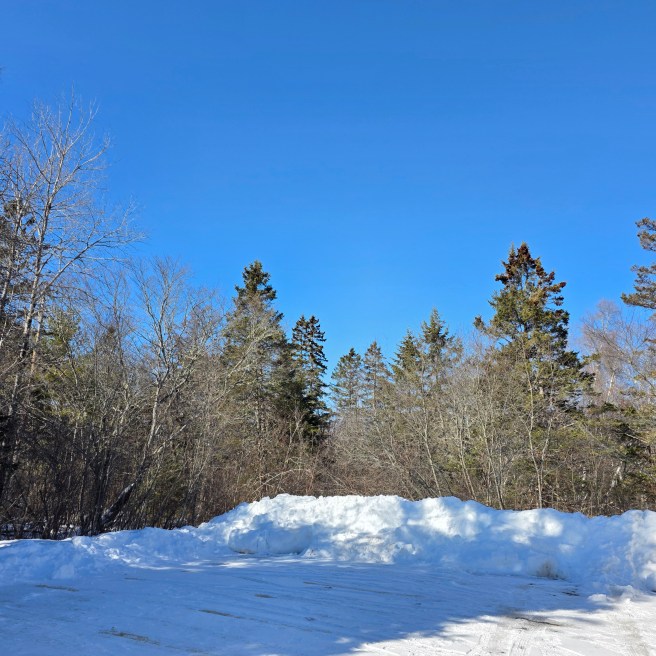
To that let me note that daily fresh air essential for my well-being. The outdoors counteracts feelings of entrapment or engulfment and depression I’ve been susceptible to otherwise. I need to get a taste of wild nature – my feet on the ground, my fingers in the soil, my eyes on the horizon and sky.

It’s part of my spiritual recalibration, even when I was living in the yoga ashram in Pennsylvania’s Pocono mountains.

In this, every day counts, good weather or bad.

~*~

Personal relationships have certainly changed within my lifetime. My parents’ generation suffered many more unhappy marriages in contrast to today, though many youths at the moment have only an envy of deep connection and commitment.

My love poems of the turbulent ‘80s and ‘90s stand as witness to that transition, as do my novels Daffodil Uprising, Pit-a-Pat High Jinks, and Nearly Canaan.

~*~

I am embarrassed for Ohio and Indiana since I’ve left. They had such greatness and potential.

~*~

You’ll find my novels in the digital platform of your choice at Smashwords, the Apple Store, Barnes & Noble’s Nook, Scribd, Sony’s Kobo, and other fine ebook retailers. They’re also available in paper and Kindle at Amazon, or you can ask your local library to obtain them.

How young we were!

Fictional characters don’t come out of thin air, as far as I’ve seen. Instead, they’re prompted by real people the author has known and then, to whatever extent, abstracted. Better yet are the figures who emerge when two or more of these prototypes are crunched together.

Not uncommonly, over the years between the initial events and the revisions leading to the published book, I’ll even lose the original names (in part or in full) of individuals who prompted the eventual characters.

Still, I’ll venture that all the people in the worlds of fiction, cinema, and television were somehow inspired by real people. Forget the obligatory denial you view in the credits.

The writer’s job is to abstract that into something more universal and eternally new.

That said, I was recently startled to get a message relating that one inspiration was now 87. Here I had thought him “older” as Wes in Nearly Canaan, but now see he was in his early 40s at the time. And riding high, as I recall with admiration.

Photos of colleagues in the newsrooms that prompted Hometown News or in the Workshop in Political Theory and Policy Analysis at Indiana University – details that infuse Nearly Canaan, The Secret Side of Jaya, What’s Left, and likely more – have all elicited the shocking realization of how young we were at the time. Even our leaders.

Ditto for the ashram that inspired Yoga Bootcamp or the ghetto and hippie farm of Pit-a-Pat High Jinks.

The events that propelled the novels came in times of great upheaval in my own life. Like me, I think you would be surprised to learn that most of the Pacific Northwest is desert – that the famed rainy landscape occupies merely a narrow band around the ocean and its inlets. Yet the desert is where the apples – and much more – are grown. It’s a remarkable region, with four distinct seasons and cowboys, Indians, miners, and much more in the mix.

In the broader scene, my professional relocations meant that personal connections from one locale to the next soon ceased, meaning that individuals from one to the other became frozen in time. For me, everybody in high school was frozen in time, as were others in the later leaps.

Reconnecting with a few has felt strange and yet invigorating. As more than one has exclaimed, it’s like nothing has lessened in the gap.

~*~

You can find my novels in the digital platform of your choice at Smashwords, the Apple Store, Barnes & Noble’s Nook, Scribd, Sony’s Kobo, and other fine ebook retailers. They’re also available in paper and Kindle at Amazon, or you can ask your local library to obtain them.

Do you use storyboards and photos?

While these weekly Arts & Letters postings have been focusing on the writing life, at least as I’ve known it, some of the insights do spill over into regular life more generally. (I’ll leave that redundancy for emphasis.)

I am visually oriented, more so than many writers, and I did have four intense years of art training in high school. As a newspaper editor, I was regarded for my design layout skills and photo editing and presentation. I credit my high school teacher for much of that.

As a writer and designer, I’ve collected magazine photos, art books, postcards, and stray photos that happened my way. Use of a personal camera was more sporadic and problematic.

And then came digital photography, for me about the same time I started blogging.

But first, to back up.

Memory can carry you only so far, and even good notetakers miss much at the time. A story or poem can become vivid through a detail that pops a character or a scene. A sensitive writer might find that specific in a scent or a taste or motion or a particular word that’s voiced or sensed, but in many more instances, it’s something visual, the sort of thing you might find in examining a photograph or a painting. I’ve learned how those saved magazine photos as well as later images found online can be valuable that way. You or I can even build memory boards to support certain characters or locales, even a room in their house, to assist in our thinking. Some might use a website like Tumblr to do that, too, though I’ve found much more’s available more openly.

Much of my revision of the novels Daffodil Uprising and Nearly Canaan greatly benefitted from such prompts, as did the drafting of “Miller at the Spring” in The Secret Side of Jaya, and especially some books I won’t tell you about.

Some of these photo archives have become albums I’ve posted at Thistle Finch editions, should you be interested. Others you’ll find there, more recent, are images I’ve been taking in my new setting at the easternmost fringe of the continental USA. They’re more of what I’m considering an adjunct kind of journaling – impressions that might have spurred poems back when I was without a camera. I’m even finding a similar stream in what I’ve posted on my Facebook profile, where the images are more likely to be video. (Yes, today’s author is supposed to be active hustling everywhere.)

I hate to admit this, but the ubiquitous digital camera is greatly reducing my on-paper journaling.

Besides, just what are all of those people out there holding up their cell phones wherever they go planning on doing with all of those digital shots? It’s like they’re trying to confirm their own existence. Note the selfies. Or that what’s in front of them is actually happening.

Not that I’m trying to say I’m somehow nobly above that. (Well, maybe?)

As for photo inspiration? In my household, the collected images are impacting our thinking in the ongoing renovation of our historic old house. At this point, the kitchen, especially.

I am trying to be more selective in what I post here at the Red Barn, even if the subsidiary blogs are picking up some of the overflow. Maybe you’ll enjoy them there, too.

~*~

You’ll find my novels in the digital platform of your choice at Smashwords, the Apple Store, Barnes & Noble’s Nook, Scribd, Sony’s Kobo, and other fine ebook retailers. They’re also available in paper and Kindle at Amazon, or you can ask your local library to obtain them.

More bits from one writer’s journey

I am one of the few poets and novelists who has spent the bulk of his career editing daily newspapers, rather than teaching literature or creative writing. Still, when it came to creating a contributor’s note for a literary journal, I had to think of myself in the third-person.

Here are some of those contributor’s notes I don’t think were published … until now.

  • In a typical year, Jnana drove enough miles to circle the globe, yet rarely ventured far from his relatively small state.
  • Jnana admits there’s something quite frightening in any occasion of encountering a dragon, much less being carried off by one. He’s been scorched more than once.
  • In his lifetime of writing, Jnana has found himself addressing issues of PLACE as much as character or social conflict or even religion and ethnicity. Place, of course, intertwines with history and the natural sciences. In examining where he lives – where we live – and have lived – he also examines movement, change, home, and community.
  • When Jnana graduated from college, the economy was in a tailspin. The hippie movement was flourishing. He was too skinny to be drafted for Vietnam.
  • Jnana once spent a week at an ecological workshop in Port Worden, Washington, where Barry Lopez, Gary Snyder, and Howard Norman were joined by biologists and anthropologists. It’s as close as he’s come to a writing seminar.
  • As copy desk chief, Jnana was a glorified secretary rather than the top grammarian.
  • Jnana began his professional journalism career as an Action Line research assistant.
  • As a homebrewer, Jnana handcrafted more than 2,500 bottles of fine ales and lagers.
  • Jnana’s elder daughter wanted to raise chickens, ducks, and bees at their small-city homestead. He wondered about the neighbors’ dogs and cats, as well as the possums, groundhogs, and skunks. He didn’t want the misery of another henhouse raid.
  • His wife thought Jnana would have fit the mid-1800s better than contemporary America. She wondered how someone engaging an Anabaptist religious line could be so unorthodox in his art.
  • As a daily newspaper editor, Jnana sensed he was among the last to uphold a vital blue-color trade. He wondered how democracy could survive without independent reporting or clear writing.
  • Considering the brevity of New England summers, Jnana had hoped to launch a line of Hawaiian sweaters.
  • Jnana hates onions but loves a good martini. (Gin, not vodka.) With or without olives.
  • As a journalist, Jnana lived in the trenches of community life – in the tensions of industry and finance, retail commerce, social inequalities and prejudices, and reactionary politics. He admires the progressive activists who have maintained their optimism in spite of it all.
  • In management and as an editor, Jnana had his head and heart handed to him on a silver platter more than once.
  • He hopes he never has to load or unload another U-Haul as long as he lives.
  • Jnana is quite grateful his younger daughter gave up rugby for crew as her first college sport.
  • Jnana senses rural values are rooted in his soul. His dad was born on a farm.
  • Jnana’s mother was born in St. Louis. She loved taking him to the zoo.

Journaling over the years

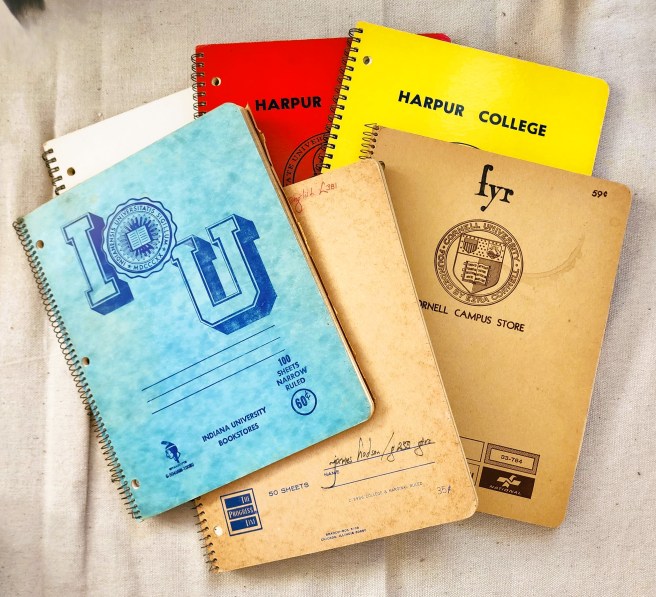
Prodded by a crusty newspaper editor-in-chief to keep a personal journal, I started the practice 55 years ago using spiral-bound notebooks. At the time, I was largely in quest of exploring “my problem,” meaning the deep depression and loneliness that followed the breakup with my first lover and my inability in social circles to find another. Long story to pick up later.

What I found instead was the manic upside in my funky settings during the hippie outbreak. Many of those entries, some of them in my favored 8½-by-14-inch notebooks – an option that disappeared all too soon from the market – found their way into my eventual fiction and poetry, though much of the rest is dross. At their best, they do have a sense of Richard Brautigan. Look him up, if you must.

As for the banal run of most of the entries, people who snooped into my journals and then voiced their disappointment in what they found told me as much. Note to those of you who consider doing something similar, it is an invasion of privacy and will likely bruise your relationship. It is an abuse.

Entries were rarely a daily thing for me, more likely weekly or, of late, even monthly. When I sat down to do so, I was more likely to record what was going on around me than I was to delve into my emotions or underlying perceptions. Those latter elements might appear whenever I had more time at the project. The big lesson was that my life was much richer than I had suspected, and I was too prone to lose the connecting threads without these times of reflection. In some ways, they were like Lewis and Clark’s explorations across the continent, I suppose. Who knows who might need the maps later.

In earlier returns to these, I did find I had duly noted details of unfaithfulness and other impending disasters that I was denying to myself, yet there they are in clear daylight when we return.

Among my goals this year is a thorough revisiting of the 200-plus volumes to date, the latter half mostly  in hardbound 8½-by-11 artist sketchbooks. Most of what I review will be discarded, harsh as that sounds, but I the act will release emotional burdens as well. My novels and poems distill and carry much of that journey, thank you.

The ones beginning in 2000, though, retain so many details of my current situation, I really can use the reminders of things I don’t recall when they’re raised by others. I’ll let you guess who, especially.

~*~

My practice has definitely changed since I began blogging. Much of the recording of events, personal observations, and reflections has deflected from the hardbound journals to these online entries. Well, so has much of what would have gone into long letters to friends and colleagues now has vanished online as well. Emails and texts fall far short of real correspondence, OK?

The journaling on paper continues, though at my age, life feels more routine, less worthy of intense recording. So much of it I’ve already said, even to myself.  Still, as a practice, it’s one more thing I can see as prayer, too.

You’ll likely be seeing more of what I turn up in those yellowing pages.