JUST FOR ADDED KICKS

Admittedly, we live in an area that gives meteorologists headaches. It’s one of those where several major weather systems collide. Not quite as bad as where I once lived in Upstate New York and we sometimes wound up with four completely different forecasts for the day’s four editions of the paper as the day wore on. But here, one winter, when one of the local websites had its own retired Air Force meteorologist providing early morning reports, he did note an ongoing line running from Concord, New Hampshire, to Portland, Maine, and remarked that if it shifted slightly north or south, so would the weather, depending which side you were on. That line held on most of the winter.

In the past week, we’ve just come through two “weather events” that provide some amusement in the iffiness of science department, even if it has meant more than 20 inches of snowfall to dig out. In the last one, the projected amounts of snowfall kept changing, sometimes with hourly revisions, or so it seemed, going from one to two inches and settling on two to four, at one service, to three to six at NOAA. We wound up with over eight. So they missed, one of them (the one that’s usually somewhat hysterical in its warnings) off 75 to 88 percent.

In the storm before that, I’m glad I decided to back out of plans to head to Boston for a working session with Friends. The heavier-than-expected snowfall was a mess, and I never would have made it there in time.

Now we’re looking at another weekend, one with a gathering halfway across the state tomorrow night, and the other Sunday morning, the one we rescheduled in Boston. And I have no way of knowing what to expect, other than it might be messy.

Without getting into the percent chances of precipitation but sticking only to the forecast, here are the options:

  • Saturday overcast, Sunday ice pellets, Monday rain.
  • Tomorrow wintry mix, tomorrow night and Saturday rain/snow, Saturday night and Sunday freezing rain continuing Sunday night, Monday rain/snow.
  • Tomorrow a few afternoon showers, Saturday cloudy, Sunday rain, Monday cloudy.

So Sunday’s the only day they agree on, and even that could be simple rain or really messy?

I guess if I had to choose one, it would be the third option, especially since Sunday has only the warmer rain. Or maybe, if I look around more, I might even find a fourth choice I like better.

Or should I just check my horoscope for a clearer idea, instead?

HAPPY HOG

Having a big freezer allows my wife to keep garden produce available through the year and to stock up on “happy meat” (meaning humanely raised, and free of unnatural chemicals) when she finds it marked down on sale.

One year we even ordered half a pig from some Friends in Bowdoinham, Maine.

Went up to the farm, met him before his demise, scratched his nose, watched him trot. Didn’t get to see him leap from the diving board into the pond, though, due to a dry spell. We were assured he was happy right up to the end.

Rachel even ordered the cuts from the butcher the way she wanted them, with no waste. Wanted it all, especially the parts we couldn’t buy at market. No need to make any into sausage or smoke the ham, either. We preferred those as pork belly or fresh ham, which we discovered are very, very tasty additions to just about any dish you’re preparing.

In fact, the experience proved as much of a revelation in taste as what we’ve discovered by growing our own vegetables and berries or going out to a nearby farm or picking our own at an orchard. It’s miles apart from the supermarket. Fresh is the essence of wondrous dining.

These days, though, we’ve been cutting down on meat altogether. It’s more a garnish or ingredient than the traditional slab Americans expect. But that’s another story. Maybe even one to make a hog happy.

THAT FRESH PERSPECTIVE

When it comes to food, this time of summer is always a revelation, at least here in northern New England. The sheer abundance and variety of fresh produce is such a contrast to the rest of the year. One bite from any of the kinds of tomatoes we harvest is enough to make you ask just what those imitations in the grocery really are. You can go down the list.

Yes, this has been building up, beginning with the asparagus and lettuce in the spring and continuing through the strawberries and blueberries and a number of other crops along the way. Should we even mention peaches and apples, now coming on strong?

Let me argue that there’s nothing more marvelous than a sandwich loaded with real mayonnaise and sliced fresh tomato and nothing else. Forget the bacon. Lettuce is nice, if it hasn’t all bolted. Or a sprig of fresh basil. But that’s it. Pure and simple.

You can put all those cookbooks aside.

Another of those nothing-can-be-better experiences is one that sometimes follows a day at the beach. On my way home, I pull off the highway at a nondescript seafood wholesaler and boatyard where I purchase three one-pound soft-shell “chix” culls – the lobsters that may be missing a claw or simply not be visually perfect enough for the restaurant crowd. If it seems extravagant, I remind myself I’m saving 50 cents a pound, which makes each lobster cheaper than a McDonald’s fish sandwich this time of year, even before you get to New Hampshire’s added eight percent Meals and Rooms Tax aimed at tourists. And the lobsters are from local waters, rather than shipped in from Chile or wherever.

A bit up the road I stop at a farm market, if it’s not Wednesday, when I’d have already hit one of two farmers markets. This time, it’s fresh corn-on-the-cob – ears picked that morning.

As soon as I arrive home, I put a big pot on the stove, go outdoors and shuck the corn, which then goes into the pot once it reaches a full boil. Five minutes later, the corn comes out and the lobsters go in. The water’s already flavored.

Butter goes immediately on the corn, to melt thoroughly before I add fresh-ground pepper.

Ten minutes later, two of the lobsters join the corn on the plate – and that’s it, plus a squirt of lemon in the melted butter. Forget the little dish of butter you get in a restaurant; just use what’s come off the corn. Yummers, as we sometimes say.

So I retreat to the Smoking Garden, where making a mess is no problem, and delight in my classic twin lobster repast as the dialogue in my head asserts the king of France never ate better. Gold flatware and rare porcelain would add nothing to this meal. Julia Child, for all of her insistence on fine culinary technique, would have to admit that all of those skills existed only to try to emulate the wonder of this simple afternoon glory. Tamar Adler, with her advocacy of one-pot meals, would no doubt be on my side here.

The third lobster, you ask? It goes into the refrigerator for lunch or even breakfast the next day. I’ll add a dollop of mayo on the side, for dipping, and find myself re-creating lobster salad, minus the bread.

If we’re really being ambitious, we save all of the shells for chowder stock or lobster ravioli, the latter dish sometimes getting an extra lobster all its own for the meat. Either way, that step really lowers the per-serving cost.

This hardly makes me a foodie or even give me any creds in the kitchen. So? The fact is that we’ll never be able to subsist on the food we raise on our little city-garden. But it, and the local farmers and fishermen we visit, give us many reminders of the inescapable wonder of freshness on the plate. You can’t beat quality ingredients after all, and this is where it all starts.

As Julia would say, Bon Appetit! With or without the king of France in the background.

FOLLOWING THE LINE

As I said at the time: Who am I writing to? Right now, me. A conversation with myself. Not that I want it to remain that way. In time, it may be you, the invisible reader wandering around my mind or heart. The kindred spirit. Or perhaps, as prayer, as confession to God. Who already knows the outcome. And who would cheat God? Yes, the ubiquitous “you” in contemporary American poetry may well be God as much as one’s lover.

In my experience, I really do need to get that first overview drafted, to see in part where my thoughts and heart are leading. At that point, I can begin to ask what else needs to be said about you or me, the family, faith, our part of the world (now I think of a friend who painted a much different picture of Maine than the coastal postcards most people imagine), and so on. (And don’t overlook the lessons from the convent, I tell her.)

“The new chapters in your letters have good energy,” I continued. “They move along well, keeping eyes open for details and heart for insight. A good direction!” Having just finished the ninth or tenth draft of one manuscript, retitled again, I acknowledged stages of writing and revision my own process entails. The first draft is essentially for myself: to see where the material leads. The next several revisions tend to round out the logic, support my leaps, provide background for the reader; in this stage, the work becomes wordy, by necessity and is written for others, rather than myself. Then comes the “sponge stage,” where the work begins to soak up more and more new material quotes, references, new insights; it must reach saturation point. Sometime around here, the work needs to be restructured or reblocked: the original outline or roadmap no longer leads the material through the best route. (A chronological approach, for instance, may be jettisoned at this stage.) Eventually, what I really need to say emerges, and that leads to some heavy copy editing, to make the light and dark contrasts stronger. This is when the thesaurus and the search/replace get heavy usage, too, punching up the diction, largely to expand repeated concepts and terms. In a long work, I always find a handful of overworked terms; maybe they reflect the central issues, but left untouched, they become tedious.

WIND BLADE

100_8492

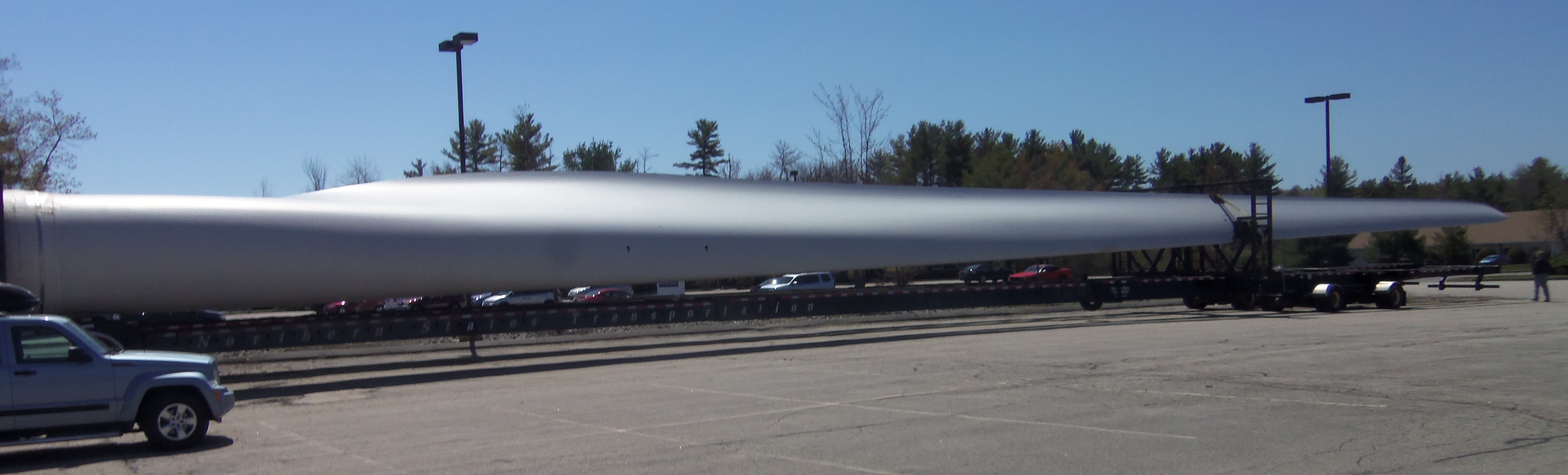
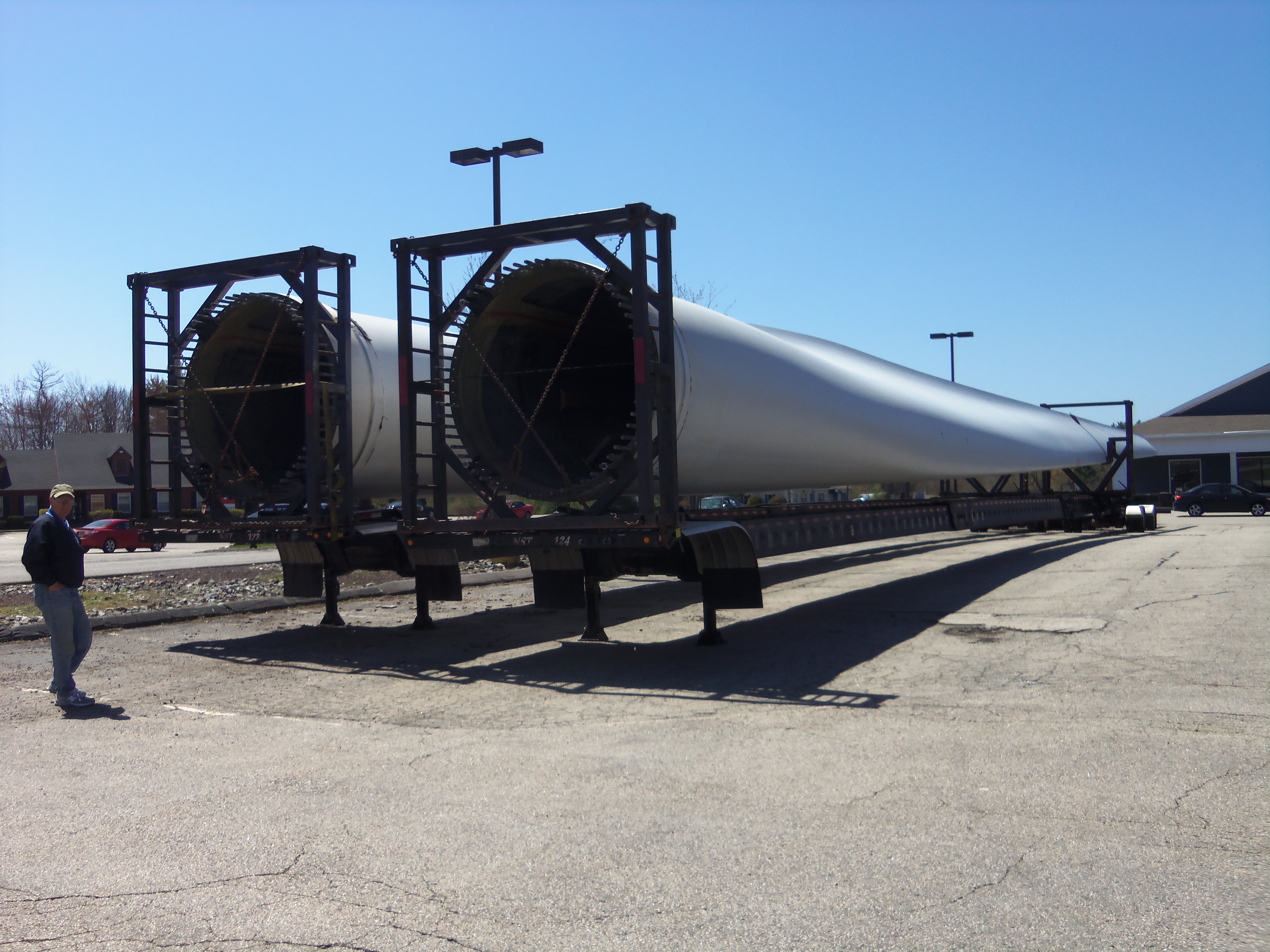
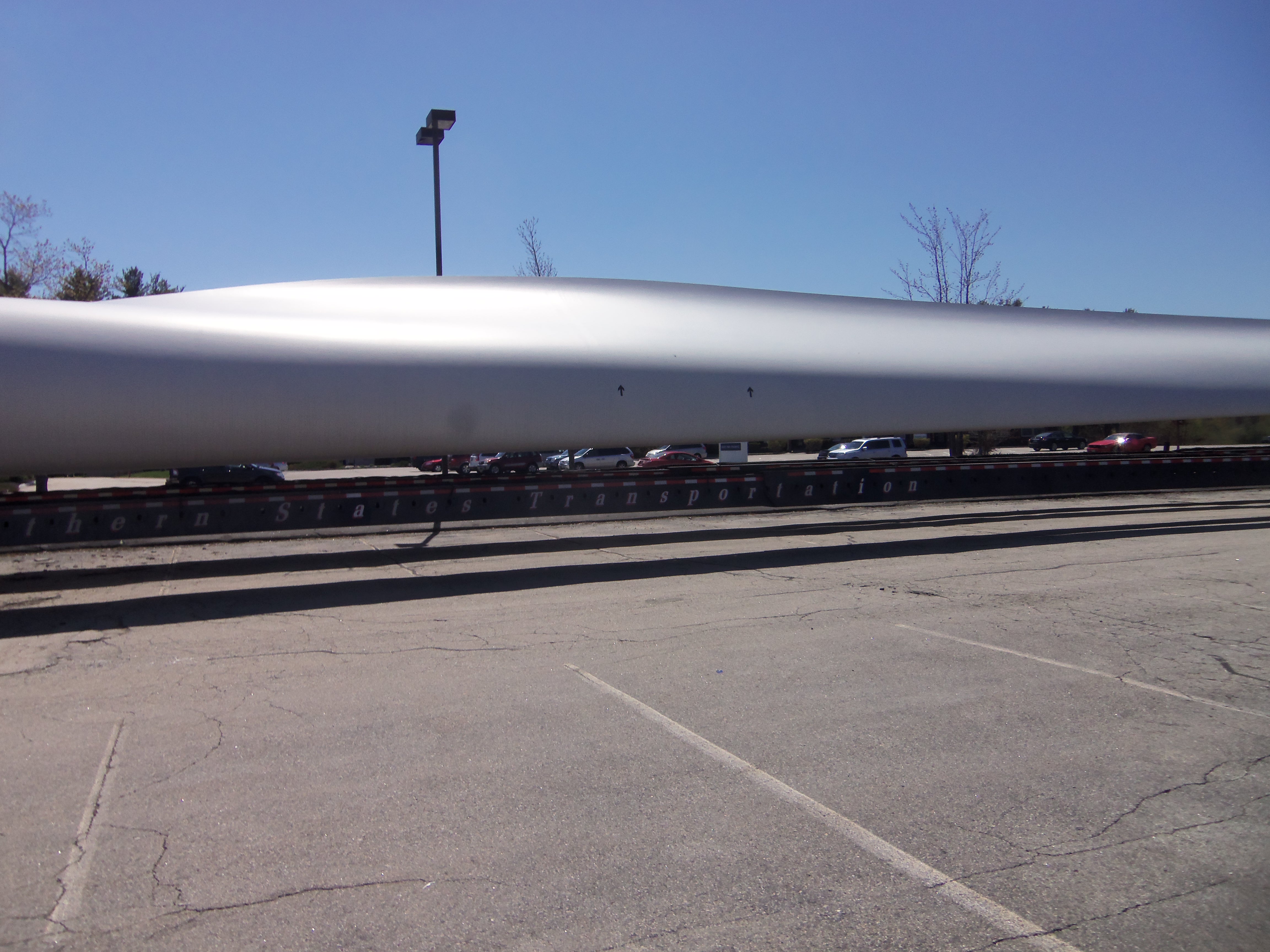
Several months ago, while driving on Interstate 95 to Boston, a remarkable view caught my eye. Headed in the opposite direction was a very long trailer, one at least three times longer than the usual tractor-trailer rigs. A few miles down the road, I glimpsed another. And then a third.

They were blades for wind-powered electrical generators being erected atop several ridges in Maine. Perhaps you’ve read some of the controversies erupting over proposals to build these “wind farms” in suitable locations across the country. But this was the first time I got an inkling to the size of each tower.

Earlier this month I came across two similar propellers, this time settled in a parking lot, no doubt waiting for a few more to join in a caravan. Even before being erected on a summit, they’re an amazing sight. Somehow, the gleaming sun on the metal reminds me of watching whales lolling in the ocean. Whales, you may recall, were the source of the oil used to illumine many homes in early America. They were another source of energy from New England.

100_8486

100_8490