

You never know what we'll churn up in cleaning a stall
The narrow, mile-wide island, claimed by both Canada and the U.S., is treasured by many birdwatchers for having the largest colony of nesting puffins along the Maine coast.
Trips to the island are limited, so much so that when online reservations for daily summer visits opened at 8 a.m. on January 10, all the tickets were booked in 45 minutes – at $180 a seat.
Sounds like a real bucket-list item, even if the boat sails from Cutler in my own Sunrise County.
Be warned, too, that the weather can be iffy, meaning that reservation might be cancelled on short notice.
Should I start considering a trip to Newfoundland if I really want to see any of the distinctive birds?
Eastport is a city, after all, and many of the homes are packed in close together. Not that it matters to our local wildlife.


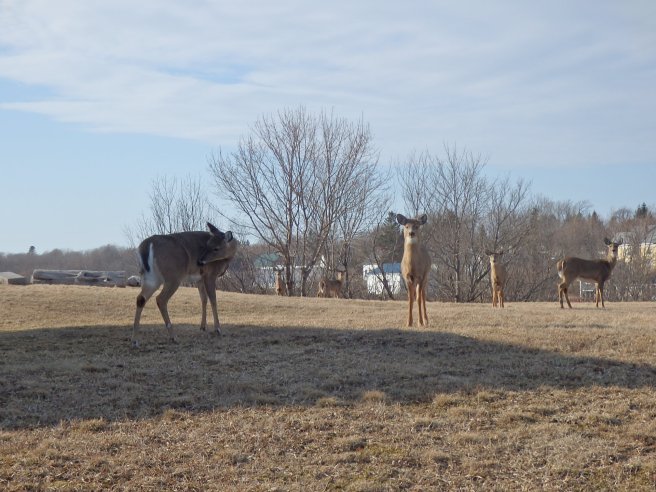


They’re so much a part of the place they even have their own Facebook page, Deer Eastport, and it is very active.
No matter how cute, though, they’re a gardening challenge. As are the raccoons.
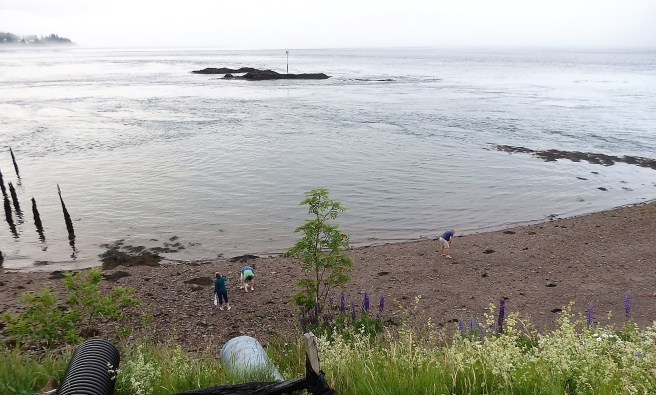
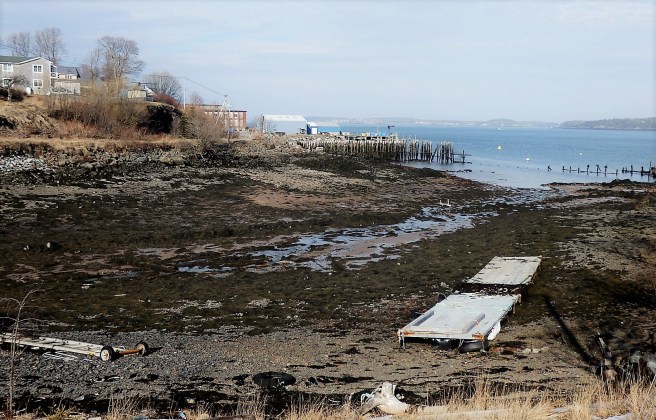
A third-generation shipbuilder, C.S. Huston at one point owned four shipyards on Shackford Cove – his father’s, on the south side of the water, and the William H. Hall and Jacob Shackford yards on its north side, as well as Aymar’s spar shop at the South End bridge, which has long since been filled in.
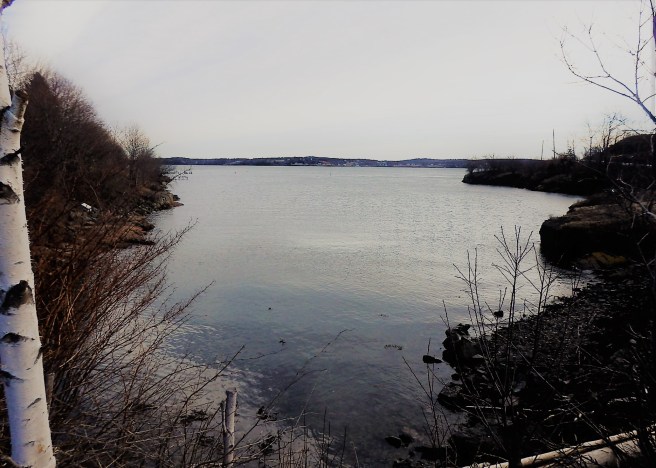
As an innovative entrepreneur, he early on erected a steam capstan to haul boats out of the water, along with a 600-foot marine railway made of thick beams set up as interlocking boxes filled with stones.
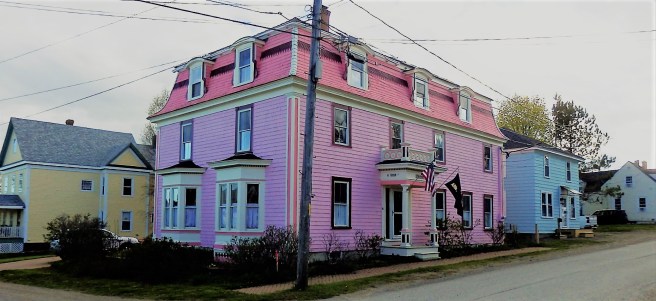
Huston lived in a Second Empire style house overlooking the yards, which he purchased from Hall in the late 1850s.
The shift to ships built of steel rather than wood changed everything. Maine had seemingly endless lumber at hand, but not steel. That also allowed for bigger vessels, meaning fewer could suffice for shipping. Finally, with the advent of the automobile, passengers stopped relying on steamships and that, too, ceased at the corner of this cove. But not before the world’s largest sardine cannery extended from its shore – a building 250 feet long.
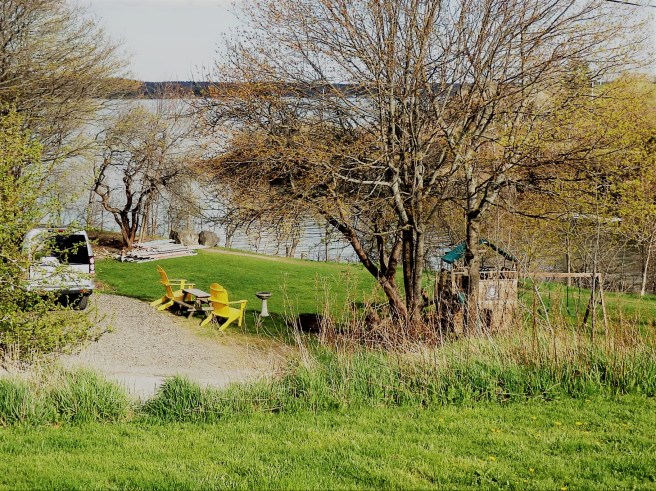
It seems so quiet today.
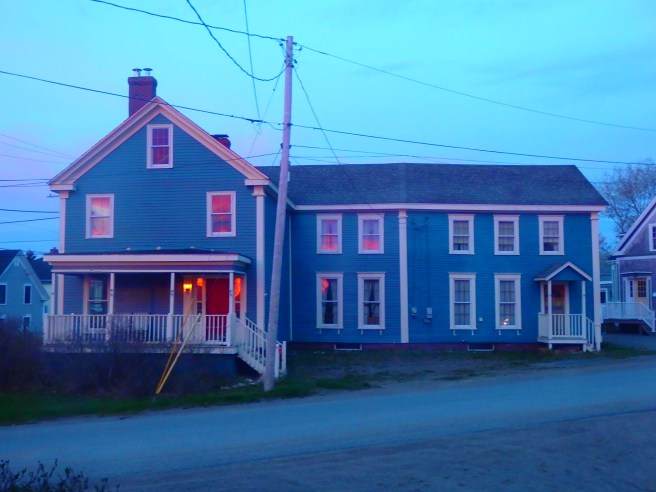
But I knew nobody was home. Instead, the illumination was only the reflection of another brilliant dawn and blazing sunrise.


As our City in the Bay has been redefining itself, in part thanks to its lively arts scene and surrounding natural wonder, tourism has been ticking up, even in the face of Covid-19.
Part of Eastport’s appeal is the deepest natural harbor in the continental U.S., a port that at one time, back when there was a lot of smuggling, was the second-busiest in the nation – something a shift in federal tax laws and heightened enforcement soon curbed.
Still, we have a long history of steamship travel, right up to the auto age.
And now, this year, hooray, we’re even anticipating the return of passenger vessels, albeit of the increasingly popular “small” ship variety rather than the floating cities that can overrun a seaport.
First, the 210-passenger, 325-foot Pearl Mist is scheduled for five visits, most of them 3½ hours ashore, as part of a seven-night round-trip out of Portland. Other stops on its Fundy Bay circuit include Rockland and Bar Harbor in Maine, and St. Andrews, St. John, and Grand Manan Island in New Brunswick. Fares run from about $4,000 and up.
Second, in September we host the innovative 530-passenger, 459-foot Roald Amundsen expedition ship on a 10-hour stopover. Originally, this was to be part of an adventurous 44-day navigation across the Arctic Ocean in a Northwest Passage venture from Vancouver, British Columbia, an ultimate bucket-list voyage. But the fares, starting around $57,000, may have been too pricy for the Covid-antsy market, causing it to be broken up into segments – the first ending at Nome, Alaska, and the second continuing from there on to Greenland and ending at Halifax, Nova Scotia. Eastport is now tucked in as the cherry in a shorter, more affordable, New England dessert.
More exciting is the news that the Amundsen is now scheduled to return next year as part of an even more audacious 94-day cruise – a Pole-to-Pole adventure that will originate in Vancouver, British Columbia, and traverse the Northwest passage before coming to Eastport and then continue on to equatorial warmth, the Panama Canal, the Pacific coast of South America, and finally shore visits on Antarctica. Think of going from icy summer to the edge of autumn in New England to the tropics and on to spring while exploring three continents. The lowest fares figure out around $600 a day.
And little Eastport will be part of that.
In Maine, the bulk of the cruise action hits Bar Harbor, at the edge of popular Acadia National Park, where frequently two ships a day debark during the summer season, and in Portland, which gets especially busy during the fall foliage season.
We’re really not set up for the mega-cruise vessels that have dominated the industry. Let’s see how our emerging niche shapes up.
 Jnana's Red Barn