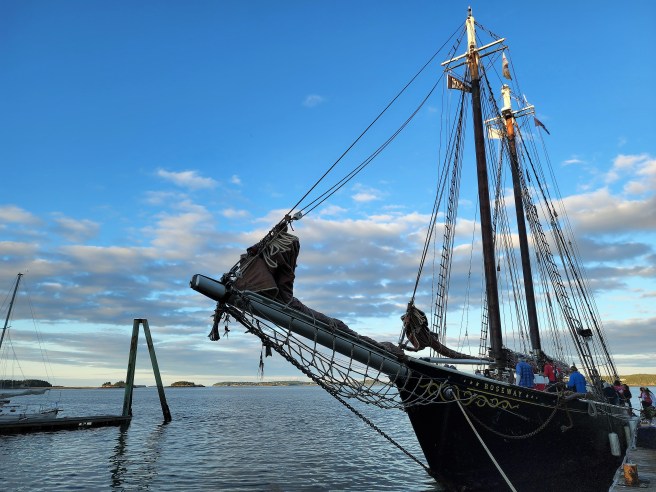
Roseway in port
You never know what we'll churn up in cleaning a stall
Roseway in port
While I had heard that these stretches of a surrounding blur of dense gray could linger weeks here, I assumed folks were talking about March or maybe late November, not the height of glorious summer.
And then a friend told me of one summer in Lubec, a few miles over the water to our south, where it hit every day, often without any splash of sunshine.
It does dampen the emotional wellbeing of many.
As much of the nation – and world – suffers under recording-breaking heat, we’re having many days when the day’s high has barely reached much above 60, as in Fahrenheit. Only a few readings have even broken as far as the lower 80s. I’ve worn my beloved Hawaiian shirts only three times, and my shorts are still in the bottom drawer of the dresser. If you’re wondering, unlikely as that is, I’m not one of those guys who goes bare-knees in January, believe me.
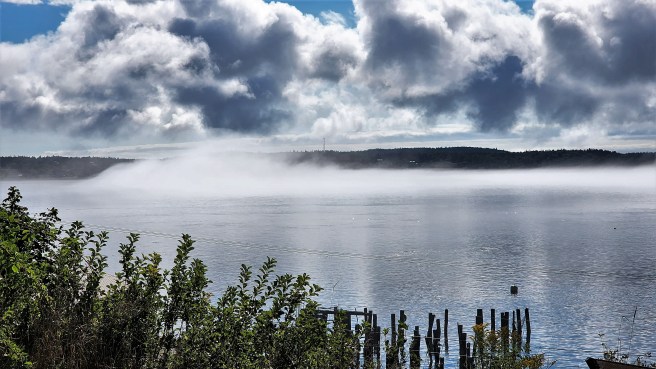
Much of this has been accompanied by weeks of fog – morning and late afternoon through the night, especially – but sometimes without break during the day as well.
I’ve stopped reminding people that Seattle experiences something like this six-months straight every year or that San Francisco is accustomed to watching the ground-hugging clouds return every afternoon.
We do live on an island, so the temperatures just seven miles away on the mainland traditionally run ten degrees warmer, but those are still much more reasonable than the hellfire raging elsewhere.
None of the wider extremes should come as a surprise. True prophets had forecast them a half century ago, and we are running on those projections, contrary to the decades of denials and resistance of capitalist naysayers and their puppet politicians. Remember, too, it was “climactic instability” rather than mere “global warming.”
So, on a more mundane level, on those partly-cloudy to partly-sunny days in the forecast, we jump onto running the laundry early and then getting it promptly out on the line to breathe, and I attack the lawn with the mower as soon as the grass dries sufficiently. Not that I’m the only one, not by a longshot.
When I did live in the Pacific Northwest, I was in the interior desert with dreams of escaping somehow to a writing life somewhere along the coast, maybe in a cabin in British Columbia or Alaska.
Something like this, perchance.
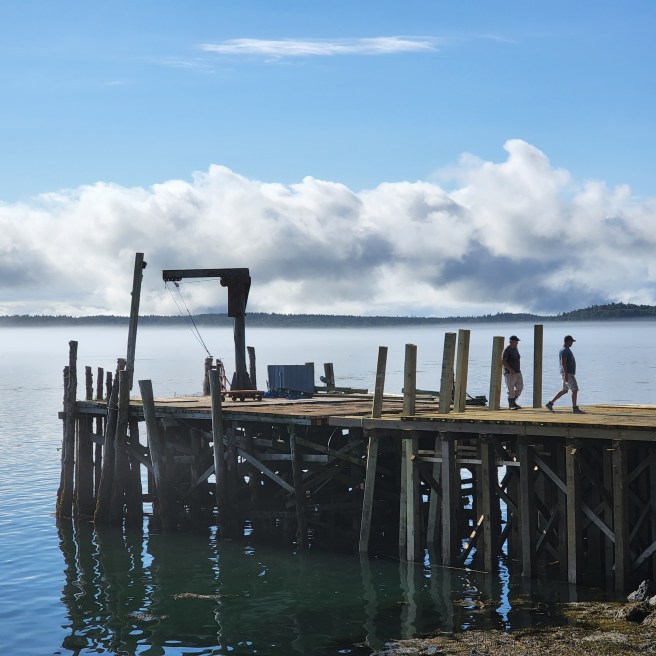
Only a block from our house.
Ours are smaller than the glorious Dungeness of the Pacific Northwest or Chesapeake Bay’s popular Blue delicacy, named for the color of their tips.
But that’s not to say Maine doesn’t have crabmeat that’s as sweet. Ours comes from two species.
Here’s some perspective.
Me? I haven’t yet had to complain of having too much. Now, please pass the Old Bay.


San Francisco has no monopoly. We are, after all, the City in the Bay.
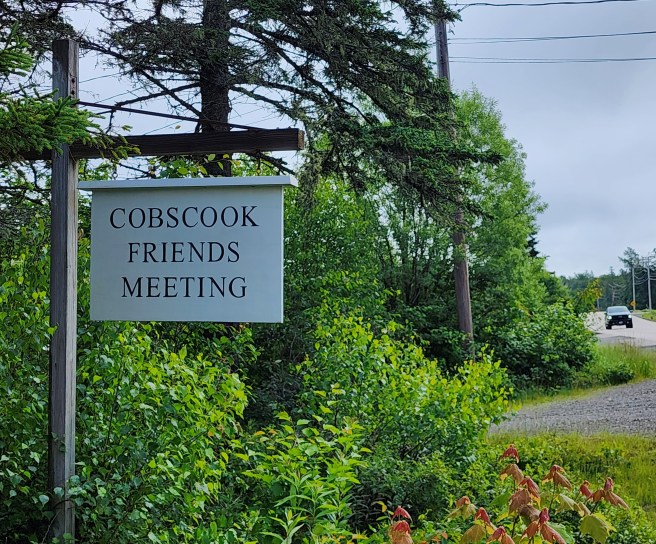
As a small, rural Quaker fellowship, we’re especially happy to be worshipping together in one space every Sunday again, at least through the summer and early autumn.
Covid, of course, had us connected only by Zoom through much of the Covid onslaught and after that, coming together in a physical space on alternative weeks only. We do live at distances from the meetinghouse, so winter weather can often be a challenge.
Not so summer. We’d love to have others join us in our hour of mostly silent centering, beginning at 9:30 on Sunday mornings. The meetinghouse is in the woods along Maine Route 189 in Whiting – on the way to Lubec and many great outdoors trails.
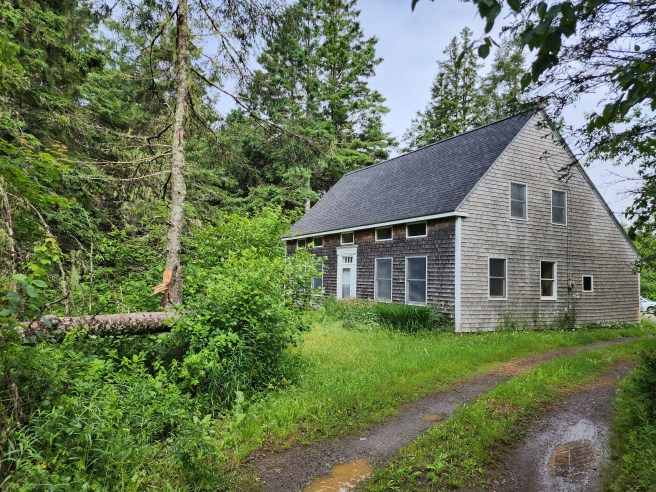
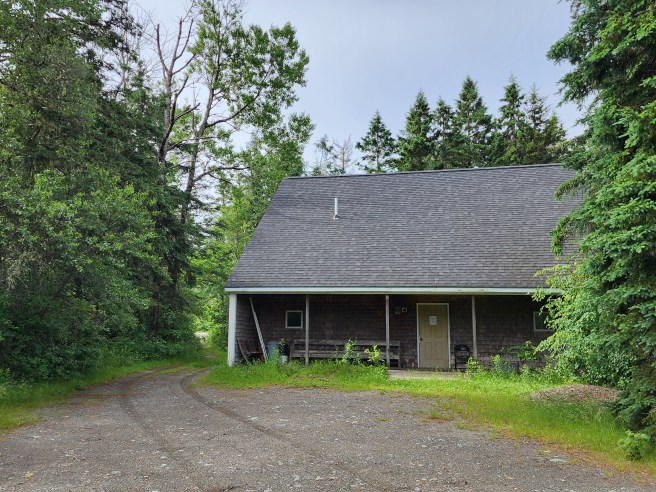
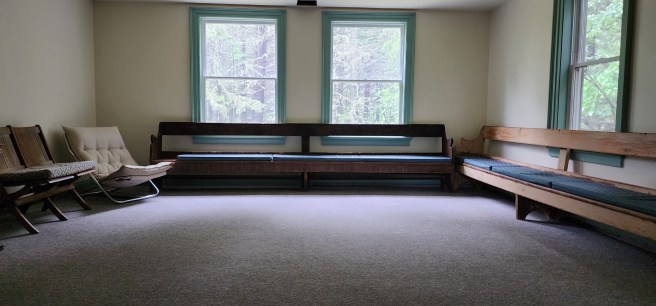 If you meditate in some practice, you’ll fit right in – and if that seems foreign, it’s still a great time for personal reflection. I always find it renewing.


I’ll let others swing out on that rope.
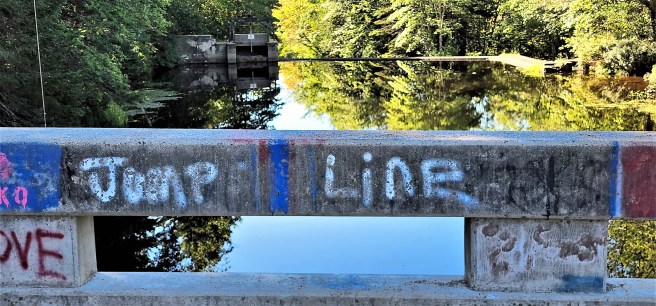
As it says on the bridge.

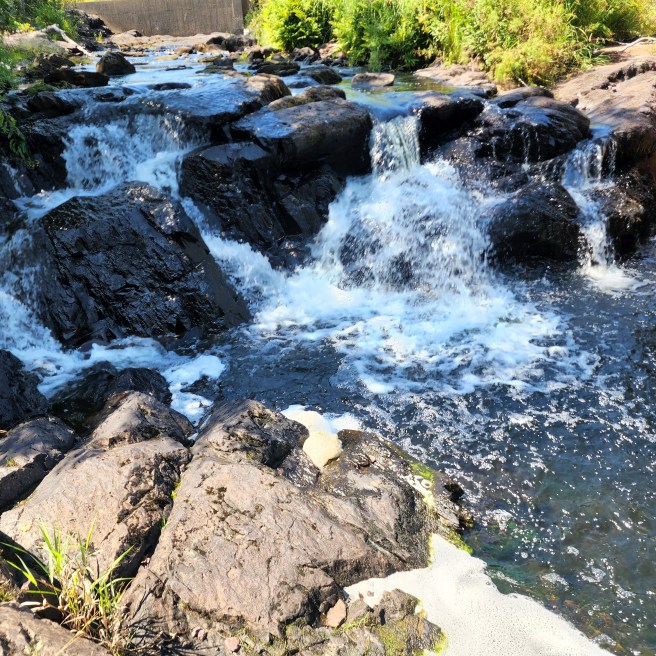
You can even just sit in one of the little basins in the fish ladder and let the water rush over you.

Looking one one.
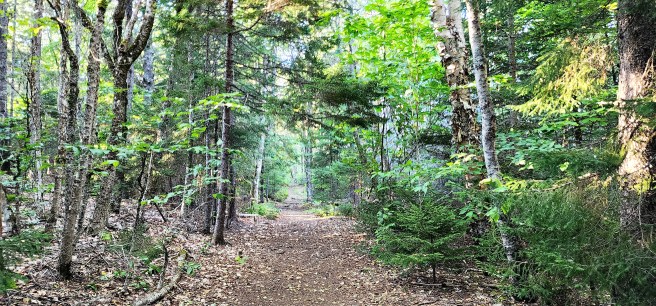
Or, if you turn around, the other.
 Jnana's Red Barn