Refreshing our salmon pens

Sunrise County – more formally, Washington County, Maine – and neighboring Charlotte County, on the facing waters in New Brunswick, are the center of some serious salmon farming. Cooke Aquaculture, a pioneer in the field, is a major employer in both places.

Without getting into the surrounding controversies, millions of salmon are shipped to market from these farms and are one reason the protein-rich anti-oxidant species is no longer a luxury item for most people. It’s a surprisingly healthy option, if you’re so inclined to investigate.

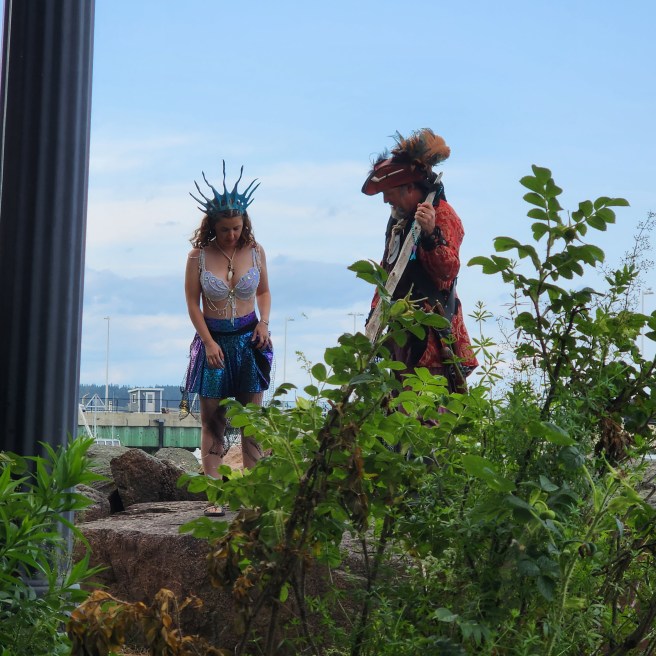
The local enterprise has even spawned Eastport’s annual Salmon Festival over the Labor Day weekend, which includes narrated boat trips to farms in our coves, typically clusters of 16 pens, and explanations of their care. Some locals describe the event as drawing an NPR kind of crowd, in contrast to our Pirate Festival the following weekend, which may be seen as more of a NASCAR following or its biker equivalent. (Please stay tuned.)

What I’ve found fascinating this summer is the flock of working boats busy around two of the farms in our fair city. The pens have been vanishing!

The reason, I’ve been told, is that every few years, the pens and their nets need to cleaned and repaired. And then they also lay fallow for a season or two.

Don’t know about you, but I’m impressed. Each pen starts out with a million and a half baby salmon. Maybe more.

And the filets we get do make for some impressive sashimi – raw fish that are a favorite in Japan, expensive in restaurants, and surprisingly easy to make at home. If you’re interested, check out some recipes online. My between-the-lines improvised sauces remain delightful, at least as far as me and my sons-in-law are concerned. (Pardon the English there, I’m yielding to their generation. Those boys really can skin a fish, by the way.)

From here, we’re most curious to see about how Cooke’s efforts at oyster and mussel harvests from our waters are also progressing.

The advice to eat local remains a spiritual discipline, as far as I’m concerned, not that it’s always practical where I’ve lived.

Now, what’s on your plate tonight?

As I said in a recent letter to the editor …  

One of the more baffling things I’m finding in living here is the reluctance of folks in one town to participate in something in a neighboring town, as if they were worlds away.

It’s not just a matter of coming in to the Eastport Arts Center, either, or watching a movie in a little theater in Calais.

Pembroke’s renovated library has been hosting a series of free chantey sings by maritime historian Stephen Sanfilippo, and those would welcome (and do deserve) more participants. His well-researched programs usually include much than work songs, despite the title. A recent one that dug into clams and oysters would be a fine eye-opening example.

The most recent event included an illustrated talk by Susan Sanfilippo, drawing on the town’s historical society’s archives. She discussed ships built along the local tidal banks and then showed images of the resulting vessels as they sat in faraway places like Cuba, China, San Francisco, or Hawaii.

Stephen then used the varied destinations of the Pembroke ships as the basis for songs we all joined in singing later, often including nonsense verses while we looked at slides of the vessels. A calypso, anyone?

I should say it was all delightful and enlightening.

Besides, it was a sampling of what happened all along our Quoddy coast. I could image launchings from Shackford Cove in Eastport that then made similar extraordinary voyages.

Who says there’s nothing to do around here? Please look again and expand your horizon.

Urban deer, oh dear

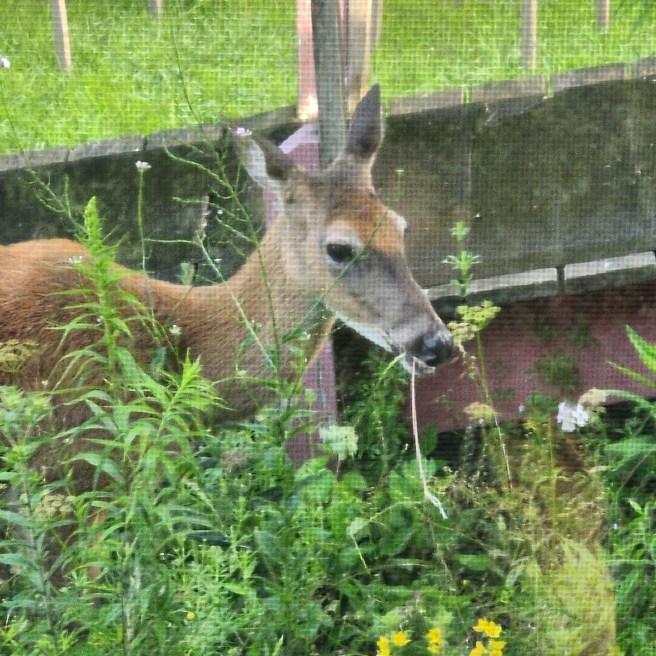
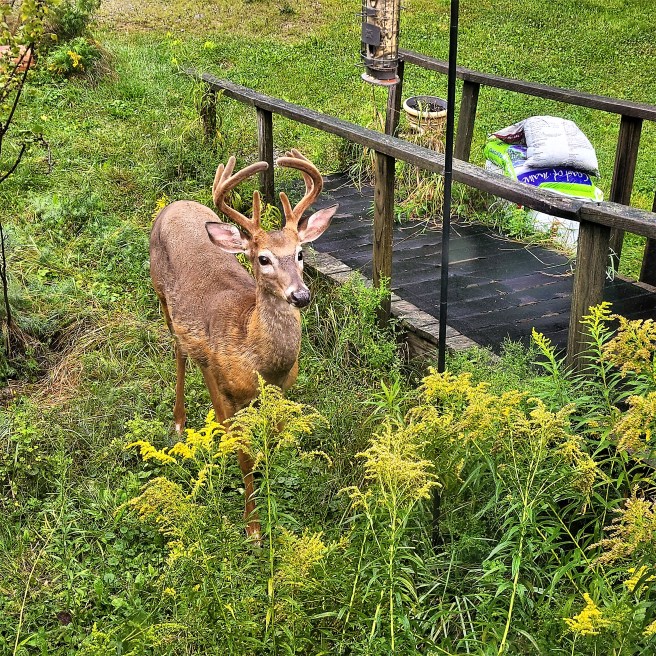
Eastport – centered on Moose Island – is one of many small cities being overrun by deer. You may have met some of the culprits here at the Red Barn.

Here are some random bits as a result.

  1. In the Wampanoag language, they’re known as “the ones with wet noses,” for the way they investigate the world around them.
  2. Why do fawns have white spots? I suspect it could be a good opportunity for a storyteller to develop. Along with the question of why fawns eventually lose them.
  3. They like apples. Man, do they. Some will dance on their hind legs in reaching for the branch overhead.
  4. They can destroy a garden overnight.
  5. That said, they’ll eat just about anything. One even swallowed a spigot on our bird feeder.
  6. Speaking of which, a bit of cayenne pepper in the feeder seems to repel them. As the adage goes, better late than never, regarding some lessons.
  7. They’ll eat out of your hand if you’re patient. Not that I advise that.
  8. Bucks get bumped out of the circle as they come of age.
  9. The most we’ve counted in our small yard at one time was ten.
  10. We’ve had an albino in the north end of town. I first thought it was a goat in the night.
Here’s a shot from our dining table. Or hers, as well.

One commute I can’t complain about

Some Sunday mornings, my drive to and from the Quaker meetinghouse a half-hour from my home is a meditation in its own right.

Even in fog or snow, it can be refreshing.

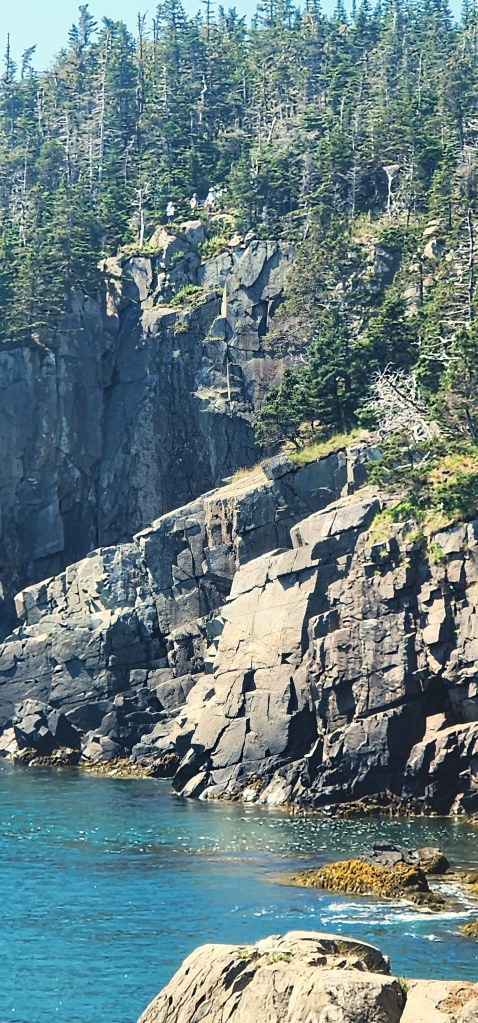
Much of the road is through forest, plus stretches along Passamaquoddy and Cobscook bays and their tributaries. The route also passes through a tribal reservation and a national wildlife preserve, which does sound a bit exotic though I take it as routine.

Eagle sightings are common, and I have had to stop for deer or turkeys in the middle of U.S. 1. Once I even spotted a moose far ahead on the pavement.

A radio program of classical choral music on a CBC station that comes in quite clearly is often also an element, depending on my mood.

Do you remember the freedom you felt when you first learned to drive? Some mornings, especially when there’s no other traffic, that elation returns.

While I’m tempted to proclaim “What could be more glorious than this!” I will also note many of the scattered homes I pass resemble junkyards – poverty in Washington County is a constant – so there’s a reminder of that reality, too. I suspect there are more dead cars and trucks here than people.

As an added touch, there are no traffic lights, either.