Pick up your free copy now

Celebrity writer Tom Wolfe lamented that nobody had written the big hippie novel, something akin to the Great American Novel, but he was wrong. I’ve said so in some previous postings here.

For my part, let me invite you to Daffodil, Indiana, as its tranquil – some might even say dopy – campus goes radical. No outside agitators are needed in the face of the ongoing repression. The Revolution of Peace & Love is its own calling.

Daffodil Uprising is one of five novels I’m making available to you for FREE during Smashword’s annual end-of-the-year sale. The ebook is available to you in the platform of your choice.

Think of this as my Christmas present to you. Or, as we used to say, If it feels good, do it!

For details, go to the book at Smashwords.com.

The making of a hippie

Is there another novel in the works?

It’s a fair question, though for now, I’d rather be plunging into a reading orgy. My to-be-read stack is huge, both paper and digital books and periodicals. I’m feeling rather famished.

As for fiction, nothing since my mid-30s seems to suggest a hot story. Most novels, by the way, seems focused on life under age 30. Or at least rediscovering it. As for growing older, as in aging? No sex? Well, depends on the hook. For now, everything I’m seeing points toward nonfiction.

If I did another novel, I’d want to limit the number of named characters. Just two? Perhaps four or six or eight max? It’s obviously character-driven, not action. The volume itself would be thinner, too.

~*~

There are some other drafts I could clean up, but would any of them be worth the effort? The endeavors  to build readership can be quite exhausting.

I’ve never done this before

This may seem crazy, but for Smashword’s annual End-of-the-Year sale, I’ve decided to offer five of my novels to you FREE.

It’s your chance to pick up these ebooks at no risk. If you like the stories, perhaps you’ll leave a brief review and five stars at the website, just to encourage other readers who come along in the future.

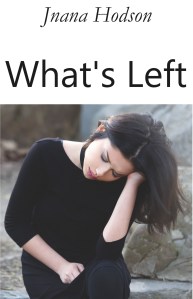
The titles are Daffodil Uprising, when youth across the country went freaky; Pit-a-Pat High Jinks, with lovers and friends setting forth in premature adulthood; Subway Visions, with wild rides through the Underground; What’s Left, as a bereft daughter tries to make sense of her bohemian parents and close-knit Greek family; and Yoga Bootcamp, where Asian spirituality sizzles in a back-to-the-earth funky farm not far from the Big Apple.

Think of it as my Christmas present to you. I hope you’ll be pleasantly surprised.

The sale starts today and ends January first. Please don’t delay! Go to Smashwords.com for more.

Acid test novelist: Virginia Woolf (1882-1941)

Maybe I was intrigued by the title of the 1962 play, “Who’s Afraid of Virginia Woolf,” but when I finally got around to reading her, in the novel The Waves, it was epiphany. While I had heard of stream-of-thought writing, but what overwhelmed me was the utter beauty of the prose and its observations. What poured forth was a stream, period.

I do get caught up in style more than content. Perhaps that reflects much of my career as a copy editor having to clean up a news story on a tight deadline.

Still, returning to her is always refreshing.

The matter of naming those characters

I’d love to hear other novelists and short story writers discuss their reasons for selecting the names they apply to the figures in their stories.

For that matter, I’d love to hear readers’ reactions. Like what’s your favorite connection there?

I’ve avoided using names of people I’ve known well. Surprisingly, it became a problem especially in my ashram novel where the best Sanskrit names had already been given to my fellow residents. Elsewhere, it eliminates a wide swath of common names, starting with John, James, Robert, Thomas, and William for males. Or Jack, Jimmy, Bobby, Tommy, and Billy, more colorfully.

Had I known they wouldn’t be reading my work anyway, maybe I should have used the names and left people guessing. I’ve tried to be gentle, though, and perhaps that’s a weakness.

Though I’m not one to apply nicknames in everyday life, I have found them useful in my fiction. As examples, I’ll offer “Big Pumpkin” and “Elvis” for the swami in Yoga Bootcamp.

~*~

There’s also the matter of which figures get named and which ones can pass through unnamed. We don’t want to tangle a reader, do we?

A major consideration in revising my output was an attempt to reduce the number of named characters. For a big book, like the five-generation span of What’s Left or the four-year college life of Daffodil Uprising or the burgeoning social life of Kenzie in Pit-a-Pat High Jinks, this was a challenge.

I did find myself shading Greek tradition in What’s Left: repetition of a name within a family is common but would have been utterly confusing here.

As an alternative, I tried to limit some to a single chapter, treating it like a short story; when it was done, so were they.

Acid test essayist: Tom Wolfe (1930-2018)

Not to be confused with the Depression-era novelist Thomas Wolfe, the journalist Tom came to prominence in the final years of the New York Herald Tribune, my favorite newspaper ever.

With its clean, classic design, smart writing and editing, and sometimes playfully tabloid headlines, it was a standout in a very competitive newspaper market but looking for one more edge to assure its survival.

Voila, Wolfe emerged with his hyper, supercharged, Pop art zeitgeist, in-your-face, “Look at this!” writer for the paper’s Sunday magazine (which would continue on its own as New York magazine after the newspaper itself ceased publication). He even moved up to the daily paper itself as a columnist, alongside Jimmy Breslin.

Quite simply, he was fun to read.

Maybe it was a reflection of his Manhattan success or the counterculture themes he picked up on, but Wolfe created a marketable visual image as a dandy in a white, often three-piece, suit, with oversized glasses. He was about getting attention for himself, counter to the usual advice to reporters to make themselves invisible so they could more objectively view the events unfolding before them.

Not so, Tom. Or, in my case, with the college prof who thought I’d be the next Tom Wolfe.

His Electric-Acid Kool-Aid Test, following Ken Kesey and the Merry Pranksters as avatars of LSD, became a bestselling sensation leading memorably to the Right Stuff about astronauts.

Apart from this writing style, he knew how to sniff out a trend. In contrast, I ultimately went counter-trend.

I do wonder how much he influenced me. Perhaps in Subway Visions.

As for others, Hunter Thompson seems to have most closely built on the legacy.

By the way, the novelist Wolfe was notorious for excess writing, too, though of a masterly sort.

As for the Herald Trib, you can get a taste of it in my post “Establishing my creds” of September 11, 2014.

More than my life changed since retiring from the newsroom

It’s been a dozen years since I left full-time employment, but I can say I still don’t know what “retirement” is. Could it be because I don’t play golf or tennis?

After years of hoping to be financially able to leave the newsroom and instead concentrate on a life as an author, I finally made it to freedom. In the years leading up to that, I had put together detailed plans of running on a tight schedule, rising to meditate and pray, do some yoga, attend to correspondence, tackle some heavy new writing, and so on, but that’s not how things turned out. At least guilt hasn’t kicked in. I haven’t exactly been a slacker.

In those earlier schemes, I didn’t envision swimming laps every day at the city’s indoor pool or my weekly trip to Boston to sing in a choir. Nor was self-publishing the novels and poetry or the expanse of blogging or other social media. Photography, even of a digital sort, was an unexpected new hobby. Yearly Meeting responsibilities, however, were on the list and duly enjoyed. I’m embarrassed to admit that many yoga exercises are now beyond me – it’s amazing what 50 years of physical neglect can do.

I’m still trying to discover my natural sleep cycle, too. Eastport is a place where most folks rise early, and that’s generally what I’m doing – often, 3 am in the summer and a bit later in winter. The roads around here are busier at 5:30 in the morning than at 5:30 in the late afternoon or evening. A nap helps but isn’t always a daily option. And I’m spending more time at the keyboard than is probably healthy.

~*~

The most obvious way my life changed my writing life was is in having longer periods where I could concentrate on a given work or project. I wasn’t writing on the fly, like graffiti, as I have quipped, or immersing myself for a vacation week or two and then reluctantly putting the manuscript aside. My attention wasn’t diverted as often, either. I no longer had the daily commutes as time for reflection, but it’s amazing what bubbled up as a swam my half-mile of laps – some of my favorite lines in What’s Left, especially.

No longer writing or revising on the fly apparently made my new work more difficult.

At the beginning of my new life, I took up blogging, first to clear out much of my backlog of writing and small-press first publications, and then the photography came forward. One blog became five. Networking face-to-face with other writers once a month was on my rounds, and there were other events for poets, too. That led to the release of most of my scripted fiction, a huge emotional relief.

Curiously, I haven’t written poetry. The focus has been on prose, especially my one new novel, What’s Left. You’d think in my expanded creative schedule combined with my earlier experience of shaping fiction, this would have been a breeze. Instead, it was the thorniest project. Its purpose was to wrap up the hippie era, drawing together my Kenzie stories. The book kept shifting focus, and even finding an appropriate title was elusive. (A cover image was even more problematic.) It was also the least autobiographical, even with the new Greek-Orthodox circle in my life.

I can’t say which of my novels underwent the most exhaustive transformation from their first published version to the way they stand now, but What’s Left was the most painful as well as the biggest turning point. None of the others changed that drastically from their starting point to what hit print. The changes from first published version to what now stands is another matter.

But What’s Left did prompt that deep reworking of all the earlier ones, as well as the big round of republication.

My other piece of new fiction was perhaps the easiest of all, the middle novella in the Secret Side of Jaya. This was set between two earlier ones that had undergone multiple revisions before I inserted Jaya as a unifying voice.

~*~

If I thought I could kick back after those revisions, I was mistaken. Quaking Dover was on the horizon.

It was the book I didn’t want to write, I was truly tired, but the one that’s carried me the farthest with readers. It wasn’t even fiction.

And it proved as difficult in its revisions as What’s Left had. There was the challenge of fitting myself into the text as the “gently laughing curmudgeon” that one insightful beta reader suggested. It ran counter to all of my journalistic training as a neutral observer and my yoga humility of rendering myself invisible.

When I undertook Quaking Dover, Covid broke out. My laps in the pool ended, as did Revels Singers in Boston. After finishing the first draft, I relocated to Way Downeast Maine in what became an ideal writer’s retreat. It was amazing what I could find online in my research and revision.

As I’ve said, our move was the next step in some necessary downsizing in our life. Over the past decade, I’ve shifted to the Web and am now largely paper-free. I am going to have to face considerably more purging when we get the rest of my book collection out of storage and try to fit what we can (or what I need) into this smaller house. And let’s not forget, there’s no barn here.

~*~

Quaking Dover did lead to live and streamed PowerPoint presentations, a further new skillset for me.

Among other things, my concentration isn’t what it was. I learned in a few months of working as a 2020 Census enumerator that my stamina has also faded – it was an exhausting job. My spelling’s declined. And I’m not as sharp-eyed as an editor, either. In fact, I’m more tolerant.

I’m reading mostly ebooks, avoiding the filled shelves conundrum.

I don’t feel an urgency trying to “understand my problem.”

Even the journaling is slowing.

And there was a round of renewed therapy, ending shortly before the death of my therapist.
Acid test poet: Ted Berrigan (1934-1983)

Encountering a trio of his Sonnets in an issue of the Paris Review my senior year of college blew me away. First, by the fact that their iambic pentameter had been cut into lacy fragments but also that the remaining threads were made more powerful and light-filled as a result. Or, “oh, for the loving” (expletive), as he wrote. These were more like the collages of Robert Rauschenberg than the corseted stanzas of Shakespeare.

The fuller set, published in 1964, advanced the impact, especially in seeing how the collection came together as a series of essentially three poems that kept getting reassembled in new ways. Variations on a theme, as it were.

These were unmistakably urban, cigarette smoky, and not so secretly drug-infused.

They inspired my own set of American sonnets, The Braided Double-Cross.

As a reader, they also point me toward John Berryman and John Ashbery.

I love his definition of a poem as a miniature wind-up toy.

Some writing pet peeves

Personal biases do come into play – as a novelist and as a reader. For me, some of them as pet peeves are a reflection of my preferences. Consider those as graded on a scale, one to five or ten.

For example, New York City is way overrepresented in literature – especially Manhattan and Greenwich Village. And so, even though I based one novel on an out-of-towner’s encounters with the subway and then transported part of that to another, setting a book in the Big Apple definitely costs points in my esteem. Harlem, however, is a plus, along with overlooked corners of the boroughs. See Chester Hines, for starters. Something similar happens with Los Angeles, San Francisco, Berkeley, Chicago, and Seattle. Show me someplace way, way out of the usual media spotlight.

Books celebrating novelists, poets, musicians, visual artists, actors, university professors, or celebrities in general also cost points. We aren’t a superhuman clan, OK? And way too often we’re deeply flawed in ways nobody examines. Still, a rare work, like Tar or Maestro, portraying Leonard Bernstein, breaks through my resistance.

Anything that feels contrived, rather than organic, also turns me off. It goes back to what I considered “Found” versus “Invented” when I was evaluating cartoonists and stand-up comics. Real-life discoveries are superior. How well is the author listening to what’s going on around him (or her)? Or observing in the details?

Escapist. This goes for most of the genres, actually. Off somewhere in space? Or back in a medieval court? Or even in romance and pornography. I read and write to better record the history evolving around and within me.

Factual misrepresentations are an instant turnoff. Getting a key date off, for example, often rips apart the rest of the timeline.

That points to cliché, especially in thinking. What happens when you invert it, so that winners become losers? Maybe a story is more about losers than winners, at least the ones that ring true to me.

Purple prose follows up on that. I hate being told what I’m supposed to be feeling. Will somebody please pop that balloon? But flat, conventionally viewed background also fails.

Inconsistent use of punctuation. Yes, God and the devil are both within the details. Hello, are you awake or fully there at the keyboard? Show me that you’ve mastered the basics.

Grammar and syntax mistakes. Inconsistent tenses drive me up a wall. Misuse of commas or more creates a mess. These are lines in the sand between professional writers and the wannabes. It’s quickly signaled by “towards” rather than the American “toward” or “that” where it should be “who.” Beyond that, “whom” seems relegated to those who want to seem British.

Gratuitous violence is another turnoff. It doesn’t connect with life as I’ve known it.

Dialogue is a special high-wire act. When it rings wooden, I’m gone. The attribution proves equally tricky. I long ago tired of “said” but “stated” is equally overdone.

Well, maybe that will do for starters. There’s so much more I need to start collecting. I know it’s out there.

Acid test critic and commentator: Samuel Johnson (1709-1784)

Encountering Johnson during my freshman year of college was like mastering a foreign language. His baroque English, with its convoluted sentences and lofty vocabulary backed by an oversized ego, were so foreign to the flat Midwestern voice I’ve inherited or the accompanying weight of humility and piety.

I did wind up publishing an underground broadside series, Dr. Samuel Johnson’s Rambler, in the aftermath, though it had a kind of Wind in the Willows countercurrent. Anyone remember mimeograph?

Later, at the Lilly Library at Indiana University, I actually had in my hands on original copies of The Rambler that Johnson produced twice a week beginning in 1750. Some of the issues before me had coffee stains. Or were they tea? There were also pencil markings in the margins.

His influence probably resulted in the complex compound sentences in my own work that likely limit my readership. Thanks, Literary Lion.

I should have also seen the way he created a role of outrageous author and played it to the hilt, far before the excesses of Romanticism swept European culture. Richard Wagner could have taken lessons from Johnson.