HIGH-TECH CONSTRUCTION

Everything that’s transpired in the 28 years since I first drafted my novel Hometown News has made me feel prophetic.

Now, of course, you have an opportunity to judge for yourself. I just wish it hadn’t taken this many years to become public.

One thing I’d like to point out involves the initial experiment I used in constructing the novel. Quite simply, I wondered if I could build a computer-generated story – no matter how distasteful the premise itself strikes me in my self-identity as a neo-Luddite and fussy literary type. Maybe it was just some of the vestige of the scientist wannabe in me?

So I created a master day-in-the-life chapter, made multiple copies to repeat throughout the story, and included up to 120 variables for search-and-replace functions. And away I went, allowing the S&R efforts to produce their own pace and variations. Not that it quite worked as I’d hoped. I found myself going back over those pages and adding new layers, softening some of the edges, adding shadows and highlights. As they say in the visuals arts, it’s quite “painterly.”

Be that as it may, one thing I’ve observed over the years is how little we typically know of many of our coworkers. There might be a favorite phrase they repeat or a piece of clothing or a distinctive quirk. And that’s it, sometimes year after year. So that part was agreeable to the S&R structuring.

As a technique, though, I’m afraid to report – or maybe more relieved – that the S&R by itself was insufficient. It did provide the core “bones” for the novel, but I did have to paint over much of it to make it more pliant and, well, human.

All the same, I’m feeling vindicated. Maybe it’s a high tech revenge for what high tech is wreaking on the workplace and surrounding community.

To check out my Smashwords ebook story, go to Hometown News.

Hometown News

AN IDEA NOTED EARLY

Not long ago, I came across this note to myself:

“Story idea: paragraph or two, repeated … one or two words changed each time, till the end provides an entirely new view.”

It’s old, probably from the mid-’70s, and yet has become the basis of several series of my poems from the last decade.

In a way, it’s also the basis of my novel Hometown News, although the repeated sections and their variations are much longer than single paragraphs.

Works for me. Wonder what else I’ll turn up.

~*~

To learn more about my novels and poems, go to my page at Smashwords.com.

GEORGE AND MERTIE’S PLACE

As I said at the time …

You asked about my handle, Jnana. In essence, it’s Sanskrit for the spiritual “path of the intellect,” but that knowledge comes into fullness only when it finds harmony with the other forms of devotion – passion and compassion, physical labor, humility, charity, and so on. “Theoretical knowledge” misses the mark; rather, the name was given to me, in the ashram, only when I came to appreciate all the other spiritual gifts people have. Eliade calls it “the knowledge of ultimate realities” as well as “philosophy.” Perhaps “discernment” would be its equivalent in Christian practice. Whatever, I do tend to dwell in the mind and to dance in a field of ideas; I become grateful for those around me who help ground me in everyday applications.

Here it is, two months after hearing of your decision to shutter the place. (Hmm, was it a rooming house, bed-and-breakfast, or mountain inn? – so many possibilities!) Six years is a respectable run and for that, our gratitude and respect.

I once heard that before Caterpillar was launched, its editors had resolved that a journal has only three years of fresh insights to offer, and so they limited its life span to that – truncated, in my opinion, though I have my own theory of being in the public eye, which I first saw when I was pushing new comic strips and text features to newspaper editors: I see the “talent” as having a 10-year creative span – two years for readers to catch on to a new regular feature, and roughly five for a feature to start to take off in popularity; meanwhile, the artist/writer is using up the conceptual reservoir, so at five years the project is going into decline. You can tally your own list of television, radio, newspaper, or magazine projects that continued long after they had gone stale. (Of course, sometimes an individual will catch a second wind, but that’s another story.)

A year-and-a-half ago I stepped down as clerk of Dover Quarterly Meeting after a six-year term. That meant I had been presiding officer of a fellowship that met four times a year, gathering most of the local Quaker congregations in New Hampshire. (New England Yearly Meeting is the parent body, obviously named.) I was really happy to discover in the Book of Faith and Practice that limit to the length of service in any one post! It was long enough – I had initiated all I could.

More recently, I had hoped to be sending off some new material for you to consider. After a number of upheavals, of a positive sort detailed below, I’m back at writing again – got tied up, though, in some heavy-duty theological drafts rather than “creative” stuff. Things like why “Christ” equals Logos or Light more than Jesus, or why God wanted Adam and Eve to eat the fruit and why their expulsion from the Garden was not the cause of Original Sin, contrary to Augustine’s teaching. Who knows what those whackos in your neck of the woods would make of all that.

Your observation about the lack of time really hits home. It’s a disease or unease of today’s America – something that has received a lot of consideration in our Friends Meeting when we look at what we’d like to accomplish as a faith community, and then what we feel we can volunteer. Or when I debate whether to accept some OT shifts, which would help with all the bills, but decide instead to decline.

And your plans to move hit home, too. Guess the best place to catch up is just to cannibalize from the long-draft of my annual Yule letter from this past winter. Maybe some will resonate. If it doesn’t, skip!

ESTABLISHING MY CREDS

Longtime visitors to the Red Barn are likely aware that I spent four decades as a newspaper editor – experiences that feed into my latest novel, Hometown News.

It’s meant working nights, holidays, and weekends – rarely on a schedule matching the general public’s. And it’s always meant “working under deadline,” where an internal clock is always racing to finish the task on time (or else!). In addition, it’s also given me some insider looks at the surrounding world itself: having a celebrity standing a dozen feet behind your back is just another regular occurrence. (For the record, they often look quite different than they do on television.) Even as a cub reporter, I saw dead bodies, got inside the county morgue, checked out small plane crashes, met ex-movie stars, faced some stiff competition from the pros on the rival paper. Looking back, I sense how often I was in over my head and wonder how I ever survived.

These experiences have also fed into the Red Barn’s category of Newspaper Traditions, where I’ve written about:

  • The best newspaper ever” The glorious final days of the New York Herald Tribune were like no other newspaper. Nothing like fighting hard to the bitter end.
  • Chancing Upon a Profession: Glenn Thompson’s influence hit me, among many others, in one medium-sized city. He had a knack for finding talent.
  • Hot Type: In the days before phototypesetting and then digital publishing, newspaper production was a highly skilled craft. Here’s an admiration for the long gone masters.
  • Living Under Deadline: When your career hangs on meeting deadline after deadline, with no room to spare, you begin to live differently from other people.
  • The Art of Writing a Headline: Trying to steer readers to a given news report with just four words can be a real challenge. Take it from a pro.
  • Editing Obituaries: Announcing someone’s death and funeral arrangements can be more precarious than you’d imagine. This post, one of the most popular at the Red Barn, became a WordPress Freshly Pressed selection.
  • Four Measures: Just what makes “news,” anyone? Here’s one take.
  • Police Calls, 10 P.M.: Well, there is some behind-the-scenes banter, even when calling the cops.
  • One Phone Call Too Many: And then sometimes the facts get in the way of what looked like a great story.
  • Local, Local: How you define “local” news can backfire when it comes to your readers. Especially when it’s boring.
  • Bias: Sometimes those who accuse journalists of being biased should first look at themselves in the mirror.
  • The Shrinking Page: Like many other products, the newspaper page has been shrinking. It’s about half as wide as it was when I entered the trade.
  • The Human Imprint: Not too long ago, the editors and publishers were well-known public figures.
  • Objectivity, for Starters: There really were some strict standards and practices.
  • Windy City Perspectives: The tower of the Chicago Tribune holds some special memories for me.
  • Painful Neutrality: Again, maintaining a discipline of objectivity comes at a personal price.
  • Free of the Entourage: David Broder was the best of the breed. I wish I’d said hi.
  • End of the Line: One of the last editors who put a personal stamp on a paper was David Burgin. Maybe that’s why he was always getting fired.
  • Get Out of the Way: Real reporters are invisible observers. TV’s imitation inserts itself on the story.
  • You Read It Here First: Plagiarism has always been a dirty practice. Here are a few examples.
  • Reality Check: When it comes to seeing “liberal media,” some people fall off the far right of the world. The one that’s still flat.
  • A Logical Conclusion: The more conservative the nation’s editorial pages become, the more circulation declines. Think about that.
  • Death in the Afternoon: The newspapers published in the afternoon once had the blockbuster circulation. Here’s why they vanished.
  • Beware of Unintended Consequences: There are times embarrassing things slip into print. Lewd expressions, especially.
  • Beware of Survey Conclusions: Marketing research can lead to bad choices. It helps to put the findings in perspective before taking action.
  • So Much for Romance: And then there was the reporter’s lament as he returned from covering a large singles’ mixer.

I invite you to visit or revisit the postings, especially if you’re new here. And I promise there are more ahead.

~*~

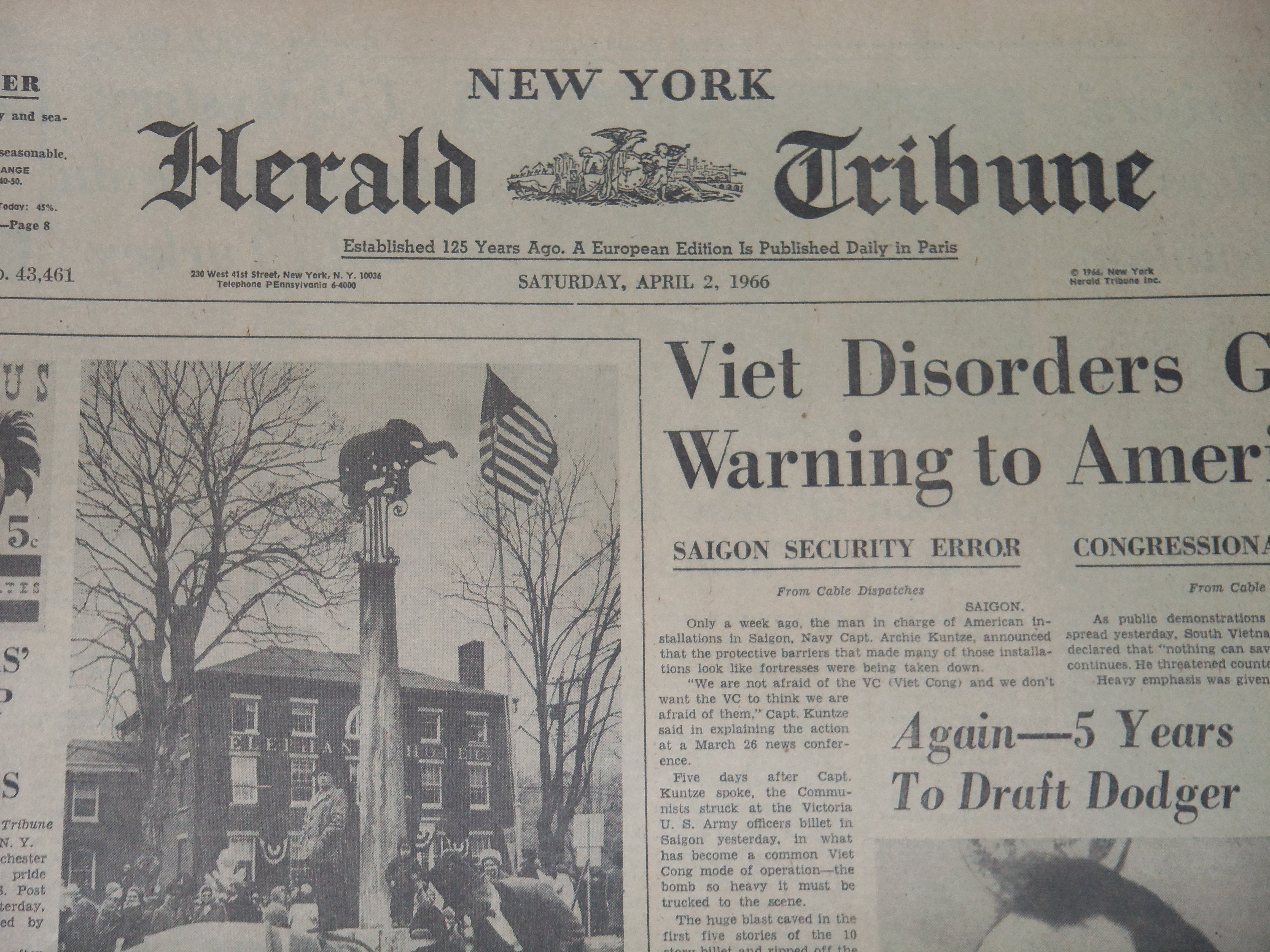
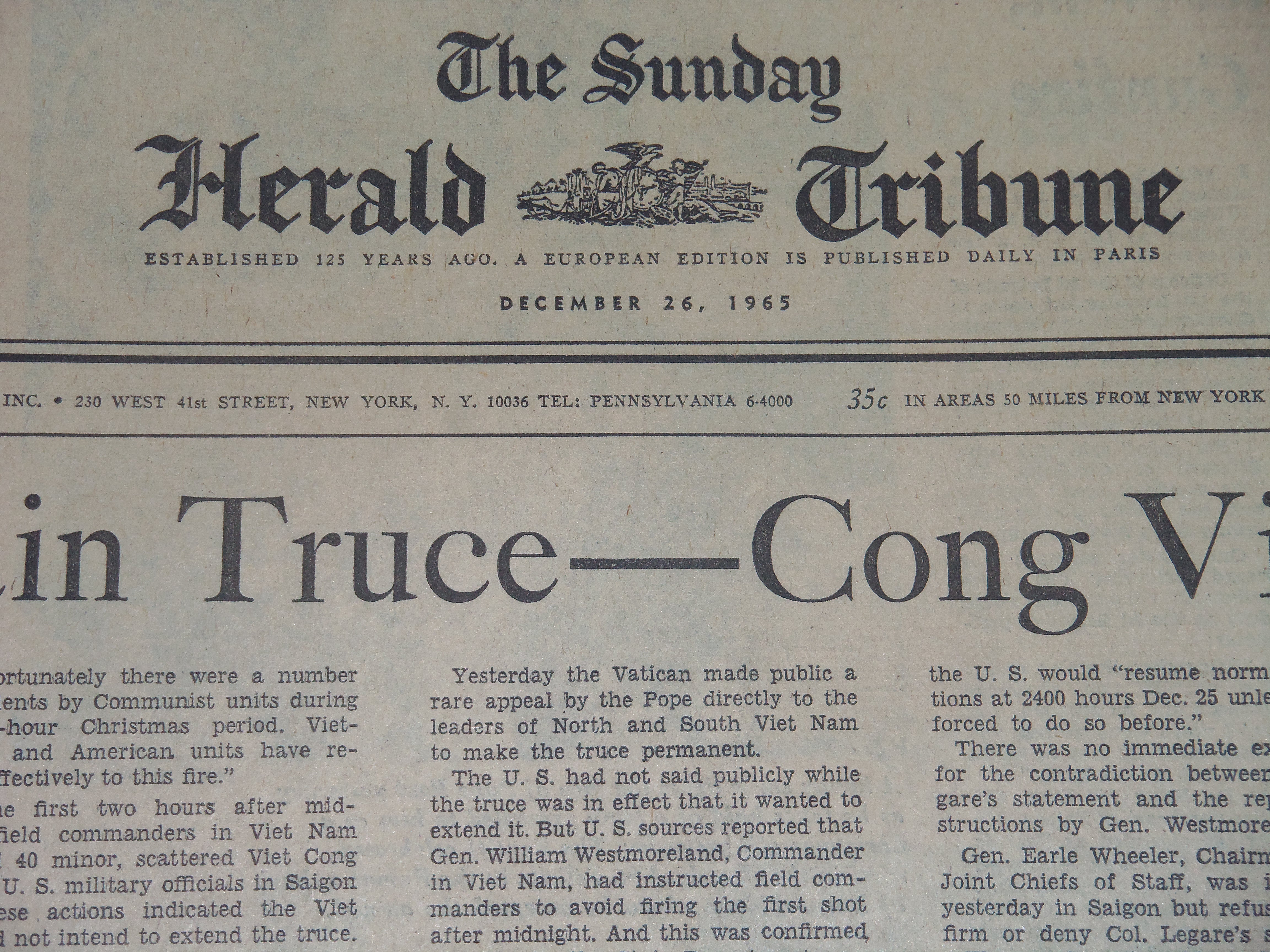
While we’re at it, here are some pages from the New York Herald Tribune’s final years, when it established itself in my mind as the most elegant and exciting newspaper ever. (Remember, I was still a teen and a budding journalist.)

The daily edition.
The daily edition.
And Sunday.
And Sunday.

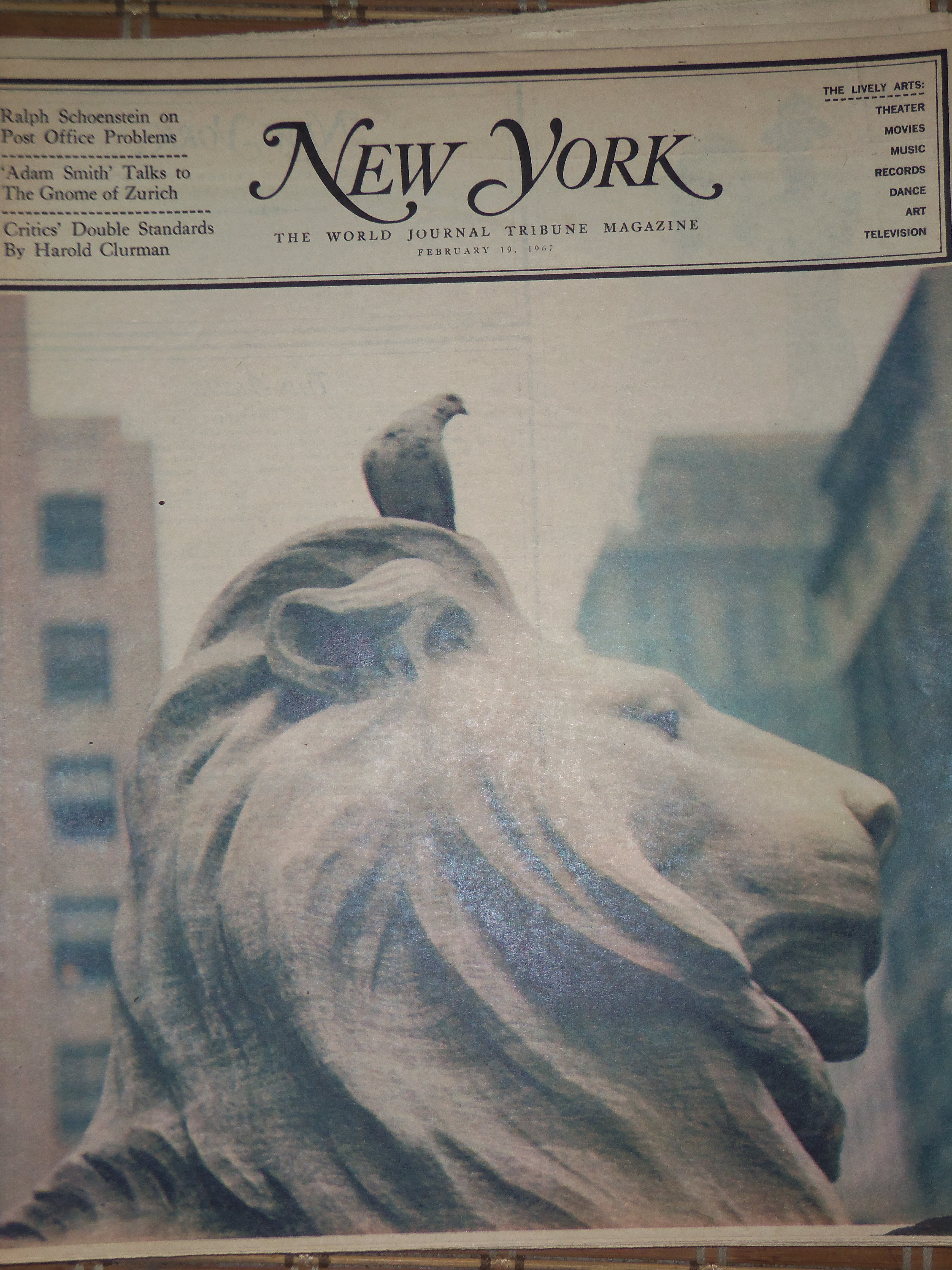
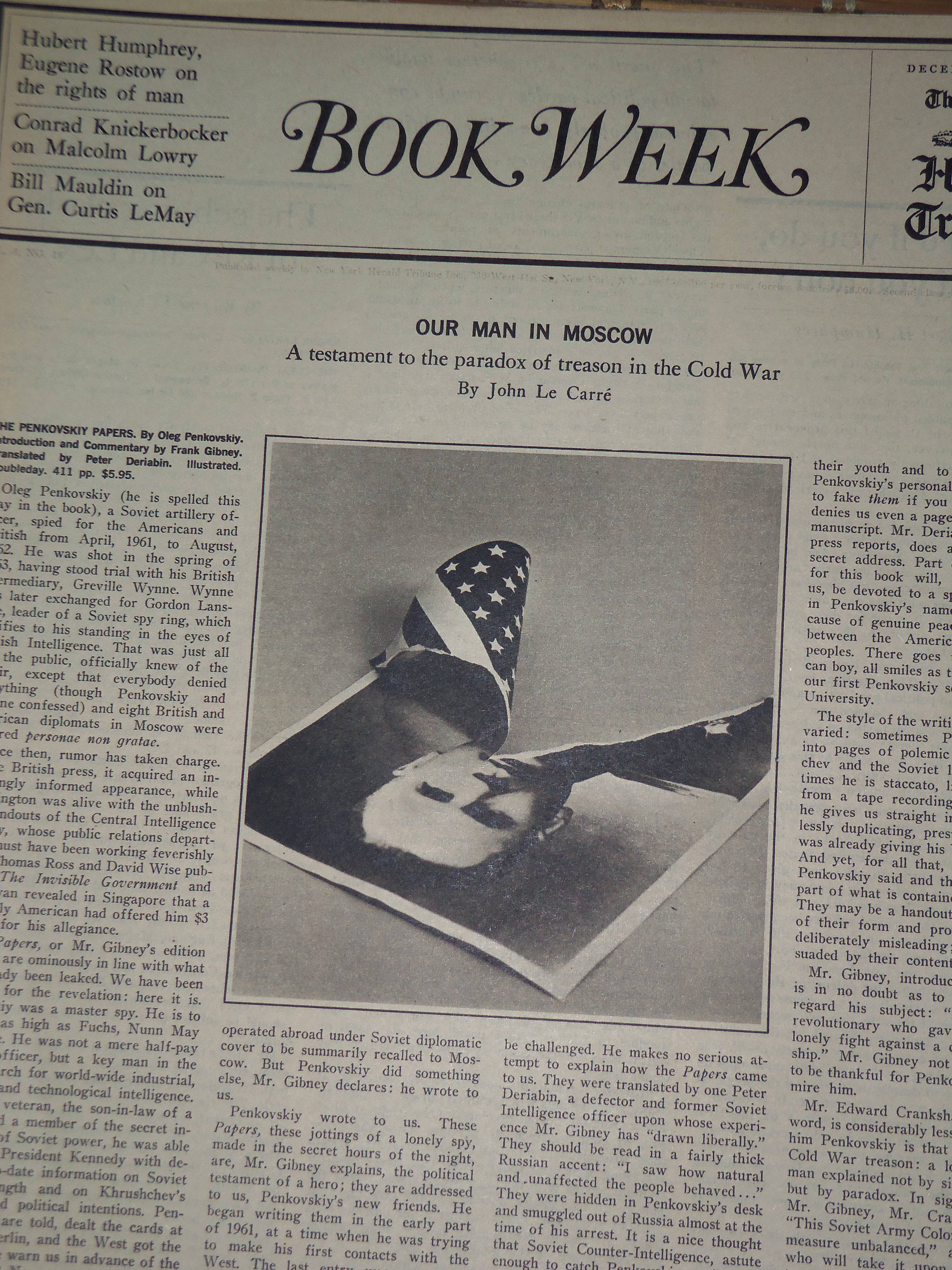
Among the Trib’s legacy was New York Magazine, which originated as the Trib’s Sunday glossy magazine. It was classic. And Book Week reflects a time when books were really important, at least in the eyes of the informed public.

The Sunday mag.
The Sunday mag.
And the books review section.

~*~

Not all of the exciting journalistic action took place in Gotham or Fleet Street or Chicago’s competitive shootouts, though.

Much of the most dedicated and innovative work emerged in small communities in the heartland where a few individuals could make an obvious difference. That’s the story I explore in my latest novel. In some ways, it’s Tom Peters’ Pursuit of Excellence meets Dilbert on steroids. It might even resemble some places you’ve labored.

 ~*~

To find out more about Hometown News or to obtain your own copy, go to my page at Smashwords.com.

RUNNING WHILE I CAN

So we’re having coffee once again, one of my favorite authors and I, and while he’s a decade younger than me, I still marvel at his relentless output.

Why do you pace yourself that way, I ask.

Because time’s running short, he answers.

As I said, he’s a decade younger.

Maybe we should talk to an older painter we know, a good decade-and-a-half ahead of me. The one who’s still painting furiously. Quite possibly better than ever.

WHAT MAKES A VOICE DISTINCTIVE?

You have to wonder what makes some voices so distinctive. Maybe it’s what makes a master. They way a few notes instantly separate Mozart from Haydn or announce Beethoven. A few strokes, a Rembrandt from Vermeer. Any number of writings.

I think of particular musicians, too. The conducting of Max Rudolf, for certain.

The way God claims to know each of us by our voice.

NOT WHAT YOU THINK

I’ve always been a visual person. Had even considered a career in art before the writing took over. As further evidence, remembering a story or argument I’ve heard has always been more difficult to recall than one I’ve read. As for names, I’m hopeless unless there’s been a name tag.

Somehow, though, I can remember a musical line much more than I can any lyrics, including those we’ve been working on in chorus. So I’m not memory deaf, exactly.

As a visual person, I’ve found the point-and-shoot digital camera entries you’ve seen posted in my blogs to be a wonderful way of sharing the way I look at the world and many of the details that catch my attention.

But there’s another range of experiences I can’t begin to describe. Often, especially while watching people, my vision shifts from photo-realism to real-life cartoons. I hope I’m not staring, but the transformation is incredible. R. Crumb had nothing on me, other than technique. Sometimes they’re squiggling black-and-white line drawings. Sometimes, baroque etchings. Other times, wild blobs of color.

Even before they start moving.

SABBATICAL LESSONS

As I said at the time …

When I was 38, several developments occurred in a way that allowed me to give myself a year of unemployment, drawing largely on savings. Rather than travel the world or undertake some related activity, I hunkered down in a writing spree [that resulted in the novels now (finally) being published]. The sabbatical meant that for the first time in my life, I had a period of uninterrupted concentration on this work. The writing itself. Three fast novels, now to be revised, and thud! skidding to a crash or whatever. Enough to expand to a dozen, in the hours of revision after I went back to the paying work. Looking back, I know it had to be done. And done then.

Nevertheless, in my struggle between practicality and art, there’s been a longstanding sense of guilt in spending time on myself. To my surprise, a resolution came through a workshop on prayer, when we were divided into smaller groups and then asked to write out a prayer request. Not for what others might need or a social issue, but for something we needed individually. “Ask for something for yourself,” which the others would then pray for.

Of course, each of us works differently. I’m not one for the blank sheet writer’s block syndrome: I’m usually springing from notes jotted down earlier. (Pacing is another matter: just where is this going? And why?)

In contrast, I recall a poet friend who was also a public school teacher; he was quite prolific during the busy school year, yet during the summer, could produce little, though he could never quite figure out why. (He could also stare at a piece of paper for five hours and then turn out a sharply focused gem.) The other friend, having all the leisure in the world, could produce only disconnected flashes. Could it be some juggling or resistance is also essential to the practice?

SOCCER MOM, RUGBY DAD

As I said at the time …

So here we are. Who would have thought we’d be attending kids’ soccer and rugby matches? Not us!

Or dealing with declining parents. Your mother’s dementia must be difficult. You mention that she still remembers people and is in a wheelchair, which makes me wonder if she’s afflicted with Alzheimer’s or something different. My wife and the girls talk fondly of Grandpa Marion and how his Alzheimer’s brought out a sweetness in him, while another, with episodes in the past years, turns mean and paranoid. Parkinson’s is rough, too, with its long decline; I lost a dear Mennonite mentor last January, in Virginia, and one of my best friends here is in the early stages – so far, controlled by medication, when they get it right.

Galapagos? My elder girl will be very envious. At age 11, she went on a big Darwin kick, a passion that has never abated. A few years ago, we went down to the Boston Museum of Science for a special exhibit they had, and it was quite impressive. In all of the historical debate over his insights, I’m surprised we don’t hear more about the religious roots of his work – most of his encouragement and support seemed to come from clergymen. Me, I’m quite fond of his later affection with earthworms. Maybe it has to do with my monster composting.

Now I still want to hear how you distinguish between mystery and magic. I have a few ideas, but I doubt they’re as expansive or insightful as yours.

In the meantime, I’m hoping to get back to poetry by early fall. Why can’t I stick to just one kind of writing? Or be somehow easily identifiable? A good friend’s son, who is a successful serious novelist, seems to have the same problem. He, too, wants every book to be unique, rather than a continuation of or variation on his others.

Gotta run … time to commute, again. And tomorrow, another birthday. How can that be?

ATTUNED TO THE PULSING

Back in the late ’70s I attended a weeklong interdisciplinary conference at Fort Warden State Park on Washington’s Olympic Peninsula, an event that remains a potent influence on my work and thinking. Organized by Sam Hamill, then of Copper Canyon Press, the Power of Animals seminar spanned biology, literature, anthropology, mythology, and more. Presenters included the writers Barry Lopez, Gary Snyder, Howard Norman (then just the author of a chapbook of poems called Born Tying Knots), David Lee, and an equally impressive slate of zoologists and botanists in an interdisciplinary examination of the dimensions of the animal kingdom. One highlight was a stage production from Reed College that relived some of the glorious Coyote tales of the Pacific Northwest.

In a Heartbeat

Now, with the release of my chapbook In a Heartbeat from Barometric Pressures at Kind of a Hurricane Press, I hope to return the favor. This set of poems runs playfully with wild and domestic animals of all sizes and influences as they impact our lives in real and imaginary ways.

To join in, simply click here. And remember, it’s free.