Acid test mystic: Isaac Penington (1616-1679)

Unlike many of the early Quaker voices, Penington was well educated and respectable, the eldest son of a Lord Mayor of London. He even became William Penn’s father-in-law. But his joining with Quakers led to harsh persecution, including imprisonment six times, as well as intense spiritual experiences he described in various writings, including his letters.

A critical reader will recognize that articulating what is ultimately non-physical or confirmable is a difficult challenge. What Penington achieves remains insightful, personal, yet universal. There’s nothing dogmatic or doctrinaire or theoretical or speculative, not when grounded in personal practice.

His style fascinates me, long sentences that coil around and around as they move toward a core. Pulling a short quotation from them proves difficult without losing the wider field of wonder. As an example, “Give over thine own willing, give over thy own running, give over thine own desiring to know or be anything and sink down to the seed which God sows in the heart, and let that grow in thee and be in thee and breathe in thee and act in thee; and thou shalt find by sweet experience that the Lord knows that and loves and owns that, and will lead it to the inheritance of Life, which is its portion.” Eighty words, in all – typical.

Somehow, I find myself contrasting him to the Muggletonian William Blake a century and a half later, who struggled with similar challenges for a much different result.

Is small really beautiful?

One place I was appearing as a writer was in the small-press realm. Largely unseen and at the fringe of the literary world, its prolific, low-circulation reviews, quarterlies, ‘zines, chapbooks, and even full-sized books reflected a passion for literature, an intense mission, or outright ambition rather than an accountant’s commercial motivation. Many were marginally funded, mimeographed or photocopied, while others had more traditional printers, perhaps even typesetters, and a few of the biggest even had paid staff. Most were edited by dedicated individuals or partnerships; others by an institution or circle; and still others by college English departments, with either students or faculty as the team.

It’s where the action was – and remains.

Among the book publishers, Black Sparrow and Copper Canyon stand out, along with Shambala for a Buddhist focus.

In general, university book presses garnered more respect and financial backing and weren’t open to those of us who weren’t in a professorial track.

In college, I had been told of a widely recognized poet who averaged 20 rejections for every poem he had accepted in one of these journals. That was meant as inspiration to keep us lesser voices from despair.

Well, a few years later, I was getting about 20 rejections for every batch of five poems I mailed out. Still, I got more than a thousand acceptances. They usually paid me with two contributor’s copies, or did before the action shifted online. There are some fine online sites, by the way, if you look.

The track was how you were supposed to build a reputation and even entice an agent or editor. I think they were all too busy to notice.

A newspaper career was usually supposed to grow the same way: start out on a small daily somewhere out in the sticks, one with next to nothing pay, and work your way up. Or as one critic warned publishers, this was a process of eating your young. Or your seed corn, in another version.

(The highest income I ever reached, by the way, was the national median. And that was thanks to our Newspaper Guild contract, unlike most of our rivals.)

~*~

Acceptances created another challenge, drafting a contributor’s note.

I noticed that many of the writers listed their most recent book or two, but I really didn’t have that much. Others went with where they were teaching or working on an advanced degree. With my name distancing myself from the more common tag I used in the newsroom, naming the newspaper wasn’t really an option – and not that wise, anyway, if the content was of a controversial nature, as many still saw the hippie movement.

The solution, then, was to look for some bit that would make me more human. Do try it, if you’re asked to come up with something similar. Even be flip, if you can.

~*~

The World Wide Web has taken all of this in a new dimension, of course.

We bloggers are essentially producing ‘zines or similar small journals. We even have photography as a regular option, not a given back in the day.

I’ve even gathered my published poems along with newer ones and published them as free PDF chapbooks at my own online imprint, Thistle Finch, a sister to this Red Barn. Do look it up.

More crucial has been the growth of ebooks and on-demand print publishing, which I’ll discuss in an upcoming post.

Acid test novelist: Gurney Norman (1937- )

Returning to Tom Wolfe’s charge that no great novel sprang from the hippie counterculture, it’s clear that he overlooked Divine Right’s Trip, which originally appeared in the margins of the Last Whole Earth Catalog. (Far out, indeed.)

Rather than taking place in any of the celebrated hippie havens, Norman’s pilgrim figure finds himself in Cincinnati, a largely redneck habitation I’ve heard described as a place of perpetual Lent, before heading on into the strip-mined mountains of eastern Kentucky. Yes, hippie did indeed take place in seemingly unlikely locales. It was also often drab and lonely. And then, as Norman illustrates, it also drew nurture from some very unlikely sources.

If anything, there’s widespread lament that Norman didn’t write more. Divine Right’s Trip is humbly beautiful.

Aspiring to the big-time is natural

Let me confess to the allure of having an author’s photo and bio blip on the back dust jacket of a hardback volume. That’s always carried so much more gravitas than a mere newspaper byline – in my early days reserved only for major stories rather than distributed to just about every headlined item, in part to shift the blame for errors – or, one step up, the columnist’s thumbnail mug shots, for the truly honored writers. A magazine’s contributors page was a step up, especially when they included a full-color photo.

It’s not that being honored was essential – I was an anonymous, behind-the-scenes copy editor, after all – but more an acknowledgment of success, especially when it signified not being a hack. It’s just that everyone harbors a desire to be important, at least to someone, right?

~*~

For me, having the manuscripts but working on them part-time, I sensed myself racing a ticking clock. Would time run out on me?

The book publishing world was shrinking, as was daily newspaper journalism that provided my paychecks. Fewer houses were publishing fiction, and even those were in turmoil. They wanted blockbusters rather than the cottage-industry lines that previously prevailed.

Literary agents were struggling to support the writers they had and were less likely to take on new clients who would require more time and effort to promote. One, who had been considered hot just the previous year, replied to my query – a rarity, by the way – saying my proposal was an important book but not “commercially viable.” Another, equally acclaimed, vented her frustration with the changing publishing world and her struggles to cope within it.

Well, it did remind me of a letter I received from a newspaper editor I greatly admired during one of my job-hunting interludes. He was warm and welcoming, but confessed his career had turned into heading papers through their final days. From what I saw, he did manage some glorious sunsets.

My personal writing turned to several nonfiction projects that had commercial potential, but they, too, failed to break through the brick wall. One problem was that I was only a writer rather than an expert with academic or other highly placed credits.

It was a vicious circle. To get published, you had to have been published to some success.

~*~

It paralleled my earlier efforts to land a position on a major metropolitan newspaper. There had been some near misses, but the Union Leader proved to be a better fit for my remaining career. I even made it to the finishing line in a rapidly shrinking field.

In addition, “making it” as a poet was looking more and more like a dead end. Who can even name a living poet?

How are you feeling about the trial’s revelations?

You know the one I’m talking about. Even before getting to the others just ahead.

Let’s just say I’ve been watching this building up, step by step, for decades. The corruption by big money and trickery, the erosion of the middle class, the polarization, the sleaze, the breakdown of the checks and balances or a loyal opposition.

Working in the newsroom, I was bound to give both sides their voice, though one was doing everything it could to discredit us and those distortions went unchallenged. There was more, of course, going on in the dark, things we sensed but couldn’t prove outright.

Let’s just say I was outraged but had to keep it bottled up. But then, after retiring, I let it out by indulging in a stream of poetry I usually steered clear of – the polemic rant akin to Dr. Bronner’s Moral ABC or Allen Ginsberg’s The Fall of America collection or Phil Ochs’ protest folksongs.

The result is Trumpet of the Coming Storm.

While the pieces that spewed forth in my collection may look like history from the Reagan years through the Bushes, they do reflect the origins of what’s coming to a head today. Even the poems that can be considered sophomoric seem prescient.

There are good reasons I subtitled it Blasts of Alarm and Rage, 1976-2008.

Do take a look.

It’s available in the digital platform of your choice at Smashwords, the Apple Store, Barnes & Noble’s Nook, Scribd, Sony’s Kobo, and other fine ebook retailers. You can also ask your public library to obtain it.

Remembering the student strikes of ‘70

News reports of protesting students seizing administration buildings on college campuses do bring back memories, and I know I’m not alone.

While there had been earlier seizures of campus facilities in the late ‘60s at schools like Berkeley, Columbia, and Ann Arbor, Michigan, the killing of four protesters at Kent State on May 4, 1970, and two more at Jackson State on May 14 triggered student strikes across the country.

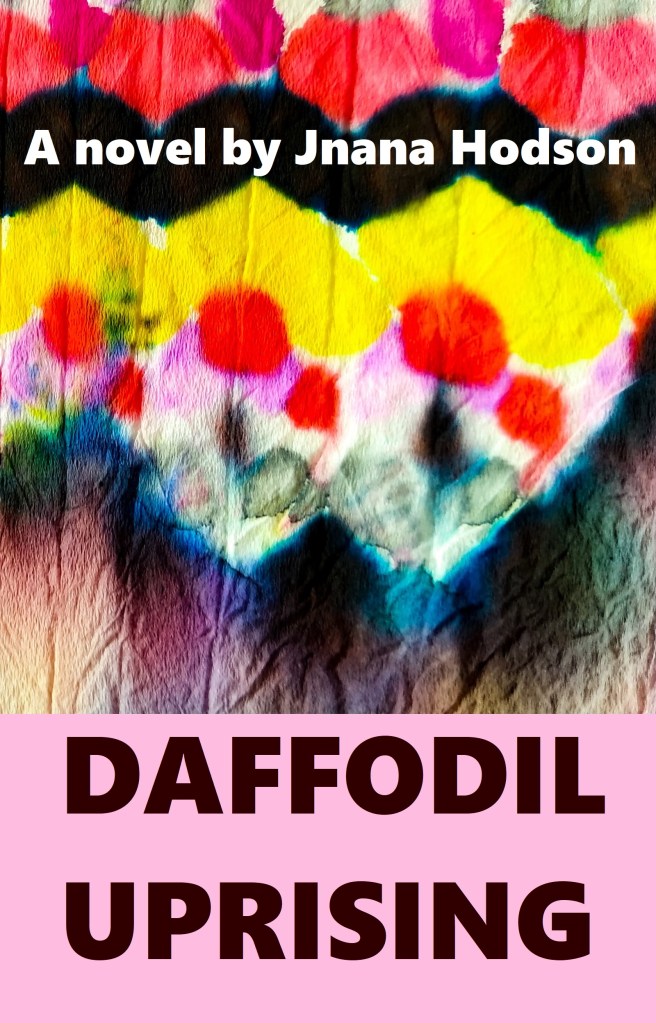
The causes ran deeper than just the ongoing warfare in Vietnam and surrounding countries, do note. My novel, Daffodil Uprising, reflects my experiences in Indiana.

The making of a hippie

While I’m not about to engage in comparisons of today and back then, I am fascinated in the focus on university funding in the current protests. My novel saw that as a crucial factor back then, too – it wasn’t just Dow Chemical, either.

Of special concern, now and back then, is the depth of frustration that finally erupts as rage and revolt. We can assume there are elements in the current actions that go back well before the current Gaza crisis, and not just in the Middle East.  They need to be addressed.

I believe that many of the problems in contemporary America can be traced back to unresolved issues from the late ‘60s For now, I’ll leave it at that.

For any of you interested, my book is available at the Apple Store, Barnes & Noble’s NookScribdSmashwords, Sony’s Kobo, and other fine ebook retailers, and at Amazon in both Kindle and paperback.

Acid test poet: Greenleaf Whittier (1807-1892)

Whittier is a poet I’ve come to know largely through Dover, where his maternal grandparents and an uncle and cousins on his father’s side lived. His parents in fact, married in our Quaker meetinghouse.

His poems aren’t about himself but rather a greater faithfulness. While he’s self-effacing, many of his works are deeply felt political and social protests that remain biting and land on-target.

Despite the seeming simplicity of his rhyming form, his lines are sharp. When you read his poems, don’t stop at the end of the line but keep moving onward as a full-sentence thought. There you can breathe. Robert Frost follows in Whittier’s footsteps.

His poem, “How the Women Went from Dover,” commemorates an important event that appears in my Quaking Dover as well.

If you like people-watching and eavesdropping, check out this

Today’s the release date for Hamlet: A Village of Gargoyles, and I’d love for you to check it out.

The 200-plus off-beat poems of my collection were composed well before I relocated to a real-life village and, by then, many of the pieces had appeared in literary journals around the globe. What I’ve seen since comes as confirmation.

And now they’re together in one volume, as originally intended.

The pages present candid, surreal, often humorous confessions by various community members who span the generations and occupations of an imaginary locale. They’re the kind you may chance upon in a comic strip, support group, or while walking the dog in your own neighborhood.

Opening the book can be like opening their door, for that matter.

You can find it in the digital platform of your choice at Smashwords, the Apple Store, Barnes & Noble’s Nook, Scribd, Sony’s Kobo, and other fine ebook retailers. You can also ask your public library to obtain it.

Scratch that, add this

Back when I was a summer camp counselor, I had one of Phil Donahue’s kids among my assigned campers. On parents’ night, he advised me to revise, revise, revise, as he was doing as a newscaster. And then he turned into a hot syndicated talk-show host.

It took me a while to appreciate his counsel, along with the adage, “Talent goes into the first draft, genius goes into the revision.”

Originally, my feelings about revision were like those regarding playing musical scales, relegating the practice to a secondary status nay nuisance. It took me a long time to appreciate doing it as a practice in itself rather than as a prelude to the primary action.

Indeed, more than once I’ve discovered a better novel buried under the first draft. Or perhaps lurking in its bones, waiting for release, akin to Michaelangelo’s block of marble.

It’s never easy, though. Thorough revision takes longer than the draft did, and that’s for each sweep. The fact remains that multiple deep revisions will be required.

One of the places it engages me is the use of synonyms. I’ve come to rely on a thesaurus more than some other writers, and doing so comes with a caution. While it increases the vocabulary count and possibly adds words a reader doesn’t know, I feel it allows me to unpack dimensions of a central word or phrase that keeps repeating in a long work. In my case, there are usually 20 or so in each piece, and I find them cloying. Take the term “revision,” which turns out to include amendment, reconsideration, modification, adjustment, alteration, change, correction, improvement as its shadings. It’s much more thorough than typical editing.

In some of my manuscripts, the revisions demanded I change the tense throughout, as well as the point of view – third person to first to second, for example. The genders of key characters even flipped.

With ebooks, I’ve even replaced the titles and characters’ names.

~*~

While I had done major revisions on Subway Hitchhikers from its inception to the breakthrough publication, the manuscript had also grown blubbery with backstory and detail in the in-between stages. My revisions occurred in sweeps in my moves from Ohio to Indiana to Washington state back to Iowa and another corner of Ohio and finally Baltimore, adding backstory and explanation before landing on the butcher block that produced a lacy, playful ride through the imagination.

Still, that process was nothing like what happened after my move to New Hampshire and had a computer to work from. I can’t imagine trying to retype so many pages on paper, nor did I have the funds to hire a typist for the pile of drafts in front of me. Remember the poor starving artist image?

When Hitchhikers came out, I had been in New Hampshire three years.

I had all that excess from its intervening years and saw promise for several new books in those pages. I took them back to the drawing board.

Emotionally, I was going through a long recovery period, including therapy – self-induced depression, as I quipped. In the process, I was learning to take feelings more seriously, and that extended to my revisions. What was the underlying feeling in a particular line or scene, rather than simply the action or physical detail? That sort of thing.

At least I once again had mountains at hand, abetted this time by the Atlantic, and even a boss with a sailboat for some of my initial outings.

With a pile of drafts already keyboarded, I could pick up a section in any available time and work away to make it somehow better.

This was when I really began to appreciate the importance of deep revision. Not just the superficial polishing to make a story read more clearly, but transformations to probe into underlying events. I was examining much that I had experienced in my life without fully seeing what was happening at the time. Some of these were shared by many in my generation. Some by kindred spirits who were simply somewhere out of the spotlight. And some were essential unique and personal.

~*~

As I reflect on the revision process here, I ask about what was going on in the background. Remarrying grounded me, for certain, and gave me a sounding board for troubling passages. As I’ve joked, everything before that now became ancient history, including the substance of the lingering novels.

What, if anything, was playing in the background as I worked in the top-floor next, my not-quite Fortress of Solitude? Kronos Quartet, late Miles Davis, or the Shostakovich preludes and fugues might give me a different ambiance than Bach organ works or Beethoven – some inclination for edginess or gravity, depending. If someone was in the bedroom on the other half of the top floor could have an impact, too, if only by limiting by space to pace within.

The view outside, the weather, even the season of the year?

So far, I haven’t heard any discussions about the practice of revising, certainly not along the scale of drafting. I’m coming to think of it as living with a project, the way you would with a kid in the household, knowing vaguely that at some point they’re going to grow up and leave.

Acid test novelist: Grace Metalious (1924-1964)

One of my colleagues at the New Hampshire Sunday News insisted that Metalious was a much better writer than the tabloid image that plagued her and her notorious book.

After reading Peyton Place, I have to agree. The realities it exposed are no longer scandalous but widely acknowledged. The novel, meanwhile, is skillfully accomplished and hints at more that could have been accomplished under other conditions. She certainly understood the unspoken skeletons of northern New England as well as anyone else I could mention, and she took the risks of admitting the dark undercurrents of survival in a small town anywhere in the country.

Her personal life, on the other hand, is an American tragedy.