Embracing my sunny side

Let’s celebrate the publication of my poetry ebook Mediterraneo this week.

As a series of poems, this book was a turning point for me. My earlier poetry had been mostly of the nature or love genres.

Here I focused on Western culture itself, through places around the Mediterranean Sea. It was someplace I’ve never visited, though it’s had a huge impact on my artistic and spiritual outlook. What I have known comes through artworks, literature, philosophy, operas, insights from my daughter and wife’s travels and those of my goddaughter and friends and even Greek Orthodox dancing and liturgy as well as ancient Hebrew scriptures. Put them all in the mixer, then, and see what we can distill.

It’s quite distinct from my ultimate roots in the British Isles and Germany.

When I created these poems, I had not yet relocated to a remote fishing village on an island in Maine after 20 years in the Seacoast region of New Hampshire. The climate is colder than the Mediterranean’s, for certain, but the light of the sun does reflect off the sea and back into the sky, magnifying the luminance in a way that attracts artists, as it does in many of the locations in this homage to the cradle of notable classic faiths, cultures, and cuisines. I do miss Greek dancing and related dining. The ability to see whales from shore or deer in my small-city yard do offset that.

The Mediterranean is much larger than I had supposed. It would reach from nearly one end of the United States to the other, yet also spans so much more diversity.

While I’ve never been to the Mediterranean, much less Egypt, and never out of the country, for that matter, excepting pockets of Canada, all the same, I’ve flown places in my imagining, and some convey some underlying kinship.

Barcelona is one of those. Seemingly far out of my northern nature, this Latin complex of sensuality, color, and Roman Catholic devotion also harbors a stubborn independence, under its ostensible domination by others. Spanish, but not Spanish. Catholic, and yet in a historic realm of heretical lay movements. A passion for the musical dramas of Wagner, accompanied by industry.

Perhaps my genetic line does run, as a marker suggests, from northern England to the border of Spain. Uncork a red wine, then, and sit in my Smoking Garden on a summer late afternoon. Muse on a line from on friend or other while listening to an opera broadcast.

Consider Pharaoh’s descent, the ways the culture of ancient Egypt anchors one corner of the Mediterranean. Was there another anything like it, in its mindset or visual conception?

Or the pervasive smell of camels with their wave-like gait as they nearly sail from the southern shore of the Mediterranean and on deep into the interior of north Africa. In many ways, it’s their land more than man’s.

Or the continuing influence of Greece and its blinding sunlight, scented with lavender and sage, spills over the the culture we inhabit, sometimes with an air of longing

So much ancient history is filled with brutality and revenge, lusts and conquests. Especially, we would venture, around the Mediterranean and its sea.

The Italian Renaissance, with its lush reds and golden adornments, leaves its mark on the imagination. What would Europe be without it?

As for Minotaur in the Ring, with strokes of Picasso, don’t overlook Barcelona, the fifth most populous metropolitan area in the European Union. Some say the port city was founded by Hercules, which would fit its fierce spirit. It even lives its own language, despite Spanish rule. And then there’s its unique style.

They’re all energies in these poems.

You can obtain the collection in the ebook platform of your choice at Smashwords.com and its affiliated digital bookstore retailers.

Practicing excellence in modest work

Rather than the big splash – the masterwork, Oscar performance, Pulitzer Prize, MVP sort of thing.

Think of a pastor, crafting sermon after sermon each week.

A woman who found housing for the homeless and then patiently worked them through their finances to point them toward independence.

The big dreams of a novelist or poet page by page that never found a readership, or the correspondent for a local weekly newspaper.

A doctor or nurse. Teacher. Carpenter. Mechanic.

Keep your eye open and the list grows quickly.

It even becomes more impressive than many who have fame.

To add the word ‘island’ to Grand Manan would be redundant

Despite our many trips to Cape Cod back when I lived not that far away in New Hampshire, I never got around to visiting tony and history-laden Martha’s Vineyard or neighboring Nantucket. It’s an oversight I don’t want to repeat when it comes to Grand Manan, an impressive Canadian island we can see from some points here in Eastport, Maine.

I am hoping to get there this year. Even if I don’t, here are some high points:

  1. Its closest point on the mainland is the town of Lubec Maine, nine miles across the Grand Manan Channel. For mainland New Brunswick, it’s Blacks Harbor, 20 miles over the Bay of Fundy. Yet if you look at most maps of Maine, it doesn’t show up at all, despite its proximity. That part
  2. As the largest of the 25-plus Fundy Islands, Grand Manan is 21 miles long and has a maximum width of 11 miles, covering 53 square miles in all. (Campobello and Deer Island, which border Eastport, are the second and third largest, respectfully.) It’s home to 2,595 year-round residents.
  3. The principal way of getting there is by a 90-minute ferry ride from Blacks Harbour. Reservations are recommended, both ways.
  4. For comparison, Martha’s Vineyard is 20.5 miles long, covers 96 square miles, takes a 45-minute ferry jaunt, and has 20,530 full-timers; Nantucket covers 45 square miles, is a 2¼-hour commute by traditional ferry, and has 14,444 residents. Both of the Massachusetts towns are much wealthier than Grand Manon, where most folks eke out their living “on the water.”
  5. The economy is based primarily upon commercial fishing – lobster, herring, scallops, and crab – plus ocean salmon farms and clam digging.
  6. For the traveler, the island is largely a step back in time, with a single highway along the eastern half, where most of the modest residents live. That leads to the rest of the Grand Manan archipelago of nearby smaller islands such as popular White Head (reachable by a second ferry ride), Ross Cheney, and the Wood islands, plus countless surrounding shoaling rocks. Meanwhile, the rugged and forested western side, with 300-foot-high cliffs, high winds, numerous passages, coves, and rocky reefs, incorporates wildlife-rich preserves.
  7. Tourism, the second source of income, provides unspoiled ocean views, whale-watch cruises – rare right whale breeding grounds adjoin its waters – as well as kayaking, hiking, camping, photography, painting, and bird-watching with more than 240 species, including nesting puffins in season.
  8. Among the lighthouses to check out are Gannet Rock, Swallowtail, Southwest Head, Long Eddy Point, Long Point, and Great Duck Island. Not all of them are what you would call picturesque or prime condition. Not to slight them.
  9. Linguistically, “Manan” is a corruption of mun-an-ook or man-an-ook, meaning “island place” or “the island” in the local First Nations’ language. The suffix ook, meanwhile, means “people of.” French explorer Samuel de Champlain recorded the place as Manthane on a 1606 map and later changed it to Menane or Menasne – close enough in sound. So if Manan already means “island,” why be redundant? You don’t need to add “island” to the Vineyard or Nantucket, either – everybody knows what you mean without it.
  10. Grand Manan’s not for everyone. As one review said, “A long way to travel for nothing. Nice rocks but you can see those in Maine. Sea glass was hard to find and sparse. Very poor, depressed area. Lighthouses are ugly and there is nothing to really do other than hiking, which you can also do in Maine. Ferry stunk and was disgusting. Never saw any whales or seals. Nothing on the island except rundown shacks. All the online promotions are just hype. Waste of a day. … Go to Campobello island, it’s 100% better.” In short, sounds right up my alley for adventure.

The first permanent settlement, by the way, was in 1784 by Loyalists fleeing the U.S. at the close of the American Revolutionary War, a common occurrence across New Brunswick.

When elk move through my mind these days

They are a memory, more as an emblem and ideal than creature. I never tasted elk flesh, though I heard praises. Nor have I stroked the fur. What I’ve known has appeared only on the forest floor as track and scat – no ticks on the neck or patchy summer skin like the moose where I now live. That, and winter encounters viewed from a distance.

The deer who frequent our yard these days are so small by comparison.

Will I ever revisit the Pacific Northwest where I lived? Would I even recognize most of it?

Or was it all gone in the divorce?

What’s left after ‘What’s Left’

Every writer has to face the question of knowing when a particular work is done, as in finished and ready to release.

The problem is that there’s always more that could be added or refined. Writing is, by definition, imperfect. In fact, the vaster the ambitions of a novel, for instance, the more imperfect it will be. Visit the critical examinations of the great novels Huckleberry Finn and Moby-Dick as prime examples.

The decision finally comes down to the line where the work releases the writer. The obsession burns out. You’re exhausted and feel you need to move on. You’ve said all you can say. You’ve discovered just about everything of relevance you can on the subject. For some writers, I suppose, it’s like the end of an affair.

For luckier ones, it’s when the editor or publisher demands the manuscript, ready or not.

~*~

I’ve previously posted on how my novels percolated over time. There was the sabbatical year I gave myself in Baltimore, where I lived off my savings and armed myself with a new personal computer with 5½-floppy disks (for you high-tech geeks with a knowledge of now ancient systems) as I poured myself into keyboarding rambling manuscripts in the search of publication.

When my savings ran out and I returned to the workaday world, I kept picking at those seminal drafts, usually on vacations and holidays. Other efforts at more marketable books also got attention and even a few nibbles, but in the end, none of them panned out. Working full-time, I simply didn’t have the additional open periods required for successful self-promotion.

I’m glad I didn’t wait until retirement, as so many others I’ve known did, to start writing those novels. The details and intensity would have evaporated. Instead, retirement played out in a different way and the novels did finally find publication.

My one fully new book was the one that grew into What’s Left, though it did start with piles of outtakes from the earlier novels as well as other material.

As I’ve also previously posted, it did eventually lead me to thoroughly revise and reissue those earlier novels.

The result is that I have eight books of fiction available today, and I am proud of them, even if they haven’t found wide readership or critical acclaim. Not that I wouldn’t welcome either.

~*~

I am struck by how much has changed for me in the seven years since then, some of it a consequence of the shift to digital writing and publishing. I don’t require as much space for files, for one thing, or for research materials and correspondence. What can be found online with little effort is amazing, as I discovered while writing Quaking Dover. I hate to admit I no longer keep a dictionary or thesaurus at hand.

Downsizing to our remote fishing village at the far end of Maine four years ago meant that I no longer needed a studio in the attic. A corner of a bedroom sufficed for some pretty heaving writing and revision.

It’s a far cry from the dream I once had of remodeling the top of the red barn into a year-‘round studio that included a custom-build semi-circular desk with me sitting in its center – something like the copy desks that were common to many newsrooms.

No need for that now, not even at newspapers.

~*~

The task for me now turns to cleaning out remaining files, both digital and physical, that are no longer needed. I don’t want to leave that mess to my wife and kids later.

One thing I’ll confess is that I doubt I have another novel up my proverbial sleave.

~*~

You can find my novels in the digital platform of your choice at Smashwords, the Apple Store, Barnes & Noble’s Nook, Scribd, Sony’s Kobo, and other fine ebook retailers. They’re also available in paper and Kindle at Amazon, or you can ask your local library to obtain them.

She did have quite the tongue

In the official statement marking the death of Alice Roosevelt Longworth, President Jimmy Carter observed, “She had style, she had grace, and she had a sense of humor that kept generations of political newcomers to Washington wondering which was worse – to be skewered by her wit or to be ignored by her.”

Just listen.

  1. When her father was governor of New York, he and her stepmother planned to send her to a conservative school for girls in New York City. Curtly, Alice responded, “If you send me, I will humiliate you. I will do something that will shame you. I tell you I will.”
  2. When her father became president after the 1901 assassination of William McKinley in Buffalo, she greeted the event with “sheer rapture.”
  3. She later said of her father, “He wants to be the bride at every wedding, the corpse at every funeral, and the baby at every christening.”
  4. When a prominent Washington senator was discovered having an affair with a young woman less than half his age, Alice quipped, “You can’t make a souffle rise twice.”
  5. Most famously, “If you haven’t got anything nice to say about anybody, come sit next to me.” She had that one embroidered on a pillow kept in her living room.
  6. On Calvin Coolidge: “He sprang from the grass roots of the country clubs of America.”
  7. Another quick character sketch: “He looks as though he’s been weaned on a pickle.”
  8. And one more: “Never trust a man who combs his hair straight from his left armpit.”
  9. As for Washington, D.C: “A town of successful men and the women they married before they were successful.”
  10. Through it all: “I’ve always believed that if you’ve got a good sense of humor, you can get through anything.”

Do note, her father was quoted: “I can either run the country or I can attend to Alice, but I cannot possibly do both.”

The hardest prompt: a love letter

You’d think these would be the easiest, most natural thing on earth, except that they usually wind up being 99 percent cliché and hot air.

Besides, how many times and ways can you express the dirty stuff, if you dare?

(And be prepared to back it all up in person.)

Really!

In addition, the audience of one can be the world’s most demanding, no matter how fond of you they are.

Even more difficult, add to the assignment something I heard a writing prof say, quoting another one: Never revise a love letter.

Nope, let it gush forth.

~*~

For further humiliation, there was an instance when I was living in the ashram and writing a reply to a beloved’s epistle when several of my fellow yogi residents came up and grabbed my effort, grimaced, and declared, “If I received that, it would be the end of the relationship.”

Those girls were so full of helpful insights, as you’ll find in my novel Yoga Bootcamp.

~*~

Well, I’ve never been good at pickup lines, either.

~*~

About a dozen years ago, I had a spree in the loft of our old barn when I went through the remaining letters to me from girlfriends and lovers over the years.

Earlier ones had been helpful when I was drafting my novels Daffodil Uprising and Nearly Canaan. What jumped out at me in this round was their underlying unhappiness apart from me. It didn’t make for a good give-and-take in a relationship. No wonder things didn’t work out in the long run.

The time for the ritual burning was way overdue. It took longer than I would have guessed.

~*~

More recently I came across some surviving letters written on computer, some of them that were then sent by the postal service and others that went by email.

The ones I wrote now embarrass me. As for theirs? A gentleman won’t say, though they reflect a long search for a fitting relationship that never panned out, like panning for gold. My, all the hours I spent writing those and reading the responses!

Once more, though, a purge is overdue.

We could get into a discussion regarding the intimacy of handwritten letters versus legibly typed ones, though that’s largely moot now that the exchanges have shifted to emails and cell phone texts. That topic deserves its own conversation. For now, let me say that the playful back-and-forth with my now wife via America Online when we were getting to know each other is woven into my Prelude & Fugues poems available at Thistle Finch editions.

~*~

Back to the advice about never revising a love letter. I find it useful as an ideal for other kinds of personal writing, too. Just let it pour out, best as you can. Not that it usually proves so easy.

Yeah, yeah, I fall back heavily on the revise-revise-revise emphasis elsewhere, along with the adage, “Talent goes into the first draft; genius comes in the revisions.”

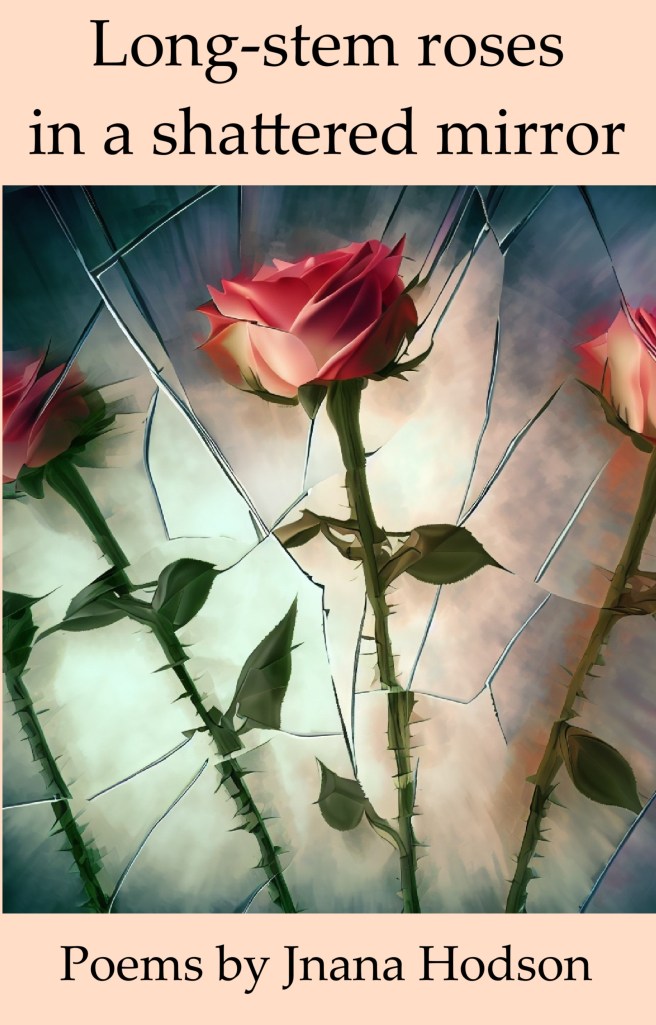
Still, some of those love letters gave rise to the poems in my collections Braided Double-Cross, Blue Rock, and Long-Stem Roses in a Shattered Mirror (upcoming).

Let me add to that the only time – well, just about – that I face the dreaded writer’s block is when having to come up with something spiffy on, say, a get-well card. Like the ones they used to pass around the office. I know of a truly major writer who agrees with me there. Maybe sympathy cards are even worse. You can’t go with “Miss you” there, and nearly everything else is so trite.

~*~

One final concern I’ll raise while we’re circling around the topic involves what would we say to each other now, all these years later. At one time, I tried to find out, thanks to Facebook. It wasn’t encouraging. Some who had been hot on my end barely remembered me.

And while I had tried to be conscious of their objections or potential feelings of hurt in reading the fictional accounts of our lives, I finally had to realize they never read what I had written after our breakups or differing directions.

Ouch! Most of them I missed more than they did of me.

Sound familiar?

~*~

You can find Braided Double-Cross in the digital platform of your choice at Smashwords, the Apple Store, Barnes & Noble’s Nook, Scribd, Sony’s Kobo, and other fine ebook retailers. You can also ask your local library to obtain it.

The original wild child of the White House

The eldest child of Theodore Roosevelt was renowned for her wit and unconventional ways even before she married Nicholas Longworth III, a Republican leader from Cincinnati who eventually became the 38th speaker of the U.S. House of Representatives.

Here I was, planning to sample some of her sharp retorts but now feel compelled to offer ten points about her remarkable and long life to age 96 as a most remarkable observer of life in the nation’s capital.

Please consider this cut-and-paste biography.

  1. Alice Roosevelt was the only child by the future president’s first wife, Alice Hathaway Lee, a strikingly beautiful and charming Bostonian banking heiress of deep Brahmin roots who died at age 22 of previously undiagnosed kidney failure. This death came only two days after giving birth to Alice and 11 hours after Teddy’s mother also died, all in the same house.
  2. Grief-stricken, Teddy turned his daughter over to his unmarried, elder sister, Anna. The infant dwelled in “Bammie” or “Bye’s” book-filled Manhattan house while on her father recovered on Western adventures. Once the child back under his roof after he remarried when she was three, he never spoke to his daughter about her mother. So deep was his despair that he tore pages from his diary and burned letters. Alas. Can it get more gothic than this? Distraught after her death, he almost never spoke of her again and prohibited mention of her in his presence. His autobiography even – imagine this – omitted her name. His daughter reflected this practice after her own marriage, preferring to be called “Mrs. L” rather than “Alice.” We can only imagine what her therapist would have made of this, had she had one. Or, for that matter, how the psychological impact affected his politics.
  3. Bammie somehow remained a significant influence on young Alice, though eventually from a distance after marrying and moving to London. Alice later spoke of her admiringly: “If auntie Bye had been a man, she would have been president.” Got that? Over her own father?
  4. As the daughter became more independent and chafed against her father and stepmother, her Aunt Bye still provided needed structure and stability. Late in life, Alice said “There is always someone in every family who keeps it together. In ours, it was Auntie Bye.” Does anyone else sense a writing prompt here? A historical novel, perchance?
  5. A celebrity and fashion idol by age 17, Alice’s social debut in 1902 was highlighted by a gown made of what was soon dubbed “Alice’s blue.” The dress sparked both a women’s clothing trend and a popular song, “Alice’s blue gown.”
  6. Scandalously, Alice smoked cigarettes in public, rode in cars with men, stayed out late partying, was spotted placing bets with a bookie, and had a pet snake named Emily Spinach – named after a spinster aunt and the green vegetable. (Her five half-siblings added a badger, guinea pigs, birds, cats, and dogs to the menagerie.)
  7. Her wedding in February 1906 in the East Room of the White House was the social affair of the season. The groom was 14 years her senior, a scion of a socially prominent Ohio family, and widely whispered to be a Washington womanizer. The event was attended by more than a thousand guests while thousands more crowded outside hoping to glimpse the bride. Alice wore a blue wedding dress – not white – and theatrically sliced the wedding cake with a sword drawn from an unsuspecting military aide.
  8. When the Roosevelts moved from the White House, Alice buried a voodoo doll of Nellie Taft, the new First Lady, in the front yard. When the Taft White House later barred Alice from her former residence, it was the first but not the last administration to do so. Next in line was Woodrow Wilson, who barred her in 1916 for a bawdy joke where he was its butt.
  9. In 1912, Alice publicly supported her father’s Bull Moose presidential ticket while her husband remained loyal to his mentor and fellow Cincinnatian William Howard Taft. During that election cycle, Alice appeared on stage with her father’s vice presidential candidate in Longworth’s own district. When her husband narrowly lost his House seat that year to a Democratic challenger – by 101 votes – she joked that she was worth at least 100 votes. Although her husband recovered the seat in 1914 and stayed in the House of Representatives for the rest of his life, Alice’s campaign against him caused a permanent chill in their marriage.
  10. During their marriage, Alice carried on numerous affairs. Best known was her long, ongoing liaison with Senator William Borah of Idaho. When Alice’s diaries were opened to historical research, the pages indicated that Borah was the father of her daughter, Paulina Longworth (1925–1957). Even in this sensitive situation, Alice’s famed “brilliantly malicious” humor was inescapable: she had originally wanted to name her daughter “Deborah,” as in “de Borah.” And according to one family friend, “Everybody called [the daughter] ‘Aurora Borah Alice.’”