If only I had owned a digital camera back then

In revising my novels Nearly Canaan and Secret Side of Jaya, I created several lookbooks slash storyboards from images found online to sharpen details in some of the passages. It’s a great writer’s hack, by the way. You pick up bits you overlook at the scene.

I do wish I had my own photographs from the decade of journals we’re sampling, but often I had no camera, much less training in how to use anything except the simplest point-and-shoot.. I did, however, work with some of the best photojournalists and knew some outstanding fine arts photographers as well. It would have been wonderful to work with them on these posts, but time has intervened. Well, I still have memories, faded as many are. And with a camera, I wouldn’t have worked so devotedly on writing, no doubt. There’s only so much time in a day, even without a paying job to attend to.

For a sense of my visual encounters in the Pacific Northwest, take a look at these free PDF albums at my Thistle Finch editions site: Apple Crates, Glorious Mount Adams, Know Your Salmon, Reflecting the Coast, Unexpected Northwest, and Yakama Beadwork.

Not that I haven’t attempted to re-create that world in immortal words.

Pick one or pick these booklets for your armchair travel.

Welcome to another Rabbit Hole on the Internet.

On hits and misses as a writer

Here are ten more confessions on being a published author.

  1. “The difference between the almost right word and the right word is the difference between the lightning bug and the lightning.” – Mark Twain
  2. “Any word you have to hunt for in a thesaurus is the wrong word. There are no exceptions to this rule.” ― Stephen King
  3. “Style means the right word. The rest matters little.” – Jules Renard
  4. “My aim in constructing sentences is to make the sentence utterly easy to understand, writing what I call transparent prose. I’ve failed dreadfully if you have to read a sentence twice to figure out what I meant.” – Ken Follett
  5. “I would advise anyone who aspires to a writing career that before developing his talent, he would be wise to develop a thick hide.” – Harper Lee
  6. “One of [the things you learn as you get older] is, you really need less … My model for this is late Beethoven. He moves so strangely and quite suddenly sometimes from place to place in his music, in the late quartets. He knows where he’s going and he just doesn’t want to waste all that time getting there … One is aware of this as one gets older. You can’t waste time.” – Ursula K. Le Guin
  7. “Rejection slips, or form letters, however tactfully phrased, are lacerations of the soul, if not quite inventions of the devil – but there is no way around them.” – Isaac Asimov
  8. “Was I bitter? Absolutely. Hurt? You bet your sweet ass I was hurt. Who doesn’t feel a part of their heart break at rejection. You ask yourself every question you can think of, what, why, how come, and then your sadness turns to anger. That’s my favorite part. It drives me, feeds me, and makes one hell of a story.” – Jennifer Salaiz
  9. “I love my rejection slips. They show me I try.” – Sylvia Plath
  10. “I used to save all my rejection slips because I told myself, one day I’m going to autograph these and auction them. And then I lost the box.” – James Lee Burke


What do you know about jellyfish?

With their many different species, jellyfish are found in every ocean in the world, including very cold waters of the Arctic and Antarctic. Some are even found in freshwater. Some species live in shallow, sunlit waters near the surface, while others live in the deep, dark, cold or somewhere in-between. Here are a few other points.

  1. They predate dinosaurs, bobbing along in the currents for at least 500 million years and possibly 700 million years, roughly three times the age of the first dinosaurs.
  2. They aren’t fish. They don’t have a backbone or spine, nor do they have brains, hearts, eyes, scales, gills, or fins. Instead, they swim by opening and closing their “bells.” Many scientists simply group them as “gelatinous zooplankton.”
  3. A few species have surprisingly complex vision. For instance, the box jellyfish has 24 “eyes,” two of which can see in color. It’s also believed this animal’s complicated array of visual sensors makes it one of the few creatures to have a full 360-degree view of its environment.
  4. Its lifespan depends on the species in question. Some live for just a few days or weeks, while others can live for several decades or more. One species, called the immortal jellyfish (Turritopsis dohrnii), is capable of reversing its life cycle and returning to a younger stage of development after it reaches sexual maturity. This means that it can essentially live forever as long as it is not killed by predators or other external factors.
  5. This ability is a major subject of research, as it could help the medical field understand how to turn cancerous cells into noncancerous cells like muscles, nerves, or skin.
  6. Jellyfish use tentacles to catch their food. These long, thin appendages on the sides and bottom of the jellyfish’s body are covered in tiny stinging cells that contain a venom to stun and capture prey. When they encounter something edible, they use their tentacles to bring it closer to their mouth, located in the center of their body.
  7. They are carnivores, meaning they eat other animals. Since they’re unable to chew their food, they usually eat small marine animals they can swallow whole, such as
  8. plankton, small fish, and crustaceans like shrimp and lobsters. They’ll also eat smaller jellyfish.
  9. The power of their stings can vary widely depending on the species. The most venomous is probably the box jellyfish, capable of killing an adult human in just a few minutes with a single sting. Each box jellyfish reportedly carries enough venom to kill more than 60 humans. To make matters worse, their stings are excruciatingly painful — it’s said the pain could kill you before the venom does.
  10. Jellyfish are eaten by larger predators, such as tuna, sea turtles, and whales. They’re even a delicacy in some places, such as in Japan and Korea. The Japanese have transformed jellyfish into candy. More often, they find their way into salads, fried into crunchy noodles, or are eaten with soy sauce like sushi.


A fresh perspective on the craft of poetry

Lew Welch (1926-1971) was a Beat-era poet I’ve enjoyed very much. He was influenced by Gertrude Stein early on. At Reed College, he was a roommate of Gary Snyder and a friend of Philip Whalen – what a Trinity of fine poets! William Carlos Williams certainly thought so after meeting them in Oregon.

Here are ten insights gleaned from Welch’s take, “How I work as a poet.”

  1. All poems are translations.
  2. Language is speech. The din of a tribe, doing its business. You can’t control it, you can’t correct it, you can only listen to it and use it as it is.
  3. Speech is the most powerful single thing we human beings have.
  4. Whose kid is that? (With force!)
  5. All poetry should be that intense.
  6. It very seldom is. The few poems we praise over the centuries and across all cultures and times are more intense than this.
  7. (Discussing a copywriter, Do Not Disturb): He is in a trance. All he is trying to do is make his living writing baby-talk ads for a mail-order house. But Li Po, while extemporizing intricate lines on whatever subject the Emperor happened to throw at him, dropped, I am sure, into the same glaze-eyed state. His eyes would widen then clear, and he’d wittily speck his lines. I saw William Carlos Williams do this on a challenge from Snyder and Whalen and me back in the 1950s.
  8. Usually, of course, we don’t speak with any exactness at all. It is mostly ceremony and blather. … Exactness to what?
  9. All that trochee, iamb crap, it’s British. Forget it. It doesn’t have anything to do with us.
  10. The poet doesn’t want to be understood. He wants to be believed!

Welch left a suicide note, but his body has never been found.


The notebook covers themselves frame a story

As my Bloomington/Daffodil entries in this presentation became grouped by subject, rather than chronological order, we lost a sense of the progression of the notebooks themselves. Take a look now.

  • 18, Cornell Campus Store, 90 sheets, kraft cover. Undated. The Cornell spiral-bound lined volumes have wide margins, 3½ inches. My, how I loved those wide margins! Such luxury! Poetry drafts, early ashram experiences. A few bits saved for possible current poems now.
  • 19, Cornell Campus Store, 90 sheets, kraft cover. Undated. Let me repeat, these Cornell spiral-bound lined volumes have wide margins, 3½ inches. More poetry drafts, early ashram experiences. A few bits saved for possible current poems now. (How is it I had a stash of these varied campus notebooks?)
  • 20, Cornell, 90 sheets. Undated, except one entry in late November. “Swami Jnana-Devananda into winter: ashram.” Mostly quotes: Zen, Ginsberg, Hutterites, etc. Includes Swami’s return from first India trip. The onset of my ashram residency. 23:XI:71
  • Vol 21 Winter ’72: ashram. Begins with our first week-long seminar. Some really bizarre group action, both from the guests and the staff. includes trip to Ohio for Grandma’s funeral; she died June 21
  • Vol 22 summer ’72, ashram, and well into autumn. More tracings in the water / into Sannasyn, 8:VII:72 11:45 am.
  • Unnumbered red cover stenographer book, mostly October 1972. Includes trips to New York City and Binghamton.
  • Vol 23? Starts 23:XII:72 and ends with leaving ashram.
  • Vol 24? Miscellaneous, though where the pages fit in is uncertain now:
  • 24, Yellow Varsity. Has inner cover His Holiness Sri Swami Jnana-Devananda in the middle of Erewhon 22 January 1973. So my ashram residency ended earlier than I recalled …
  • 25, green Indiana cover, beginning 19 February ’73 in a Bloomington visit, then turning into the first of the Fostoria series. Some overlap with the previous volume.
  • 26, hunter green cover, beginning December 1973. Filed out of sequence, opening with many Tibetan notes. Three-inch left margins.
  • 27, blue IU (Aristotle’s Inc.), 23:III:73 on inside cover
  • 29, hunter green, 17:I:74, Fostoria. By now I’m dating the entries, in one of the new styles (colons or periods, depending). National Blank Book Company Holyoke, Mass. Wide margins!
  • 30, BGSU, 24:VII:74, Fostoria. Verge of marriage.
  • END OF CRATE 1: the plastic milk carton cubes, which were so handy in all of my moves from place to place and then turning into instant bookshelves later. Remember those?
  • 31, Hunter Green cover, begins 18:X:74 Another wide-margin notebook. Glory be!
  • 32, avocado green Penrite 4 Subject Divider Theme Book, 98 cents, 2409 W. Second St., Marion Indiana 46952. Undated entries, mostly stabs at verse and a few other notes in closing up in Fostoria and traipsing on to Bloomington. The last three divider sections remained blank.
  • 28, green Campus twin-wire, 59 cents, product of Mead Corporation, Dayton, Ohio. Out of order.

This does have me wondering if you saved any of your college notebooks or the like in your life journey to wherever you are now. What souvenirs have you kept? Or what have you intentionally discarded? Perhaps even with regrets later? Photos, letters, cards as well?

By the way, I hate to think what a spiralbound notebook costs nowadays.


‘Nature lover’ doesn’t begin to cover it

Do you require getting out in nature when it comes to maintaining your sanity and soul? I certainly do. In fact, one of my struggles living in Fostoria was the relative lack of that exposure, even though the small city was surrounded by some very productive farmland. I wanted something a little wilder and freer.

Here are ten perspectives:

  1. “In nature, nothing is perfect and everything is perfect. Trees can be contorted, bent in weird ways, and they’re still beautiful.” — Alice Walker
  2. “I go to nature to be soothed and healed, and to have my senses put in order.” — John Burroughs
  3. “Nature does not hurry, yet everything is accomplished.” — Lao Tzu
  4. “Adopt the pace of nature: her secret is patience.” — Ralph Waldo Emerson
  5. “In all things of nature there is something of the marvelous.” — Aristotle
  6. “Nature is the art of God.” — Dante Alighieri
  7. “There is something infinitely healing in the repeated refrains of nature — the assurance that dawn comes after night, and spring after winter.” — Rachel Carson
  8. “If you can’t be in awe of Mother Nature, there’s something wrong with you.” — Alex Trebek
  9. “Nature is not a place to visit. It is home.” — Gary Snyder
  10. “You are a guest of nature — behave.” — Friedensreich Hundertwasser


A few old newsroom notes

Reporter Jerry Handte, someone I saw as a grizzled old-timer. Threw the word “hardscrabble” at me in a story, one I didn’t know. Changed my perception of him.

AP’s middle-class conformity.

Contrived news stories, with formulated sentimental reactions: hippie story, Agnew story, dog or handicapped child story, medical/scientific breakthroughs, etc.

“Chimes,” the Evansville Courier’s wrap-up of church activities.

The Press won’t hire anyone else as long as it can slide by as it is.

~*~

The tug toward middle-class: security: keep job, get a degree, build retirement, home, house, and family. It’s gonna be so hard telling Mom and Dad I’m splitting.

I’m becoming like them: Don’t rock boat, don’t do deep fixes on stories, let it slide, why bother with better headlines and layouts, etc.

Is a job search always a tribulation?

After reviewing old clippings: “How close my writing has come to greatness … or to babble.”

At the RT, how much our photography carried us, especially considering how thin, until the end, our local coverage was – how important our Saturday front-page feature was in setting us apart and giving the staff a fairer schedule. .

Morning on long-distance calls to Bordner, Aldrich, Swaisgood, L. Nighswander.

Other fronts, Russ called back, said Larry Hale expected an “editor’s position” in several weeks … So much confusion, would I really want to go back there?

And the letter from Tacoma, $20,000 arts and entertainment, if they get the opening … What do I make of this? McClatchy upswing versus Gannett versus a fighting crew at the foot of Pike’s Peak?


So what about Colorado?

Imagination still reeling with thoughts of the Rockies. A place to be at peace? Low pay may be an incentive to freelance or grow.

The West may spur a novel. I’m too boxed in here.

On the brink of Colorado. A time of despair, anxiety, and waiting through the layoff.

Early May, Colorado Springs, round-trip ticket, $189.

On flight out: half of southern Indiana is forest. Region defined the sudden shift to farmland where the hills give way to flatness.

Contrasting smoothness of disked fields next to rougher plowed.

Strip-mine lakes outside Terre Haute.

~*~

Colorado Springs Sun: Don’t feel there’s much I can do here – to many “trained incompetencies,” exhausting and routine-work hours. B.B. [the editor who was to hire me] is leaving for Detroit after eight months here.

No local color in the paper. Newsroom looks and smells like RT. Computer (VDT) may help – question is, how much?

Upon seeing first UPI lead, realized how clear, precise, and simple my own style has become. Newspaper work may destroy that – at least, I feel it slipping away.

No sense of nuance, of grace, of individual voice – that is, true style – in this news writing, which exists as stilted and artificial as any literary style. It is divorced from the human voice and from American speech.


Another Far West facet

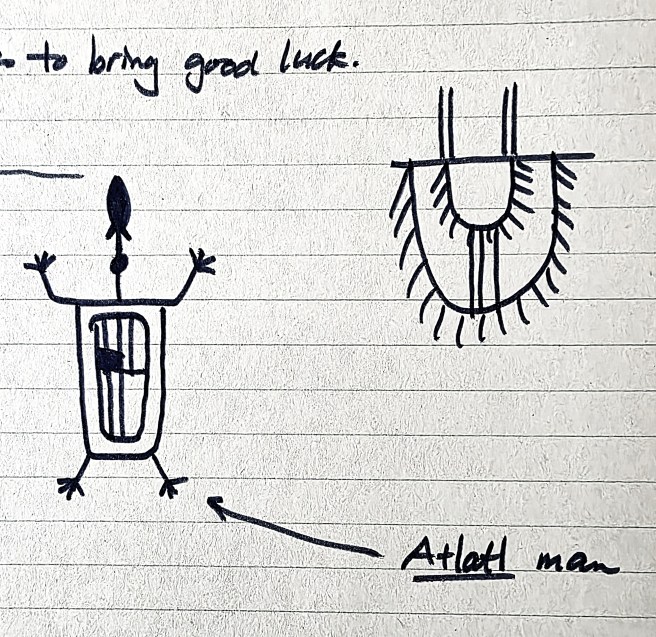
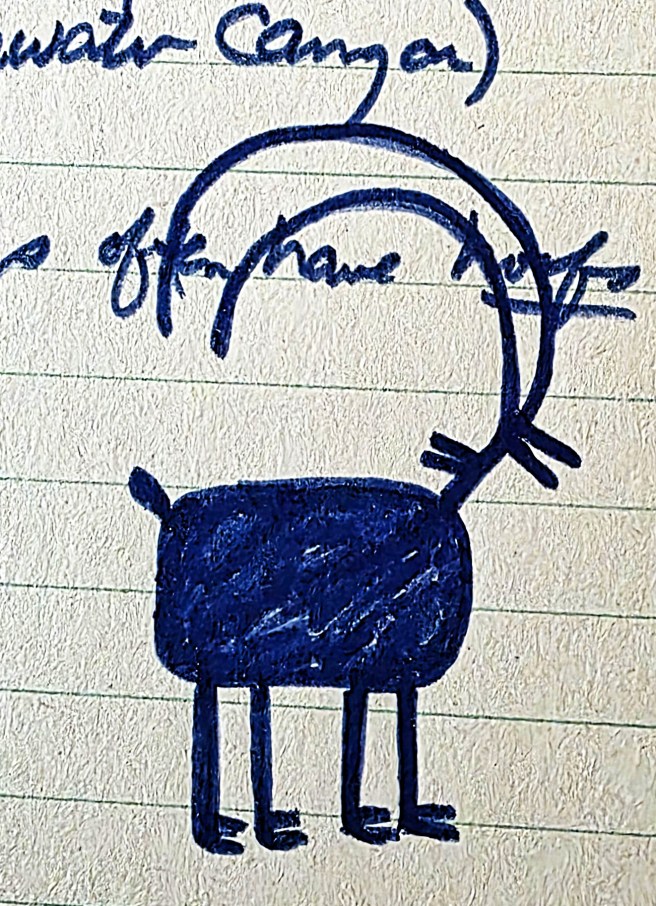
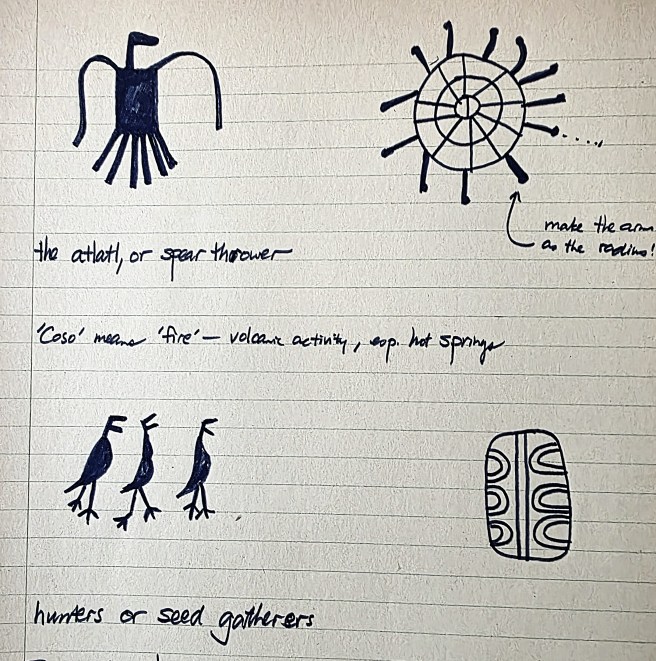
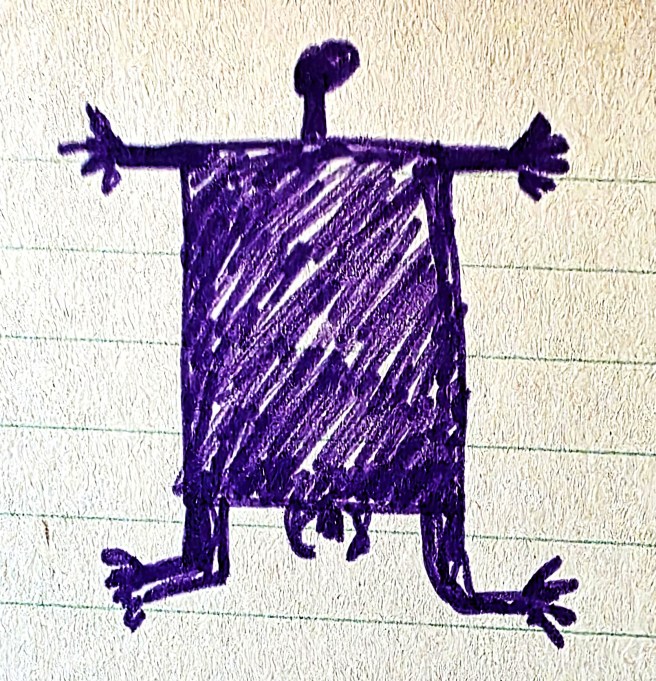
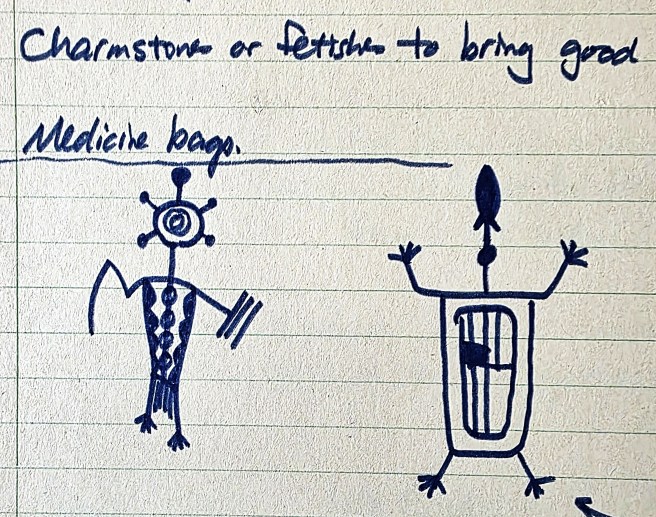
All along during my stint as a research associate, I was reading technical material on Indigenous artwork. Here are some sample entries from my Bloomington journaling.


~*~

Back from the Rockies

Indiana feels too thick, too green and wet in contrast. My sinuses are acting up again. I’m out-of-place in America.

Horoscope says a month or two before big change. We’ll see.

Looking at the cons: long hours (nine to ten hours a day), ending at 2 or 3 am; low pay, publisher interference, no investigative reporting, and someone named Dana …

I’m having to admit that not getting that job was a blessing. I would have been engulfed. The trip was, though, at my own expense, devouring half of our savings. 


Just where might I be heading?

Doubts about “where I want to go.” Should we make the plunge into NYC? Find an agent yet? (I’d rather wait two more years.) I feel the necessity of steady income, yet also feel “duty to yourself” calling. Turned down music critic position at Herald Telephone. Hard for me to say No to any job, even with low pay. ($10/review; negotiate on features, say $50/page.) Don’t think I really want newspaper work. That’s hard to admit.

Copy editors are a kind of janitor and paid accordingly. Hence, I should concentrate on power-writing. (Like advertising?)

My own failings coming home as nobody wants to hire me, not yet, free me from the damn suspense/suspension with half of our goods packed in crates and warping corrugated boxes, the general feelings of inutility accented by this ungodly heat and humidity

Late June, returned yesterday from two days [of housesitting] at Dietz’ … and found a letter waiting from Yakima. Very exciting prospect, work split between copy editing and general assignment reporting. A nice balance, good pay, exactly where I’d like to be – the dry side of the mountains. And Kat’s very excited. Hope everything works out. (Received a formal job application to fill out and return.) Getting anxious to get the address situation straightened out and new pieces into the mail. …

Wherever we wind up, I’d like to publish a few chapbooks of my work, for free distribution to friends and critics (and some for sale). Would also like to get a typist to do final drafts of potential freelance pieces. Will need to arrange more office-type space … we need Kat’s extra income …

Already, we’re anticipating spending that extra income … new car, furniture (that’s her idea), new clothes, bigger place, airfares …

A call today from Center for Law and Poverty in Indianapolis, a job I’m not too crazy about but one that might be the springboard for the southern Indiana magazine/tabloid I’ve been pondering.

Other calls to/from Yakima, which sounds better and better but less and less likely, like an impossible dream.

Nancy Neubert saying Yakima is a very nice, good place: agricultural, wealthy, conservative, hydroelectric cheap electricity, good produce abundant and cheap, Spanish and English …

The m.e., there since March, Steve Kent, from Albany, New York, thus appreciated my Binghamton angle. A good phone conversation.

Located Snyder’s lookout towers on the map, though Sourdough was not shown. Some of the other sites he relates, though, were.

Spicer: “West Coast is something nobody with sense would understand.”

Good place to end this journal. 10:20 pm, night of new moon, unseen through the haze

~*~

From Spiralbound Hoosier, with commentary from now.