there was something cozy
in Isabel’s phrase
dark roasted coffee
after dinner
~*~
North Amigo
South Amigo
– not Americans, but Amigos!
the United States of Amigos!
To continue, click here.
Copyright 2015
You never know what we'll churn up in cleaning a stall
there was something cozy
in Isabel’s phrase
dark roasted coffee
after dinner
~*~
North Amigo
South Amigo
– not Americans, but Amigos!
the United States of Amigos!
To continue, click here.
Copyright 2015
Ours was not the journey of Ulysses. There had been no dramatic battle. No obvious defeat or shipwreck, either. We weren’t accompanied by our own troops. I intended to make my home here, at the edge of wilderness, and venture into its realms, rather than circle back toward some faraway but faithful woman or goddess.
With the exception of my spouse, who also traveled with me, I was fleeing my own people and hoping that strangers would be better, or at least different. Crucially, I would continue to enter the back country to be reminded of some mystery, as if on this edge of the continent some faithful remnant was making a final stand in defense of Old Ways handed down through practice from antiquity. Still, you could look at the ground and be disgusted here, too, to find white fibrous butts, the thimbles of broken cylinders left behind wherever man goes, along with the larger, inescapable debris. Look up and see contrails of airliners and military aircraft. You could scoff that in vapor-lighted cities, where cancer is the predominate cause of dying, few inhabitants are aware of the flickering stars or the planets in their orbits; the populace is ignorant of the very lunar phases you will so closely follow here. Taunt them, arguing that Jesus is the only bum welcome on their streets and parking lots, and accepted in their midst only because he’s conveniently dead. Maybe he’s not all that welcome, either, if you look closer. Meanwhile, vandals spray-paint his name on forest boulders alongside highways, as though a word alone can distribute clear-cut salvation. Ponder the contempt for both creation and creator. The Old Orders dismiss superficial religion. There’s fasting, and then there’s starvation. The soul knows a hunger, one that comes at the beginning of prayer. Some practitioners know this opens a furrow their horses help plow. For now, I would venture into high places to be reminded of the ancient interplay of dualities. Not just good and bad, but the overlapping harmonies as well. Make my rounds, however quickly at first, acknowledging the slower nomadic practice.
When I packed for this move, I preferred boxes over baskets. Something squared, for paper and recordings, especially. Typewriter. Electronics. We weren’t transporting dried berries or salmon. Blankets cushioned furniture and china. The cardboard presented fewer overlapping harmonies. Learn to weave baskets and I might learn something of the Cross. Especially in its curving.
Handle with care, all the same. Let go of one, something shatters. Or the other, something bounces. Baskets stack differently than boxes. See which one fits a squared room better. Which one, a hogan, wickiup, tipi, or kiva.
Step outside. Turn to the four directions. Then name them.
MALE / SUN
FEMALE / MOON.
Turn again.
AIR / FIRE
EARTH / WATER.
Once more.
SPIRIT / LIGHT
FLESH / SHADOW.
Draw out their colors according to tradition or your own intuition.
Soon the divisions break down, into Yin/Yang swirling.
This is where prayer begins its dancing, even without Kokopelli’s piping.
In such turning I was brought to the edge of my intellect. Facing the expanse toward the horizon, my knowledge of geography, geology, botany, zoology, astronomy, and survival itself proved defective. The edge and depth of my emotions, too. Return to my religious texts and I’d find a different story. Not the one taught to children, but more sinister dimensions. Walk far enough away from the village or highway into open fear, admitting this experience might break me. This Dedicated Laborious Quest draws on all my ability — mental, physical, and psychic — until I’m forced to pull strength from some kernel of infinity within myself. As you pull, roots come forth. Draw them from the emptiness within the basket. The emptiness waiting on the horizon’s circle, as well. More roots, reaching out like cosmic rays through the sky, are visible only to the spider — these beads on a rickety filament.
For more insights from the American Far West and Kokopelli, click here.
two blocks from my apartment, on the way
toward downtown
the Amoskeag Dam impeded the Merrimack
with a broad placidity I associated
with the upper Susquehanna
below it the roaring wildness of hydroelectric generation
or the snow-melt Yakima and its tributaries
why I didn’t just dump half my stuff way back
and start over before trekking through the marketplace
to rediscover how outrageously expensive all these goods
I need at hand can be? at last, though, my belongings
began falling into place where old mills extended
an eerie sense all too similar
to what I had created in one novel
to say nothing of the French-Canadian hilltop
on the west side of the river, neatly occupied
by descendants of Kee-beck, and an air of Kerouac
oh, how I’ve come through calculator-town
foundry-town, shoemaking-town, college-town
fruit-packing-town, sawmill-town, meatpacking-town
car-assembly-line-town, blast-furnace-town
summer-resort-town, and spice-grinding-town
on the harbor
to this ghost of a textile-town on the river where
the warehouses of my broken ambition overflow
once more, I arrived without a lover or children
for now, though
this life in a sleeping bag and cardboard boxes
fatigues and I long to get back to Owings Mills to pick up
the rest of my furniture and files so I can really move in
with essentials that include a toaster-oven and
the little red light on my answering machine,
items I’ve come to miss
but having a little cash in my pocket once more
feels wonderfully strange
and having seven book-length works
drafted and revised allows me to show something
more than a concept in my head or scattered notes
the arduous, tricky road to publication can take ages
usually eighteen months once a house accepts a work
and the contract’s signed, according
to the New York Times Book Review a few months back
In the meantime, my savings have gone
(the miracle is that they lasted as long as they did)
and it’s time to get back on my feet, financially
To continue, click here.
Copyright 2015
For all of their range across time, seasons of the Spirit, as well as seasons of the flesh, are grounded in the here and now. It’s the paradox that unites the two, and intensifies their wisdom. Eternity, in effect, as found in a flash.
Keep racing, and you’ll see nothing but a blur en route to some goal. You can be fully alive in the rush of adrenaline, your attention concentrated on what is essential in split-second increments. The pace is unsustainable for long, naturally, and an emotional crash will follow. The alternative is to stop yourself, to achieve calm before the storm or calm within the storm, before continuing. Stopping, to regain strength as well as collect scattered thoughts and actions. To restore focus and wholeness.
When I think of these seasons, I don’t know whether the yin-yang emblem of Buddhism, with its “S” rippling through a circle, and light on one side and darkness on the other (alternating day and night or sun and moon), or the Christian cross is more appropriate. The cross, after all, leaves us with four quadrants, like the seasons themselves, while the yin-yang expresses alternating rhythms encountered daily.
The daily rhythms converge on sunrise and sunset – in many traditions, times of meditation, prayer, or chanting. Moments to acknowledge the presence of Spirit with us, in our flesh.
Walt Whitman, describing his first Quaker meeting, tells of entering a room where people were “sitting still as death.” The phrase initially appears morbid and troubling. Even so, it reflects an early Quaker understanding of a necessity of “dying to the world” and its desires and distractions in order to become open to the Spirit. Deep silent meditation becomes a kind of winter, to be followed by spring. The flesh, too, is given symbolic rest and freed from unessential movement. The moment becomes timeless. The stream clears. Fears and worries fall away.
This, too, is a season I invite you to discover.
The hour will end, and we’ll return to our usual labors, before drawing back together in stillness.
~*~
For more Seasons of the Spirit, click here.
Why wait for the dust to settle? Here are 10 bullets from my end.
~*~
~*~
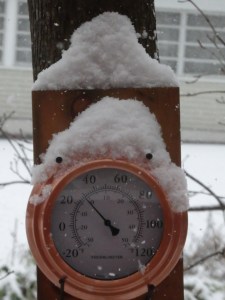
In the congregation of pleasure:
Some are fat; some, skinny.
Some cute; a few, beautiful.
They smile, frown, dimple, blink.
Hair short, curled, long and free.
They come from anywhere.
~*~
“Roger was in my room again till five
telling me he didn’t want to sleep alone again,”
she said, glancing at her lover
while he simply smiled, facing away.
~*~
One votive burns
twice as fast
as the other.
Both, invoking
departed honeybees.
To continue, click here.
Copyright 2015
She liked to bite fingers.
She braided my beard.
Her nose and big toe were square.
Her tresses were thirteen years long.
~*~
She devoured the translation like a cheeseburger
and refused to understand me.
She spent her paycheck
on clothes she bought on layaway
while she was one unemployed
good dresser who had to do something.
She said Kayak poetry review
looked like a Sunday school booklet
with a cannon on the cover.
~*~
She didn’t like the antique silver fork
with the engraved W
I’d bought for a dime
– the yellowed marriage
whose bride was no doubt long dead
held no treasure in her eyes.
Why else would we have it?
To continue, click here.
Copyright 2015
As I revisit my copy of The Diamond Sutra and the Sutra of Hui Neng, the binding falls apart. How appropriate! The price, $2.95, says everything: this is a volume that has been carried from one end of the continent to the other and back, with a world of spiritual practice and discovery in between.
A sutra typically is a Hindu or Buddhist teacher’s discourse for aspirants.
The scarab, a symbol of ancient Egypt, originates as a beetle, By extension, it also becomes a symbol of transportation in the hippie era, leaping from there to the Hindu and Buddhist texts and back.
Break away from routine – job, home, neighborhood and friends, the commerce of community – just long enough to let the mind clear. Don’t fill the silences with radio, conversation, any music or dialogue but your own. From somewhere deep in the nervous system, atypical even random bits of memory and observation rise in unanticipated sequence. What ought to have been obvious all along suddenly asserts itself, perhaps with bold surrealism or jarring candor.
In a flash, the mind dances, as it will, with whatever engages it. Field notes, the words themselves, appear unadorned, without apology. Here something other than straight thinking presents its original mental hopscotch.
To a generation of Americans, the Volkswagen Bug represents cheap, easily repaired, carefree transport – often accompanied by adventurous first-time experiences and personal growth. In ways, the plain VW depicts a break between the routines of schooling and establishing families and careers to follow. A time, too, of spiritual exploration, with a flowering of Yoga and Zen, especially.
Here, then, the machine serves as a vessel into the Void, where the mind glimpses and tastes “all this fleeting world: a star at dawn; a flash of lightning in a summer cloud; a flickering lamp, a phantom, and a dream,” in the words the Diamond Sutra (Vajrachchedika).
Listen to this teaching. As Hui Neng insists, “Mirror-like Wisdom is pure by nature.” And persevere!
~*~

Well, these are all at play in my newest poetry collection, Ripples in a Bejeweled Prayer Flag. Take a look at Thistle/Flinch editions.
The mind dances here and there, rarely in a linear fashion. So what’s on my mind these days? How about counting on these fingers?
~*~
~*~
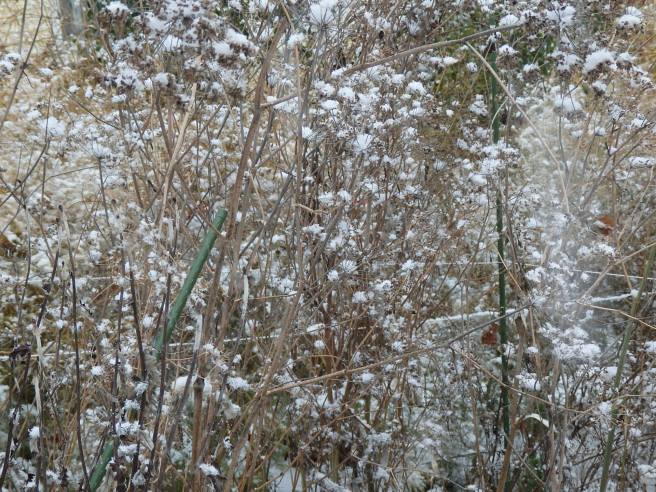
who knows exactly when it happened
that he realized he held more in common
with squirrels than any of his colleagues?
he couldn’t quite fly, no matter how much
he admired birds, and had climbed
enough trees as a kid to nearly qualify
still, he had little taste for nuts, other than cashews,
unless you mean a strange people,
and he rarely raked fallen leaves
maybe it was all a matter of some vague sense
he didn’t exactly belong in this apartment or house,
except by clandestinely rearranging his peculiar insulation
maybe it was simply a nickname
for the way he rummaged frenziedly in search
of some missing item suddenly remembered
he would dash, then, in and out of the trap
in and out of the trap and, with a snap,
wonder where he was being carried
Poem copyright 2015 by Jnana Hodson
To read the full set of squirrelly poems, click here.

