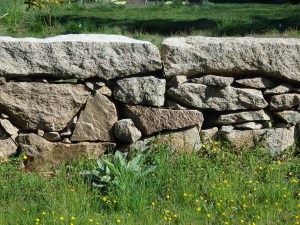
SO MUCH FOR THOSE PLANS

Being mindful of what’s right in front of us can always be a challenge. Here are 10 new items from my end.

~*~

  1. Some years we use the Smoking Garden more evenings in September than August. Often with a small fire going and sense it may be the last time of the year. How sweet!
  2. We have our own taste of the African Queen when we take the fall trip up the river from Portsmouth, starting with the broad harbor that finally narrows just before coming into downtown Dover. It’s a rather amazing midday cruise.
  3. Such a joy discovering a masterpiece by sight-reading, the way I did with “There Shall a Star from Jacob Come Forth” from Mendelssohn’s unfinished oratorio, Christus. Much different from listening to a recording or hearing it in concert.
  4. Some of the best ocean swimming comes after Labor Day. The water’s finally warmed enough to be comfortable. As for tide-pooling, we still have a wide variety of small crabs. They all move fast when uncovered. But no fiddler crab, so far, despite the title of my poetry collection.
  5. There are no lifeguards where I swim in the open Atlantic at a relatively unknown park in Maine. While some of its pocket beaches are sandy, mine’s a field of pebbles. Sunbathing there can be surprisingly comfortable. Now comes the balancing act. While the water’s finally tolerable, even briskly pleasurable, the air can be a tad too chilly.
  6. How do “real” writers live in their “free” time? Thought I’d have an answer by now, free from the office. Instead, the right pace and attitude remain a challenging mystery.
  7. Still not ready to shave my head, even if I’d look like a Zen monk.
  8. The night ocean: a remarkable tint of green.
  9. September can be thunder in the distance.
  10. Nothing we do goes quite as planned. (Not just the garden, at that.)

~*~

Leaven was an adveturous outpost of good food and good company in downtown Somersworth, New Hampshire. Small towns can be incubators of entrepreneurial innovation. Leaven's bakery continues as a wholesale operation.
Leaven was an adveturous outpost of good food and good company in downtown Somersworth, New Hampshire. Small towns can be incubators of entrepreneurial innovation. Leaven’s bakery continues as a wholesale operation.


LEAVING THE POINTS OF REFERENCE

To step into desert far enough you no longer see cars or houses brings a break with convention. Returning from one exploration with Kokopelli, I view the town as a mound of pea pods. Next, it becomes peanuts (which aren’t raised in these parts). Eventually, as packages of Grape-Nut Flakes — each building containing bodies, nothing more. Entire cities appear as collections of books identical to a room of cardboard boxes. Every abode duplicates a television set. I know this isn’t how people should be living. This isn’t freedom. This isn’t personality. We have our work cut out, don’t we? If Kokopelli hadn’t come this way earlier, I might have feared for my sanity. Instead, I know the brain’s a weird instrument and let it go at that.

Imagine undertaking a trip where there are no road signs, no maps, no pages of text. You have no way of knowing how far to the next town, gas station, restaurant, motel, or campground. Ask people and hope they know. With utter sincerity, half of them give bogus information. The other half lie. Without a guide, all the books you’ve read can’t possibly help find the marker, YOU ARE HERE. Your teacher embodies map, compass, path, and highway. If you have the genuine article, it’s better than an Interstate speedway. If it’s false, watch out. I wished my own were closer. I was running on memories. As my Teacher said, “When you think I-I-I, you’re a smoky fire blowing every which way. No I, no me, no my attachment means there’s no smoke, just a good hot flame burning clearly.” For me, this meant breaking out of my own shell. Would I have wings or claws? I hadn’t considered the spider.

At least I have Kokopelli, on occasion. Most of the time.

In this desert, I seek to unearth the hidden meanings of place. I return to a chart of Aboriginal names and translations, and substituted these for the Geological Survey’s designations. The mountain once known as Komo Kulshan is STEEP. That’s how it is when GOING FOR CLIMAX in the spiritual quest. You must keep asking, “What can I do WHERE I AM?” The answer? “Take another step dancing with your beloved.”

For more insights from the American Far West and Kokopelli, click here.

DRESSING THE PART

I wish I could articulate these feelings more clearly, but this seems to be the best I can do at the moment – maybe the counseling will bring new clarity as I delve deeper into my own emotions and dark side. Owning up to a lot of buried resentment (anger) has been a very difficult task, as is seeing how it has weaseled through so much of my outlook and actions.

As for thy question about dress, thee knows that plainness and simplicity are different. Thy daughter convinced me that plainness has meaning when it’s an expression of community – the concept of a city set upon a hill implies a people, and this isolated Quaker isn’t even part of a family in that way. Plainness would make me less likely to find the other half of that family base, too, from what I see. So in finally breaking down and ordering myself some new clothes (really the first time for that since before my marriage; my now-ex-wife bought me clothes after that, and in Rehoboth what I obtained was work-related), it turns out that with the exception of my bright yellow windbreaker, all of my mod clothes would fit very nicely into an Amish quilt. So much for my breakout! By the way, my corduroy broadfalls from Gohn Bros. are the most comfortable slacks I’ve ever had, even without the zipper. No, I have no desire at this time to appear “separate from the world”; at this point that would create a needless barrier to people who have enough trouble trying to comprehend the message of the Gospel. What I am finding, though, is that I feel separate from the world – walking into a mall or Kmart can be like landing on Mars. The biggest difficulty in all of this is the loneliness that ensues from that lack of family and community, of that sense of relatedness and common purpose. (Another one of the therapy’s major fronts. Please stay tuned for further developments.)

~*~

For more Seasons of the Spirit, click here.

ALONG WITH SOMETHING ELSE GOOD

Just a taste of what’s popping up. In case you were looking for a prompt.

~*~

  1. In Hebrew, breath and soul share the same word. (And thus, by extension: “I breathe, therefore I am.” As well as, “I breathe, therefore I’m inspired.” Remember, too, God breathed into the first human, Adam, giving humanity life, animation, and awareness.)
  2. Without a sense of rhythm, how little progress. Never overlook the drummer.
  3. Driving along, we keep laughing as we notice of every barn and not a few houses, as we acknowledge they needed of scraping and painting. As well as reroofing. Of course, we’ve just done ours. For now.
  4. They’re canning tomatoes these days. And peaches. Where will they all go?
  5. The Style of my own Eye. For now, back to the camera.
  6. Regarding the Song of Songs, a voice cries out, “What happens when we lose that Lover?”
  7. Watching two girls do the yoga sun salutation sequence on their patio, I find myself with a tinge of anger or disgust – something unexpected and hostile. Along with something else good, all remembering the circle. More centrally, whatever, about Swami that leaves me conflicted.
  8. I’m still amazed by the range of color in clear ocean water when I’m tide-pooling in the rockweed. Everything’s so crystalline in brilliant sunlight!
  9. A hummingbird at a prayer flag. I suppose it’s mostly about color.
  10. The Dover Greek Festival held every Labor Day weekend has introduced me to more than our local Orthodox community. I love the word “kefi” – joy, spirit, happiness, triumph, feeling good, mojo, loving life, and so on. Not a bad outlook on life, when you can.

~*~

Designed by Charles Bulfinch, who defined much of Boston's architectural style, the Massachusetts State House remains an imposing structure. It faces the Boston Common.
Designed by Charles Bulfinch, who defined much of Boston’s architectural style, the Massachusetts State House remains an imposing structure. It faces the Boston Common. 


APPRECIATING WHAT’S FUNDAMENTAL, EVEN PRIMITIVE

Throughout history, people have turned to pilgrimages, monastic retreats, or fasting as pauses in their daily customs — opportunities to reflect fully on immortal objectives before returning to everyday demands. Modern versions include vacations, travel, and outdoor pursuits such as camping — typically without the dimension of worship. Whatever the form, people return home with renewed appreciation. Maybe my wife’s trip on the bus held an element of this; perhaps it was just an escape.

The desert is similar. It’s made me recognize fundamental, even primitive, life requirements clearly, as though chiseled by flint instruments. Like the multitude of crickets chirping in the garden, much we take for granted — rain, clouds, family, especially — now magnify in consciousness. I could lay out some generalized principles and then form a big picture.

Tell me, then, Kokopelli insists. So I do.

Begin, for instance, with a line found on few maps, one that nevertheless defines the United States as much as the Appalachian mountains, Mississippi River, or Mason-Dixon Line do: to its west, less than thirty inches of rain falls in an average year. Because they require at least thirty inches of rainfall a year, leafy trees never extended across the Great Plains or Far West, except along streams or in pockets settlers planted and irrigate. The line drops across the map like a spider’s exploratory filament, a perpendicular sheen from a ceiling. The Dakotas, Nebraska, Kansas, Oklahoma, and Texas are cleaved. Further west, forests return near mountains, which generate their own weather patterns. Snowfall and rain, in part, explain the conifers of Western forest. Explain, too, the smell of open air, crackle of fire, proliferation of wrinkles in neighbors’ cheeks and foreheads. More lines can be drawn, leading to some web: the treeless expanse, for instance, between the Rockies and the Cascade or Sierra Nevada ranges.

Within the treeless expanse are other circles, other webs. Take center-pivot irrigation, patented in 1952, and count how many mile-wide green circles it’s spun across the Western landscape, each one requiring the electrical power of a city of ten thousand and a reliable source of water, generally fossilized or snowmelt. Back east I had rarely considered such matters. A drought meant no rain in several weeks. Dew was dependable. I knew about farmers, not cowboys. Grass was thick and green rather than sparse and dun. Summer air heavy with humidity made the sky milky rather than this piercing blue. On the westward journey, I barely noticed how loam is a table tilting to sky until we ran up against the forbidding wall of the Rocky Mountains. Now I measure summer nights that plunge fifty degrees, yet desert thermometer readings don’t compare with the comfort and discomfort known elsewhere. Thirty or sixty days without clouds oppress me as much as continuous rain would. I need new prayers. New magic, too.

For more insights from the American Far West and Kokopelli, click here.

VERILY, VIRGO

Why wait for the dust to settle? Here are 10 bullets from my end.

~*~

  1. For two weeks each year, those of us who have annual passes to the city’s indoor pool laps are shifted to the Olympic-size outdoor pool instead. At 50 meters, it’s more than twice as long, a length that can be intimidating. Just eight laps outside equals my 18 laps indoors – a half-mile routine. Already there’s a feeling in the air that summer’s over. Yes, most of the flowers have already gone by. Evenings are cool; nightfall, definitely earlier. But the water’s crisp, and it’s fun anticipating the contrails of a jetliner-a-minute headed in or out of Logan down in Boston – even before you get to the soaring eagles.
  2. Reviewing photos of our first years in our house, I find it painful to see how ugly the place was and how much progress we’ve made, still far short of our vision.
  3. What would I be doing if I weren’t blogging?
  4. In Genesis 3 (the second half of the Eden story), mankind loses its connection with (1) each other, (2) the earth, and (3) its God. One more dimension I’ve overlooked in my monograph!
  5. Scratched my arms picking crabapples along the street. They seem to be public property.
  6. A possible title, The Echo to Michigan, comes from overhearing, “We could take the Echo to Michigan.” Even that works better than “Toyoto Echo.”
  7. My oeuvre, written on the run, on the fly? Catch as catch can.
  8. I haven’t really retired but rather switched careers more fully to Quaker and writer. Though it seems there’s still not enough time for either.
  9. Sugar Shoes. (Wherever that came from. Wherever it goes.) Pump up the Prayer Flags.
  10. Just what kind of economic future are these kids facing?

~*~

Mill in Berwick, Maine, seen from Somersworth, New Hampshire.


THERE WERE NO EYES PEERING OUT FROM UNDER COONSKIN

when the snake that would have entered the burrow
had become a clothes line, pinned with nursing pups

nonetheless, when it came to his own yapping brood,
he was as territorial as any other male

running the risk of trying to span too much
when it came down to choosing sides,

he found no compassion for the frenzy
leaping from the bay window and

scurrying on the arm of his astonished roofer
no warmth, either, for overnight gnawing

through pristine crown molding
confronted by his rivals’ succeeding wave

weaned every three or four months,
who did he think he was, trying to command

shipshape precision in this collision?
it was only natural, then, his attempts

to shield his own from foul heavens
should invoke clownish tragedy or cannibalistic humor

just why would he assume in this life or that
anything was holding above their heads?

the roof is a bridge
between trees

*   *   *

squirrels would be snipers
rather than muster in any militia

Poem copyright 2015 by Jnana Hodson
To read the full set of squirrelly poems,
click here.

TURNING, RETURNING

My cultivated exercise of substance and spirit, my Dedicated Laborious Quest, is an interplay of natures — my own character and communities and varied ecosystems as they ultimately feed into our universe. As they harmonize, intuition leaps and skips; intellect dances with the heart. Emotions and each individual’s senses potentially humanize a fertile terrain rather than snagging within wildness. Wilderness, meanwhile, represents another order. In its sacred opportunities, the field of endeavor itself, whatever its name or specific form, becomes secondary to the abundance being disclosed around and within each practitioner. Indeed, many who participate and even excel in some activity where the D.L.Q. begins to appear — be it a gymnasium or playing field, a studio or stage, a laboratory or workshop — remain oblivious to the gateway my spiritual brothers and sisters and I have entered. When I meet a celebrated mountaineer who perceives icy heights, it turns out, the way a trucker regards a highway, I’m disappointed he failed to become a mystic seeking cosmic oneness. Accomplishment that’s solely technical remains devoid of unity. No, I’ve already learned that birds along the way are not just birds; my Teacher’s gardens nourish more than a stomach. In a circle of heavenly order as well as disintegrating debris, Kokopelli and I prepare a clearing and settle for the night. Observe planetary and lunar motions. Greet the sunrise. All natural phenomena give birth in an opening, should you find it. Likewise, locating a personal opening, an enclosed space within a universe, can bring recovery, renewal, healing, and salvation. To sit at the center of one’s birthright repeats an ancient journey made only on foot. There have always been charlatans who gain large followings by pandering to appetites for instant gratification, these days offering the comforts of jetliner or Interstate automobile. In reality, the aspirant must abandon even camel or mule along the way — eventually jettison everything, including his own backpack and affection for the very form he practices. In time, even his intentions. Step by rocky step follows a pathway that regresses through that origin. Perhaps the aspirant’s teacher has been there; perhaps he’s lost. At last, with his very life is at stake, if he turns back, he bears a haunted look in his eyes forever. I’ve come far, answering a call in the night, goaded by some deep wound and an overwhelming loneliness. In this exploration, dreams and mythologies correspond to trail markers. Once you discern how paradox differs from contradiction, you embrace its place in the teaching. To climb a higher ridge requires first descending to a valley.

Kokopelli, of course, knows all this and much.

He knows you may have taken any of a number of pathways to the holy garden. One may have played high school football — likely on the offensive line. One may have been an Eagle Scout, backpacking through winter forest. One may have built theater sets or lighting. Analyzed interstellar noise or constructed parquet flooring. One may have repeated violin scales, like me, or cared for younger siblings. The stories Kokopelli’s heard are endless. The common thread through all is this: the commonplace is never good enough. The spider’s thread climbs higher.

It’s no accident I came to dwell in desert, the timeless opening for religious surrender and ecstasy. By good fortune I also encounter great mountains, summer snowfields, crystalline air, unrelenting winds, a circle of fascinating comrades, and a new fullness of myself, no matter how briefly. From those heights, my art and intellect extract an essence, an inspiration to share with brothers and sisters who remain in suburbs and cities, often by necessity or by the duties of urban economy and civic obligation. My goal as poet, priest, artist, philosopher, naturalist, explorer, teacher, or prince — whatever that call — is somehow to preserve a sense of this supernatural potential and cosmic harmony.

Kokopelli says we can do all this when we play a dance. “They can feel it, and that’s enough,” he explains.

To be authentic, such an extended sojourn must somehow reflect other facets of existence as well: violence, savage revolt, a wide ranging lack of dignity or purposeful employment — at least, a recognition that socially valuable work seldom offers adequate compensation. In this preparation, the pilgrim may be propelled backward through history as well as forward into science fiction and interplanetary speculation. How curious that desert is so often perceived as a place of escape: gazing into its vast inhospitable space, you’ll detect nowhere to hide. Such terrain strips and confronts. No other environment, excepting surfaces of large water, is as mirrored with brilliant sunlight. All reflections turn back on the very thing you might most desperately seek to escape: yourself, especially.

If you hide behind a boulder, it evaporates. If you raise your hand to block glare, a Greyhound bus hisses past in a cloud of dust and thunder. If wearied by this torment, you retreat to the house, you’ll find that boulder waiting in the bedroom. A note on the kitchen table will divulge your beloved has taken that bus to the seacoast. You cannot sleep in her absence.

For more insights from the American Far West and Kokopelli, click here.