IKEA, where small is stylish

The Swedish retailer of low-cost home furnishings, appliances, cookware, and the like is a magnet for folks trying to make the most of tight spaces like apartments. Say a challenge like a 400-square-foot apartment.

Even if you have an old five-bedroom home like ours, the interiors can be challenging. IKEA has frequently come to our rescue. Yes, some assembly is usually required, and I can attest it’s not always idiot proof, but overall, we’ve been pleased with the results.

The closest IKEA superstore to us is located south of Boston, and since deliveries aren’t cheap, it’s worth the four-hour round-trip, even if you get lost inside once you’re there, as I have. The cafeteria, by the way, is quite the bargain.

Are you one of those intrigued by the small-scale living space displays in the IKEA superstores?

What’s your experience been?

As the random blahs kick in

So this general shutdown or shelter-in-place or self-isolation, call it want you want, is dragging on and will likely do so. Any novelty’s worn off. I miss my old routine and acquaintances. Can I assume I’m speaking for everyone?

My wife and I are lucky to live in a big enough old house so that we’re not always tripping over each other except in the kitchen. (Not that you care.) We have a big yard, too, which this time of year is beginning to demand gardening attention, getting me outside in the dirt and, well, mud. We also have access to a lovely carriage trail we can follow through a nearby woods to the top of a hill, giving us some decent exercise almost daily.

But I’ve definitely reached the state of blah, even when it’s not one of those dull wet deeply gray days. No, as I draft this, it’s partly sunny outside my window.

So here I am, up in one end of the third-floor attic, while my wife’s “working from home” with an online meeting on the first floor. I hate to walk through that. You know, the little square showing her face in the upper right-hand corner? Anyone else know the feeling? I’d move her to another room, but she’s comfortable in that particular spot. We try to adjust.

I can’t imagine being cooped up in a tiny apartment, much less with kids, though I’m sure that’s the case for many. Even a mobile unit in a trailer park would be way too confining.

What’s shut down goes beyond much of what most of us are seeing. Look, it even includes playgrounds! The one around the corner saved my sanity with the younger one more times than I can count. Let me sympathize with every parent during this duration.

But let’s try to be aware of the wider impact.

Continue reading “As the random blahs kick in”

Who sez nothin’ ever happens in a small town?

As the sophisticated outsider at the outset of Nearly Canaan, Jaya’s already at odds with the small-town outlook of Prairie Depot.

For some, she’s a breath of fresh air. For others, she’s a threat. Is it enough to ignite combustion?

Her presence bursts into romance, certainly.

But in freeing her suitor from the inhibitions of his strict upbringing, does she create a monster?

~*~

What’s your take on inhibitions? Especially where you live?


Ten ways ‘What’s Left’ and ‘Nearly Canaan’ differ

I’m relieved to find these two novels have big differences.

Here are ten.

~*~

  1. Children and family. Cassia starts telling her tale from age 11, and she’s surrounded by her two brothers and a clutch of close cousins. No kids of note in Jaya’s tale.
  2. Greeks. Central to Cassia’s identity. None pop up in Nearly Canaan.
  3. Gypsies. Are they really a strand in Cassia’s background? Not a factor in Jaya’s.
  4. Ghosts. Cassia’s dealing with her family history, after all. Jaya isn’t.
  5. The cat. A key figure in Nearly Canaan. None by name with Cassia.
  6. Sexuality. More explicit in some scenes of Nearly Canaan.
  7. Infidelity. For Cassia, it’s an issue in her parents’ generation. In Jaya’s circle, it’s a more immediate threat.
  8. Wilderness. The desert is a major influence when Jaya and Joshua move west. Hardly noticeable for Cassia, even when she’s living in Las Vegas. In addition, much of Nearly Canaan veers off into the forests and mountains to their west.
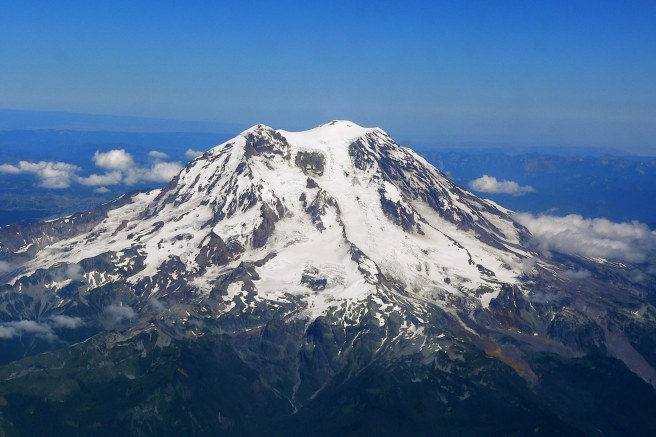
  9. The volcano. A turning point in Nearly Canaan. No geologic activity in What’s Left, apart from the mountain that triggers Cassia’s lifelong obsession.
  10. Photography. Her father’s archives become the key to Cassia’s discoveries. None to examine with Jaya.

~*~

Any of these strike your fancy?

A tidbit from a digital committee meeting

Or should that be a committee’s digital meeting?

As we were considering the possibility of extending an online workshop to our Quaker fellowship, to replace an in-person one we had cancelled, some of us sighed and admitted feeling Zoom’ed out.

That’s the phrase they used.  Zoom’ed out. Bet it’s quickly popping up around you, too. The way Google went from a way of looking (as in googly eyes) to an online search engine (capitalized) to a verb reflecting generic online usage, as in “googling,” even when you do it on Bing or DuckDuckGo.

Zoom isn’t the only platform being used for virtual meetings. Go To Meeting is also popular, and Skype is still there for one-on-ones, among others. Feel free to mention alternatives.

So, now that we’ve recently added “coronavirus” and “Covid-19” as new words in our common vocabulary, we’re about to add one more.

Any of you feeling Zoom’ed out yet?

Ten things ‘What’s Left’ and ‘Nearly Canaan’ have in common

Considering that they were drafted 30 years apart, I thought these two novels would have nothing in common.

Boy, was I wrong.

Here are ten overlaps.

~*~

  1. American Midwest. Southern Indiana for Cassia. The Great Plains or somewhere similar for Jaya and Joshua.
  2. Asian spiritual practice. Tibetan Buddhism for Cassia’s father. Hindu-influenced yoga for Jaya.
  3. Relationship and family focus. Five generations for Cassia, including her close cousins known as the Squad. Three same-age couples for Jaya, plus her in-laws and landlords out west.
  4. Livelihood. Family-owned restaurant and real estate for Cassia’s clan. Nonprofit public services for Jaya.
  5. Women in business. Cassia’s whole family, from her great-grandmothers down to herself. Jaya in nonprofits management.
  6. Career uncertainty. Cassia’s cousins have difficult decisions to make about whether to stay with the family business or find other livelihoods. Three of the spouses in Nearly Canaan struggle in their search for suitable employment, while the other three are caught up in their professions.
  7. Far West. As a young adult, Cassia works with clients across the western half of America, while Jaya and Joshua eventually relocate to the Pacific Northwest.
  8. Death and loss. They’re central to both books.
  9. Food. Cassia has all of that Greek heritage. Jaya and Joshua move to a land of orchards and fresh seafood.
  10. Restaurants. Cassia’s family owns a landmark café. Jaya is introduced to Joshua where he’s a flippant waiter.

~*~

Any of this appeal to you?

Coronavirus fuels a news storm unlike any other

The Covid-19 pandemic is an ongoing news story unlike any other we’ve seen.

Most news reports are about things that have happened – past tense – but this one is more a matter of watching things coming our way, threatening to happen in the near future.

Add in the two-week period between the time of infection and the appearance of symptoms, there’s even a sense of something ghostly in the air, a present tense that’s uncomfortably ethereal.

The closest similar coverage I can think of comes in sportswriting, as in anticipating an NFL game coming up, say, next Sunday. There, though, there are only two possible outcomes, it’s a limited time span, and a score will settle the matter.

The unhealthy emphasis on public opinion surveys regarding upcoming political elections might also fall into this future-tense focus, though we still see reports of candidate appearances and policy positions along with charges and countercharges.

With coronavirus, though, the scope spreads across many beats rather than something only on the sports desk or political reporter. It’s not just medical and health fields but also stock markets and economics,  education, transportation, technology, even lifestyles as well as sports and politics as we go into lockdown and shelter-in-place. Americans aren’t used to being confined anywhere, especially with their mate.

Well, we are also seeing potential major changes in the way we do many things in the years ahead. How much will online meetings catch on, for instance? Or what will happen to local retailing? It’s all fascinating.

~*~

There’s one other ongoing story that might emerge along these lines. Climate change.

Let’s see if experience with one leads to an increased interest in the other.

Ten distances from their part of the Ozarks

Few Americans know much, if anything, about the Ozarks, where Jaya and Joshua resettle in my novel Nearly Canaan.

Here are some driving times to points from Fayetteville, Arkansas, to major cities.

~*~

  1. St. Louis: 5 hours, 20 minutes.
  2. Memphis: 4 hours, 39 minutes.
  3. Tulsa: 1 hour, 55 minutes.
  4. Dallas: 5 hours, 13 minutes.
  5. New Orleans: 9 hours, 41 minutes.
  6. Kansas City: 3 hours, 32 minutes.
  7. Nashville: 8 hours, 47 minutes.
  8. Denver: 11 hours, 53 minutes.
  9. Chicago: 9 hours, 52 minutes.
  10. New York: 12 hours, 17 minutes.

~*~

Frankly, the Ozarks is more isolated than I’d thought. I’m surprised that its center is almost as far from New Orleans as it is from Chicago or that it’s halfway between St. Louis and Dallas. Looks like a long way to anywhere, actually.

How long does it take you to get to a major destination?

Ten places I’ve lived

  1. Dayton. Inside the city limits but with a working dairy farm a half-block across the street.
  2. Bloomington. On the Indiana University campus, and later at the edge of town.
  3. Binghamton. In the ‘hood, then on a hippie farm near the New York-Pennsylvania line.
  4. The yoga ashram. Out on a yoga farm in the Pocono mountains.
  5. Fostoria. In a loft downtown, over St. Vincent’s charity store, in what was once Ohio’s Great Black Swamp.
  6. Yakima, Washington. Including three years in an orchard.
  7. Warren, Ohio. We bought a lovely arts-and-crafts bungalow in an industrial city in economic collapse.
  8. Baltimore. Downtown in the trendy Bolton Hill neighborhood and then out in suburban Owings Mills.
  9. Manchester, New Hampshire. By the Merrimack River, then atop the tallest hill.
  10. Dover, New Hampshire. A mile from downtown. The longest I’ve lived in the same house, by the way.

And one other place that never really counted.

~*~

Tell us something good or bad about someplace you’ve lived. Like maybe your favorite?

What do you know about rocks?

In my novel Nearly Canaan, their neighbor Todd is a geologist. You know, a rocks guy. The Ozarks is where he and his wife Lucy meet Joshua and Jaya.

The place is a mineral-rich geological wonder.

Here’s part of the attraction he’d have where they are in Arkansas.

~*~

  1. Lead. The major ore that was mined. Still is.
  2. Zinc. The other major ore.
  3. Vanadium. Used in metal alloys.
  4. Diamonds. Mostly of industrial grade.
  5. Barite. The main source of barium.
  6. Tripoli. Used mostly as an abrasive in polishing and buffing compounds and as a filler in a variety of products.
  7. Quartz crystal. Used in electrical products, glassmaking, and for hardness in abrasives – in addition to its popularity in metaphysical healing circles.
  8. Gypsum. Used in a number of construction products.
  9. Chalk. Its range of uses include toothpaste.
  10. Bauxite. Used in the chemical, steel, petroleum, and cement industries, it’s also the principal source of aluminum.

~*~

What do you know about rocks?