SHUTTERING THE BUNKERS

For all of its uber-quaintness and tony appeal today, the neighboring city to our south has long had its seamy side. It was, after all, a seaport – and, for that matter, remains one.

While times have changed and its once notorious districts have long since been gentrified or razed, one bit of that heritage has lingered. We see it along the major highways, usually on the side headed toward the vacation lands north and east, and not always in the city itself but close enough to count.

These are the cement-block bunkers that sometimes tout themselves as bookstores, but we’ve never been fooled. A few actually started out, it seems, as gasoline stations that covered their windows when they converted to the sex trade, while the others may have actually been constructed with this function in mind. Magazines, videos, toys … but not live performances. Maybe there are some clubs elsewhere, though I suspect that requires a trip to Portland or Boston. Maybe Lawrence or Lowell.

These bunkers may have a thin window or two high up in the wall, but the doors are solid. In other words, no peeping. If anything, these blockhouses always look forbidding and forlorn. You might even say they appear shameful or guilty rather than flirtatious and giddy.

Rarely, too, is a car or pickup seen parked in front. And in the past few years, there have been fewer and fewer of those parked on the side, either.

Unlike their cousins on downtown streets in larger cities, where customers may slip discretely through the doorway or out, these offer far less secrecy for their patrons. If anyone knows your car or truck, they know where you are.

As we’ve driven past on the busy roadways, I’ve long wondered how these places stay in business. Magazines of all stripes have been folding or shrinking, and when it comes to racy photography, there’s plenty available online these days. No secret there. Ditto, the videos. As for the toys, well, we have online retailers of all sorts, along with rapid delivery.

Well, we now notice another of these little box stores is shuttered. It’s not in a spot we see any other store wanting. It will be curious to see what happens to the real estate. But there are no signs of mourning, either.

Funny thing, though: just up the road, at the mall, Victoria’s Secret is thriving.

CONSIDERING THE COMPETITION

After I moved from the ashram, I spent a year-and-a-half in a small city that very much resembles one I call Prairie Depot in several of my novels. And then I returned to my university as a research associate.

While our institute was set in a town very much like Daffodil, there was one difference I omitted. By this time, the town had a large urban ashram and, for several reasons, I chose not to attend classes or other activity there but instead began sitting with the Quakers in their mostly silent worship in a country meetinghouse.

Still, as the joke went, the ashram owned a third of the town. It had a vegetarian restaurant or two, maybe a bakery by this point, a house painting company, art gallery, significant real estate, and maybe much more.

The university, of course, owned the rest.

Or so the joke went, back in the mid-’70s.

My own experience is much more along the lines of what I describe in my novel, Ashram. We barely owned anything.

MORE THAN A DENTIST

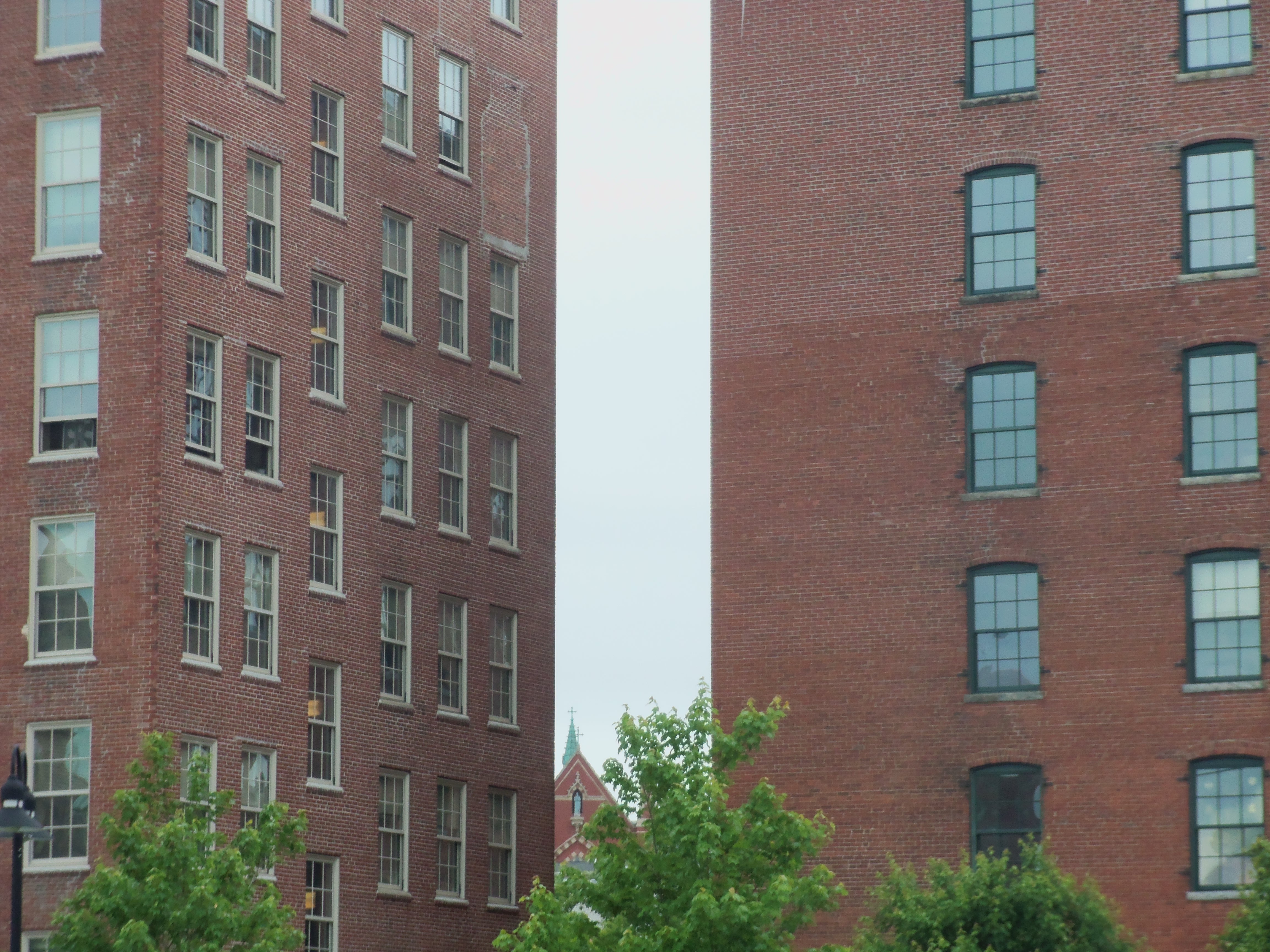
Many of the Red Barn postings have reflected the experiences of living in a relatively small city – almost 30,000 population – set near other communities of similar scale, all a little over an hour from Boston. These conditions, by themselves, do not necessarily guarantee an ideal stomping ground, but for the most part, I very much like where we landed. Having some of the neighbors we do, I should emphasize, is the biggest pleasure.

This scale also encourages face-to-face interactions in multiple settings. You run into people you know at the supermarket, the bank, a contradance at City Hall or the annual Greek festival, a chamber music concert, one of the coffee houses or a corner pub, well, you get the picture.

It’s all so civilized.

Much of this has been embodied in our dentist’s practice as well. Paul and Marge are both local kids who graduated as high school sweethearts and, well, I can let them tell their own love story. It’s charming.

When I first moved to town a little over a dozen years ago, I asked around Meeting for recommendations for a new dentist, and their practice came up repeatedly. For good reason.

As I said, their practice. And you notice, the first-name basis.

Everybody loves Marge, it just can’t be helped. She knows everybody and has a lively curiosity about their interests and activities and, well, let me add she never used a computer in the office – her penciled spread sheets were all she needed. Besides, it was also in her head. She might mention as you were leaving that your wife had an appointment in three weeks.

Paul, meanwhile, was down-to-earth and gentle. My previous dentist had expanded his building and his operation and wanted to replace all my fillings. Fortunately, I relocated in time. Paul correctly said my fillings were fine and saved me and my insurance thousands of dollars. Over the years, he’s also performed two root canals on me, and they felt no different than getting a filling. He lived up to his promise to this chicken on that count.

There were two other reliable delights in my semi-annual visits.

One was the bird feeders outside the second-floor windows, which were always flocked. While their office was close enough for me to walk to it and back, their feeders attracted a different array of birds than the ones we got at our own feeders. The grosbeaks, especially.

The other delight was Paul’s latest photography. He’s good, very good. And not every photographer can claim the kind of close-ups of bears he got at his home bird feeders just beyond the patio sliders … five days in a row.

Well, the last time I was in for my cleaning they announced it was their final day. They’d just signed the papers the previous day and were handing the practice over to a younger dentist they believe shares their values and ways. We hope they’re right. He’s keeping the staff and the setting.

As Marge said, they’re 72, though it’s hard to believe it. And as they said in their farewell letter, they came to see their patients as friends and neighbors as well.

They’re right. I hope we’ll be bumping into them around town. And I hope Paul decides to launch a photography blog of his own. I’ll certainly let you know if he does.

RETIRED OR …?

After officially retiring full-time early this year, I found myself saying I’d changed careers, taking up something that wasn’t yet paying the bills.

Actually, it’s been several things, from a rash of poetry appearances to publication of the novels, especially, on top of intensified Quaker practice.

Lately, though, as my wife returned to the workplace full-time, I’m beginning to sense I’ve retired from retirement to become … a househusband!

I really do need to learn to cook again, especially since the standards in my life have risen so sharply since we’ve been together. And then there’s the vacuuming and sweeping and washing … well, it really is endless, isn’t it!

As for meeting her in my apron, I’ll leave the details to your imagination. I hope she enjoys the cocktail and just kicking back. As if there’s time for that when you’re working.

TRUE HOSPITALITY

The New Hampshire economy – like the rest of New England, actually – relies heavily on tourism. But to put a smiling face on the cash cow, businesses and public officials alike call it the hospitality industry.

Dictionaries, however, say nothing about making a profit on hospitality. In fact, one calls it “behaving in a kind and generous manner toward guests; fond of entertaining; affording or expressing generosity toward guests.” Generosity extended by the host, we should note, and not the guest.

But looking at the word afresh, I’m also seeing another industry arising: the hospital. As in hospitalization. Oh, my.

SOJOURNING

One question facing many Quaker meetings is what to do about members who have moved away but want to retain membership. Their reasons may be sentimental or a family connection, the reality that they reside at a distance from the nearest Friends circle, or some discomfort they have regarding the meeting where they are. The fact remains that being Quaker requires face-to-face encounters with Friends.

Related to this is the concept of sojourning, with its sense in the Hebrew Bible of passing through a land on the way to another. Some of the references mention sojourning in Egypt; others speak of welcoming strangers who sojourn among you. Readers of Sojourners magazine see its application in our own time. In contemporary American society, sojourning is a widespread fact of life.

Quakers offer a form of affiliation known as a Sojourning Member, extended temporarily from the meeting where one is a member to a meeting where one is residing. I found myself using it formally in one of my relocations, where I didn’t sense full unity with (or from) the closest meetings and I held a job that was likely transitory in my career path. Informally, however, I found myself sojourning among Mennonites and, to a lesser degree, Brethren, who were theologically closer to my meeting of membership and my practice. Crucially, in a sojourning situation, one remains in communication with one’s “home” meeting. During this period, this meant attending its yearly meeting sessions and providing written responses to the sets of monthly queries.

Only after moving to New Hampshire and visiting among the nearest meetings did I feel clear to join with Dover, and even then there was a period before I felt free to transfer my certificate of membership. As it’s turned out, this is the land where I’ve settled – and my own turn to welcome sojourners amongst us.

A LOGICAL CONCLUSION

As far back as three decades, when I was selling editorial-page columnists and cartoonists to newspapers, even openly liberal editors had become shy of picking up anything except conservative voices.

As a consequence, we’ve had no new voices to speak from the left, especially not in general syndication. Think about it.

Meanwhile, newspaper circulation has been plummeting.

Could it be those conservative voices are deadly dull? (At least, when they’re not shrill?)

Think about it.

A bird with only a right wing won’t fly far.

Yes, think about it.

REALITY CHECK

Not long after arriving in town, I was walking past the managing editor’s office, which was crowded with three heavyset men accusing the Union Leader of being liberal media.

This was the same paper the Boston Globe’s news columns always called “the archconservative Union Leader,” never mind that by this time the political expressions stayed in the editorials and opinion page.

Still, it made me realize how far to the right some of the criticism originates or how isolated from the mainstream it exists. Or even how far it deviates from commonly accepted definitions.

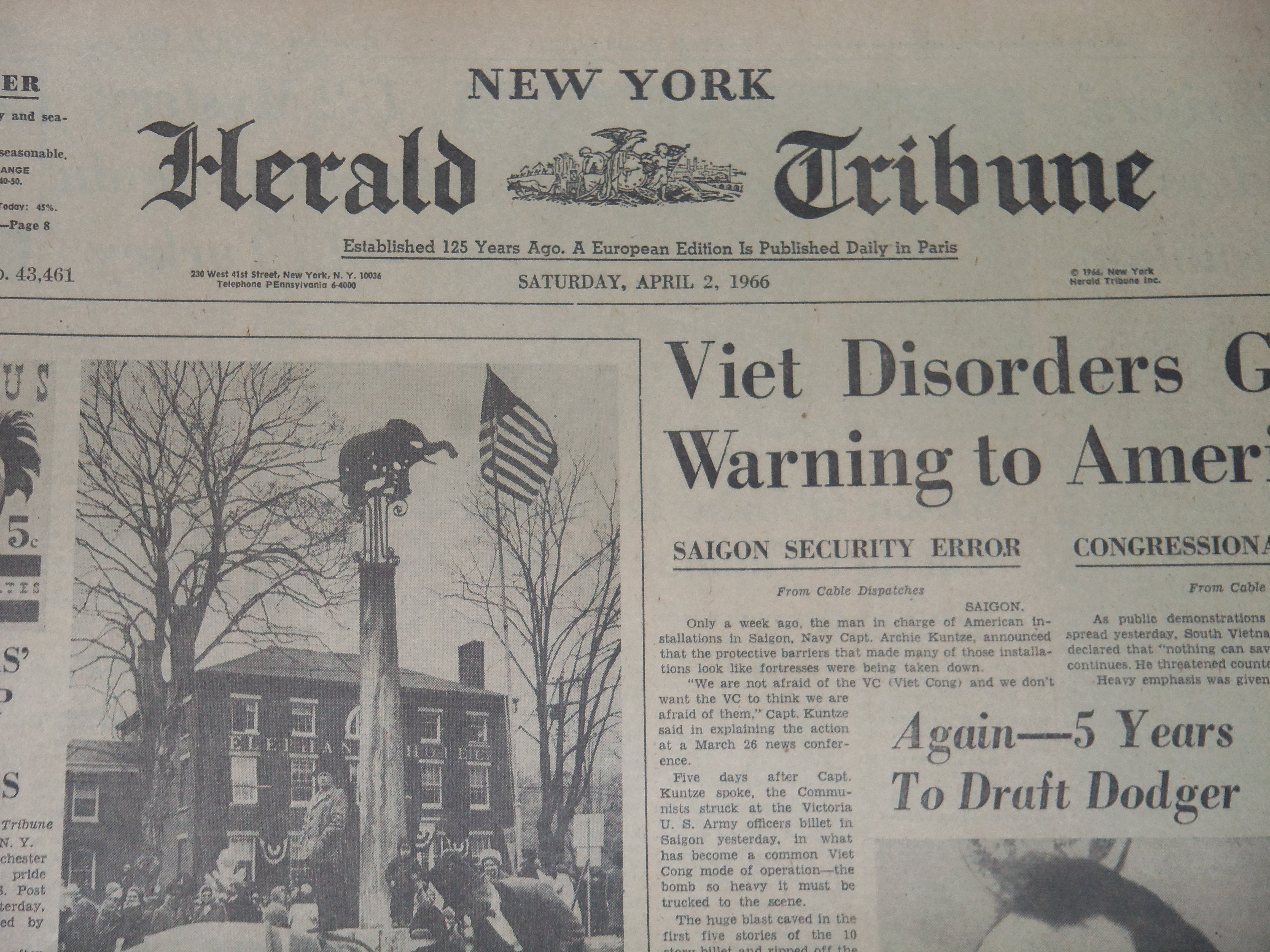
YOU READ IT HERE FIRST

Once, as I was being escorted around the Detroit Free Press newsroom, we bumped into a nationally syndicated columnist who was being given the VIP treatment.

Since I, too, was a guest, I had to bite my tongue.

A few weeks before, he’d ripped off the opening paragraph of our copyrighted lead story in the Yakima Herald Republic and opened his own column with it, nearly verbatim, without attribution.

As you know, that’s plagiarism – intellectual theft.

Despite heightened efforts to stem it, I suspect it’s long been part of the public information stream, to one degree or another.

Once, for instance, a small-town radio personality read my published concert review word for word over the air as if he had been there. Again, no attribution.

Or a Monday TV newscast read a photo page, without the photos, as if it was theirs.

More recently, we’ve had to shake our heads each time a certain television station says “W*** has learned,” because we know it’s code for “W*** read in this morning’s Union Leader.” At least they’d rewrite the story.

And then there were all of the charges and countercharges between the wire services and the big city papers, each accusing the other of taking stories and putting new bylines at the top.

But that could lead me to tell of my experience as a cub reporter at the Cop Shop (police station), where the rival newspaper ran my piece as its lead the next day. The reporter whose name appeared at its beginning had taken my carbon paper draft from the waste can.

So that’s how you learn.

OVERLOAD AT THE TOP

Every election cycle gets me pondering the limitations of any individual’s ability to make well-informed, reasonable decisions. Even with a platonic ideal, in the absence of the give-and-take combat of partisan politics, an executive can handle only so much. Or as Henry Kissinger discovered as Secretary of State, after years in academia, it was much more like being an NFL quarterback on Sunday afternoon than a divine ruler on Olympus. Is this any way to get wise results? How many crises can the White House manage at any one time, even before considering the routine operations?

Here, I lean toward the genius of the Founding Fathers when they established our compound republic, and urge divesting many of the functions to more appropriately sized levels – giving all due respect to localities and states.

But it’s not just government. In any hierarchy, information is distorted as it moves upward through the ranks. You tell the boss what he or she wants to hear. Or it gets distorted as they hear only what they find fits their views best. Rare is the CEO who has learned to circumvent this.

Again, my preference is for flattening the hierarchy and spreading the work out through a multiplicity of smaller enterprises.

Call me old-fashioned if you will. Or just plain human. Or maybe just an idealistic visionary after all.