ALSO FLOWING TOWARD THE MERRIMACK

just a warning, of Concord, revolution or dancing
the bridge or the barn, different eras
come, swim across the pond, watching
a commuter train race along the wooded hilltop
a shot, yes, by the river a bronze Minuteman regards now
with its great writers buried in its bosom
maybe you expect a great calm while packing
or overlook the state prison and traffic rotary
pressed together, “a port of entry and departure”
all of these pages, yes, being “bubbles in our wake”

~*~

the temple wall folds
to the green river
of migrating salmon

its unbroken factory façade
springs from gravel
not here or there

with the neon lights, if you would
export calico
or denim
from a carp pool

To continue, click here.
Copyright 2015

HOT TUB ORACLE

I never intended to live there as long as I did, in the rented townhouse in what I sometimes called Yuppieville on the Mountain. But it must have suited me during that decade of waiting and searching, my anticipating true love and a long-desired relocation into permanence. Besides, it was convenient to the office. Admittedly, I enjoyed using the whirlpool in the clubhouse, soaking in the hot water while watching snowflakes drift down on the other side of the display windows; besides, at that time, the complex was still surrounded by woodlands. Lest it sound too idyllic, let me also acknowledge the dumpster parked beside my unit was frequently overflowing.

The poems in the resulting collection arise in that experience of transient proximity, which has become so much a part of the American landscape. The poems themselves are a kind of side street from other works I was drafting and revising during this time. Still, they make me examine what was right in front of me, all the same.

The series closes my collection, Rust and the Wound. To read the free ebook, click here.

LOST YEARS

these damned mill towns exhaust
another mystery in the night
of Indian and Barbados descent
as much a sphinx as medical

for a change, salmon, at the hydroelectric dam

(along with the fish ladders they’re installing
two blocks from my home) the only evidence of life
is where beaver has gnashed a foot up the trees

~*~

the decade and a half
between the collapse of first
marriage and origins

that second                spiritual redirection
and career retrenchment
not harried                but

resignation
collisions
oh, all these devils

~*~

like the other stuff I was going to do tonight
my intellectual existence, it seemed
if she knows any alternatives

To continue, click here.
Copyright 2015

FROM MY LITTLE THIRD-FLOOR DECK

did I hear thunder?
coffee in the treetops

just a pony cart of vegetables
street vendor’s cry
(O! the Arabs of Baltimore!)
on his daily round
somehow getting by

yet clouds slipped in

with a long cord, the phone

this old apartment, all light and draught
the floor sinking, new cracks in the plaster
was giving way, downward, you could hear it in the night
paint flaking, more pieces falling to my bed

all going downhill, to the basement

rusty pipes, armies of cockroaches
at work in the walls

constantly dripping faucets
kitchen, shower, the bathroom sink

stacked magazines slid away on their own
new grit emerged immediately after sweeping

the faucet knobs never matched

water rings in the ceiling

blooms collapsing for lack of circulation

To continue, click here.

NOW, TO LOOK MORE CLOSELY AT A TWO-EDGED SWORD

If you want to see out-and-out prejudice by people who think themselves to be open-minded, here’s a good litmus test. Raise a matter of Christianity. Or, as a woman, wear a cross necklace. Then ask if it’s the same response you’d get had you presented something from another religion.

Put another way, I’d long ago been appalled by an assumption many of us liberals took in regard to Christians – and to be candid, I was once one who was self-righteously disparaging. Quite frankly, it’s out-and-out judgmentalism that hurts our progressive causes. It’s ignorant of the important support radical faith gave to many movements through the centuries and can still give to the future. It’s a point for dialogue with our opponents, if we’re willing to engage it.

Two common assumptions spring to mind here.

The first involves intelligence. There’s more to life, let me point out, than materiality. Think of love, music, morality, for starters – people with knowledge of ways of empathy, too. Extend that, then, to a recognition that to be a person of faith does not automatically mean stupidity, even if we do see way too many examples in the public arena – not just those of the Christian label, either. Nor do Christian do not come in a one-size-defines-all homogeneity – some denominations, for instance, refuse to bear arms or participate in war as a consequence of Jesus’ command to love our neighbor, while other churches rally around the troops. The ways of thinking and the emphases vary widely, from Fundamentalists to Evangelicals (yes, there are differences there) to Pentecostals to various strands of Calvinists or Lutherans (yes, again some key differences) to various Wesleyan (Methodist) and Baptist and Anabaptist (Amish, Mennonite, Brethren, Quaker) and on to the Unitarians. And that’s just among the Protestants. Add to that the Anglicans (Episcopalians), Roman Catholics, and Eastern Orthodox and you have a very rich mix, indeed.

Within those are some very intelligent and sensitive people, along with circles of personal growth and ethical accountability.

The reality is that religion is capable of engaging our innermost motions – our hopes and fears, especially. It’s a power that can run many ways, challenging the status quo as well as establishing community. The state and the establishment have many reasons to desire to curb it, as history attests. Even at a personal level, it can be scary stuff.

Pointedly, progressive movements have sprung from this source. For centuries, up through America’s civil rights revolution, social change has grown from radical Christianity. A central thread of the Bible has been the evolution of justice and then radical peace and equality. Read it closely, and what emerges remains a challenge to the status quo. Let’s not lose it now!

As the prayer goes, “Thy kingdom come, thy will be done, on earth …”

Many of us see that as a more loving, just, and peaceful society. Mock it if you wish, but think of the alternatives. Are they really progress?

All of that, of course, leads to my second point: the so-called Christian right, of the political sort, hardly owns the mantel of Jesus. And since any religion has the potential of engaging those most soulful endeavors of human existence, we see across the spectrum instances of appealing to fear and oppression, on one side, as well as forgiveness and oneness, on the other. Religion in this dimension presents an opportunity for conversation and growth, if we allow it.

~*~

For more on radical faith, see my book, Religion Turned Upside Down.
STANDING BESIDE THE PROUD MERRIMACK

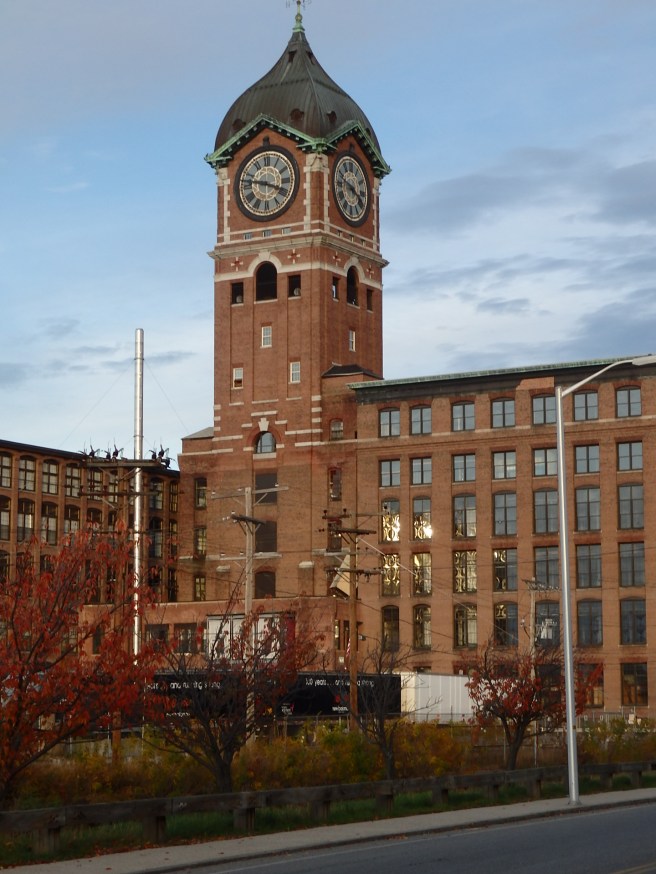
The clock tower of the Ayer Mill in Lawrence, Massachusetts, overlooks the Merrimack River on the other side of the wing to the left. It's an impressive sight.
The clock tower of the Ayer Mill in Lawrence, Massachusetts, overlooks the Merrimack River on the other side of the wing to the left. It’s an impressive sight.

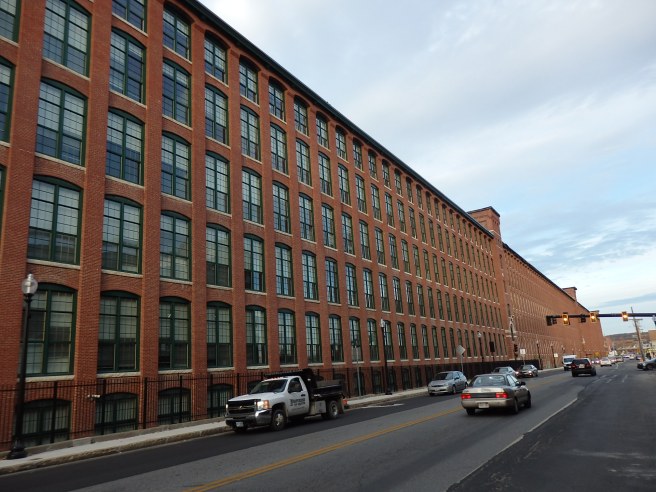
While water-powered mills sprang up all across New England, thanks to its abundance of falling waters, the riverbanks of some locations became jammed with factories that employed thousands. The Merrimack River, for instance, had major industrial clusters at Manchester and Nashua, New Hampshire, and Lowell and Lawrence, Massachusetts, all relying on the use and reuse of the same water carefully shepherded downstream.

Many of those landmark buildings have been lost over time – fire, neglect, and urban renewal have taken their toll – but those that remain can be truly impressive, especially now that they’re being repurposed and renovated into charming, flexible centers of entrepreneurial innovation and center-city living.

Lawrence, with what was once the biggest dam in the world, is a prime example.

Hard as it is to imagine, this group of mills was once dwarfed by those on the other side of the Merrimack River as it rolled through Lawrence, Massachusetts.

SO MUCH FOR THAT PICTURESQUE IMPRESSION

Looking at all of the old red-brick mills remaining along the waterways of New England, you’re likely to see them as strong, serious, silent enterprises in their day. Something like a library, perchance.

The reality is something quite different. They were beehives, for one thing, where workers were subject to wide fluctuations in hot and cold (no heat, which could spark fires, along with some brutal summers) – in addition to cotton lung, like the black lung suffered by miners.

As for the quiet? Forget it. These factories were powered by leather belts that ran in relays from the groaning, splashing waterwheel to squeaky overhead rollers on each floor which in turn led to all kinds of clacking machinery. The whole building shook.

Not all of them wove cotton, either, but the mechanics were the same.

The leather belts, by the way, would wear out and break. They alone led to a unique art of construction and maintenance. The city where I live had tanneries to supply the mills, unlike the next city downstream, which was involved largely in shipping.

As the ditty went:

“Portsmouth by the sea,
Dover by the smell.”

As I was saying about that initial impression? These were the nitty-gritty realities.

ONE COUNTER GIRL TO THE OTHER

“here’s the guy
you called a moron
the other day”

“that’s Mormon,
not moron!”

vital differences
in the distinctives
add up, I trust

~*~

came home the other day and found
my apartment door unlocked, apparently from when
the maintenance crew came in to leave a form saying
my rent’s going up next month

so much for living an hour from Boston

at least nobody tried the door in the meantime

~*~

in the circling, a return, or maybe
everybody’s coming down with colds or the flu

a repressed desire for children
driving from one town to another

interrupted by an “emergency” message from the operator
even when it wasn’t an emergency

(just informed I have
with two “personal days” that must be taken before
the year ends)
my bank balance says otherwise

To continue, click here.
Copyright 2015