OUT OF THE FLATLANDS AND ONTO THE SEA

Another blast from my past:

I spoke in Meeting about being a flatlander from a landlocked place and my ongoing fascination with the tides and moods of the ocean, leading into my first experience on a sailboat which was also my first experience out on the Atlantic and my first time of seeing a whale, which popped up in front of us.

I then mentioned another trip when my boss asked me to take the till and my surprise at feeling the wind pull the sailboat in one direction while the current tried to turn it in the opposite and how I was trying to steer to a compass point in-between – me, who would rather avoid conflict. On top of it all, it was a day when we could not see our destination, the Isle of Shoals, but had to trust our maps and calculations. Then, too, Peter’s girlfriend laughed, realizing my fear of having the boat be blown over. “Don’t worry,” she said. “If the boat tips that far, the sails will deflate and we’ll right again.” She paused before adding, “Besides, if there’s really a big gust, there’s nothing you can do about it. That’s how I lost my boat.”

As I spoke, I admitted the associations of wind to spirit (inspiration) and, as I’d now add, intellect, and of water to emotions and the unseen, while we are here in our own little vessels steering in the hope of an unseen destination.

Afterward, one Friend told me of the importance of finding that point of critical tension in our lives, where things can be accomplished. I now see this in contrast to the Tao, path of least resistance or way of falling water.

A second round of memories involves an ability to choose the right sail or combination of sails to fit the wind, as well as the lulls. The emerging harmony, too, between the winds and the waves, the lift and fall along the way.
OFF ON THE PACIFIC CREST TRAIL

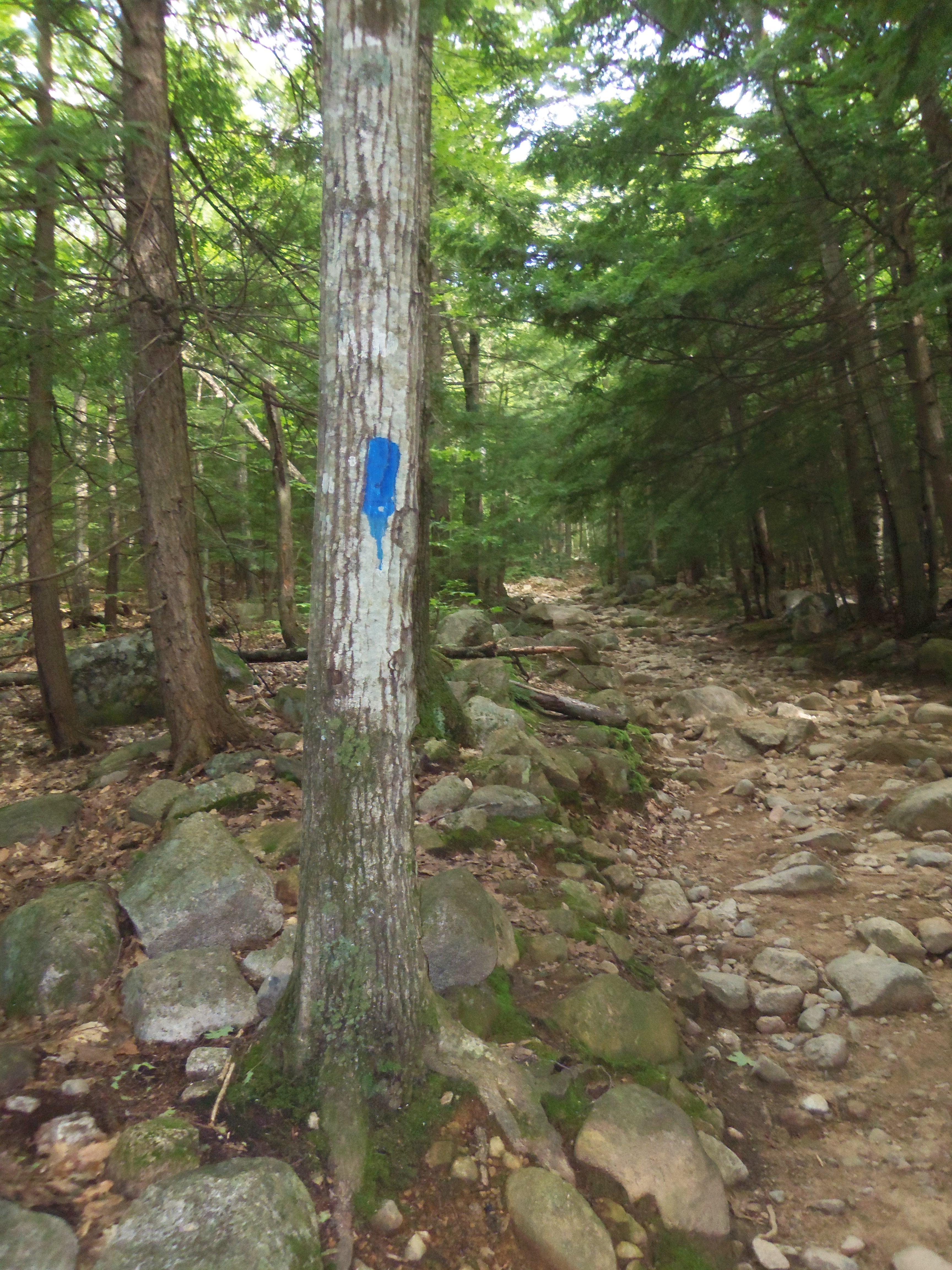
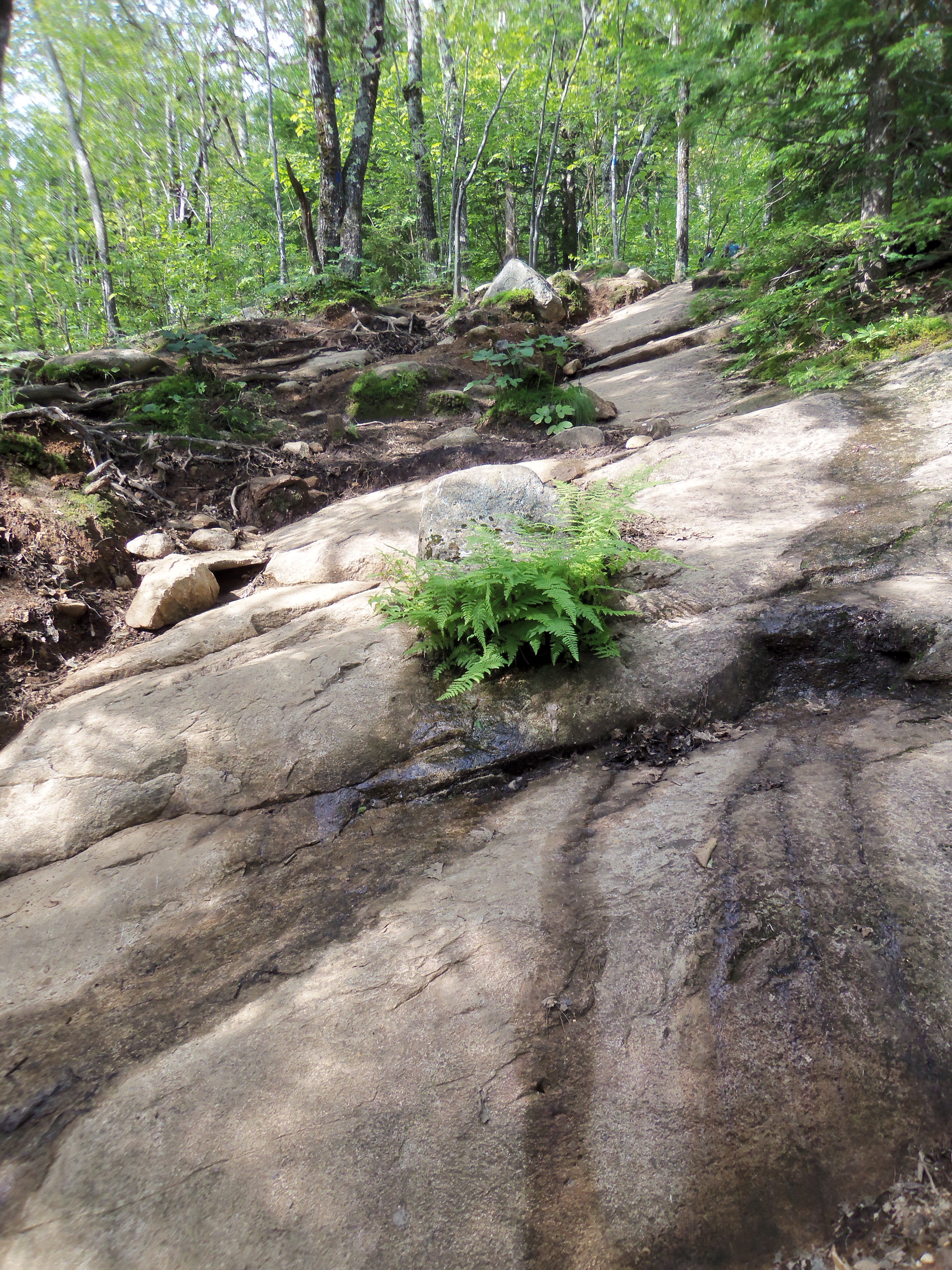
Have to admit to some envy for a young acquaintance who’s off to hike the Pacific Crest Trail.

It’s a strenuous trek, backpacking the 2,663 miles through Washington, Oregon, and California – the Western counterpart to the older, iconic Appalachian Trail.

And it’s bound to be a totally different experience than he had on the AT.

I became acquainted with Samson as one of our lifeguards at Dover’s indoor swimming pool. And now he’s away for the summer, starting just a few miles from the Canadian border and heading south.

He’s promised to update us on his blog, Samson PCT. (PCT is the in-name for the trail. FYI.)

Here’s an invitation for you to follow his progress, too.

Not bad for a kid from a little north of New York City. My, oh my!

LIBERATING IN THE END

A central question facing compositional artists of all stripes (in contrast to performing artists like actors, dancers, and musicians) is the matter of determining when a work’s finished.

How do you know?

Is just out-and-out satisfaction a measure? A trusty one? Hmm.

Let me suggest some others.

Sometimes it’s a sense that you just can’t go any further with it. And if it’s in a state beyond notes and fragments, maybe that’s it. You’ve hit a wall, a property line, or just the shore or riverbank. So you stop. Period.

There are times, admittedly, when you think something’s finished and put it aside only to find, on returning, it needs more – revision, for starters, and maybe additions and major restructuring. (A friend spoke the other evening of drafting a memoir in the third-person and then redoing it in the first-person, the kind of change I’ve done in some of my fiction. And Brahms had an early symphony that became a piano concerto, if I recall right.)

Working under a deadline can simplify matters. Time’s up! Next!

Nice, if you happen to have an advance or pipeline of delivery or the concert’s coming up.

Novelists might even find doneness appears as the time they find their focus obsessing with the book under the one they’ve been tackling.

Some poets will say that once it’s published, they can let go of it. Finito!

~*~

In the bigger picture, the “finished” question isn’t just about having a manuscript ready. For a writer, it’s ultimately about landing the work in a reader’s hands. A place where a dialogue can begin. And getting that manuscript from a polished draft into circulation can be a huge, energy-depleting limbo, especially if your life is filled with competing claims on your time.

In short, you can either focus on seeing that one work through to publication – or you can create the next one, while the inspiration’s still hot. For me, as I tried to balance my writing life with a journalism career, personal relationships, spiritual practice, and so on, I wound up with a huge backlog of finished material. At least I’d wisely not put off the writing for retirement, as had a number of colleagues I’d known – none of them ever managed to fulfill that dream.

What I did find, though, was that the unpublished work became a burden of its own. Its emotional weight inhibited new work. Why bother? It even had a way of twisting my sense of identity – who was I then and who am I now? Think, too, of the relationships that fed into one work – and the people I’m with today. As in lover or spouse.

So the experience of having my book-length works finally being published brings the “finished” consideration across yet another threshold – the matter of being liberated. I can let go of trying to hold that memory, treasuring that epiphany, honoring that friendship.

Should I have just trashed them long ago and moved on into other, non-literary endeavors? Just think of the hours that could have been directed instead to overtime pay, which would make my retirement more secure. Or travel or …

Maybe it’s just a case of hoping for acknowledgement. Hey, here I am!

Still, it’s what I’ve done.

What I have is a feeling of being true to a responsibility carried to its completion at last. What happens from here is, well, liberating any way it goes.

ON THE ROAD AGAIN

We’ve entered vacation season (not that we Friends don’t travel widely throughout the year). While it also means that our attendance is likely to be down through the summer, it also means we’re likely to have visitors from, well, just about everywhere – people I expect we’ll welcome warmly.

It also means we’ll have the opportunity in our own travels to attend other Meetings, something I strongly encourage. For the truly adventurous, worshiping with Friends in the “other” streams can be stimulating and thought-provoking. A pastor? A choir? Hymnals? I always learn something. Last time, it was silent singing. Another time, that the Evangelical Friends can have just as much of a cat-herding condition as we do. Memories of a humorous exchange with the baritone sitting next to me in the choir.

There’s also a curiosity about us, too. “Why did you choose us?” – that, in the pastoral meeting style, rather than the unprogrammed worship a dozen miles away. I could have given any of a dozen reasons, but eventually got down to the part, “Besides, I have the book” – meaning a collection of historic essays and oral histories made before the village was flooded by a Corps of Engineers dam, and the new meetinghouse built out along the highway. And then, in the give-and-take of quick conversation, receiving that priceless look and gentle reply, “It’s all fiction.” As a writer, I had to laugh, knowing all too well how difficult it is to get any story right. The quick exchange followed by some suggestions of sites to poke about afterward, if I had time.

I come home with a renewed appreciation for every visitor who ventures through our doorway. With a little more flexibility in our own open worship. With my own additional chapter to a well-used book on the shelf behind me. And with an expanded awareness of our body as a Society of Friends.

YET ANOTHER PILE OF OBSOLESCENCE

Years ago my father gave me a small metal cabinet with 18 one-inch-deep plastic drawers, each 2.5-by-6 inches. It was intended to hold screws, nuts and bolts, and other small items for the household repair shop – but mine wound up in my studio, where it holds small items of the writer’s trade. An artist’s pencil sharpener, push pins, souvenir fossils and flakes of mica, fountain pen cartridges, staples (for the stapler), a measuring tape, clothespins, business cards, foreign coins, colorful paperclips in both small and large sizes.

The last item – three of the drawers, in fact – recently stopped me cold.

Not so long ago, or so it seemed, I started collecting them at the office as we went through the mail. My literary work at home included a hefty dose of correspondence – not just submissions, either – and the bright-color clips seemed a much brighter option than the usual shiny steel in circulation.

As I gazed on them this time, though, I started to wonder what I’ll really be doing with them. Submissions are all done online these days, as is most correspondence, even of the personal streak. Maybe I’ll clip materials together when offering a workshop here or there, but I’ll never go through my stash.

Add to that the manila envelopes and cardboard backing, the loud bursts of colorful folders and binders, even the three bottles of typewriter correction fluid.

Not too long ago I wanted more filing cabinets, but as elder daughter informs me, folks can’t even give those away these days. Besides, I stopped printing out manuscripts long ago. Talk about downsizing?

Makes me wonder what’s next to go. Not that I’m really comfortable with any of these changes.

A SECLUDED COURTYARD, IF YOU WILL

I’ve already mentioned it, the patio-like space beside the barn where we grill and dine through the summer. The place we call the Smoking Garden.

Originally, I envisioned it as a haven for the kids’ grandmother to sit with her cigarettes, but she never used it. Preferred the porch to the barn, if anywhere.

We inherited the arrangement when we bought the place. A couple of thick maple branches had to be removed, since they were blocking any passage at chest level. But the round fiberglass table was already in place, with pea-gravel on the ground and three adjoining panels I’ve since cleared and planted.

Now we’ve added tiki torches and twinkling Christmas lights overhead, plus the hammock.

Pour me a glass, please. Turn up the music.

~*~

 let me praise the secluded outdoor corner
as part of an urban dwelling:
a patio or deck
(my last apartment lacked one)
the courtyard with a fountain
a large porch or gazebo
at the least, a place to sit
or, better yet, cook
any place close enough to the kitchen
with a degree of privacy and a view of something

Poem copyright 2015 by Jnana Hodson

CRACKLING IN OUR AIR

In blogging here, I’ve generally tried to steer clear of current events, as in political and economic news. Even my reflections on the weather have been, I hope, along a larger or more timeless horizon than mere day-to-day changes. Think of watching the grass grow.

But I do live in New Hampshire, and the campaigns for the November 8, 2016, presidential election are already generating daily front-page headlines here. Remember, that’s nearly a year-and-a-half away.

The primary is tentatively set for February 9, but that could move up, depending. We hate when it clashes with Christmas.

The point is, politics is already crackling in our air. How can I possibly avoid it?