INTO THE GREAT PLAINS

To grow a leafy tree requires more than thirty inches of rainfall or its equivalent each year. If you drive west across the United States, you can cross an imaginary line that passes through the Dakotas, Nebraska, Kansas, Oklahoma, and Texas, and beyond it deciduous, or leafy, trees are quite rare. Soon, so are conifers, the evergreens. Irrigation becomes a fact of life if you want to raise food or flowers or even a lawn.

The Great Plains eventually pass into desert – and you might be surprised to discover that most of Oregon, Idaho, and Washington state is actually desert. The rainy belt is little more than a thin band along the Pacific-facing side of the Cascade and Olympic mountains.

Quite simply, it’s a different world from the one most Americans know.

~*~

As for the Great Plains, let me recommend Kathleen Norris’ Dakota. It’s a unique and marvelous book.


SAMPLING A FEW QUAKER PERIODICALS

Now for the magazines rack. The one in the meeting library, where we display our current periodicals.

First is the monthly Friends Journal: Quaker Thought and Life Today, published in Philadelphia from a Friends General Conference perspective. In its elegant format, it’s a delight to hold. Admittedly, the articles often run the range of crunchy granola-head interests and sometimes a too “politically correct” editing and can leave one wondering just where Friends stand as a body, but there’s almost always something provocative, from one side or the other. Look, too, to see how it progresses under editor Martin Kelley.

Second is Quaker Life: A Ministry of Friends United Ministry published six times a year in Richmond, Indiana. This colorful, glossy magazine underwent a lively transformation in its few years under youthful editor Katie Terrell, who attempted to give each issue a distinctive focus – integrity, transforming lives, what does a new kind of Quaker look like, humor, authority, discernment, even controversy itself. Considering its audience of primarily Midwestern and Southern pastoral Friends, I’m often impressed by the number of writers from unprogrammed meetings, many of them in New England – as well as those from Third World nations. If you want to get a quick overview of how our spiritual roots influence us today, turn to historian Tom Hamm’s one-page question-and-answer column in each issue.

Also of note are the quarterlies. Quaker History can be anything but quaint when it’s examining the difficulties of integrating Sidwell Friends School in Washington, as well as its not-so-orderly roots, or the psychedelic influences of ergot-infected oats on the early Quaker movement. (The real Quaker oats?)

And Quaker Religious Thought, often focusing on a single topic such as Speaking Truth to Power or the strand of Holiness movement in Friends tradition, typically counterpoises the primary article with considered reactions. Sometimes a thorny theological issue can be too arcane for general discussion, but that’s offset by the others that prove unexpectedly stimulating.

*   *   *

Oh, yes – the extra magazine and newsletters piling up in your home? Consider dropping them off at the public library magazine swap pile, a local coffee house, or the Laundromat. You never know who might learn of us that way.

PENDLE HILL PAMPLETS

Some of the most helpful or inspiring writing I’ve encountered has come in short volumes. In poetry these are typically called chapbooks, while in prose they’re often pamphlets or booklets.

Among them, the rack of Pendle Hill pamphlets in our meeting library presents an astonishing array of Quaker wisdom. Published by subscription (currently five volumes a year) at the retreat center in Wallingford, Pennsylvania, the series now numbers more than 400 titles. Admittedly, there are some duds among the jewels, but somewhere in the collection is likely to be a reasoned answer to your nagging question about Quaker faith and practice.

Some, like Margery Mears Larrabee’s Spirit-Led Eldering and Sondra L. Cronk’s Gospel Order: A Quaker Understanding of Faithful Church Community, focus on vital aspects of Friends’ community. Others, like William Taber’s The Prophetic Stream and Four Doors to Meeting for Worship, serve as guides for the experience of our hour of open worship. John Punsheon’s Alternative Christianity finds in Quaker practice itself a different expression of Christian faith than is found elsewhere (that is, he looks at the results, while I’ve been looking at foundations). Peter Bien’s The Mystery of Quaker Light parallels some of what I’ve been uncovering in the revolutionary aspects of this central metaphor of our faith. Brian Drayton’s Getting Rooted: Living in the Cross, a Path to Joy and Liberation, spring from personal practice.

The series has also included a wide range of social action issues, like Pat Schenck’s Answering the Call to Heal the World or labor lawyer Richard B. Gregg’s A Discipline for Non-Violence, as well as volumes on art and theater, prison work, nurturing children, and Quakers’ experiences in yoga and Zen.

There’s even a Quaker Pamphlets Online project to provide free downloads of classic early issues.

For now, I’d like to take a more extended look at four volumes that came in around the same time:

  • Benjamin Lloyd’s Turnaround: Growing a Twenty-First Century Religious Society of Friends is an exciting and challenging argument of extending Quaker faith to younger generations. Funky interracial ads on the sides of city buses, anyone? With his theater background, Lloyd’s right in contending we need to reach out, vigorously, and shake off unnecessary baggage. He’s right in sensing we need celebration and true community. And he’s refreshingly candid about our weaknesses.
  • John Lampen’s Answering Violence: Encounters With Perpetrators is a hard-nosed blueprint of the author’s work as a peacemaker who moved into a land of engrained conflict. The incidents he relates are difficult, dangerous, courageous, sometimes leading to tragedy, sometimes bridging opponents trapped against their own heart’s desires. Yet he also marks important turning points in the time-consuming drive to pacify Northern Ireland.
  • Framed by an enigmatic old English folksong, Richard Kelley’s Three Ravens and Two Widows ponders the modern Society of Friends through the quite different legacies of his mother, with her urbane Philadelphia outlook, and his paternal grandmother, with a Holiness-based pastoral Quakerism in Ohio. Somehow, they had to find ways to live together after the deaths of their husbands. By implication, so do we, as a diverse community of faith.
  • Brian Drayton’s James Nayler Speaking considers the brief, prolific outpouring of early Quakerism’s most important minister. More articulate, mystical, and systematic than George Fox, Nayler was at the forefront of bringing the Quaker message from the north into London and all the upheaval that followed. No one else has written more powerfully of the Light or embedded its metaphor into Quaker thought so thoroughly.


THE CUSTOM OF QUAKER JOURNALS

The custom of publishing the journals of influential Friends was no doubt intended to encourage others to strive for exemplary service. The journals themselves form a curious genre – part diary, part autobiography, part memoir viewed from the vantage of advanced age, part travelogue (often tediously so, unless you’re looking for individuals and places being visited), part glimmers of spiritual brilliance – often published after the specific Friend’s death and at the direction of a yearly meeting. Closely related is our custom of memorial minutes.

Best known are the journals of George Fox, spanning the initial decades of the Quaker movement, and John Woolman, whose lifelong mission essentially ended the ownership of slaves among Friends before the Revolutionary War. Both works are in our meeting library and highly recommended.

But there’s a host of others, as you’ll find digging around.

Like the journals themselves, collections of writings or of journal excepts serve as similar prophetic inspiration. For instance, Terry S. Wallace’s A Sincere and Constant Love: an Introduction to the Work of Margaret Fell allows us to look into the remarkable thinking of the woman who became George Fox’s wife and confidant and did much to shape the emerging Friends organization. (How I wish we had a similar cache of material for Elizabeth Hooten, who mothered Quakerism from its very beginning! No such records, unfortunately, are known to have survived.)

For now, let me name one other volume in our collection: Wilt Thou Go on My Errand? Three 18th Century Journals of Quaker Women Ministers edited by Margaret Hope Bacon.

There’s also a host of books and pamphlets that put the lives of Fox, Fell, and Woolman in context or add to their outpouring – too many, in fact, to detail here.

NO NOSTALGIA

There are people who feel nostalgia for the ‘50s or early ‘60s. Not me – except for the high culture, which was still deemed important — I was glad to see them go. Those decades, despite all of the lofty aspirations in some circles, really were confining and laced with hypocrisy and denial.

What I lament losing most in the decade of civil rights and hippie movements that followed, though, is a side that gave a sense of hope in its spiritual, political, and social justice yearnings. But not the narcissistic or hedonistic excesses that too often accompanied the movements.

To be honest, that stretch of my history had its own pluses and minuses … and a lot of lonely heartbreak. Seeing it honestly, then, means accepting both sides and their lessons. As well as continuing the mission.

SAVORING THE OPENNESS

When we view our mostly quiet worship in contrast to pastoral meetings, we make silence the measure while conveniently overlooking the focus of our practice. William Penn may have been critical of both styles of worship when he wrote:

“When you come to your meetings … Do you gather bodily only, and kindle a fire, compassing yourselves about the sparks of your own kindling, and so please yourselves, and walk in the light of your own fire, and in the sparks which you have kindled? … Or rather, do you sit down in True Silence, resting from your own Will and Workings, and waiting upon the Lord fixed with your minds in the Light wherewith Christ has enlightened you, refreshes you, and prepares you and your spirits and souls to make you fit for his service, that you may offer unto him a pure and spiritual sacrifice.”

An awareness of this focus also places in context this passage from Penn’s Advice to His Children (chapter II, section 27):

“Love silence even in the mind; for thoughts are to that, as words to the body, troublesome; much speaking, as much thinking, spends, and in many thoughts, as well as words, there is sin. True silence is the rest of the mind, and is to the spirit what sleep is to the body, nourishment and refreshment. It is a great virtue; it covers folly, keeps secrets, avoids disputes, and prevents sin.”

“Rest,” I might add, can also be recast as “centering.” In Biblical use, the word often also indicates freedom from oppression by the enemy, as well as peace of spirit. There is even a sense of gathering of strength. That is, I see nothing simpleminded in Penn’s concept of True Silence. Indeed, as I’ve noted, entering it can prove surprising elusive until its refreshment pours over us.

MOSES CARTLAND

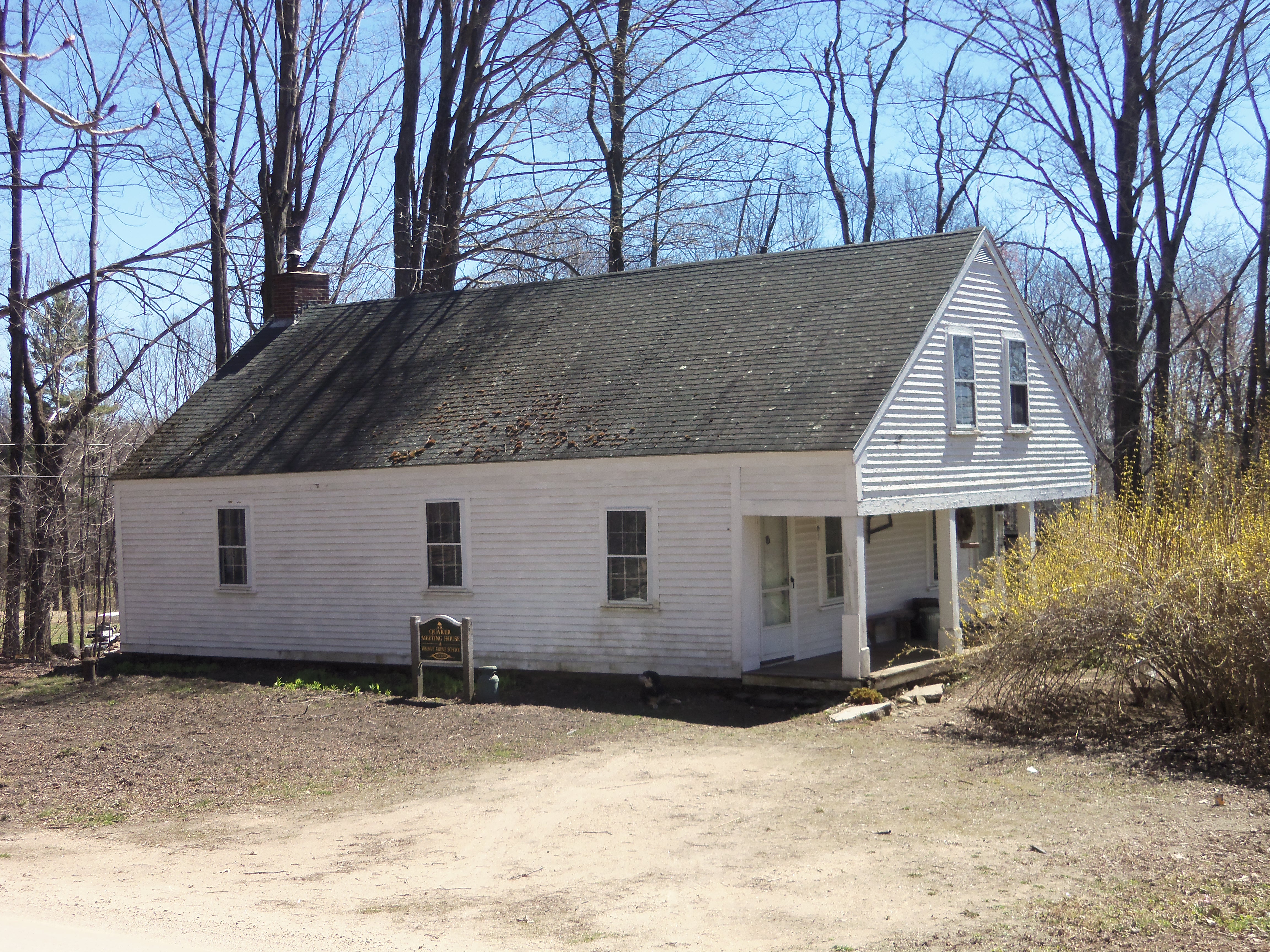
The Quaker meetinghouse doubled as a school

A pioneering educator, Moses Cartland taught in this combination school and Quaker meetinghouse at his family’s farm in Lee, New Hampshire, after previously establishing the Clinton Grove Friends school in Weare. A staunch abolitionist, he was also a founder of the Republican Party in New Hampshire and a candidate for the U.S. Senate.

Moses and his cousin John Greenleaf Whittier were closest friends and lifelong bachelors, at least until Moses married one of his students – who was also a cousin. Although considerably younger than Moses, she predeceased him.

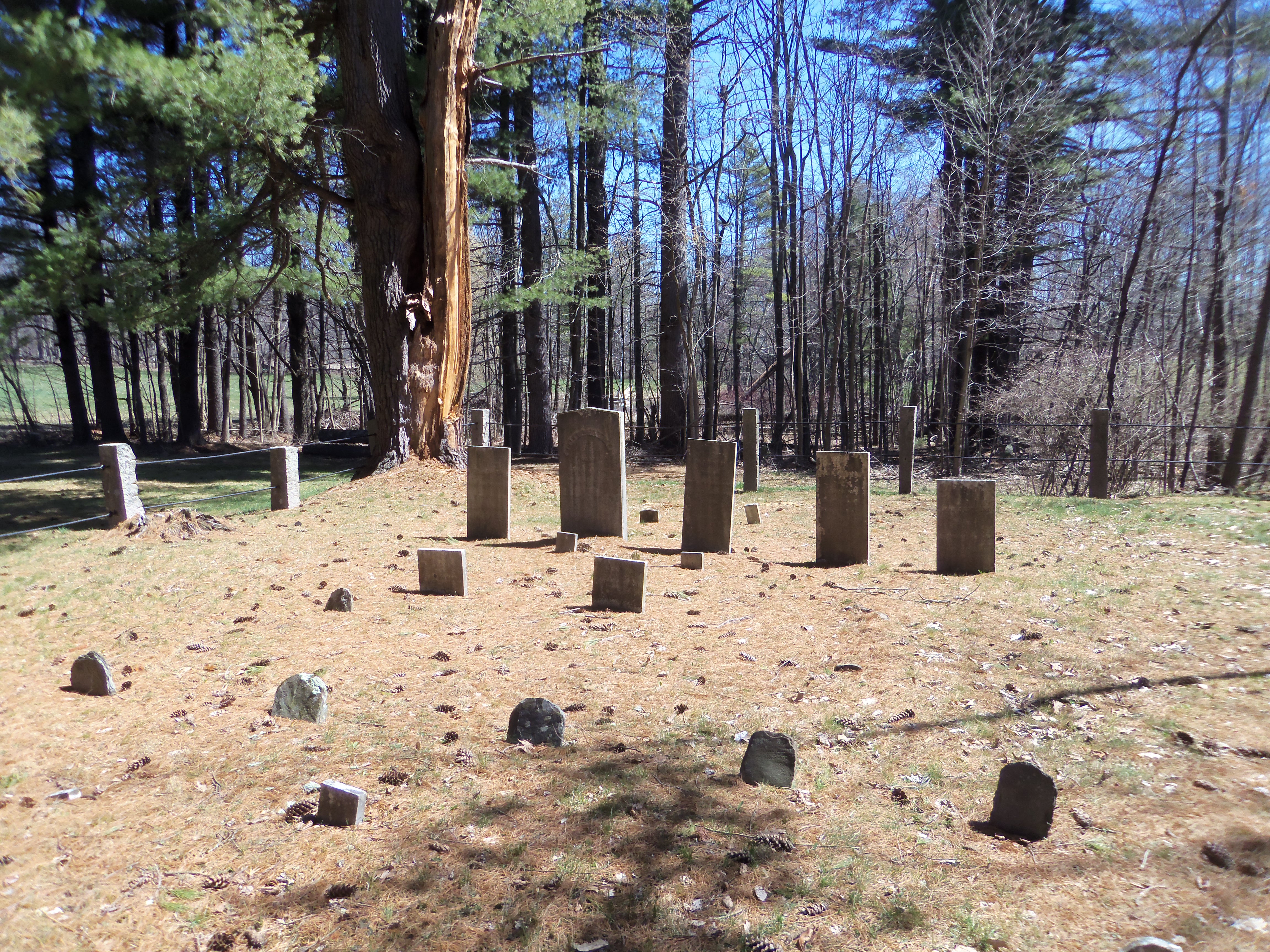
The family burial ground.
The resting spot is in the right side of the view.

GETTING BEYOND LIKE OR DISLIKE

One of the secrets to living a richer life comes in learning to evaluate experiences beyond a simple like or dislike – especially on first encounter. So many of the delights of living are found in acquired tastes. Returning to a challenge for new insights. The critical examination and perspective.

So it’s been with the opera, so much classical music, visual art, beer and wine, even literature I’ve come to love. To say nothing of Holy Scripture. Or the places I’ve lived. To be honest, there are often stretches in a long hike I might admit I don’t like, especially if the insects are biting and the incline’s steep, no matter how much I’m enlivened by the entire outing.

Somewhere along the line, I’ve learned to distrust what comes easily. In living with a piece of art, you may realize fatal flaws behind the initial flash, or to your continuing delight you may find the revelations expanding.

Part of the transition comes in learning to see value in ambiguity and paradox, or to find riches in the shadings of gray beyond simple black and white. It’s not an argument for self-torture or meaninglessness, but rather a willingness to suspend disbelief long enough to consider many other dimensions.

Yes, I like pizza. But, as an illustration, I never would have discovered the joys of manicotti if I’d insisted on the familiar pie that one night.

At the moment, I’m cracking open the Bartok string quartets by means of repeated listening and finding such beauty beneath their outward gruffness. Any examples you care to add the list?

TURNING THE TABLES

Something I ask among Friends, from time to time: What would you be if you weren’t Quaker? It’s an insightful exercise, unearthing answers that point to individual tastes in worship, spiritual practice, and friendships.

My answers have changed over the years – from Judaism to Zen or Unitarian to Mennonite (of the faster variety) or maybe even Eastern Orthodox (for the Greek dancing and music as well as the mysticism and discipline). I know strongly, too, what I would never be – and we’ll leave those unnamed. Look deeper, and you may see what is most precious to you at this point in your spiritual journey; perhaps it’s the richness of the story or tradition, the social witness in the face of injustice, the emotional response to music or even dance, the warm embrace within a disciplined community, the comfort of a timeless dimension, even a particular aesthetic. The fact is that we can be fed, in stretches, by practice with other faith bodies, especially through those periods where we find ourselves conflicted within the our own stream. We can learn, too, from their experiences and sometimes come away with something that enriches our own way.

The exercise can also help us greet visitors who come through our door, acknowledging that they, too, bring something to the service, even if it’s only for one morning. I see, too, how the question demonstrates the great variety of responses within our own circle, as we return to worship and work together.

PRACTICE AS A PLACE IN THE UNIVERSE

As I said at the time:

Along the way, the “creative process” is a phrase I’ve come to detest. “Poetic” is another, especially when applied to another art. Whatever “creative” really means or as though the resulting work always occurs in a given sequence. Perhaps “artistic problem-solving” or “artistic exploration” comes closer, except that “artistic” still carries too much excess baggage.

“Process” sounds too much like ritual for my taste. Or a formula, “If you add L to M you’ll end up with an original poem.” Which sounds too much like a dogma or a creed to recite. Like a corridor through a shopping mall. Like a secret code to be disclosed, a joke to be retold in some variation.

For universities, “creative process” can even be seen as the teaching of mistrust and technique. “Absolute skepticism is one of the powers,” Richard Foster writes in Money, Sex & Power. “Absolute skepticism is so pervasive a belief in university life today that it must be considered a spiritual power hostile to an honest search for truth. The task of a university is to pursue truth – all truth – and yet precisely the reverse is happening today.” Creation, however, requires a foundation. Affirmation – a critical embrace of what remains holy. However we want to define that.

In the periodicals, the accepted pieces are typically of a certain length and idiom – that is, they are those lacking the obvious signs of amateurism; they’re idiomatically correct. But do they say anything meaningful, especially to the general reader, much less the populace? Do they speak to others’ conditions? I sense not: at least, seldom my own. (Leading to literary journals read by exclusively by other poets or short story writers, a particularly ticklish incest.)

Meanwhile, when I look at Japanese and Chinese art, the Zen/Chan work jumps out in its freshness from the well-schooled stream of traditional art. Thus, with poetry or musical performance that knows living silence: a whole higher dimension. Necessity for revolution here: transformation. Transfiguration. Transcendence. Transparency, too. On into unending depth.

When I first set forth, I believed to be truly creative, something had to spring out of nowhere – a bolt of lightning accompanying work thoroughly unlike anything before it. Similarly, my girlfriend at the time thought, “Wouldn’t it be great if we had a language all our own?” One unlike anything before it. Slowly, however, I realized how difficult it is to understand what’s said and written in an existing language, with all of its nuances and roots waiting to be fathomed. The fact is, creative acts happen through building on existing tradition, evolving at the edges and frontiers. The artist or scientist or inventor or entrepreneur is indebted to all who have come earlier, and is responsible as well for those who will follow.

Often see those who start out are filled with an experience/awareness they want to share but cannot because of deficiencies in technique. By the time they master technique, they’ve lost the freshness. Yet I most admire those who have acquired technique the hard way: hands-on, original, primitive, perhaps without any of the accepted shortcuts.

~*~

The term I’ve come to love, by the way, is “practice.” The way a doctor or lawyer practices. Or even a football team or a choir. It’s never really done. It’s just a way of living.