EX- MARKS THE SPOT

A comment from Martha Schaefer got this ball rolling.

She was confessing that she never liked Brussels sprouts until her ex-husband, “an excellent cook,” introduced her to what happens when the tiny cabbages are cooked well. And, of course, that changed everything.

My, that could even get us going on a crimes-against-foods rant, considering how many vegetables, fruits, meats, and so on are abused in kitchens around the globe.

For now, though, let’s consider an overlooked aspect of broken relationships. Think of something positive you’ve carried away from an ex-spouse or lover. What were you introduced to that you now treasure or delight in?

A special place, perhaps, or food or beverage, music or art, literature or activity, friends or family, even (maybe most of all) lovemaking.

What comes to mind? Or your heart? Pipe up!

ADDRESSING THE QUERIES

As Ohio Yearly Meeting’s Book of Discipline stated, the Queries and Advices “provide a means for maintaining a general oversight of the membership pertaining to our Christian life and conduct. … It remains this Yearly Meeting’s heartfelt desire that good order and unity may be maintained among us … the attention of each member of the Society should be drawn at regular intervals to individual self-examination … To aid the members in this exercise, a series of both Queries and Advices is provided to impress upon the minds of us all various principles and testimonies which should guide our daily lives.”

The tradition was for Quakers (the Society of Friends) to ponder a set of these Queries at each monthly meeting for business and have someone draft a summary to be reviewed the next month. (This is in contrast to the weekly times of worship on Sunday, or “First-Day,” morning and, if possible, sometime during the week.) The monthly meeting’s summaries would then be reviewed at the next quarterly meeting – a gathering Friends from nearby meetings – and another summary would be drafted, to be shared in a similar manner at the larger yearly meeting.

When I was living in Baltimore, one Friend suggested that those of us living at a distance from our home meetings sit down and partake in this exercise and then mail our written answers to our home meeting. Although intending to take up this practice, I procrastinated and Winona received nothing until a personal invitation arrived, gently urging me to join in the exercise.

Many of my short essays and poems originate in those responses, now turned from addressing the community of faith to the Source itself and outward again.

WALKING THE DOG THROUGH THE ZOO

Humankind’s attraction to other animals – the baby ones, especially – is universal. What is it in our love of pets, for instance, that so opens us to our own existence?

What I see is a recognition of our animal nature and a desire to snuggle in amid our fellow critters rather than hover above them. Well, most of them – there are those we fear or detest. Even so …

As the German grandmother loves to quote, God has a big zoo.

And that includes us.

In a Heartbeat~*~

For a look at my animal kingdom poems, click here.

FROM A SECLUDED SLIP BELOW THE LEVEE

I’ve already written of living along the Susquehanna and being introduced to the trail that wove through a wooded strip between the water and the freeway.

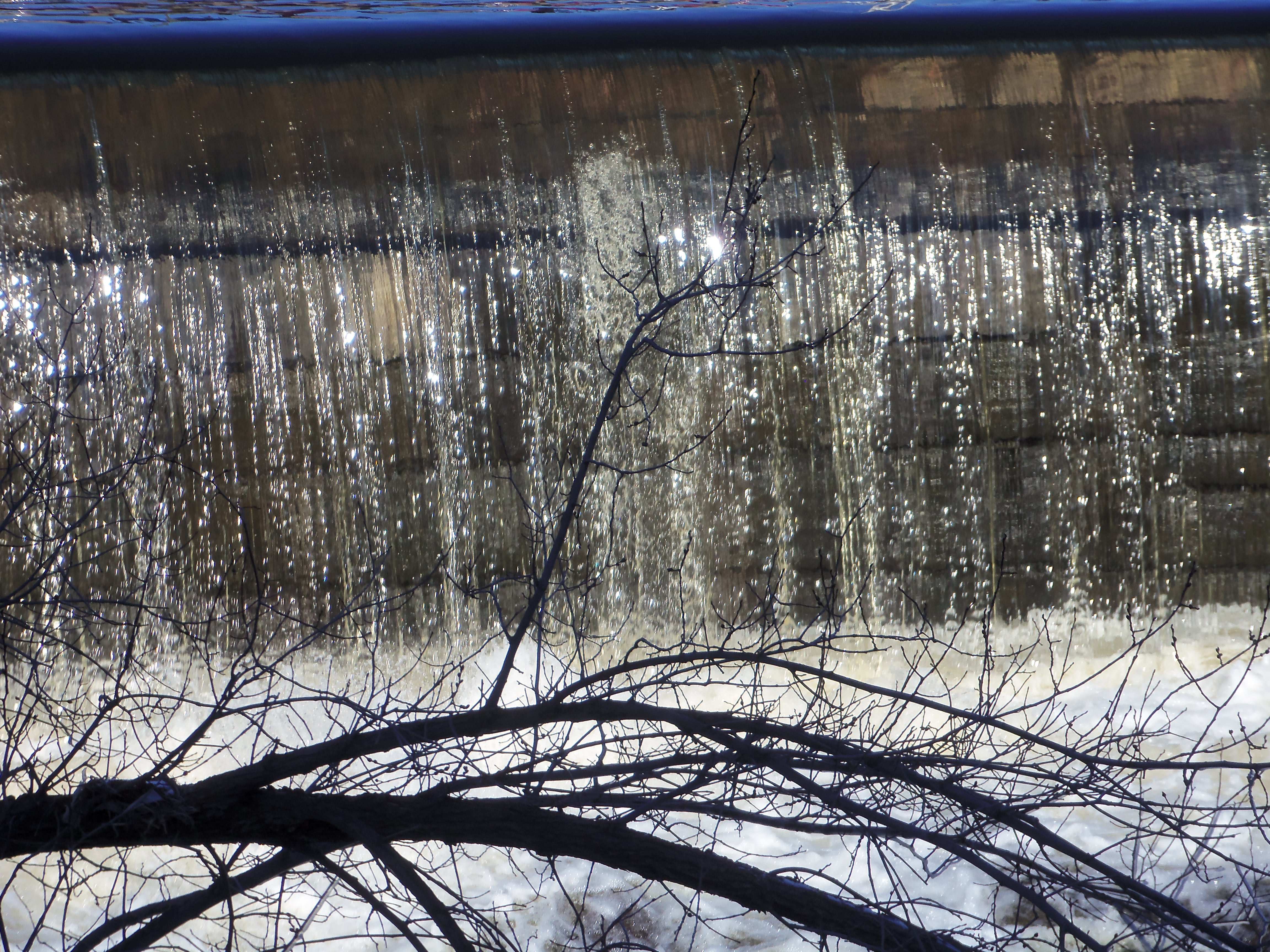
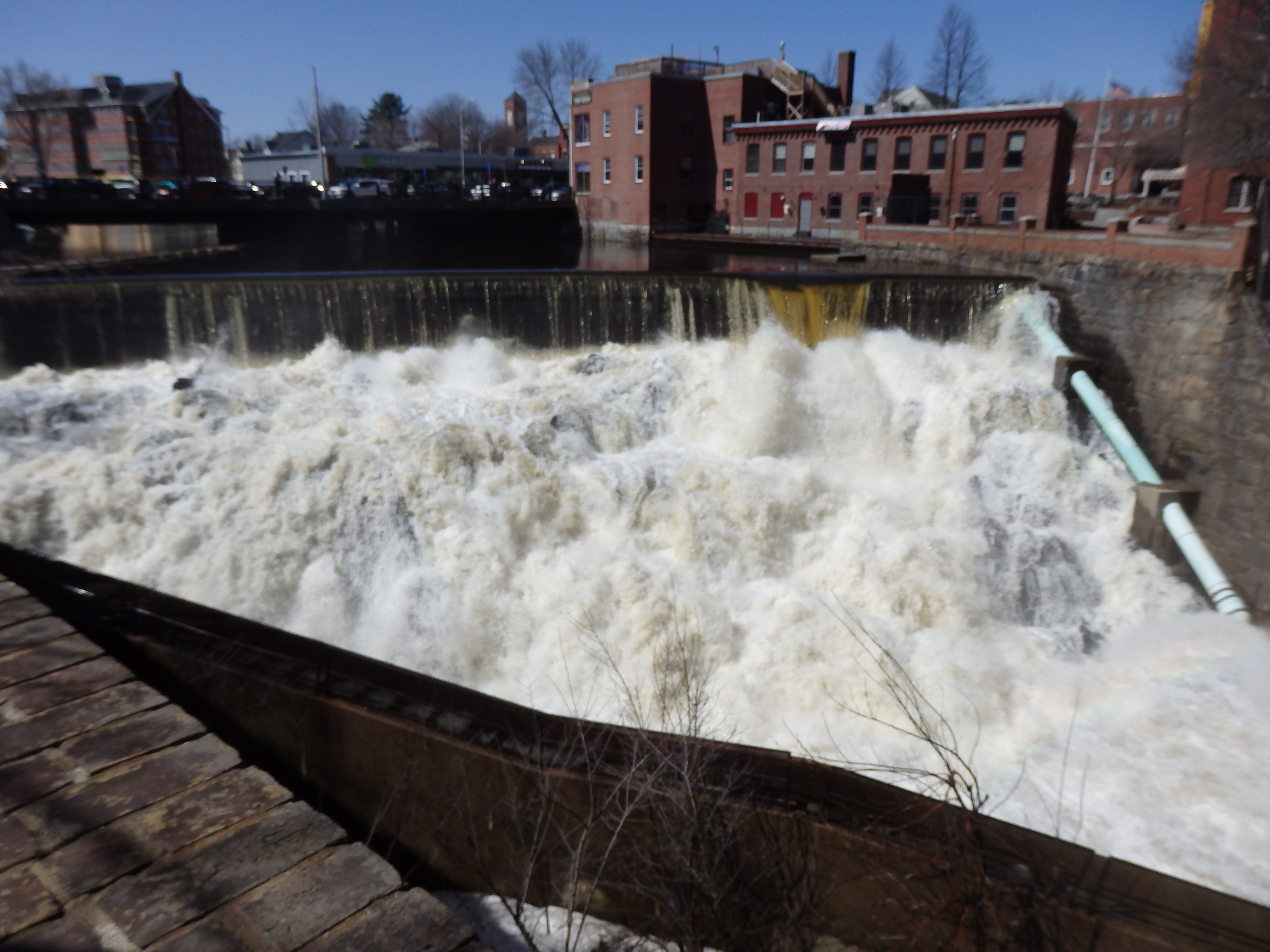
The site included a bridge that stood closed to vehicular traffic and a low dam that once diverted water to power cigar factories along the riverbanks. Only part of the foundations of the mills remained, along with some of the weir, which filled with moody water after a heavy rainfall.

At the time I was living in an inner-city neighborhood – Italian by day, Afro-American by night. The riverside provided a mostly private escape into nature.

It was enough, though, to give rise to poetry. Follow its seasons and flow in my new chapbook by clicking here.

Susquehanna 1

AFTER THE CAMERA BATTERY QUIT …

I was enjoying a leisurely trip back through Vermont, taking many breaks with my camera. All was well until approaching the New Hampshire line, I stopped to capture pictures of a Mennonite church – one of a few in New England – and was about to walk a block or two to take shots of a long covered bridge across the Ottauquechee River. Alas, my camera stopped working.

I assumed the battery simply ran out of juice, though back home I remembered (too late) sometimes you just need to remove it and put it back in – have no idea why that works, but it did on my old Kodak. Well, I’m still getting acquainted with my new Olympus from Christmas.

There would no doubt have also been additional shots of the “quintessential Vermont” general store, a bed and breakfast, and other quaint buildings clustered around the green – this was Taftsville, after all, which turns out to be a neighborhood in the iconic town of Woodstock.

The 189-foot-long span built in 1836 along what’s now U.S. 4 was severely damaged by the remains of Hurricane Irene in late August 2011 and for several years was left dangling precariously from a middle pier. (It’s listed as a Multiple King post and arch design, by the way.) Now, including a fresh coat of red paint, it looks dazzling. Alas, you’ll have to take my word for it.

More missed photo ops took place an hour later, when I stopped for lunch in Lebanon, New Hampshire – not down by the busy interchange along the Connecticut River but up on the hill, around the old green. It’s one of those New England towns that has an opera house as part of city hall, and this one has an actual opera season each summer. This year’s bill includes not just Mozart’s Abduction from the Seraglio and Bernstein’s West Side Story but also Aaron Copland’s rarely performed Tender Land. What I saw and heard of that, by spying through a crack in double doors from the lobby, was gorgeous. Well, again you’ll have to take my word for it. You would have seen the exterior of the hall from the common.

Finally, much closer to home, as I was stuck in a construction delay at the Lee traffic circle, I looked out my car window and saw three fawns grazing placidly at roadside. If my camera were working, it would have been a classic shot. They’re such small, fragile critters with such big pointy ears!

Well, even with the missed opportunities, I am happy with what I got that day. Now, to plan ahead to scheduling them for this blogging!

COLLECTING LEAVES TO COMPOST

Dealing with clay soil like ours has convinced me of the value of compost. Not that I hadn’t composted before. But over the years here, I’m watching the ground become more supple and workable and productive, thanks to the effort.

The first autumn, I collected more than 200 bags of leaves from the neighborhood. (Each year, I try to reduce the figure, only to find some of neighbors now expect me to come over for the haul.) To that, we’ve added our garbage (thus reducing our expenditure on the city’s green trash bags). Once we acquired rabbits, their droppings and the hay from their bedding started going into the pile as well.

The process is incredible, watching the volume decrease to a fraction of what it had been. Consider the amount of heat the decomposition produces, and then the arrival of the red wigglers (or wrigglers, I’ve heard both), the friendly worms that do the big work of transformation. Forget his insights about evolution, it’s Darwin’s observations of worms I treasure. What’s left in the end is a gardener’s pure gold.

On a spiritual level, this humus and humility have a lot in common. So much can flourish from their nourishment and grounding.

ON ART ABOUT ART

As I said at the time …

I largely distrust art about art. It’s not that I haven’t written poems about poetry, much less music or paintings. I think we all do, sometimes as a matter of reflecting on the practice we pursue as artists. Why do I write what I do, in this voice or style? Where do I fall in the stream’s current?

The danger is that such work can become incestuous. Artists of all stripes can easily perceive themselves as high priests of the mysterious or marvelous. We are inspired, or so we think. Or at least super-sexy. We have special visions and heightened awareness. We speak our own jargon. So what if the masses cannot understand if it heightens our niche? What sells is commercial, and we point to its cheap tricks, unless it’s feeding our wallets.

What happens, of course, is we speak more and more to each other, rather than the world we inhabit. We celebrate ourselves, rather than searching outward. We become artistes, caricatures who flock to cafés and late-night bars, rather than hard-working creators. Paris wasn’t Paris when it was the expats’ hot stomping ground. Their old photos look more than funky.

Consider, for a second, the opera. Let me argue that Butterfly, free of the artist halo, is a more fascinating and touching character than Tosca, the opera singer. Parsifal or Lohengrin, than Meistersinger. Orpheus moves me as a widower, rather than for the power of his music. The magic flute, fortunately, becomes a mere footnote in Mozart’s cosmic comedy.

That’s before we even get to the application of “poetry” to describe another art. A pianist whose playing is “poetic,” for example, or the “poetry” of a piece of architecture. Again, it becomes incestuous or self-celebratory and essentially meaningless. Do we mean pianism that’s introspective and not flashy? Then what about humorous poetry? Do we mean architecture that instills a sense of awe or one that’s lean and understated? And so on. Should we even ask which poet the critic had in mind?

This might also have something to do with the fact that I’ve spent most of my adult life as a journalist, rather than in a full-time literary profession. I don’t teach writing or literature. Even in religion, where I am actively engaged, it’s not in paid ministry – which can seem somehow tainted by the fact it’s a job or employment. They overlap, of course.

Despite that, I have written collections that remain homage. My unfinished Corridors arises in the experiences of visiting art museums over a lifetime, as well as making art: while individual pieces are named after various artists, I should point out there is rarely a direct connection between the two, other than the spirit of life. Likewise, the Partitas and Fugues cannot employ a direct correspondence between musical form and language – if anything, in acknowledging the wonder and joy such works stir within a listener, my poems only admit the chasm between pure music and an aspiration for a pure language, apart from literal meaning.

Now, out into the field beyond the field across the stream below the house, as it were.

DISTINCTIVES AS A MATTER OF FINE DINING AND FAITH

Maintaining particular elements that set a faith community apart from the larger society as well as a desire to be like everyone else provokes a basic tension in religious history. In Quaker tradition, we see it especially in the Hicksite Separation and later, with the Gurneyites, as many Friends adopted pastoral worship and turned their meetinghouses into “churches,” sometimes complete with a bell. The problem that arises along the way is that other values, like the Peace Witness, can also be eroded on the road to a generic Protestant practice or New Age miasma. (Or, increasingly these days, both.)

It’s important that we remain aware of what are known as “distinctives” – in our stream of Quakerism, the unprogrammed worship, simple meetinghouses, and decision-making process are highly obvious. Once, our discipline of Plain dress and speech, our system of “guarded education” in Quaker parochial schools, and our avoidance of public entertainments would have also set us apart. Scholars look for distinctives when they examine a spectrum ranging from sect to denomination, where something like the presence of an American flag in the sanctuary can say much about how far the congregation buys into the values of the surrounding culture. (The Mennonite fellowship I participated in was viewed with some suspicion because we enjoyed going to Baltimore Orioles games – together, at that. Ahem.) Often, it’s seen as those scholars look to reasons one Amish group differs from another. The width of a man’s hat band, for instance, or even buttons. It’s the way the little things add up to strengthen more important matters. I’m not saying any of this is easy.

Once, while dining in Little Italy in Baltimore, I overheard a couple talking to the co-owner of a restaurant. They were telling him how, on a visit to New York, they kept hearing everyone speak about how his place was the best one back home. Finally, he interrupted, saying, “If you don’t believe you’re the best restaurant in Little Italy, you shouldn’t be here.” While some people detect a degree of arrogance in that, I sense a humility and an admiration of his competitors – a desire for excellence and an admiration for those touches that make each restaurant distinctive. Ways that encourage each other to do better, too.

I turn that to our own neighboring faith communities with an admiration for congregations that uphold their own meaningful distinctives. Each one, with the potential of enriching the others. We Friends need not add glittering icons or glorious pipe organs or triune water baptism to our service, but we can dialogue and even worship with those who have them – and maybe all come away with deeper amazement and resolve in our own daily practice.

Hey, it was only a month ago I was reveling in Greek dancing — admittedly, not as part of the Orthodox service but certainly as part of the community. Along with all of the food.

MONET AT THE WINDOW

I’ve often joked (or was it boasted?) that we have the best stained glass windows in town. And not just at this time of year. Actually, there’s something basic in the Quaker practice of having clear windows, whether the view opens to the city jail next door or a busy highway or a placid burial ground – we’re not isolating ourselves from reality when we worship.

Sitting on the clerk’s bench one morning one May, I found myself looking out at a Monet. Well, the spring green for three-quarters of the hour fit the tones he used, until it turned metallic in the last quarter-hour when the sunlight turned harsh. Most weeks after that, I tried to identify which painter the view brought to mind – a sequence of Corot, Diebenkorn, Mitchell, Twombly, Klimt, Pollack, even the Zen painting of six persimmons (ours, however, had about twice that amount of fruit), and maybe a bit of Chagall or Hopper. (What was I saying about our Meeting not being blue-collar? Here I am, expecting most Dover Friends to know most of these artists!) Occasionally, even a Kaufmann, as Dick and Jane’s heads appeared in the lower corner while they walked up the ramp to the door. Sometimes the dogwood tree presented a flat image; other times it had holes, opening to the depth behind it; eventually, come winter, it was only sketches in front of a more distant landscape, and etchings, rather than paintings, came to mind. Expecting the Monet to return the next May, it didn’t, for whatever combination of reasons, although there was one week when it was adorned with pale stars – its flowers.

Not that any of this is essentially profound, other than as a recognition of the play of light – just as we encounter various presentations of Light within the room and ourselves through the hour. But I do consider ways our perceptions and expressions differ from the earliest Friends who sat in the room. These artists, for one thing, came after them, except for the 12th century persimmons (and those were off in China, anyway); the now familiar language from science or psychology, too, to say nothing of sports jargon and even military expressions. Did those Friends ever have a bagpiper playing at the edge of the yard, or some equivalent to our sirens on the street or music from a neighboring church? How did they see the world, in ways that we don’t? Somehow, all kinds of differing eras come together when we, too, sit together. So just how do we see each other through all of these seasons and ages?

~*~

This piece originally appeared in Types and Shadows, the newsletter of the Fellowship of Quaker Artists.