An orange is an orange is an orange orange

The mystics and traditions I’ve encountered are anything but airy-fairy. In fact, they can be pretty down-to-earth and practical, based on personal experience and testing rather than empty speculation or dogma.

As George Fox said at the beginning of the Quaker movement, “This I knew experimentally.” That is, by first-hand experience including trial and error. Or as was said a few years later, “Some of the best barns in Rhode Island were designed during Quaker Meeting,” during quiet meditation.

Never underestimate the importance of the disciplined circle of fellow practitioners, either. Anyone who says “I’m spiritual, not religious,” but lacks that communal base is headed for trouble.

I learned that 50 years ago in a yoga ashram – see my novel Yoga Bootcamp for unorthodox examples of how it works – and have seen it in other traditions since, especially my Quaker circles.

One of my favorite stories comes via fellow blogger Tru-Queer, who relayed the incident this way:

A Tibetan lama and a famous Korean Zen master in the Rinzai school were to have a debate.

The Tibetan lama sat meditating, counting his mala. The Zen master produced an orange from his robes and asked the lama, “What is this?” It was a famous koan. Waiting for a response, the lama continued meditating. The Zen master asked again, “What is this?”

The Tibetan lama spoke with his translator for a moment, who said, “Do they not have oranges where he is from?”

~*~

I suppose I should explain that a koan is a kind of mental puzzle intended to push a student beyond rational thought. Zen is essentially black-and-white ascetic, while Tibetan Buddhism is full of colorful esoteric teaching and drama. Yet here the roles are reversed, in a great joke.

But it doesn’t end there. When’s the last time you really looked at an orange? How many varieties can you identify, much less their differences in uses or subtle flavors? Does your recognition that it’s “an orange” put a stop to regarding it fully? That is, when’s the last time you had an “OH WOW!” moment with something so seemingly commonplace.

Gertrude Stein was aiming at something similar with her “A rose is a rose is a rose,” which blows open when you learn she was also speaking of a friend named Rose and not just the metaphors associated with a specific flower that somehow too often gets lost in the entire equation.

So just how do we live full of wonder – a state a Friend hailed as the Holy Now?

I’d say having dear ones who share it with you does help. Even if they’re Zen Buddhists.

No, it’s not all flat, either

In my novel Nearly Canaan, Joshua and Jaya meet in a railroad crossing known as Prairie Depot. And in my newest release, The Secret Side of Jaya, she returns there in a magical sort of vein.

Yes, Prairie Depot is somewhere in the Midwest. But the region itself is hardly as homogeneous as many portray it.

~*~

  1. Defined: The region is generally comprised of 12 states – Illinois, Indiana, Iowa, Kansas, Michigan, Minnesota, Missouri, Nebraska, North Dakota, Ohio, South Dakota, and Wisconsin. I question the inclusion of Missouri, which was a slave-holding state and thus Southern, but others try to add Oklahoma. Population 65 million.
  2. Breadbasket of the world: Wheat, corn, and oats are major crops, along with soybeans and sugar beets. Beef, dairy, and hog production are also huge. The fields run on for miles. And Wisconsin is the nation’s leading producer of cranberries.
  3. Major cities: Chicago, Detroit, Cleveland, St. Louis, Minneapolis, Cincinnati, Milwaukee, Kansas City, Des Moines, Omaha, Columbus, and Indianapolis head the list.
  4. Mall of America: The 400 stores, waterpark, and aquarium in Bloomington, Minnesota, are deemed one of the most popular tourist magnets in the country, drawing 35 million visitors a year.
  5. Heartland: The geographic center of North America is in Ruby, North Dakota.
  6. A taste for the oddball: Cawker City, Kansas, is home to the world’s biggest ball of twine. Ten feet in diameter.
  7. Linked by rail: The Union Pacific’s Bailey Yard in North Platte, Nebraska, is the world’s largest railroad yard. It’s eight miles long and up to two miles wide, with 301 sets of rails.
  8. Horses and buggies: More Amish live in Ohio than in any other state. In 2015, there were 69,255. And Iowa has a significant number, too – about 7,000.
  9. Cowboy country: Much of what we consider cowboy-and-Indian out west actually took place in Kansas, Nebraska, and the Dakotas. And sharpshooter Annie Oakley was raised by a Quaker family in Ohio.
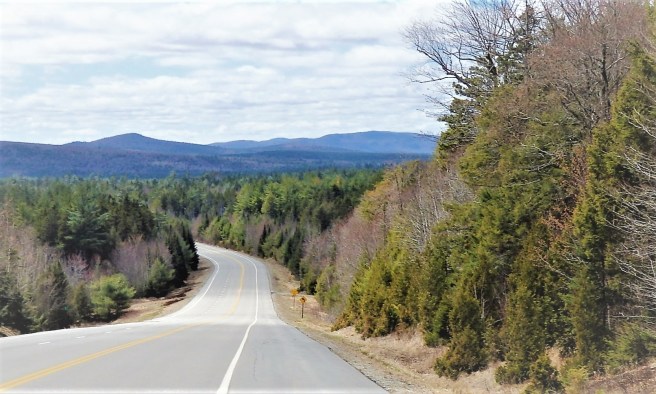
  10. It’s not really homogenous: Each state is different, starting with the economy, religious mix, ethnic origins and culture, and amount of annual precipitation. Even the parts of a state can vary widely along these lines. Much of the eastern half of the region is heavily industrial, with steel and auto making at the fore, while other parts are intensively agricultural. There are further breakouts like the Great Lakes region or the Great Plains. And it’s not all flat, either.       

~*~

What are your impressions of this part of the country?

Our glorious dawn is much more than just sunrise

Except on overcast or stormy mornings, the early light of day in Eastport is amazing. Campobello Island in Canada blocks the first rays of the rising sun from striking us directly. Instead, the beam is deflected from the ocean into the air to become an ethereal rosy radiance, sometimes against a dark bank of clouds hovering off over the neighboring Fundy islands. And then, with that doubly-illuminated sky mirrored in the two-mile-wide channel separating Eastport from Campobello, the overhead color spreads out below as well.

Often, this scene is accompanied by the faint puttering of commercial fishing boats venturing out from the port.

When the sun itself finally swells into view, the blaze is nearly blinding, winter or summer.

Note to self: Keep sunglasses at hand.

Blessings, all

As the sign in front of an Aroostook County church advised:

When temptation knocks,

let Jesus open the door.

~*~

Yes, I had to laugh.

It all starts with the events being remembered today.

The quote also flips the quotation from Revelation, which I recall with its association with an illustration on my grandparents’ dining room wall, where he’s knocking at a thick wooden door. Maybe that’s a symbol of our own hearts, too many days … closed, hard, and dark.

Today, let him enter, in spirit, and dine with you and those you love most dearly.

May you be spared all temptations in this blessed day.


In my dreams

Just because I watch the stars doesn’t mean I trust them.

We had foxes at the bird feeder and viewed them as they slinked off into the woods, akin to Garrison Hill, and next to it was a bear.

I was a championship swimmer and a symphony violinist not actually competing or performing but enjoying the status.

At the airplane crash scene as a reporter, I helped put bodies in valet bags.


Ten kinds of prayers

It is how striking the impulse to prayer arises across cultures and eras. I’ve even noted that one set of Zen Buddhist prayers in print is something even an atheist could endorse.

In her book, Help, Thanks, Wow: The Three Essential Prayers, Anne Lamott lays out a basic approach to the universal practice of turning to the Holy One, regardless of name. Her three types seem to cover it all.

Still, there other types, even before we touch on wildly different faiths and theologies. Here are a few, even as I search for some formal Greek theological terms I’ve filed away somewhere.

  1. Supplication or petition: Humble, kneeling, raising a request or concern for God’s action.
  2. Intercession: Pleading on behalf of the needs of others.
  3. Confession: Openly admitting one’s sin and desire for pardon.
  4. Consecration, benediction, or blessing: Joyfully approving a person or situation, with the speaker as an active co-participant.
  5. Agreement: Corporate prayer encouraging each other in our shared faith when gathered together.
  6. Surrender: In times when one feels the weakest, a yielding to God’s strength and leading.
  7. Prophetic: Speaking as an oracle of the Holy One or the Holy Spirit.
  8. Listening or waiting: Sitting silently, raising one’s heart to the Presence, open to answer.
  9. Contemplative: Eliminating outward distractions by focusing on a repeated word or phrase, drawing the one closer to God in calm stillness.
  10. Fasting: Think about this one, especially if you’ve never tried it.

~*~

And we haven’t even touched on postures or breathing, much less chanting or dancing …


Ten things about Baptists

In my novel The Secret Side of Jaya, she learns a lot about Baptists while living in the Ozarks.

For starters, within their shared identity, they come in all varieties of theological nuance and group practice – and the lines within them can be drawn sharply. And they don’t handle snakes as part of their worship.

Here are a few facts:

  1. Baptism is reserved for believing “born again” adults and is usually by water immersion only. Jesus is accepted as Lord and Savior.
  2. Church authority, with few exceptions, is placed in the local congregation, which can voluntarily affiliate with other like-minded fellowships. Beliefs can vary by congregation, historically along Calvinist versus Arminian lines. Far more than I want to get into here, other than say I’m in the Arminian camp.
  3. The major affiliations in the U.S. are the Southern Baptist Convention, American Baptist Association, National Baptist Convention, National Baptist Convention of America, American Baptist Churches USA, and Baptist Bible Fellowship International. Far from the only ones.
  4. There are also Independent Baptist churches that refuse to affiliate with others.
  5. Faith is a matter between God and the individual. Thus, absolute liberty of conscience is essential.
  6. The Bible is asserted as the only norm of faith and practice. So start flipping pages.
  7. Baptist membership is roughly 100 million worldwide – half of them in the USA, where they constitute a third of American Protestants, especially in the South.
  8. They make up more than 40 percent of the population in Mississippi, Alabama, and Tennessee.
  9. Forty-five percent of African-Americans identify themselves as Baptists.
  10. The Lord’s Supper, or communion, is considered symbolic and not necessary for salvation. There is no set calendar for its observance.

~*~

Does this make their identity any clearer? We haven’t even touched on some of the key theological language.


Ten historical figures who inspire me

Let’s skip past Jesus and Lincoln and King David and Gandhi, Martin Luther King, etc. Go to more regular folks who also had everyday lives.

  1. Charles Ives, 1874-1954, classical composer and Manhattan insurance executive, an “American original” in both fields. Or even a maverick. Seriously overlooked when it comes to performances and airings.
  2. Charles Kettering, 1876-1958, American inventor. Second only to Edison in the number of patents.
  3. Arthur Morgan, 1878-1975, a civil engineer Kettering encouraged on a life of notable public service in flood control and higher education.
  4. Abigail Adams, 1707-1783, first wife in the second presidency and equal to any of the First Fathers. She really knew how to write a letter.
  5. Jenny Thompson, 1973-present, big-time Olympic gold medalist swimmer. Despite serious setbacks, including biased judging against her, she was persistent. Better still, she claims Dover as her hometown and works as a pediatrician up the coast in Maine. How can I not think of her every time I swim in the big outdoor pool carrying her name?
  6. J.S. Bach, 1685-1750, as an example of daily practice and faith.
  7. John Woolman, 1720-1772, Quaker minister who confronted economic and racial injustice. Many of his critical insights regarding wealth and oppression fit today, too.
  8. Emelia Bassano Lanier, 1569-1645, apparently the real author of the plays attributed to Shakespeare. I’m buying the argument. The works now take on a fresh vitality.
  9. Elizabeth Hooten, 1600-1672, the real mother of the Quaker movement and first woman preacher, quite outspoken, no sleight intended for Margaret Fell. She even came to Dover in 1662 and was severely treated by Massachusetts authorities, despite a letter from King Charles II. I wish we had more from her on the record.
  10. The Theotokos, mother of Jesus, in Eastern Orthodox theology envisioned as something much more than a Virgin Mary. Literally, “the God-bearer.” I mean, she’s addressed as the Mother of God! The implications – and personal interior experience – are mind-boggling for anyone seeking a feminine experience of Judeo-Christian thought, especially when we get back to the everyday life part.

~*~

Well, this list has changed over my life!

Who would you name?

Mottoes to live by

Dunno if this counts as a motto, but I still like it: “Duma Luma!” From a private cartoon to me, evolving into an earlier incarnation of my novel Subway Visions. Here are ten more.

  1. “I hope for nothing. I fear nothing. I am free” – Nikos Kazantzakis, “Japan, China,” 1963
  2. “Abide in me”– Jesus of Nazareth
  3. “Jesus is the unseen guest in this house” – as inscribed over a Quaker family’s doorway in Belmont County, Ohio, followed by, “He listens to every conversation.”
  4. “The closer we get to our hopes, the closer we get to our fears” – artist Lita Albuquerque
  5. “Be ashamed to die until you have won some victory for mankind” – Horace Mann
  6. “Mind the Light” – old Quaker counsel
  7. “I make dreams … I don’t see clothes, I see the world” – Ralph Lauren
  8. “Everyone wants to reach for something a little higher. … Part of Ralph’s genius is he understood life’s aspirational”  – Michael Gould, Bloomingdale’s buyer
  9. “Randomness invites the universe to speak” – James Bartolino
  10. “You better be good to toads,” Cassia in What’s Left

~*~

Yay!

We’re all ears for any you might want to share.


Ever been in a barn?

You already know about the barn I’ve owned the past 20 years – the one that gives this blog its name. It’s modest, as barns go – more of a carriage house, common in an old New England city like ours, but “carriage house” sounds pretentious and ours isn’t. I usually call them “urban barns.”

I grew up in a Midwestern industrial city, and barns were usually something we passed out in the country. Even so, my novels Nearly Canaan, Yoga Bootcamp, and Pit-a-Pat High Jinks, each feature a barn.

Here are ten I especially remember.

~*~

  1. Uncle Arlie’s. We spent many Sundays and holidays at my dad’s aunt and uncle’s farm. I loved climbing around in the rafters and loft, even though it was dangerous.
  2. Grandpa’s. A small “urban barn” at the rear of Grandma and Grandpa’s yard on the other side of town was stuffed with supplies for his plumbing company. I can still almost smell it.
  3. Dad’s birthplace. Once, traveling with Grandpa, we stopped at a farm in the middle of nowhere. He introduced me to a strange man and took me inside the barn on the farm while telling me this is where my dad was born. I was around five, maybe no older than seven, and didn’t fully understand, especially the idea of home births much less than Dad wasn’t born in a city. What I do remember is all the light shining through the slats of the walls.
  4. Moler Dairy. From our side window when I was growing up, we could see a working dairy. It had a large white barn facing busy Smithfield Road, while we were on a quiet side street. I did get to tour the bottom level a few times, with its stanchions and cows. The brick milking parlor was next to it.
  5. Hippie farm. After college, I shared a farmhouse with a circle of other free spirits. Its small, ramshackle barn provided living space for some of the characters in Pit-a-Pat High Jinks.
  6. Ashram. That sturdy brown barn is described in Yoga Bootcamp. It was Swiss-style, set in the side of a hill.
  7. Ivar’s. Our landlord in Wapato had one of the most impressive barns in the Yakima Valley. It was white frame, rather than modern metal, and had three large levels. It’s detailed in Nearly Canaan.
  8. The Antique House. The large attached barn, as many in New England are, is part of the house where elder stepdaughter reigns. It’s second-nature now.
  9. Silas and Connie Weeks. They were intent on restoring their ancient farm in Eliot, Maine. Quaker Meeting even had a wedding reception in theirs.
  10. Parsell Farm. Serves as a farm stand just up the road in Rochester. Our principal source of hay for the rabbits.

~*~

A few others I should mention include the massive Shaker barn in Canterbury where I contradanced once, and another in Ohio I once toured. A similar one, but kept to a single story, was at a friend’s summer home in Sandwich in the White Mountains to our north. And then there was a decrepit one at my goddaughter’s family in Enfield, Maine, that was too far gone to repair.

~*~

What are your experiences with barns?