my shoes not off for two weeks now
at least in the stinkin’ dream
You never know what we'll churn up in cleaning a stall
my shoes not off for two weeks now
at least in the stinkin’ dream
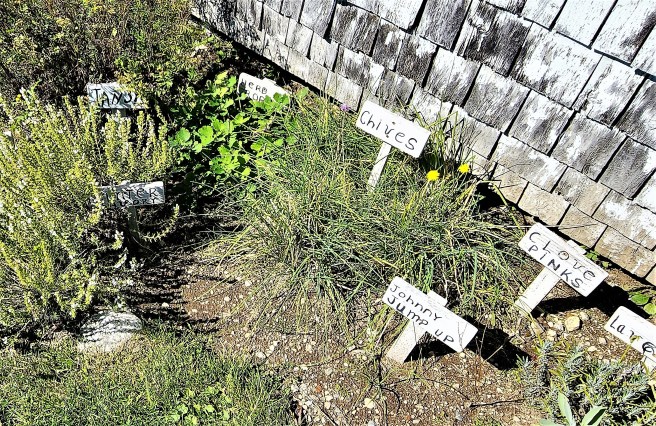
Well, this is how it looked last September.
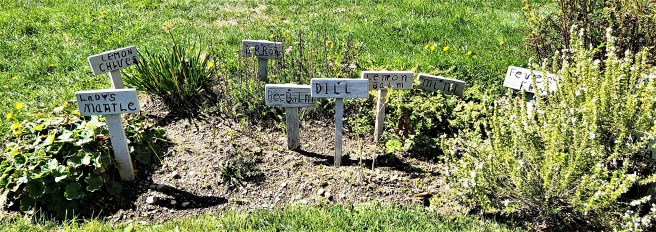
The English colonists knew their herbs and spices, as shown in the Pemaquid state historical site’s garden. The selection includes bee balm, betony (lamb’s ear), celandine, chamomile, chives, clove pink, crane’s bill, dill, evening primrose, feverfew, Johnny jump up, lady’s mantle, lavender, lemon balm, mint, parsley, sage, savory, tansy, tarragon, thyme, and yarrow. Many of these were grown for their medicinal applications.
We never had much more than salt and pepper back in the ‘50s, at least as I recall as a kid.
New England history is all through Harvard. And then Yale and Williams College.
Except, of course, a few mavericks like me. (Even though, humbly confessed, I’m not a historian.)
Well, you do have another opportunity to see why he said that if you register promptly for my free Zoom presentation from Cape Cod at 12:30 Sunday afternoon ( https://bit.ly/QuakingDover ).
Here’s hoping to hear from you there!
I looked out from the kitchen sink window and saw this:
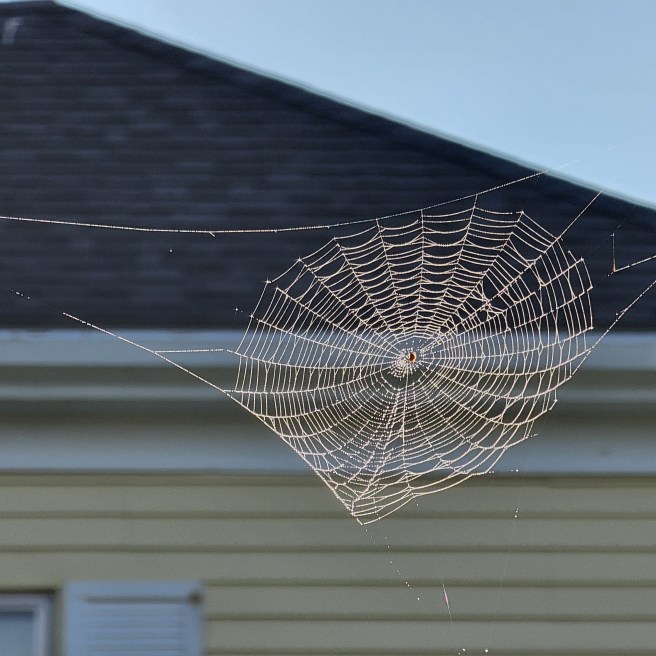
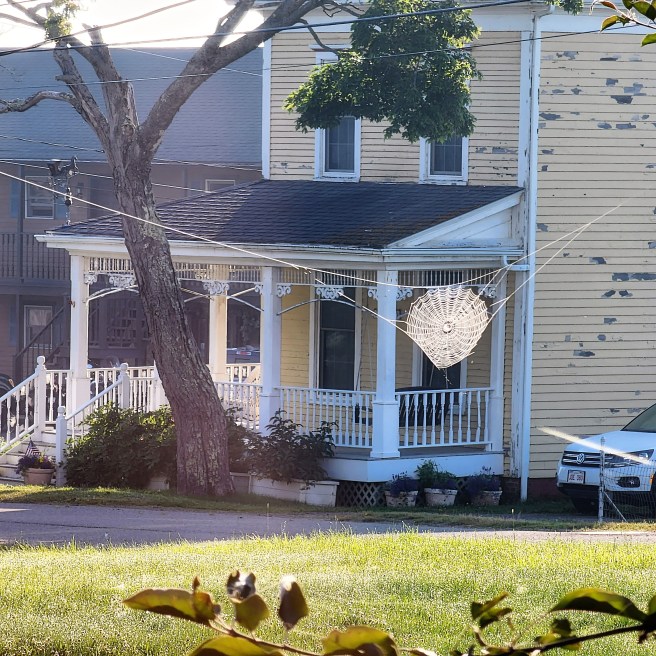
With the Suncatcher House in the background.
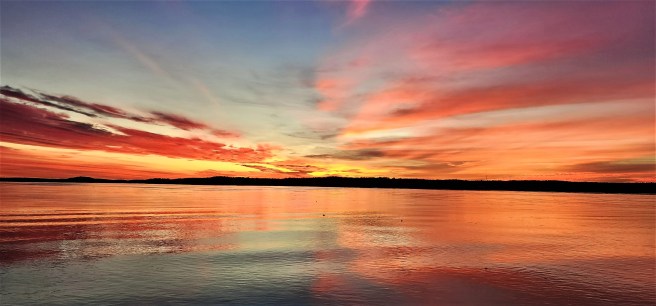
Good morning! This is another example of our dawns around here, just not during our current two weeks of heavy fog, rain, and occasional thunderstorms. It is a welcome reminder, though.
Holy Land Mart
rolls of steel ingots
Potluck House


How’s this for a brief section of one trail?
Defense Mapping Agency
“luck favors the trained mind”
Might as well start by eliminating the word “meaning” from the question.
That leaves the core mystery to savor before expressing its wonder in mere, pale words.
Life itself is unfathomable. Why me, you, us? As is our very awareness. It’s more than a neurochemical reaction or the like.
Descartes, for me, fails the mystery altogether. Thinking, which can wander all over the place, is secondary. Feeling is more primal, closer to what the Bible calls heart.
I prefer recasting it as “I breathe, therefore I am,” as more embodied. You know, inspiration, expiration. Inhale, exhale. It’s more Zen, and the Hebrew word for breath is the same word for soul, so I’ve been told. (And soul equals heart there.)
Action, then, perchance, as a way forward? Even one breath at a time?
Explain any of that, if you can.
Without raising too many more questions.
Now, have a great day.
Here in Way Downeast Maine, many dawns would blow you away, at least if you’re awake in time.
It’s not just when our closest star comes into view but also the vast unobstructed sky over the bay and the ways neighboring Campobello Island interact with the growing light.
As I’ve been finding – and you’re seeing in some of the photos here at the Red Barn – much of the glory occurs in what’s officially the twilight zones, defined by how low the sun is below the horizon.
These zones are otherwise known as dawn and dusk, apart from Rod Serling’s once upon a time spooky black-and-white TV episodes.
And these are longer and more pronounced the further away from the equator they are.
I’m on the 45th parallel, halfway to the North Pole and its days of endless summer light or winter darkness. Meaning our twilights are much longer than what happens in most of the rest of the continental U.S.
Checking our local weather forecasts, I’ve noticed a few unfamiliar terms but not looked into them until recently.
The first is astronomical twilight, which I’ll skip over this round. It seems to apply mostly to the Arctic and Antarctic.
The second is nautical twilight, which apparently has its origins in the era when mariners used the stars to navigate the seas. In clear weather, most stars are still visible to the naked eye but also, finally, the horizon. You need artificial light to do much of anything outdoors.
Around here these days, it begins before 3:10 am Daylight time – or what would be 2:10 Standard. The wee hours, no matter how you slice it.
The next stage is civil twilight. It’s brighter, enough to mean artificial light may not be required for outdoor activities. Only the brightest celestial objects can be observed by the naked eye. These days for us, it’s around 4 o’clock. Yeah, 3 Standard time. Still really early for most folks.
And finally sunrise, about a more than quarter to 5.
That’s an hour and a half of magical natural light.
I think it’s why most people around here are up and about early. Even in winter, the roads are busier at 5:30 in the morning than 5:30 in the afternoon.
Of course, the reverse happens every evening.
The shifts also produce what’s called the Golden Hour, when sunlight turns warmer and softer. Or, in my thinking, buttery and magical. I place it mostly as the hour before sunset, especially when the light shoots in horizontally.
As well as the Blue Hour, when only a few stars or planets are visible. Painter Maxfield Parrish exploited it to the hilt.
During the day, much of our sunlight is reflected from the waters back into the sky, something many classic Italian painters explored as well as more modern artists here today.
So how’s the natural light where you are?
 Jnana's Red Barn