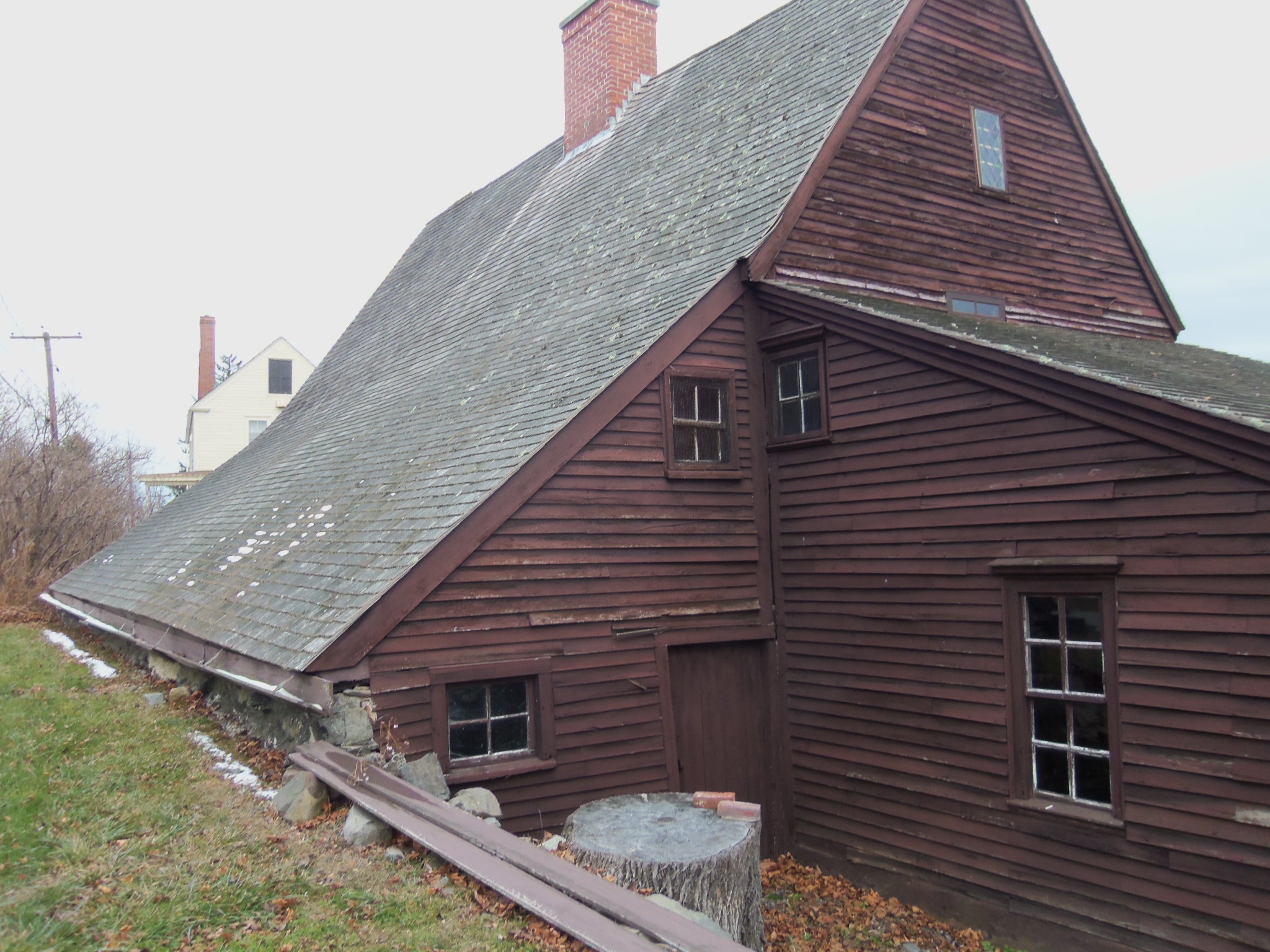
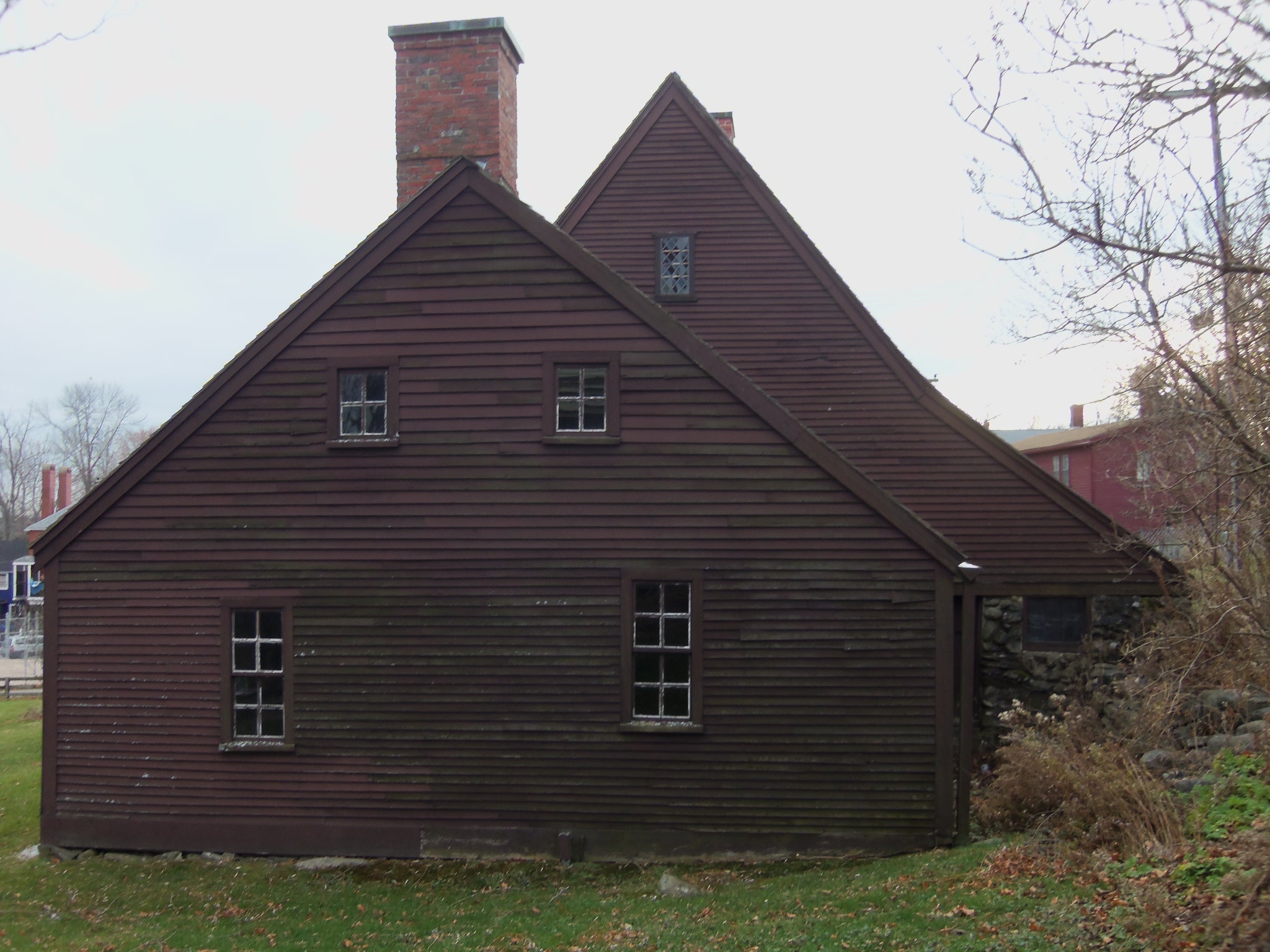
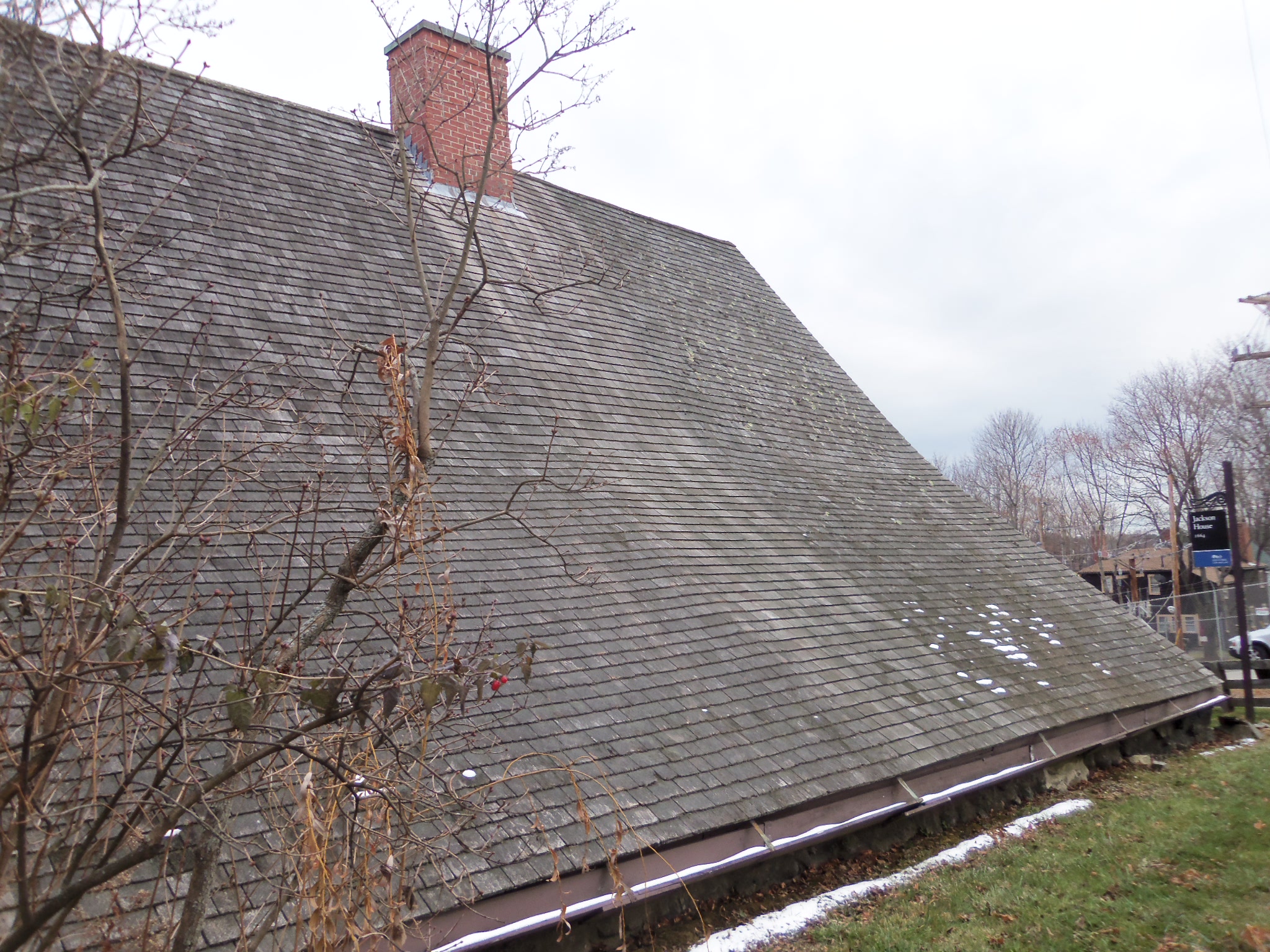
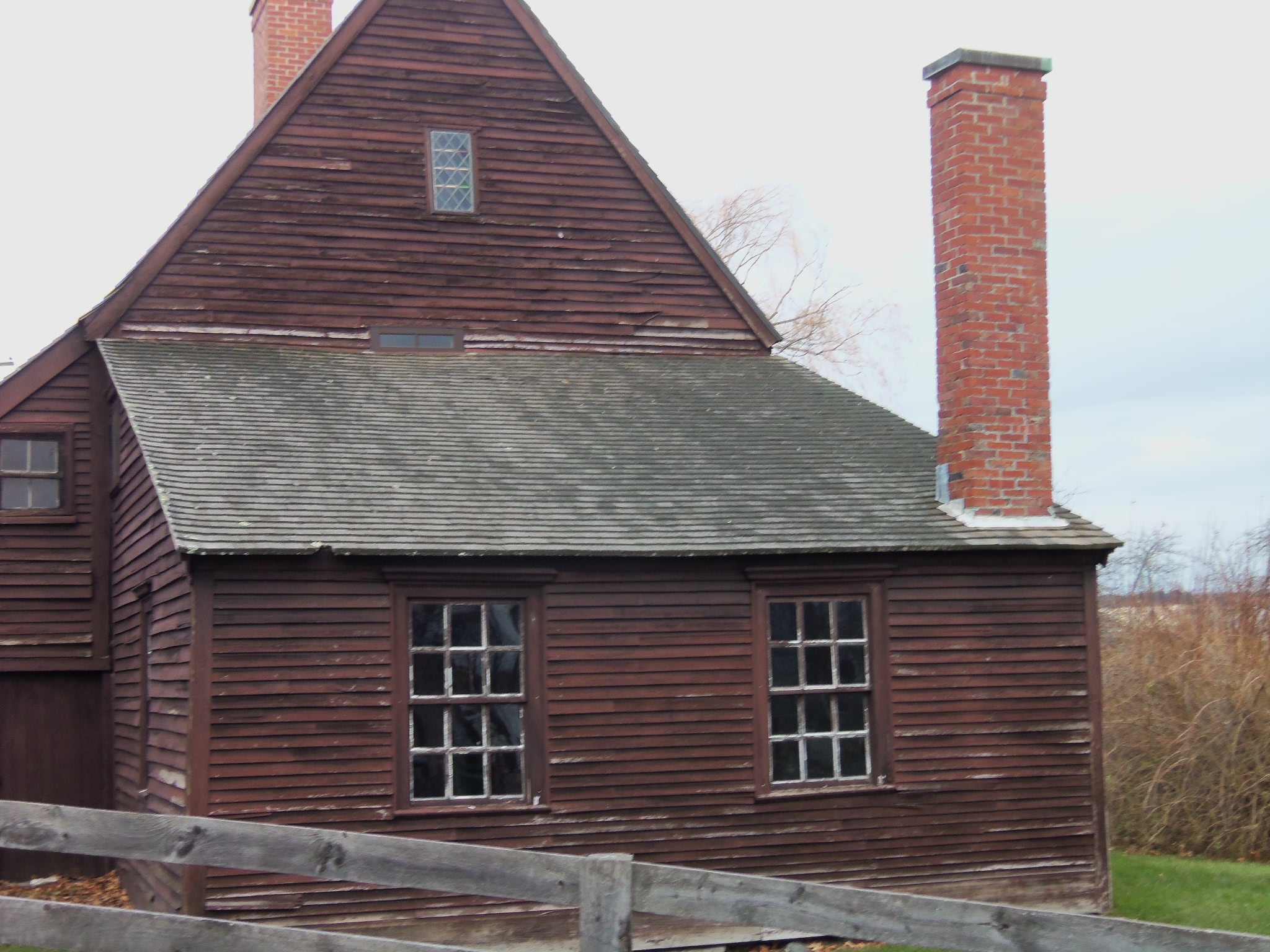
The 1664 Richard Jackson house in Portsmouth is the oldest surviving wood frame dwelling in New Hampshire or Maine. The additions turned it into a multi-family residence.
You never know what we'll churn up in cleaning a stall
The 1664 Richard Jackson house in Portsmouth is the oldest surviving wood frame dwelling in New Hampshire or Maine. The additions turned it into a multi-family residence.
As a writer, I love long pieces that allow a thorough investigation of a topic. Tell me the why and how of a situation, not just the final action.
The Wall Street Journal used to have those front-page, full-column “leaders” that jumped inside, often filling most of the inside page. These pieces actually telescoped a series of mini-stories into a comprehensive whole. How I admired those, even as I was being told to cut stories to much shorter length. (It often felt like reducing prime rib to hamburger.)
The longer stories, if well written and thoroughly researched, provided a sense of feasting, and I could point to research that showed some readers stayed around for those meaty offerings. I knew I had a feeling of getting my money’s worth after I’d savored one of those.
Not that I felt all stories should run long – I was also a big believer in running columns of briefs, in part to make room for the longer reports.
These thoughts return to me as I blog. In fact, I’m having a lot of fun “writing short” here at the Barn. You know, a couple of sentences and that’s it – especially with the photos.
For the longer efforts, though, I’ll point you to As Light Is Sown, Chicken Farmer I Still Love You, or the Orphan George Chronicles. Or to my novels. As I was saying …
The sign by the side of the highway said it all:
B LESS SIRLOIN $3.99
There it was on a public television broadcast, a curator proclaiming that no other artist had made as many bad lithographs (and maybe other kinds of prints) as Picasso. But, came the rejoinder, no other artist had made so many of genius, either. The freedom of one was necessary to open the other.
I took the message to heart. Genius, of course, is another matter.

I’m sitting in the car on a sunny afternoon, waiting for my wife or a daughter to emerge from the supermarket.
I watch a young woman pace nervously (am I being redundant), then climb on the trunk to look around or perhaps be seen by someone. She repeats this several times.
Finally, I break the ice, offer to make a phone call or help in some other way. She laughs and declines the offer.
“I’m waiting for some guy,” she says.
Oh, yes, I should have known. I think of all the other times I was waiting for some girl or woman. We know it’s a common scene.
And then he pulls up, much older than I’d expected. He goes to the driver-side window, waves a coat-hanger, and goes to work.
So it wasn’t just some guy, after all. So much for the romance that usually accompanies the story. Unless that happened somewhere down the road once she got going.
As a child, we could listen to the grandfathers and uncles talk about the good old days and their friends on the farms they left behind. Those conversations have been lost but remain a part of my heritage, my shaping — I have renounced those things, but return with a sense of ambivalence, that something more is lost — that there is no direction or depth in the changes.
The prairie was endless for the Amerindian, who lived securely within its radiance of circles, rippling harmonies, its ecologies — man, four-legged brothers, and spirits. Then the white man broke this, with straight lines: plows and axes. Like a bottle, the endless prairie was broken; its essence oozed away, like a bleeding wound. In breaking the tall grassed prairie, the white man created a new one — a desert of desolate spaces he could not understand, replenish, or be replenished by. He was depleting that which he came to find, forever. The history we consider is blazed by changes — turmoil, revolts, new kingdoms overriding the old; the Israeli history of ancient tentacles — it is not a history of land and people eternal, but rather a history of decay, of individual men or, at best, their generations as the whole thing changes in directions no one can foresee — the concept of PROGRESS with its central OGRE . . . the hidden desires to somehow make static or permanent the very creations of the destruction, which must obviously fail. In this new prairie the automobile was created and perfected — a means for fleeing, for destroying the COMMON UNITY of persons living through necessity in some kind of harmonic chord with the land (even the pioneers who broke the prairie and its Indian harmonies, had at least the peasants’ sense of the value of earth to man — they knew the traces of tribe in themselves and could still revere Mother Earth) — but with AUTO the prairie could be leveled even more — consider the vertical element that had been eliminated when BUFFALO were exterminated! enclaves of community become vulnerable, to escape as well as invasion — The Endless Prairie we have now can be broken. Pilgrimage made. The mind freed. We have our options, to fly away, or to enter inner circles. Either way, to become Indians (of America or Asia — both have ways). To focus, not upon the flatness, but on the hidden paths appearing in the Small Things.
As I used to chant: Hari Om Prasad!
I can understand the temptation to sell religion as a matter of improving yourself, whether it’s self-esteem or self-worth or, well, treasures on Earth (the “name it and claim it” version of praying). Churches have by and large shifted from emphasizing damnation versus eternal salvation, and in sweetening the message, have also seen attendance plummet. Along the way, they’ve lost much of what makes them unique as faith communities, as well. Still, as I center down on Sunday morning into the silence of our worship, I hear all the traffic on the highway outside the meetinghouse and wonder just where everyone’s racing to. For many, I know, it’s the mall, as if that has anything they really desperately need that much one day of the week, much less life everlastingly.
I hear a similar message in many of the yoga enthusiasts, who preach the heightened self glories emerging from the practice, and once again, I sense something else is missing.
What it comes down to, essentially, is whether one’s being self-centered or selfless in one’s focus. The selfless version, I’ll argue, demands a faith community – a circle of kindred souls who are committed to helping one another along the way, including listening to their perceptions of our own efforts, pro and con.
The role of a teacher – whether a guru or a pastor or a minister or elder – is also important, as well as the circle of discipline that individual submits to.
The self-centered version, in contrast, needs no one else – or many just an audience.
As I ponder the nearly empty churches on Sunday morning – and other places of worship on Friday night or Saturday – I’m left wondering just what is being fed to the spiritually hungry or what invitation is being issued to the wider world. It’s not a matter of shaping our message to popular marketing, but of being true to an alternative way of living.
And, as I see it, that demands a circle of faith – not just a solitary individual. As Jesus said, where two or three are gathered. For starters. Or a bit of what I experienced living in the ashram.
Let me add, it’s anything but easy. Far from it.
They warn of Big Government and of organized labor while they strive to strip the people’s powers in favor of Big Business. How conveniently they forget the wisdom of any balance of powers or the tyranny, especially, inherent in globalization as it’s emerging.
One World Government, they warn, while paving the way for One World Corporation. In effect, it’s all or none of us. Either way, it’s scary.
I learned to view political systems and society itself from the bottom-up. Jesus said something about it in Matthew chapters 5 through 7. Maybe it’s just a matter of viewing the bigger picture or remembering the promise of Jubilee (Leviticus 25). Ultimately, each of us equally responsible, and equally equipped, to work together. But there’s always a price to pay.


