A LITTLE AFTER THE FACT

So there we were a few days ago, finishing our Chinese dinners before dashing down the street to choir rehearsal. After cracking open my fortune cookie, rather than reaching into my pack for my eyeglasses, I asked my companion if he’d read my little slip to me. (Ah, the joys of getting older.)

After he recited my fortune, I replied, “You’re making that up, right?”

I was rather impressed, actually, and he does have a great sense of humor. Not bad for improv.

“No, here it is. You read it.” Which I did:

You are a lover of words someday
you will write a book.

BACK TO THE OBSERVATION TOWER

The top of the stairs.

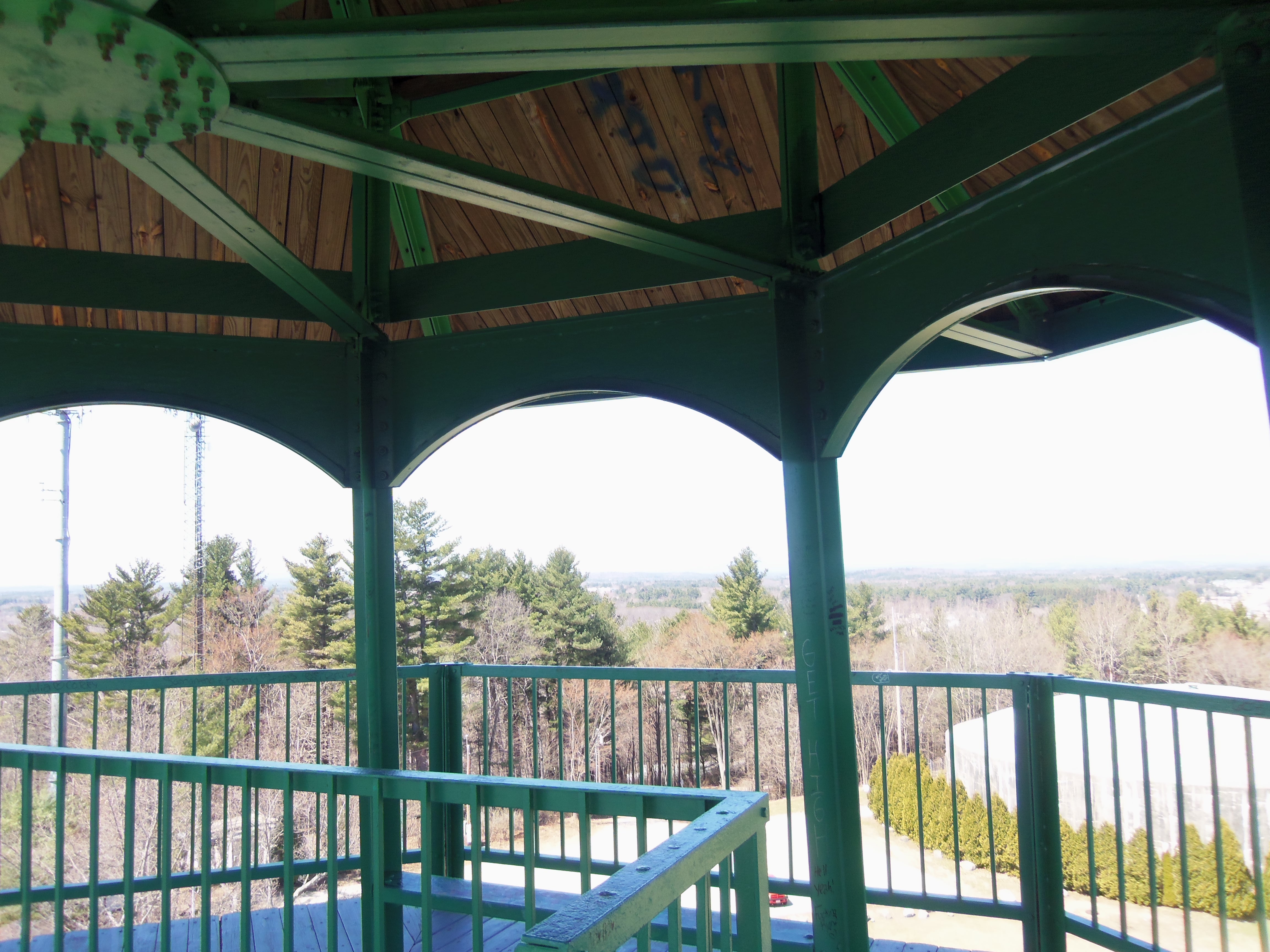
The observation tower on Garrison Hill sits on the highest point in Dover. As I posted in an earlier look, along with some views, back on June 5, 2013, it has some stunning panoramas of New Hampshire and neighboring Maine.

Overhead.
Overhead.
Underfoot.
Underfoot.
Holding it all together.
Definitely holding it all together.

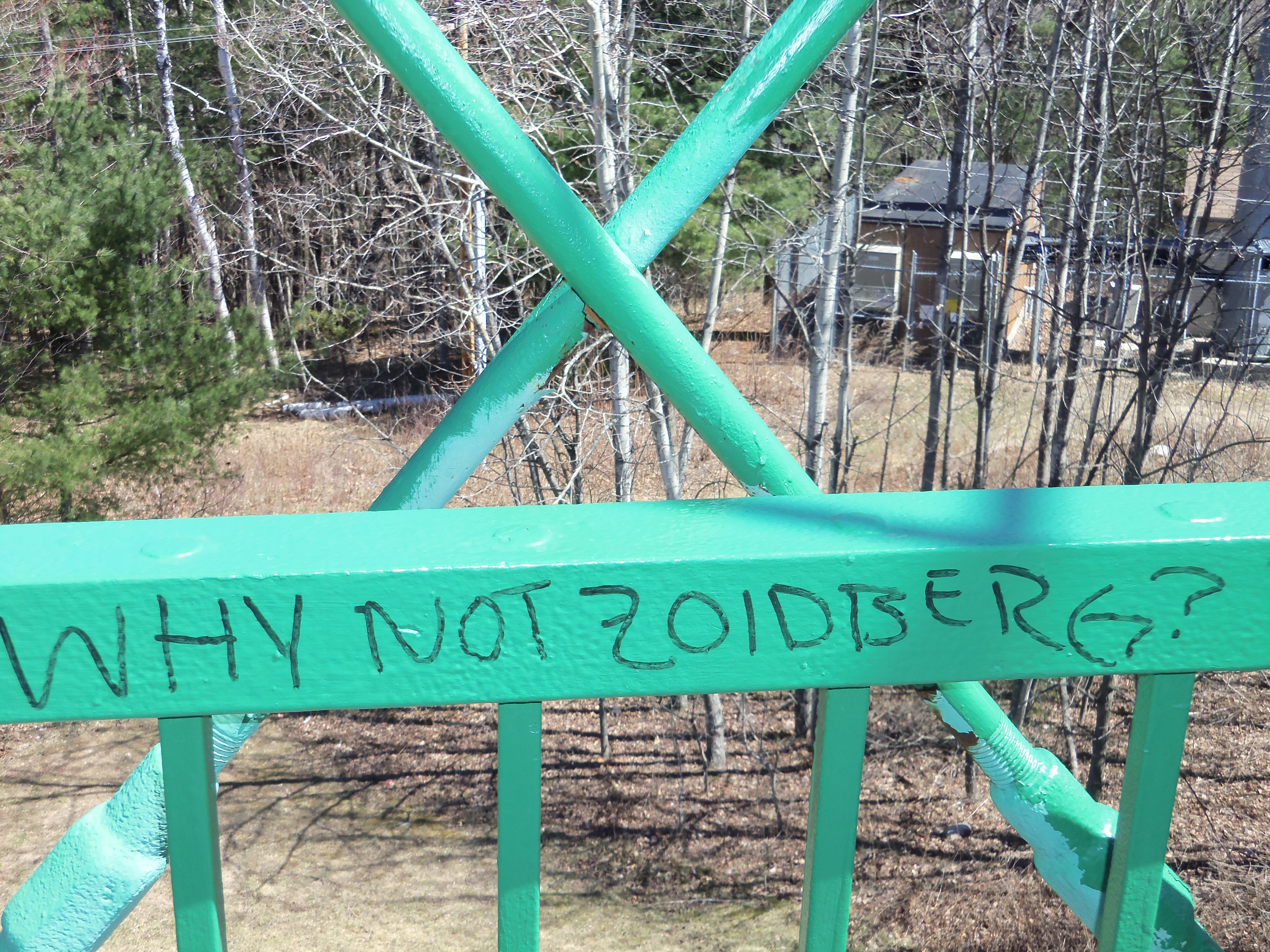
The details of the interior, too, can be fascinating to observe as you climb or descend. Along with some of the running commentary.

Why not Zoidberg?
Why not Zoidberg?

AN ALL-STAR CAST

When I was working with the newspaper syndicate, I got to meet a lot of impressive talent. (That’s how we referred to them, too, as “the talent.”)

The other day I was thinking of a few of them – Mike Peters (Mother Goose and Grimm), Jeff MacNally (Shoe), Dick Locher (Dick Tracy), Doug Marlette (Kudzu) – all of them excellent editorial page cartoonists as well – plus Joe Martin (Mr. Boffo) and Kevin Pope.

For the most part, they were a serious lot. I remember one’s reverential mention of another, “He’s the only cartoonist who makes me laugh out loud” – only to hear, months later, the comment returned without prompting. Like, admiring like, with a twist.

I remember, too, one looking at the work of another and commenting, “This is really funny” – without breaking into the slightest evidence of even a smile.

As I said, a serious lot.

What I also found was that their work was much funnier than what turned up among the others who were more boisterous and comical in person.

~*~

MacNally and Locher were both employed by the Chicago Tribune and enjoyed a warm rapport. MacNally’s studio wrapped around the elevator shaft on the 35th floor of newspaper’s iconic tower and had large windows peering out across the city and into the infinite blue of Lake Michigan as it blended into the sky. How he could ever work in such a suite was beyond me. (The top floor, just above his, was filled with electronic gear. Microwaves and the like.)

Locher’s studio was one floor down, with small diamond windows and a rather Gothic feel. I joked that it was like dwelling in a gargoyle, and he agreed.

As we sat in that space, a coworker noticed two framed certificates and remarked, “That’s all a Pulitzer is? A piece of paper?”

And without missing a beat, MacNally, who had just won his third, chortled. “Yup,” he said quietly. “That’s about it.”

REMEMBERING A PRINCE OF PUNS

Long a staple of the Friday-night Public Broadcasting lineup, Wall $treet Week’s Louis Rukeyser was noted as a master of puns. Or should that be groanster? Or even monster?

So in his presence for lunch one day, I piped up. “You know there are no good puns, only bad ones and worse. So who do you look down to for inspiration?”

He took it in good stride, knowing the sneer puns often earn, and replied calmly that when he was growing up, one of his father’s best friends was Random House cofounder Bennett Cerf – and young Louis gobbled up all of the literary publisher’s pun-filled volumes. I think he said he memorized 14 books in all. Not a bad foundation, for starters, and probably better than the jokes at the end of each month’s issue of Boys’ Life magazine.

Toward the end of his career, Rukeyser increasingly resembled the man on America’s one-dollar bills, an image he no doubt curried with a bit of tongue-in-cheek. Get a shtick in life, you might as well run with it. And how!

He was also an early example of the multimedia celebrity, something I detested in my role as a newspaper editor. I saw enough examples of television or radio personalities who tried their hand at simultaneously writing regular columns for print media, and our side of the equation was obviously the one being slighted. Let’s be frank. Anybody in the spotlight has only so much first-rate material to go around.

(That makes me recall a second-rate Boston newspaper columnist who took on TV features too, and pretty soon you couldn’t understand his content unless you’d seen the show he was amplifying. And then he was unmasked as a disgrace.)

Still, Rukeyser was candid about what we now call a “platform.” His career started as a reporter the Baltimore Sun, and he maintained a newspaper column throughout his run. “It established my credibility,” he said, back in the days when print carried clout.

The TV series, he added, gave him exposure and fame.

But the money came largely from his in-person appearances as a convention speaker. Everybody, after all, knew who he was – and that he could make the “dismal science” of economics and finance a lively, even humorous, topic.

Not every editor, I should note, bought into the argument that his fame as a public television celebrity would translate into newspaper readership. I still share their conclusion.

And then we had Andy Rooney.

ROADSIDE RECIPE

Originally it was three lines, but this is what I read:

Now hiring fried clam strips chicken tenders.

(Well, I always wondered about their scallops. But now we know who tenders those chickens. Or is it strips those clams?)

Yes, this definitely puts chicken tenders in a new category.