A SECLUDED COURTYARD, IF YOU WILL

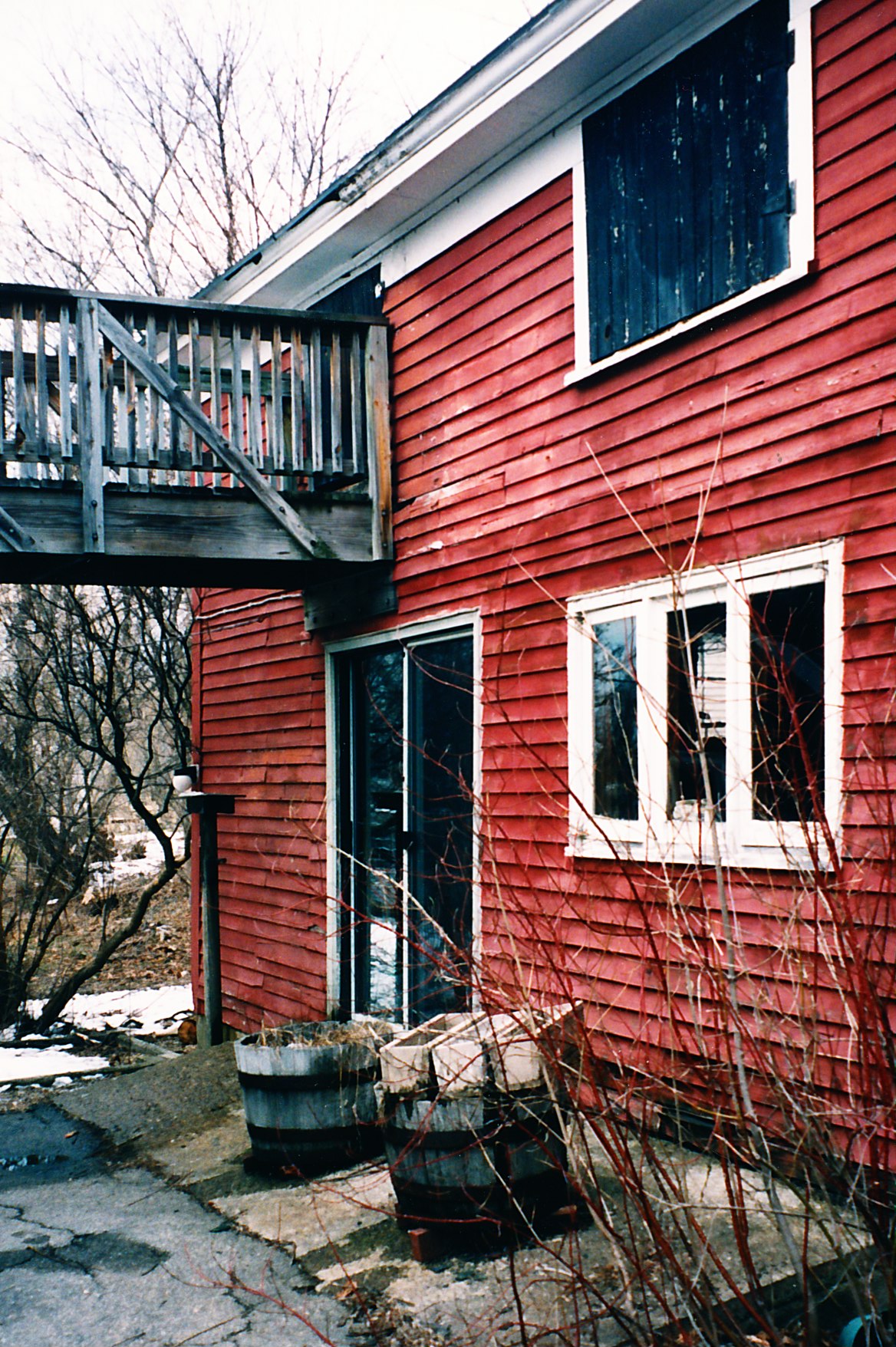
I’ve already mentioned it, the patio-like space beside the barn where we grill and dine through the summer. The place we call the Smoking Garden.

Originally, I envisioned it as a haven for the kids’ grandmother to sit with her cigarettes, but she never used it. Preferred the porch to the barn, if anywhere.

We inherited the arrangement when we bought the place. A couple of thick maple branches had to be removed, since they were blocking any passage at chest level. But the round fiberglass table was already in place, with pea-gravel on the ground and three adjoining panels I’ve since cleared and planted.

Now we’ve added tiki torches and twinkling Christmas lights overhead, plus the hammock.

Pour me a glass, please. Turn up the music.

~*~

 let me praise the secluded outdoor corner
as part of an urban dwelling:
a patio or deck
(my last apartment lacked one)
the courtyard with a fountain
a large porch or gazebo
at the least, a place to sit
or, better yet, cook
any place close enough to the kitchen
with a degree of privacy and a view of something

Poem copyright 2015 by Jnana Hodson
WELCOME RAIN

We’re not alone, I know, when it comes to unusual weather patterns.

In fact, I’m getting the feeling that the computerized models the forecasters rely on just don’t fit the changing realities. (One site I checked a couple of days ago had a projected high for the day of 71 F and a current reading of 76. In fact, the highs several days running before that, while we were waiting for an uncommon heat wave to break, were up to 20 degrees above expectations. Whew! ) Through much of the critical gardening season in May, our actual lows were often nearly 10 degrees below the forecast – a potentially costly error. And then there was one night a week or so ago when meteorologists changed the immediate outlook to 100 percent chance of rain overnight … and we got nada.

April, as it turned out, was slow motion – about three weeks behind our usual gardening routine. And then May, making up for the delays, allowed us to get more in the ground than usual.

The downside was that we didn’t get our usual rainfall. Officially, the month delivered a tenth of an inch. The seedlings and transplants had to be watered in a period where we’re usually concerned about root-rot and drowning. A month, typically, when I can’t keep the lawnmower wheels from sinking in the side of the yard we affectionately call the Swamp.

As I mowed the grass the other morning, I kept noticing how parched the ground is. This time of year?

Through all of this, we’re tallying up the effects of our long, nasty winter – the one that had snow cover for all but three of the coldest weeks in January. Dogwoods took a big hit, as did limbs of rhododendron and azalea. We’re missing a number of perennials, including the sage in the herb garden and salvia along the driveway.

So now it’s raining. What’s expected to be three days and more than two inches of precipitation. Welcome, welcome rain – even if it would have been much better doled out rather than dumped on us.

Oh, the joys of gardening …

HANGING TIGHT

When I think of essential tools, I’ve already mentioned the wheelbarrow and loppers. We could add the Cuisinart in the kitchen. Well, you get the picture.

But let’s not overlook the hammock.

She protested when she unwrapped the hammock we’d landed for her birthday.

Still, it went to the Smoking Garden, set parallel to the barn. And her resistance wore down, bit by bit, till one afternoon she fell asleep in it. She never, I should add, takes a nap. Ahem.

I’d say a hammock is an important garden tool, or thinking tool, even if it has no handles. You can work out a lot of problems there.

At the moment, it’s in pieces, stored in the top of the barn. Like so much else, waiting for warming and thawing.

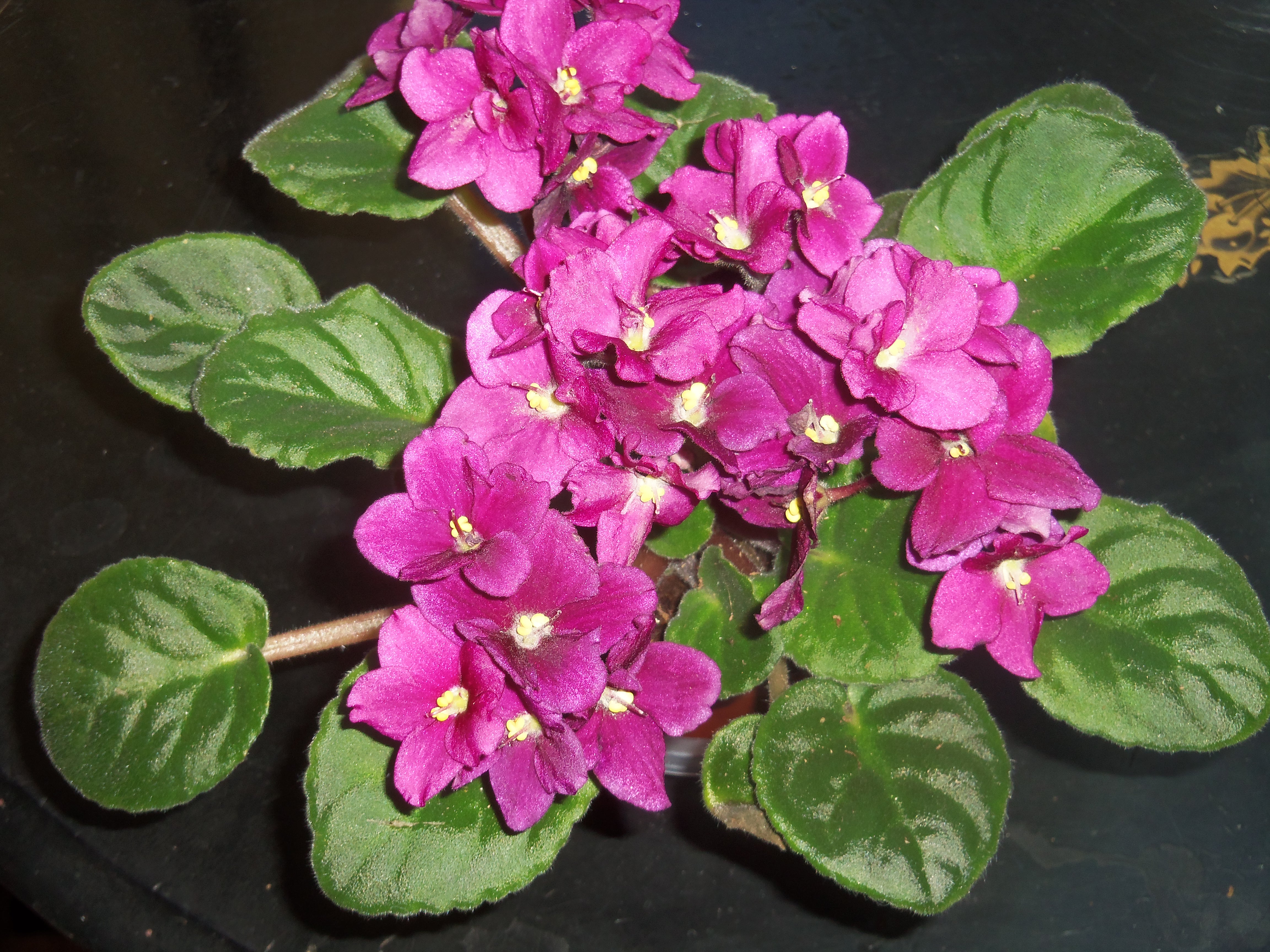
AFRICAN VIOLET

Simply lovely.
Simply lovely.

Can’t see an African violet in bloom without thinking of the calm reading room at the Lilly Library in Bloomington, Indiana. You had to be buzzed in from the museum displays, and the difference in air pressure was noticeable. And there, in the midst of some of the rarest books and broadsides ever printed, a librarian kept potted violets on the thick sills of its windows.

At the time, I was reading a lot of Samuel Johnson in the original. Pinpricks, coffee stains, and all.

THE FREEZER IN THE BARN

In one of our discussions of feasts and fasting as spiritual practices, a Friend mentioned purchasing a used freezer and how much he and his wife have saved over the years – by purchasing in quantity when supermarkets have sales, especially. It tipped the balance in our own decision to buy one, which we fit into the barn.

My wife’s no slouch in the grocery specials department, but its bigger value has been in preserving our own produce. How wonderful in January to pull out our own peas, or our own strawberries in February, or our own tomato sauce in March (if there’s any left!). Often, while she’s digging around in its drawers, she comes across surprises. Eggplant, anyone, already sauteed? And we never go wrong with a roast chicken bought on sale or, while it lasted, something from the half-pig we met at the farm.

In fact, we wound up buying a second freezer at a yard sale — and both are packed with goodies.


SNOW MUCH SNOW

It’s snowing again, a nor’easter that’s expected to drop up to 15 inches on us before dawn. That’s on top of 5 or so a little over a week ago, plus last Tuesday’s 30-inch blizzard blast and Friday’s 7.5. That’s close to 5 feet of snowfall in a week-and-a-half and we still have two more winter months left – the two that traditionally can get the biggest totals, especially if we settle into a twice-a-week storm pattern as we seem to be.

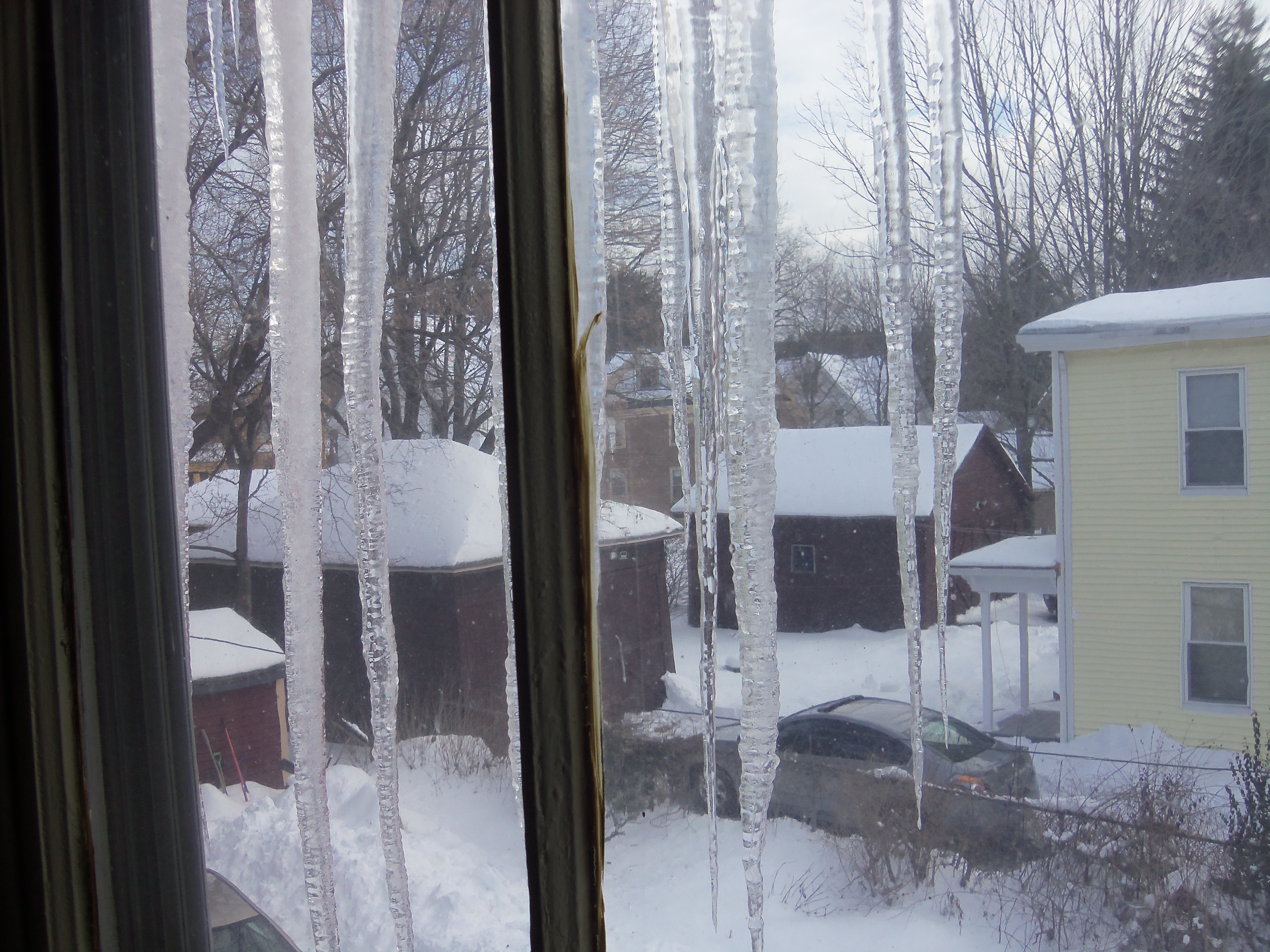
Admittedly, even with subzero and single-digit lows, some has melted between rounds, but much of that’s also refrozen into compacted snow and ice below the surface. The landscape’s getting wild, even before the next foot or so expected later in the week. Add to that the monster icicles clinging to the eaves – cold claws growing at our windows.

I keep looking out at the falling, windblown flakes and at the driveway and pathways that are already obliterated again. With an overcast sky, half of the landscape appears to be erased from existence.

This is hardly the quaint Currier and Ives stereotype of New England winter. It’s the reason barns and outbuildings were connected to the farmhouse itself. In earlier times, it could prompt madness and a feeling of being buried alive, with or without others.

Nowadays, we usually have recourse to mobility and entertainment throughout all but the worst outbursts – or the increasingly common power outages.

Still, it’s such a relief to not be commuting to and from the newsroom these days, but that’s no cause for smugness as I consider so many workers who must venture forth in public service.

And here comes a city snowplow, making one more pass down our street – and adding to the blockage at the end of our driveway.

Back to the digging, then. Round by round.