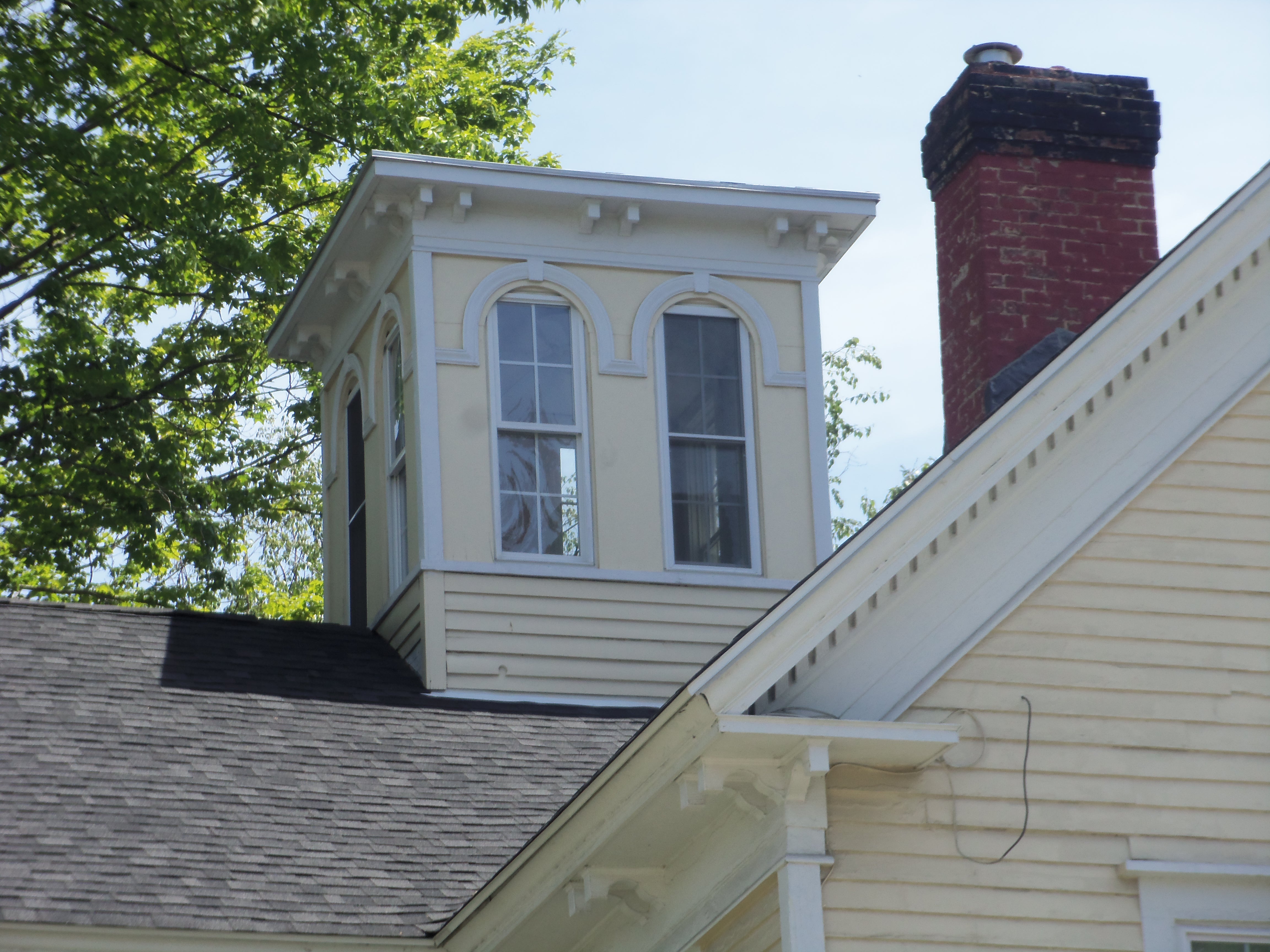
UP ON THE RAFTERS

You never know what you’ll find when you start rummaging around in an old barn. That’s how they found the 1776 grandfather clock made in Lancaster, Pennsylvania, decades later covered in grime in Montgomery County, Ohio. The one that fascinated me as a child, climbing to the top of the farmhouse stairs. The one, as Cousin Wilma later demonstrated, with such sparkling, ethereal chimes.

So here we are, in my own barn. Not nearly as big or as old. The rafters themselves far less sturdy.

NEIGHBORLY TRAILS

Our driveway and yard have been neighborhood shortcuts long before we moved here. We couldn’t refuse them, now, could we?

The kids, especially, still use it to get to the school bus in the morning and home again in the afternoon. We know some of the posse. Others, we’ll ask about.

One winter, with snow piled high in the Swamp, I learned to cross-country ski in the loop I carved around the periphery – including the precipice I finally more or less mastered.

The rest of the year, I can recognize pathways we maintain through the various beds and plantings.

I think there’s a bit of excitement in cutting across the grass or through a hole in the fence, compared to a sidewalk. Or for playing a variation of tag at dusk.


TRAILINGS

you could build boring straight lines
or else add curves or maze-figures

~*~

with the neighbors hosting Soupa
girls squealing kick-the-can
scurry amid carnival sounds

look, there’s a flurry, along the bushes

 poem copyright 2016 by Jnana Hodson

 ~*~

Home Maintenance 1For more on my home and garden poetry collections, click here.


FREEZER DISASTER TIMES TWO

Somewhere early in our time of living in this house – the property that includes the Red Barn – my wife and I bought a freezer. And then we got another, free, which also found a space in the barn. (Somebody was moving and couldn’t take it with them. So we came to their rescue.)

These two upright chests were great for stocking up on grocery specials, as well as banking our garden harvests and a lot of prepped dinners. How did we ever live without them?

When I was employed, these towering white caches were a source for many of my dinners at the office – and I was surprised by how much money we saved as a result. Cuban black bean soup, anyone? Just one of the specialties made in quantity and stored in serving-size plastic containers. As for our side-street harvest of real tomatoes, Brussels sprouts, blueberries and raspberries, eggplant, and more? Or loaves of homemade bread? Or the marked-down meats found at Market Basket? How could we live without them, indeed.

Both freezers were packed to the proverbial gills. And maybe then some.

From my perspective, this was glorious. What would we do for Sunday dinner? How about a roast chicken? How perfect! Some weeks we needed little more than fresh milk from the store.

But! This winter brought two disasters. First, one freezer died, and that meant salvaging what we could, seeking homes for some of the packages elsewhere (elder daughter, especially, rushing to the rescue), along with an orgy of using up what treasures we could.

All this happened, mind you, before the scheduled defrosting of the freezers and reorganizing of the contents, a delay prompted by other household crises.

My, what feasts while they lasted!

And then, before we’d cleared our way free, the other freezer died. This was getting serious! There was no margin left.

Some of the meat, having thawed, went straight into the trash. No value in having people getting sick. A few hams and pork tenderloins were gifted to neighbors, if we could catch them. Elder daughter had a few more spaces in her freezer and refrigerator, bless her. (Younger daughter, the vegetarian, lives too far away for consultation.)

Skip ahead a few steps, and we have a store-bought new freezer. The second one, cross your fingers, seems to be working again. The dead one’s gone to the city dump aka recycling center, via a borrowed pickup. (Yes, my back and ribs are still aching.) Some of the thawed meat has been cooked into sauces and the like and returned in new form to the new freezer. And we’re grilling each chance we can.

Oh, there’s so much more I could be saying.

But at least our life seems to be back in some kind of balance.

I hope. Now, back to the intense rounds of planting the garden. We’ve got to stay ahead of the weeds — and the advancing daylight.

RENOVATING A PERENNIAL BED

Gardeners in New England – especially in its northern realms of Maine, New Hampshire, and Vermont – soon discover the month of May can be a frantic stretch. (Or, for those of us with short memories, the word should be rediscover. I keep hoping for something more orderly than what feels dropped upon us each year.) For much of April, even apart from the threat of killer-frost nights or piles of lingering snow, the ground can be too cold or too wet for planting, and that’s if rain’s not falling. With our clay-based soil, I’ve learned not to turn it when wet, lest it form brick-like clumps. For that matter, in a typical year our large compost bin can still be frozen at heart, posing another obstacle to preparing the garden beds themselves.

When it comes to these projects, I often find myself in a bind. We simply don’t have enough room to “park” something while waiting for something else to open up or be moved to another spot. Compost is a case in point, though hardly the only one.

So when May hits, we’re rushing to get as much in the ground as soon as possible to maximize a relatively short growing season and, frankly, to try to beat the weeds to a solid start.

And that’s where we are at the moment.

I feel pretty good about a lot of the pace. Two of our raised beds have received new wooden frames, the compost bin’s been emptied and refilled with a new round of leaves and garbage, black plastic and a soaker hose are in place on what will be this year’s nightshade bed (tomatoes and peppers), the pea frames are up as are the seedlings below them, the bean tripods are in place … and we’re dining on what I think’s the best asparagus ever.

Let me add that my wife’s scheduling here means a few other outdoor projects I thought I’d be addressing are put off for a few weeks, and that’s frustrating. I hope they don’t get pushed back for months, because, well, that would affect other projects in the pipeline – and that touches on yet another issue she raised today. What if we just moved to a condo with a deck and a small garden bed about the size of our dining room table?

I could see that if we did square-foot gardening as intensely as we once envisioned, we might raise enough to keep us smiling at dinner. But my beloved asparagus bed’s larger than that. Ahem.

~*~

So we finished our first round of morning coffee and headed outside for the day’s task, the fourth of the raised beds in what we call the Kitchen Garden, the one on the far side of the driveway. The one we’re tackling is a perennial bed of bee balm (which attracts hummingbirds as well as bees), sorrel (which makes for an excellent sauce on fish), and chives, all of which we’d hoped to salvage. Unfortunately, a bout of lemon balm’s gone invasive, along with grass, plus our ubiquitous ground ivy, dandelions, vetch, and several familiar weeds I have yet to identify.

In short, this has meant uprooting most of the bed, attempting to save what we could, including some hyacinth bulbs, and admitting we’d have to start from scratch with much of the rest, including new bee balm.

So here we are, ripping out, grubbing, turning, cursing, adding compost, wondering how this got away from us, anticipating, what?

I have to admit I’m not the gardener, the one who plans the arrangement using page after page of grid paper or reads up on the options or orders the seeds or starts the flats indoors under the grow lights I set up or waters them daily while envisioning the results or anticipates the way they’ll wind up in tasty dishes or fill the freezer for dinners next winter. (I admire the one who does all this, in more ways than one. After all, I married her.) At the moment, though, I’m more concerned with what goes into the wheelbarrow, shovel by shovel or handful by handful, and where it goes from there.

And then, there will be one more thing checked off my to-do list … while adding to hers.

GARDENING, WEIRD WEATHER, AND INDOOR APHIDS

So here we are already in the month of May after what’s been an outright strange winter here in New England – and that’s even before we consider some broader and admittedly frightening American political developments. Whew! (I suppose.)

First off, those who scoff at the predictions of climatic instability should note that our region of the world just had its warmest winter on record, and while I’ve welcomed the break from shoveling tons of snow from our driveway, it comes at a price in terms of pests that would have normally been killed off and of perennial plants that took early hits as a result of false starts. I could point to my beloved fern beds or asparagus as cases in point, or the daffodils, which were poised to blossom when they were nipped by a night that dropped to 17 degrees Fahrenheit. It pains me to think of the way they buckled mid-stem and drooped. The only truly positive outcome I’d accept to date is the fact that our compost bin is not still frozen too tight to turn, sift, and spread on our beds. On the other hand, our state’s ski industry took a hard financial hit, affecting regions that already could use substantial relief.

As for maple syrup? I hate to think of the price tag  when my current supply is emptied and it’s time for the next. It was a short run of sap from everything I’ve heard.

When I call this an nontraditional winter, I should add that I’ve been in the midst of some major home maintenance and interior remodeling, which I’ll detail in future posts, along with some other dramas of a more private nature. Family’s what it is, after all, along with some public affairs of a more local nature. Oh, yes, we had to go without supplementary wood heat, at least until that chimney’s fixed. Have I said anything about household expenses and supporting finances?

None of that’s kept us from looking ahead to summer, even if we wound up getting many of the seedlings started later than we would have liked – we did, after all, get the portable shelves and grow lights up in what’s otherwise our front parlor (aka the “library”) and then delighted in watching the green sprouts appear. At least until the next shock.

What we hadn’t previously encountered was aphids, first in the peppers and then the basil before they spread as far as my African violets. We’ve been using a soapy spray as an organic counteraction, but it’s still unsettling.

At least our early peas are in the ground and looking happy as they pop their heads up underneath their elegantly stringed frames in the side of our yard we call The Swamp.

As I draft this, James Levine is making his final appearance as music director of the Metropolitan company in Manhattan and from the overture of Mozart’s “Abduction from the Seraglio” as I listen to the broadcast, let me add my vote to his laurel as the greatest opera conductor ever. The details, to my ears, are amazing. All of this takes me back, too, to our shared roots in southwest Ohio and rumors of his budding talent. So much as transpired since then.

Random impressions, then. Now, back to whatever is in front of us!

STILL LOOKING FOR AN EMAIL EQUIVALENT

Anybody have an effective suggestion for handling this email InBox conundrum?

With physical mail, I could divide the incoming missives into piles marked

  • Act
  • Delegate
  • File
  • Toss

and respond accordingly.

Another version made a distinction:

  • Respond now
  • Routine or schedule
  • Reflect
  • Trash

What I’m finding with my emails is whenever I’m uncertain how to answer, I put it aside – where it’s likely to wither and die. That is, if I don’t respond immediately, the message gets lost in the clutter.

I’ve thought about setting up a basket specifically to hold these cases, but once they’re out of sight, they’ll be out of mind. From my perspective, there’s no place to really put something aside, at least where I’ll see it but it won’t get buried. A pile for reflection sounds like limbo.

Anyone got a workable solution? Help! Tell us all!