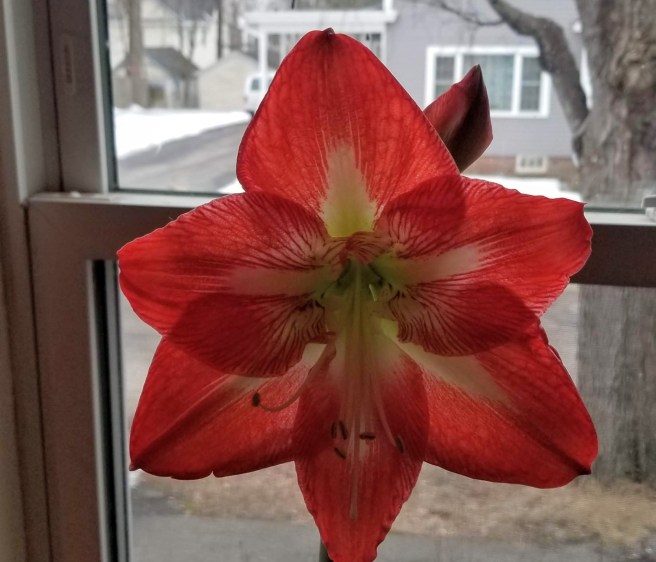
You never know what we'll churn up in cleaning a stall
The Cape we bought was listed as circa 1865, but from some of the detailing, we’re guessing it was more likely around 1835. A bird’s-eye view map from the 1835 shows a house on this site, though maybe not this one.
Many potential buyers passed on the place, for whatever reasons. It is definitely a fixer-upper, but it feels good, and we like its in-town, close-to-the-ocean location.
One chimney was in peril of collapse, and it’s already been removed. The fuel-oil tank had to be replaced. Also done.
We’re looking at the work ahead in two stages.
The first, of course, is more essential. The second, renovating the place more for our dreams.
Not that I especially wanted another This Old House kind of series, but this time we think we can tackle the project more comprehensively, rather than piecemeal.
Here’s what’s on our plate as soon as possible:


We were reluctant to start packing up our final goods from the house until the new couple passed through their final checkpoint in the home-purchase process. You know, just in case we had to show the place again to a fresh round of bidders.
What it’s meant was less than a week to box or wrap all that remains and haul it off somewhere.
We had already done a ton of packing and purging to make the rooms look presentable, but we wanted to leave enough to make it look cozy and livable. So that part’s done.
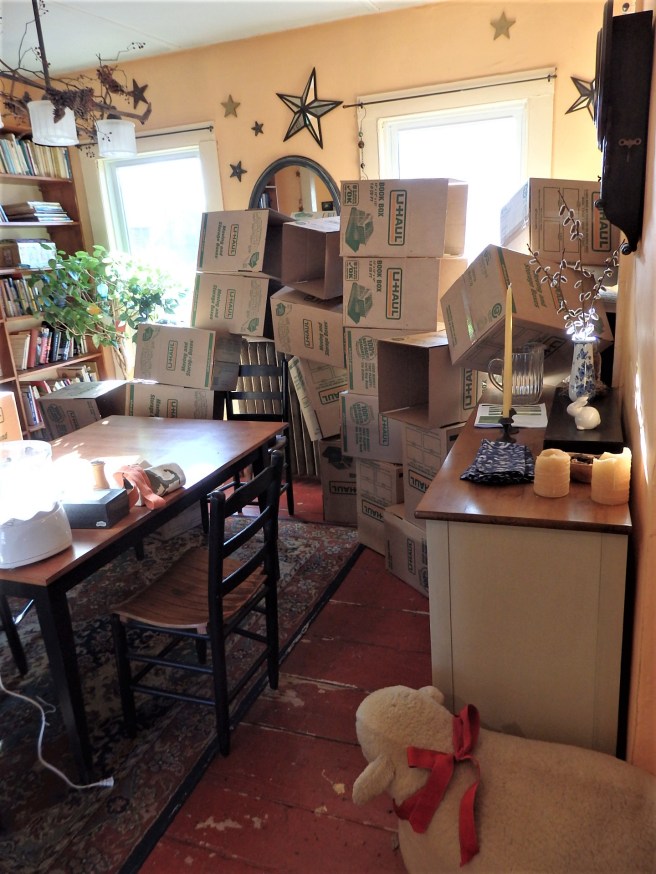
I’m a big believer in having uniformly sized boxes in a big move. They stack much more easily, for one thing.
There’s no way it will all fit in our new Downeast address, especially before our anticipated renovations are completed, so we’re putting some in two storage units, in effect buying some time for some serious culling. More is going off to our daughter’s already stuffed barn in York, to come up later.
It gets emotional, of course. I’m surprised how much responsibility I feel toward the books I’ve read, and their authors. And then there’s my vinyl collection.
Of course, that’s only my tip of the proverbial iceberg. Take the kitchen and garden goods, especially.
Sometimes I used to joke that I couldn’t understand how people lived without a barn to hold all the overflow. Only now it’s not the least bit funny. Seriously, folks.
In absolute numbers, I suppose you could say we lived in the place for free, once you compare what we paid for the place and added as renovations against the selling price two decades later, but I’m not sure that would hold up if we factored in inflation or what we might have earned if we’d placed much of that money in the stock market.
Even so, here’s some of what we had done:
And that’s not counting all the garden beds and plantings or tree work.