Ask yourself:
Would I work for
this boss?
You never know what we'll churn up in cleaning a stall
Ask yourself:
Would I work for
this boss?
I never know what will show up in our household after a Saturday morning round of yard sales, and Vince Passaro’s novel Violence, Nudity, Adult Content is a perfect example. At least it wasn’t another chair.
OK, it’s a catchy title – one I’m afraid generally oversells the story. While the novel’s excellently written, what really strikes me is the way it’s essentially four related novellas that are woven together. And, yes, it is set in Manhattan.
There’s the big law-office intrigue and infighting. There’s the one rich client’s murder case. There’s another lawsuit resulting from a brutal sexual attack. And there’s the marriage with two young kids that’s coming unraveled. (So far, it’s not that different from the three stories in a single television episode of Love Boat, a formula that quickly spread across programming. Here, though, the braiding feels more integrated into a whole. Well, not everyone was on the boat at the same time, in effect.)
Now, for a little confession. In a more conventionally structured novel, I will often leap ahead somewhere around the middle to the final pages. If what I find there makes perfect sense from what I’ve already learned, I’ll likely drop the book – perhaps picking it up later and skimming for supporting details. Of course, it the plot’s much thicker, I continue on the linear course.
What I found myself doing in this case was jumping from page to page to pick up just one of the threads, all the way to the end, before returning to the point of departure and following another thread the same way. Hey, I was pressed for time! The fact that one of the threads, presented as emails, appeared in a different font made the process that much easier.
So I’m left wondering how the author would feel about readers like me. Or whether an author even cares how a reader moves through a story.
Maybe it just depends on the book. Or an ego.
My thinking on this starts with the lone-ranger or small-time candidates for the White House, some of whom actually have some good ideas about governing or the direction to take on specific issues. But then it expands to the demands of managing the full scope of the job at hand.
You know, even on a single issue, there’s the gap between thought and action. Or more specifically, between having an idea and pushing it through a hostile Congress, on one side, and the layers of bureaucracy assigned the task, on the other. How do you really know what’s happening at street level? Or how it would work there?
We see many policies that look good on paper but when put to the daily test of everyday people just don’t work out. Think of income-tax credits that are still out of range of helping a minimum-wage two-worker household. Go ahead and add to the list.
In other words, something looks one way from the top and quite different at the bottom. It’s a malaise that affects every multilayered organization, too – if you want to survive in your job, you tell the boss what he wants to hear. Add to that the way we bend a report to fit our preconceptions – if you like it, you bend it fully to your side … and if you don’t like it, you reject the entire package. (That’s the theory of cognitive dissonance, if you want more.) If you’ve ever played the game of “telephone,” you see how it works going around a circle. The word or phrase whispered in one ear at the beginning comes out sounding quite different at the end.
Making a good decision requires solid information to begin with, and that means having alternative sources of data to cut through the skewering of upward filtration. But it also requires moving the information down, and that’s where the lone-ranger candidates are most vulnerable.
I’m always amused by those who show up in New Hampshire and plunk their registration fee down thinking they could run a country. Some have never held public office before – not even city council or a school board seat. Some have run a business of some sort, but nothing of a scale of a state government or major city, much less a Cabinet department. And they think they can get an entire cadre of people to move in step together? I want some evidence before we get to any on-the-job training in public administration. Especially when it involves the most demanding job in the world.
The reality is that the presidency is not primarily an ideas-focused position. It’s people oriented.
That’s where I start to look at the candidate’s ability to put a campaign team together. Yes, fundraising’s part of it. But so is recruiting smart, dedicated people. How disciplined are they? How reliable? How mature? What connections have you established?
All of this quickly winnows out the lone rangers.
More and more, though, it’s also making me nervous about those survivors who wind up, however briefly, on the white pedestal. I don’t think a mere human can fill the expectations. Maybe even the expanding requirements.
And unlike Plato, I sense a philosopher-king could never possess the essential knowledge of daily life in arriving at a decision or enacting it. Why do I get the feeling the lone-ranger candidates seem themselves in this role, anyway?
Sometimes daily life itself feels overwhelming – too big for anyone. Even retired folks like me. I wish the White House hopefuls well, all the same. I expect the Executive Mansion has excellent maintenance, run by someone.
In today’s publishing world, it’s impossible to keep up with the output. Even in a specialized niche.
I recall asking an English department chair at a respected college if she’d heard of so-and-so – the kind of novelist who gets reviewed by the New York Times both in its daily edition and again, independently, in the Sunday Book Review section. The answer was no.
(In fairness, she and her husband always introduce me to a range of fine authors when I scan their many home library bookshelves.)
Why wasn’t I surprised?
More recently, recognizing the extent of Greek-American influence in my own community and throughout much of the Northeast, I began searching for works that might reflect its family life and culture. Even a search by a public library research desk came up pretty empty. The Greek-American authors we did find seemed to be writing about other things.
There are, as I’ve noted, a few exceptions, but there should be more.
And then, by chance, I picked up Jeffrey Eugenides’ The Virgin Suicides. His was one of the Greek-American names I’d come across, but this story was focused on five sisters in a Roman Catholic family. I quickly resonated with the Midwestern setting of the story, which easily fit into a band across northern Ohio and Indiana and, as became more apparent, southern Michigan. This was familiar terrain, not far from my native soil – and another one that is rarely represented in literary fiction (yes, I know the objections to the term – but how do we distinguish it from commercial genres that are sales driven?). Despite its gruesome premise, this is a humorous book, befitting the thwarted desires and misunderstandings of its adolescent male observers.
And then, on page 171 of the paperback I was reading, came a glimmer of the novel I’ve been seeking. In the household of the narrator’s friend Demo Karafilis, we encounter his grandmother, Old Mrs. Karafilis, who generally stays to her room in the basement, where she keeps her memories of growing up a Greek in Turkey who managed to escape with her life. The next three-and-a-half pages are an incredible portrait that left me yearning for the novel-length development. As Demo explains it, “We Greeks are a moody people. Suicide makes sense to us. … What my yia yia could never understand about America was why everyone pretended to be happy all the time.”
What I discovered a few nights later, in the stacks of the library I’d consulted earlier, was the elusive Greek-American novel. How could it be so invisible after being acclaimed on Oprah’s list and even awarded a Pulitzer Prize? It was Eugenide’s second novel, a 529-page masterpiece.
Maybe part of it has to do with the sexuality theme that masks everything else – the narrator’s peculiar adolescent gender shift thanks to a recessive gene and the impact of earlier incest. Well, it is a riveting tale. For me, though, the primary story of Middlesex is the multigenerational presentation of a Greek-American family and its culture, done in a matter-of-fact way, with nothing sentimentalized. It’s an incredibly rich novel, no matter which part of the narrative claims your attention.
Not to take anything away from all the novels of ethnic life in New York City or Chicago or the regional flavors of New England, the South, southern California, Texas and other Far West locales, it’s safe to say many other strands of American life are greatly underrepresented or even missing entirely.
Any you want to point out?
A comment from Martha Schaefer got this ball rolling.
She was confessing that she never liked Brussels sprouts until her ex-husband, “an excellent cook,” introduced her to what happens when the tiny cabbages are cooked well. And, of course, that changed everything.
My, that could even get us going on a crimes-against-foods rant, considering how many vegetables, fruits, meats, and so on are abused in kitchens around the globe.
For now, though, let’s consider an overlooked aspect of broken relationships. Think of something positive you’ve carried away from an ex-spouse or lover. What were you introduced to that you now treasure or delight in?
A special place, perhaps, or food or beverage, music or art, literature or activity, friends or family, even (maybe most of all) lovemaking.
What comes to mind? Or your heart? Pipe up!
As I’ve reviewed the counterculture history through the lenses of the out-of-the-way places I inhabited, there are those who ask if I was ever really a hippie.
Usually, I finesse an answer – nobody really fit the stereotype, not on all fronts. And I certainly felt more at home in that circle of identity than any other at the time. Yes, I did live pretty much as a monk for a stretch through there, but that was followed by a return to a college campus and all of its action. Maybe I was in that world but not of it. My music, after all, was mostly classical and opera, along with some folk and jazz. Only now am I coming to more fully appreciate the sounds that identify the era. As for sexuality and caring, well, there’s much more to evolve there. Maybe even some radical political and social activism.
My Hippie Trails novels reflect the times, even though I keep wondering how much of the story I could recast as ongoing today – especially when it comes to physical desire and fulfillment or the simple matter of earning a living.
What I am experiencing as I dig through the encounters, though, is a sense of release – these are events that have been entrusted to me, and now that they’re published, I can move on. No matter how mundane and minor they might appear, contrasted to Haight-Asbury, say, or the Black Panther and Weathermen struggles, they were what many of us experienced, pro and con – and much of what we left unfinished. It’s no longer in my hands but rather in the wind.
This release, I’ll admit, is accompanied by an anticipation of a new phase, one adding disciplined faith to the path of renewed personal growth and service. So much of the dream awaits fulfillment.
 Winged skulls are part of the New England colonial legacy. The region’s harsh environment invoked a stoic outlook on life. The images also inspire a collection of my poems, available by clicking here.


Back in high school, I remember hearing the Young Americans for Freedom and other Goldwater supporters claiming that African-Americans would flock to their side.
Talk about blind faith! Just who were they talking to? Where were they spending their time?
I could see ways that wasn’t grounded in any reality.
No wonder I started backing away.
It was a sensation I also felt as the Vietnam war began building up.
Or as a homemade sign on the Antioch College campus boldly warned: Help Goldwater and LBJ nuke Vietnam.
At the time, all eyes and ears were cast on the conservative’s sword-and-bomb rattling. The president, we were assured, was more reasonable and reasoned. And then, once elected by a landslide, LBJ, to our horror, ramped up the American involvement. Remember the Gulf of Tonkin Resolution? As we learned later, it wasn’t grounded in any reality.
The promise, of course, was One More Year. Talk about blind faith! Just who were they talking to? Where were they spending their time?
Are we, as a people, ready for some uncomfortable true statements? We need to get grounded in reality rather than unsupported ideology. Just who are we talking to? And where are we spending our time? Let’s run some numbers, for starters.
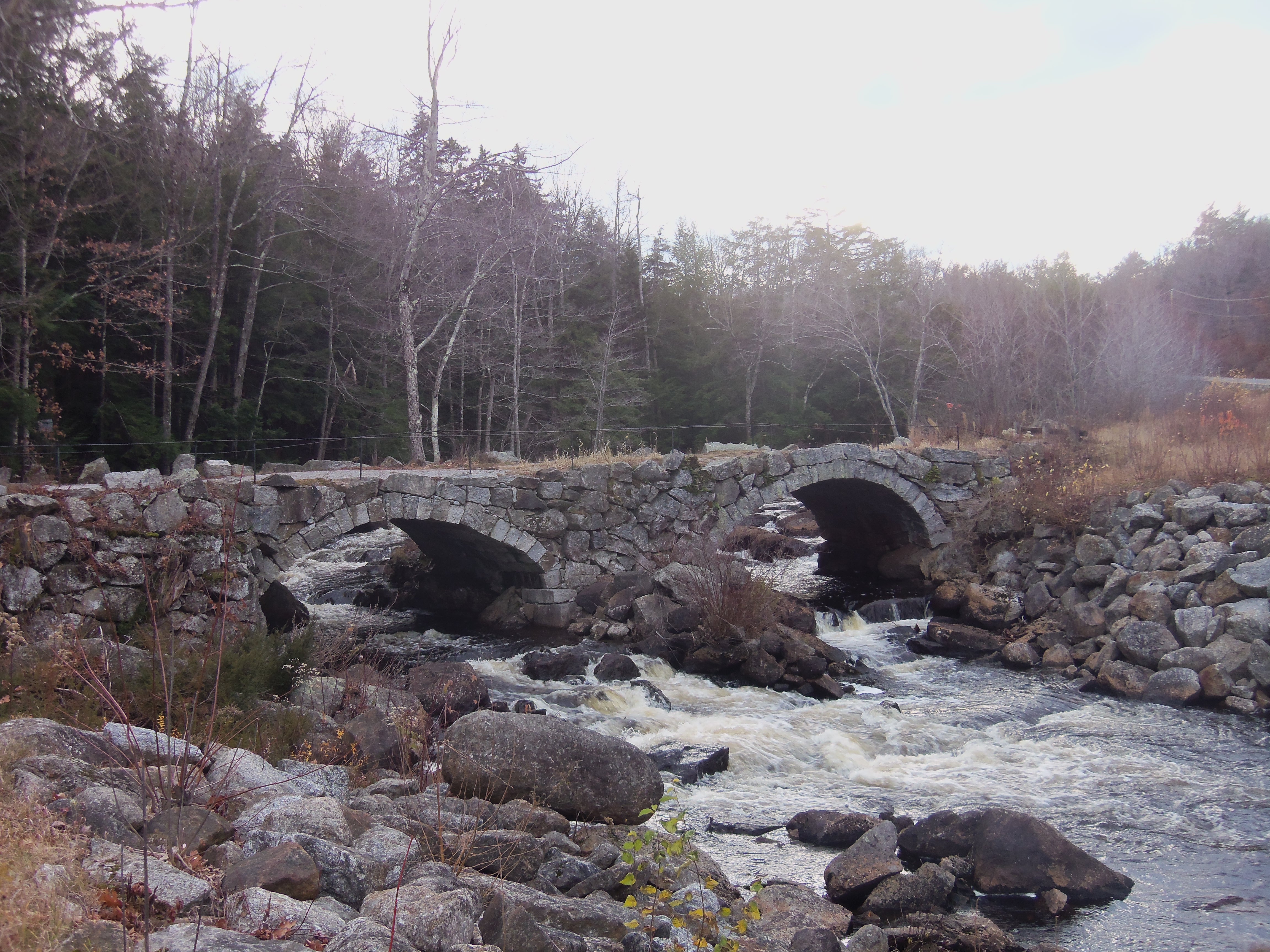
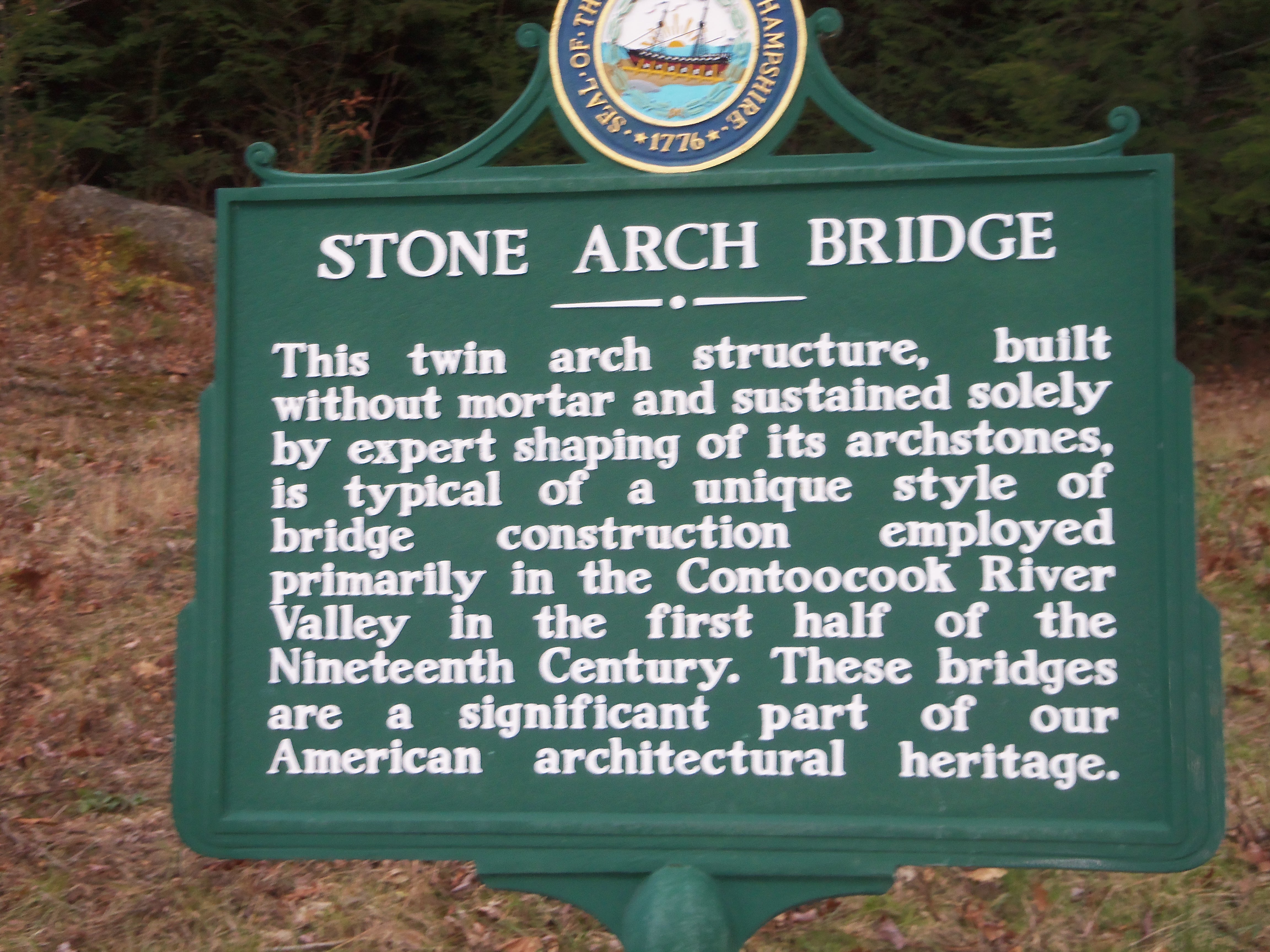 As the sign proclaims, built without mortar … nearly two centuries ago.
Some years ago, as I recall, a New York Times op-ed piece mentioned that America’s reliance on volunteer service in public affairs shifted after World War I. We started turning more and more to paid workers – the ones we now call professionals.
Maybe some of it had to do with the shift from a rural and small-town society to big city life. And some of it, no doubt, as a matter of working inflexible hours in factories. Nowadays I’d add the shrinkage of local ownership, with executives who were expected to participate in public service, and the necessity of two-income families to make ends meet in the face of lower pay levels.
It’s a complicated issue, one that can lead to long discussion – maybe even some wailing.
I see it most directly in my Quaker circles, which function on an expectation that everyone in the faith community will offer service to the whole. That is, serve on a committee. I’m among those who are arguing that model needs to change to adapt to current conditions. Of course, it’s a matter many other groups – secular and religious – are facing. But it’s refreshing to read others who are thinking along similar lines. For one presentation, click here.
Maybe you have some helpful suggestions to add.
 Jnana's Red Barn