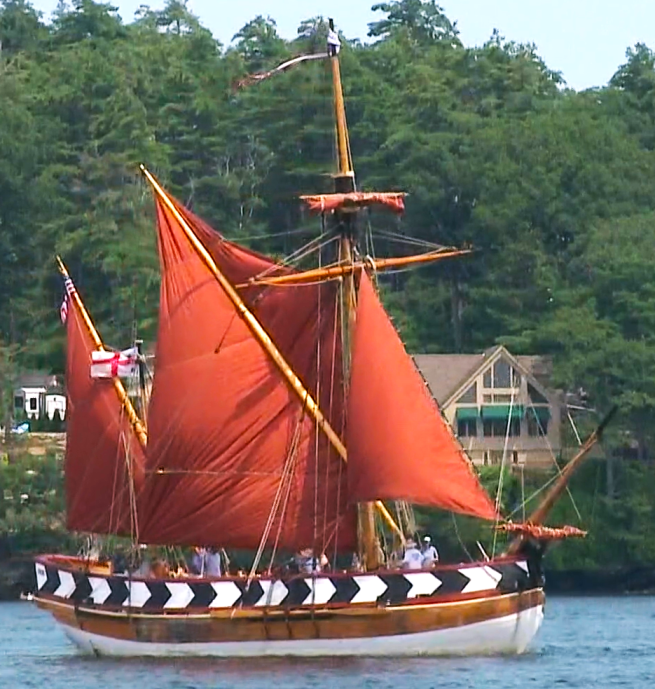
The era of commercial wooden ships under sail is long gone, and Maine played a big role in its glory days. The town of Searsport, in fact, late in the 1880s claimed to be home to a tenth of the masters of American full-rigged ships, and thousands of ships were built along the state’s shores. Do note, though, steamships and steel hulls were rapidly changing the business.
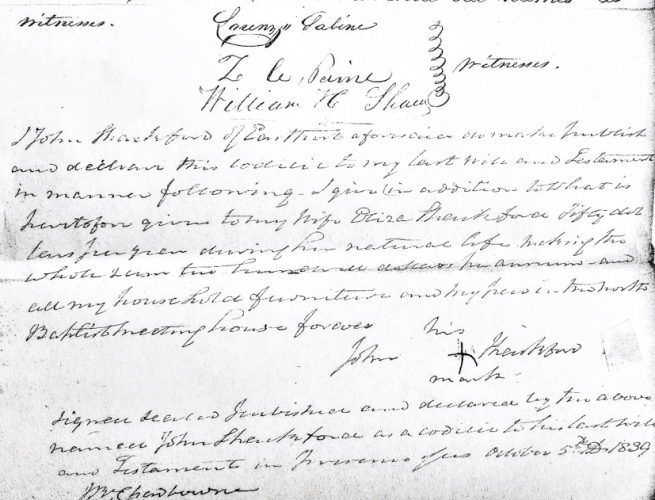
As I learned in researching the history of our house, built by a shipmaster who raised four captains of his own, there seems to be nowhere they didn’t venture.
Unlike many, though, the Shackford wives seem to have stayed on land rather than venturing forth with their husbands and serving as the trusty navigator.
Here are some other families for perspective.
- Joanna Carter Colcord, daughter of Lincoln Alden Colcord, was born at sea in 1882 and is famed, among other things, for her collecting and musically notating maritime ballades and chanteys. She and her brother spent much of their childhood at sea, where they sent extensive letters to relatives in Maine. Later reminiscing how, after a break ashore where she could attend school, “when I was eight, I took my turn at seafaring, and Link got his introduction to the halls of learning. We put out from Portland lumber-laden into a full gale of wind, and I was sea-sick for the first (and last) time. On the fourth day out it faired away, and father took me, convalescent now, on deck and set me inside a life-ring that was lashed to the top of the after house. … I was not afraid; and I remember to this day the awe and enchantment of the scene. I thought I had never seen anything so beautiful, and I still think so. The little barkentine was running bravely, among the great seas which heaved up all around in sunlit walls of liquid sapphire. When she roe on one of the huge swells the seas stretched to a horizon of living blue, barred with mile-long white-capped combers. The sun warmed me, and its play on the snowy sails fascinated me.”
- Her brother Lincoln Ross Colcord, a year younger, was born at sea during a storm off Cape Horn. Recalling the life they shared growing up, he wrote: “I know no other home than a ship’s deck, except the distant home in Maine that we visited for a few weeks every year or two. My countryside was the ocean floor, where I could roam only with the spyglass; my skyline was the horizon, broken by the ghostly silhouettes of passing vessels, or at intervals by the coasts of many continents, as we sailed the world.”
- Also from Searsport was Georgia Maria Gilkey, who headed off to sea in 1906 as the bride of Phineas Banning Blanchard, of the same town. As she observed: “It seemed like old times being on board a vessel again. I spent most of my youth at sea with my parents, brothers, and sister. Banning grew up at sea, too, and he was a captain before he was twenty.”
- Not that the life was always so bucolic, as Captain John C. Blanchard noted in candid letters in 1844 to his wife Caroline in Searsport. “I am very anxious for to leave here for the mosquitoes,” in confessed in one, followed in another with “and the hot sun has made me look more like a native of Cuba than one from the North. My health is tolerable good although I have no appetite to eat and the clothes that used to fit me now set like a ship on a handspike, as the saying is.” There was no respite in others, where “The mosquitoes would make you look more like a person with the smallpox than otherwise … The climate seems to me just as healthy in New York in heat of summer.” Also, “It seems as if the mosquitoes was determined on having the last drop of my blood. They were so plenty last night that we could but just breathe without swallowing them and as hungry as wolves. They make nothing of getting my blood right through my shirt and pants and now while I am writing they are doing their best.” Later, he noted having the American consul and two gentlemen from New York on board to dine as well as “a long string of Spanish ladies and gentlemen” who came calling. “I tell you what it is Dear C, you don’t know what a knack these Spanish ladies have of casting sheeps’ eyes but the gentlemen don’t like us Americans to even wink but dear Wife, all the Ladies in Cuba is no object to me.”
- Perhaps that provides one more reason for brides to join their sea captain husbands on his voyages. Nancy Sherman Mackintosh, for one, set forth with her new husband Alonzo Follansbee in 1837 and two months later admitted, “By this time I had learned all the nautical phrases, though I did not choose to use them, lest I get in the habit and use them on shore, which would be very mortifying for a captain’s wife.” Yes, salty language. At least she remained behind on shore in 1856, when her husband vanished at sea.
- Another bride, Fidelia Reed, in 1853 was so occupied with getting her quarters “systematized” for her honeymoon voyage from Boston that she barely noticed setting sail. Having “arranged all our books and movable articles so that they would not shake about by the motion of the ship,” she then saw “the steward fastened our trunks to the floor by nailing a bit of wood on each side of them to the floor, quite a new sort of arrangement to me.” As for her husband, John Jay Heard, “The Capt. says it seems quite as strange to him to have me on board, as it is to me to be here. He having always been alone, it looks rather queer to see ladies’ clothing hanging in the state room.” This, even though this was his second marriage. Novice Fidelia, by the way, did master the art of navigation.
- Manhattan native Cornelia “Connie” Marshall first set sail in 1855 as the bride of Captain Enoch Wood Peabody. Two days shy of Liverpool, their ship was overtaken by a tempest. As she wrote of that honeymoon cruise, “Weather continues very bad. Enoch is hard at work. Scarcely had a chance to speak to me during the entire day.” Conditions worsened, culminating in a cry in the night, “Breakers ahead! Hard down the helm!” as well as “That fearful sound, never shall I forget it, and amidst the noise I heard my poor husband’s voice in such tones as never before.” Amid the crisis, “He enters the cabin, how pale his cheek, my heart seems almost bursting. Oh, that he would but speak to me. His look is almost wild.” As for their life after that?
- Another Searsport-based wife, Maria Whall Waterhouse, took command of the S.F. Hersey in Melbourne, Australia, when her husband died, and according to legend faced down a mutiny with the aid of her late husband’s two pistols and the ship’s cook.
- Should you care to really dive into this topic, the academic article “Excitement and prey: Captains’ wives and the experience of marine animals on U.S. whaling ships in the 19th century” in the International Journal of Maritime History should be right up your alley, so to speak. Dealing with a more defined set of examples, author Emilia Svyalsami observed, “The ship’s society was hierarchical, and the captain had absolute power. A wife’s presence brought much needed comfort to captains, who often were lonely figures. They were even more so on the whaling ships, where the pressure of catching whales created tension and underlined the captain’s skills.” Many of the wives closely observed the natural world around them. Quoting shipmaster wife Mary Brewster, for instance, we have this about sunfish: “Had I never seen the fish perhaps it would have tasted better, but seeing it was sufficient to produce contrary feelings.” How droll. Add to that, from the following day, “Had porpoise for breakfast. The liver tastes very much like beefs’.”
- Missing from the records, though, are the observations of women like Sarah Bates, the wife of Captain Mariner S. Crosby, from the fatal last days before the ship went down. According to the memorial monument in Eastport’s Hillside Cemetery, the 33-year-old and her 44-year-old husband along with their four children, including an infant son, were “all lost at sea about Oct. 25, 1867, with the brig Sarah B. Crosby.” Similar markers, found across the region, have no bodies buried below.