Look for the witness in the work, too

Cinema critic Roger Ebert was talking of the importance of the witness in every movie and pointing to the places where the character appeared in the film under discussion, mostly in a lower corner. The comment flashed me to the reality of how often the hardest thing to see is what should be the most obvious. It’s not just the elephant in the room, but also smaller things we take for granted.

One way or another, all fiction is built on the observer, who is also to some degree an outsider or misfit, too. (If there are any exceptions, I’d love to hear them.) Four of my novels, for instance, were intuitively built around a photographer, a profession that makes Cassia’s father a well-trained witness. In turn, as she investigates his archives, she, too, becomes a witness, even before she starts commenting on his earlier life.

Of course, as a reader, you also become a witness. Or even a voyeur, as Camille Paglia has contended. It’s almost like every page is a microscope slide to be interpreted.

Curiously, I now see this also at play in a long-term non-fiction project in my life. Forty 40 years ago, seemingly by accident, I became involved in trying to uncover my father’s ancestry. I thought we were simply homogenous Midwesterners who had always been in Ohio from its beginning. What I discovered, though, was that one branch was – but German-speaking and largely akin to Amish. My name-line, however, was Quaker by way of North Carolina and its slaveholding culture. Both strands were outsiders to the larger society and also pacifist. It opened my eyes to alternative histories and to a recognition that stories don’t always have to resolve nicely – three people may record their memories quite differently, and maybe all three are true, if not factually accurate.

Oh yes, the research was often collaborative, with correspondence going and coming from others working on parts of the puzzle. It wasn’t always quite as lonely as drafting fiction or poetry.

To my surprise, as my novel What’s Left was taking shape, Cassia started assembling bits about her Greek-American grandparents, who had died before her birth, and then beyond to her great-grandparents, who brought the family to the New World. Like me, she found valuable clues in the surviving snapshots and formal portraits regarding their personalities, as she also did in the letters and other documents.

None of my ancestors came by way of Ellis Island, and on Dad’s side they were all in this country by the time of the Revolutionary War. I once pondered doing a series of novels on them, but I’m still intimidated by the technical challenges – a realistic language they can speak and we can understand being high among them.

Witness, I might add, has an extra dimension in Quaker thinking. It’s not just what one sees or hears but how one lives. The goal is integrity, as in wholeness or consistency. Is that what others see in us or our lives and work? Or even as our goal and ideal, even when we fall short reaching for it?

And, as a final twist, I’m realizing that the Indigenous perspective of looking back seven generations when making decisions for the future would take me back to the birth of Orphan George in 1701.

I do find that mindboggling.

~*~

You can find my genealogical gleanings on my Orphan George blog.

The novels, meanwhile, are available in the digital platform of your choice at Smashwords, the Apple Store, Barnes & Noble’s Nook, Scribd, Sony’s Kobo, and other fine ebook retailers. They’re also available in paper and Kindle at Amazon, or you can ask your local library to obtain them.

A baroque twist runs through my distilled expression

Samuel Johnson and his baroque literary constructions gave a big push to my writing ambitions after high school. Let me just say I’ve loved the clarity of Mozart from my adolescence on, and Bach and Handel have risen in my estimation in the years since. The brash English master fell right into that, though I now see again just how irreverent he was, despite all of his professed orthodoxy.

What it means it that I’m comfortable reading and writing certain kinds of complex sentences that are foreign to modern readers. Perhaps I should apologize? At least it’s not the only way I put sentences in line. Still, there’s a richness that’s missing in Hemingway and his progeny.

And here I am, drilled in the newspaper journalism Papa Ernie claimed was his inspiration. Think again. (Ernie? Makes me think of Pyle, and his big desk at the Indiana Daily Student, where I once collaborated.)

But then there’s Nicholson Baker’s effortless spinning of sentences of 250 to 300 words spanning a full book page. What wonder!

My wife has noted the dichotomy between my fondness for many Old Ways and the rule-breaking, experimental edge of so much of my writing and thinking. She can point, for instance, to my fascination with the fiery writings of early Quakers in the mid-1660s placed in contrast to wild hippie extremes.

Are they really that different, though? I feel they enrich and deepen each other.

Well, to go back to the late ‘60s, let me share a personals ad I placed in the Purdue Exponent, which charged by the word.

~*~

ANNOUNCING

Dr. Samuel Johnson’s first eventful super cosmic transcendental celestial love in, incorporating the essence of mystical human enigmatic & existential psychic understanding & zodialogical causes of karmic experiences in the metaphysical process.

Syllogistic examination of cerebral chemo electrical phenomena are hitherto banished to the outermost polarities of unconscious stimulation for the duration of the aforesaid soiree.

All persons, souls, and spirits seeking admittance to the heurese beuverie must present evidence of psychological and physical preparedness & predispositions for the event. Mind blowing, seclusivenessly introverted behavior, and abstinence from mind-liberating drugs, drink, or sex, will be considered detrimental to the well-being of the sociological matrix selected for hedonistic propensities &, to avoid contamination & empoisonment of the purity of the greater society therein gathered, will be cause for expulsion.

Adoption & encasement in persona & masquerade are desired for the happening; the playwright hereby assumes no further responsibility for the roles assumed by the characters. Coming soon at your local neighborhood hanging, where all else be suspended for the duration.

RSVP

~*~

In case you’re wondering, she wasn’t impressed.

I have come a long way since then, in more ways than one.

My, that is embarrassing.

That said, you can find my novels in the digital platform of your choice at Smashwords, the Apple Store, Barnes & Noble’s Nook, Scribd, Sony’s Kobo, and other fine ebook retailers. They’re also available in paper and Kindle at Amazon, or you can ask your local library to obtain them.

As for fireworks

Let’s start with a pitch I once considered using.

“Hi, my name is Jnana Hodson and I’m a retired hippie. One of millions and, unlike many, I’m not embarrassed to admit it was a time to remember, no matter how short we’ve fallen from its potential. What is often overlooked is that the central element was the hippie chick. My novel, Hippie Farm, celebrates her in her many guises, even if you can’t even use the term “chick” anymore without being corrected. At the time, though, it was a badge of honor and invitation – one leading, in this case, to a rundown farmhouse in the mountains outside a college town. May I introduce you to the full story?”

Well, that attempt has now been woven into what stands as Pit-a-Pat High Jinks. Still, as I also proclaimed:

“In many of my novels, the hippie movement opened their minds. Or at least their horizons. Or even a few hearts. What’s most opened yours?”

That led to these points:

  • Crucial to the outcome were personal transformations that few today will speak of.
  • We’re still caught between two worlds (or) unfinished business. I wanted to present my work as letters from a retired hippie or letters to youth and a call to action.
  • I wanted to tell them I’m sorry about what you’re inheriting. I’m sorry about the parts we messed up.
  • And yet, it wasn’t all our fault. We were too trusting, for one thing. And so green, as in naive.
  • Looking around, there are the old losers and the sense of hippie as essentially a girl thing.
  • It was a youth movement. What you need to know about its legacy is this.
  • Economics:. globalization and digitalization versus small-is-beautiful. As for the tax base? And the kleptomaniac One Percent? How about selling yourself into slavery?
  • Relationships: the restructuring of marriage and family (dare we consider ashrams and similar shared householding).
  • Environment and the earth: Global warming is a reality, despite years and millions of dollars expended in its denial.
  • Justice and equality. Dare I say more?
  • Alternative lifestyle. Think of clothing, the arts (Edge City), food, even basic skills such as use of a broom or hammer.
  • Drugs, alcohol, etc. Legalization is one thing, appropriate usage another. Jail is not the deciding point. Oppressive life situations, however, are.
  • Yup, the whole system of shaping our children.
  • I’m not going there today, other than to say deep readjustments are in order. I hope they get to the bottom rather than enrich the most elite of society.
  • Discipline and self-discipline. For me, that leads to the next.
  • Spirituality and religion. Personal experience of something divine and then holy community.

Now, back to those contributor’s notes possibilities:

  • As an unabashed political liberal, Jnana despairs for public sanity.
  • He knows nothing good can come from a politics of hate.
  • Jnana is a Lincoln Republican who votes Democrat by default.
  • I was UPROOTED, repeatedly. In location, relationship, my career, even faith.
  • The undertow or rip current, pulling me away. I expected to live in large cities, my life filled with opera and symphony performances. Instead, it’s been mostly small cities in rural conditions.
  • My life journey has had little resemblance to what I anticipated from college on. Repeatedly, it seemed I was uprooted – in location, career, relationship, and even spirit – just as I began to address a situation fully. Outwardly, the result has been fragmentary, unified only in the mind and heart that embrace its many facets.
  • In recent years, much of my experience of wandering and sojourn has constellated in an investigation of the metaphors of Light and Seed as they were expressed in the early Quaker movement. I now perceive a semblance between the Dharma bums of Asian religious practices and the vagabond ministry of itinerant Quaker ministers, and find comfort in their legacy, with its parallels to my own movements.
  • After throwing myself into business crusades and tumultuous relationships, I consider myself a survivor. I love classical music and opera, mountaintops and the North Atlantic, Quaker Meeting and New England contradancing.
  • For me, poetry is a state of mind. Its essential element is silence, linking it to sacred (An impossibility, of course, considering the nature of words. And yet!)

Or, to reconnect with Ezra Pound, literature is slow news, something allowing some breathing space and reflection, rather than the minute-by-minute confusion before us.

Which takes me back to Scripture, diving into antiquity for parallels to today.

Now, let’s sit back tonight for some gloriously fleeting pyrotechnics. Something that might inspire and awe almost everyone.

There’s even a Summer of Love

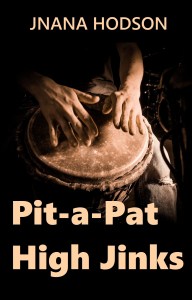
The places I lived in the settings covered in my novel Pit-a-Pat High Jinks long ago fell to the wrecking ball, yet the memories live on. The fictionalized story covers friends and lovers, along with near-misses and poverty-line entry-level work life in an out-of-the-way town and surrounding countryside while venturing out on one’s own after college. It had its downs and ups, including a Summer of Love that included a remote mountain lake.

Believe me, you can’t make up details like these, though you can amplify or reshape others.

It’s one of five novels I’m making available for FREE during Smashword’s annual end-of-the-year sale, which ends January First. The ebook comes in the digital platform of your choice. Do note that it includes adult content, so you may have to adjust your filters when ordering.

Think of this as part of my after-Christmas sale, except that these items are FREE! Remember, you risk nothing in acting now.

For details, go to the book at Smashwords.com.

Of housemates, lovers, and friends


These were some fun times

Maybe you remember your first year or two after college and trying to get your feet on the ground.

My wild novel Pit-a-Pat High Jinks relates, more or less, how it went for me way back when. It wasn’t always high, either, despite the stereotypes. These days, I see the episodes extending into the forties for many younger adults and their friends. Do check it out and see how it relates to your own experiences.

It’s of five ebooks I’m making available to you for FREE during Smashword’s annual end-of-the-year sale. You can pick yours out in the digital platform of your choice. Do note that it includes adult content, so you may have to adjust your filters when ordering.

Think of this as my Christmas present to you. In the meantime, be cool and stay warm.

For details, go to the book at Smashwords.com.

Of housemates, lovers, and friends


Pick up your free copy now

Celebrity writer Tom Wolfe lamented that nobody had written the big hippie novel, something akin to the Great American Novel, but he was wrong. I’ve said so in some previous postings here.

For my part, let me invite you to Daffodil, Indiana, as its tranquil – some might even say dopy – campus goes radical. No outside agitators are needed in the face of the ongoing repression. The Revolution of Peace & Love is its own calling.

Daffodil Uprising is one of five novels I’m making available to you for FREE during Smashword’s annual end-of-the-year sale. The ebook is available to you in the platform of your choice.

Think of this as my Christmas present to you. Or, as we used to say, If it feels good, do it!

For details, go to the book at Smashwords.com.

The making of a hippie

I’ve never done this before

This may seem crazy, but for Smashword’s annual End-of-the-Year sale, I’ve decided to offer five of my novels to you FREE.

It’s your chance to pick up these ebooks at no risk. If you like the stories, perhaps you’ll leave a brief review and five stars at the website, just to encourage other readers who come along in the future.

The titles are Daffodil Uprising, when youth across the country went freaky; Pit-a-Pat High Jinks, with lovers and friends setting forth in premature adulthood; Subway Visions, with wild rides through the Underground; What’s Left, as a bereft daughter tries to make sense of her bohemian parents and close-knit Greek family; and Yoga Bootcamp, where Asian spirituality sizzles in a back-to-the-earth funky farm not far from the Big Apple.

Think of it as my Christmas present to you. I hope you’ll be pleasantly surprised.

The sale starts today and ends January first. Please don’t delay! Go to Smashwords.com for more.

Acid test novelist and poet: Richard Brautigan (1935-1984)

Fairy tales for adults. That’s what I first thought on encountering Brautigan weeks after I graduated from college. More accurately, playful children’s stories for young adults of a hippie leaning.

With his surrealistic or perhaps warped vision taking a simple voice, and his fondness of simile and imagery, his was a unique voice that amused many of us and annoyed many others.

Trout Fishing in America barely touched on fishing of any sort. Confederate General at Big Sur and In Watermelon Sugar were about, well, shyness and innocence as much as anything.

His usually very short poems were mousetraps of longing and loss.

Their freshness still beat 99 percent of the literature that surrounded them.

If only his sweet sadness weren’t soured by the pressures of success.

Taking the subway to now

Damn Cassia! She even tore apart my first published novel, Subway Hitchhikers.

A lot had happened in the nearly three decades since the book was first published – and even more since it was first conceived in 1973. Gee, that’s more than a half a century.

As I came back to the story after the release of What’s Left, my first task was to bring the tale more in line with the rest of the series, starting with the name of the lead character. Kenzie was an advance over the hippie-era Duma Luma, which rather echoed Wavy Gravy of Woodstock renown. His earlier legacy of being a lama reincarnated in Iowa was also downplayed if not entirely erased. Besides, there had been reports of such things actually happening since my book was first published. I have no idea how they turned out, either.

Another big job involved changing the original structure of short present-tense chapters flashing against past-tense ones, like subway trains passing in opposite directions. It was a creative touch but quickly confused the reader. A more conventional chronological-order storyline took its place.

That was accompanied by a new plot based on Kenzie’s monthly trips down to Manhattan to study with his Tibetan Buddhist guru in a tenement on the Lower East Side. That development added a handful of other devotees to the characters and realigned any who had previously existed.

Some of the Tibetan details now reflected tales I had heard from a more recent friend who was studying to become a Buddhist nun. Never mind that her experiences came decades after his or that there might not have been a Rinpoche residing anywhere near the Big Apple. Rival yogis, however, were plentiful.

Tibetans by the early 21st century? Our favorite dining option in Manchester, New Hampshire, was a Nepali restaurant that featured momos, a steamed dumpling staple in Tibet, too. The owners and staff were quite honored when an authentic Buddhist Rinpoche dropped in and approved of their dishes.

My, I have lived in a changing world. When’s the last time you even saw a subway token, by the way?

The freewheeling hippie-era fantasies of my book were soon followed by some creepy downsides. Hitchhiking out on the open road had turned sinister. Subway surfers, seeking the thrill of riding atop the cars in the tunnels and on the elevated lines above the street, were being decapitated and worse or worse by immovable objects in their trajectory. And the onset of homelessness during the Reagan years created whole villages surviving underground, as Jennifer Toth reported in her book The Mole People: Life in the tunnels under New York City, which was published just four years after my novel.

In addition, Long Island Newsday had assigned a columnist, Jim Dwyer, to its new subways beat, leading to a nonfiction book, Subway Lives: 24 Hours in the Life of the New York Subways, which came out only a year after mine. Now that’s some tough competition. No wonder I didn’t hear from him after sending him a comp copy for review when my book came off the press.

By that time, though, I was living an hour-plus north of Boston and entering a time of my life when I’d be riding its MBTA trains about once a week – perhaps a thousand fares one way and back with girlfriends and later family on my visits. Familiarity with underground mass transit hasn’t lessened my fascination.

Still, since Subway Hitchhikers had been about hippies, I had to admit they had largely fallen into disrepute or self-denial. But that’s not how the book stands now, something that’s reflected in its current title, Subway Visions; Along the tubes to nirvana.

As for today? Here I was, with my fascination with subway systems, asking my favorite lifeguard about her experiences in Boston during her freshman year of college. She must have been taking the cute little cars of the Green Line, right?

Instead, she emphatically told me how disgusting they are, miserable on hot days and packed at peak hours – and, especially, the fellow passenger, an utter stranger, who puked on her feet in sandals.

I didn’t dare show her my book after that.
When an interlude becomes pivotal

Rather than being a retreat to the hills, as I initially saw the period between her future father’s leaving Daffodil after college and his return a few years later, I now see him undergoing a major slow-motion transformation amid frenetic surroundings.

For him and for me, this was a personal High Hippie time, pro and con, no longer a mere interlude to a landing somewhere in the future but a rich mix of its own.

And now, thanks to the daughter, Cassia, I had a better sense of where the larger story was headed.

Before writing and publishing my novel What’s Left, I had depicted his situation in two parallel volumes – Hippie Drum and Hippie Love – one full of near misses when it came to new love, while the other (R-rated) more often connected.

As I returned the drawing board with Cassia standing beside me, I had to admit the dual presentation was a luxury that did nothing to advance the overarching story. The two conflicting books, while beginning and ending at the same points, ultimately confused the reader. Still, it was a valuable experiment for me to file away. Thanks, Cassia.

Reuniting them into one book was a bigger challenge than you’d think. Finding the right tone, verb tense, and balance were only a start. More clearly profiling Kenzie’s country and in-town circles plus his workplace required another big effort.

If I ever do another novel, I don’t want more than four or five characters, if that. (Fat chance.)

~*~

Helpfully, What’s Left now gave me a clearer sense of Cassia’s aunt Nita as a central figure. Only a year older than Cassia’s future father, she now expanded from being his guardian angel, as she was in Daffodil Uprising, into something more of a magnet and Wise Woman who came and went as needed as he underwent crucial encounters, many of them emotionally painful.

~*~

In my revisions to what now stands as Pit-a-Pat High Jinks, I also wanted a better integration into the urban parallel to Kenzie’s life at the time, the subway novel, which would undergo its own thorough reconstruction.

My own job hours at the time would have been too constrained to allow the escapes to the Big Apple that I compress into Kenzie’s timeline. I didn’t even have a two-day weekend – only Sunday off after a late Saturday night, and then Wednesday; four of my days I had to be at the office by 5 or 6:30 in the morning, and it was brutal. In one of my later career positions, however, I did have a floating three-day weekend, which I adapted to Kenzie’s situation. Once every month he could head off somewhere, which soon became jaunts to New York City.

Another thread that I strengthened was his introduction to Tibetan Buddhism and subsequent growth in its practice, giving him a good reason to be heading off to the big city as often as possible.

~*~

In the years after moving from Binghamton, the scene of the action, and off to the ashram and beyond, I lost touch with all but one person from that period. Well, make that two, but he was an older sports editor who had nothing to do with the hippie scene. The other was a former girlfriend where the parting had been mutual.

As for the rest? I wondered where they all went, though I’ve even forgotten most of their real names. Why couldn’t I have been more snide, like calling a character “fat, stinky Frank” or “gaunt Ellen”? Nicknames were only a move in that direction.

As I revised, though, I now had the Internet at my fingertips.

Satellite maps allowed me to see that two – and maybe all three – of my housing sites there had been demolished. (I’m wondering whether I even tried driving past them in my calls on the newspaper editor when I was with the features syndicate. I don’t recall.)

And then a few ghosts from my past reconnected, first from the ashram years – I hadn’t been ostracized after all – and then my former housemate in upstate New York, the one who forms the basis for Drummer in the story.

He event came up with his wife for a visit in Dover. It was about time I met her. She was a much better fit for him that the Latina who commanded his devotion in the book. (I couldn’t invent a character like her out of thin air, by the way. She really was a center of attention in any room we shared.)

Back in the day, he had gloried in a full naturally blonde Afro back in the day, only now it was shaved bald. His smile and intensely blue Nordic eyes were the same, along with his eternally goofy outlook on life, but that chrome dome was disconcerting.

It was time to catch up.

“Did Jnana really have long hair?” my elder stepdaughter asked.

“Oh yes,” came the reply.

Somehow that was enough to get one of my younger generation to relent from their vow to kill me if mine grew out again.

“If you’re writing hippie novels, you might as well look the part,” she conceded. So I got their permission to grow a ponytail. Maybe she was just tired of what was called a combover for the balding.

He also filled me in on some of mutual friends. One was an OB-GYN in inner-city Philadelphia. Another, a federal attorney in upstate New York. Yet another was a functionary for the United Nations. And the biggest lover of the lot had settled down to raise a large family while working as a social services executive. So much for one of my hippie circles.

I even found a girlfriend, via a Chicago Tribune photo and story, who remembered very little of the time and only vaguely pictured me. She had been much more of a presence in my life, even at our distance, than I was in hers, it turned out. I had even hoped she’d be The One.

In fleshing out the characters in my pages, I now had a second Summer of Love to draw on as well as related experiences. I could ask people about their own hippie identities, and many of the thoughts filled earlier posts here at the Red Barn.

While connecting the dots for one figure whose account to me had never neatly added up, I broke out weeping. Signs of adolescent abuse were abundant. I suspect one of her teachers as a villain, but have no proof, of course. Is he even still alive?

As for the others?

Let’s be honest. We freaks weren’t as close as we’d like to think. I hate to consider that the despised fraternity brothers of college may have had the more solid connection.

So what did happen to those who shared the farmhouse? And most of the lovers?

Not that I’m thinking they’d make another novel. Not unless a unique structure surfaced, say something like postcards.