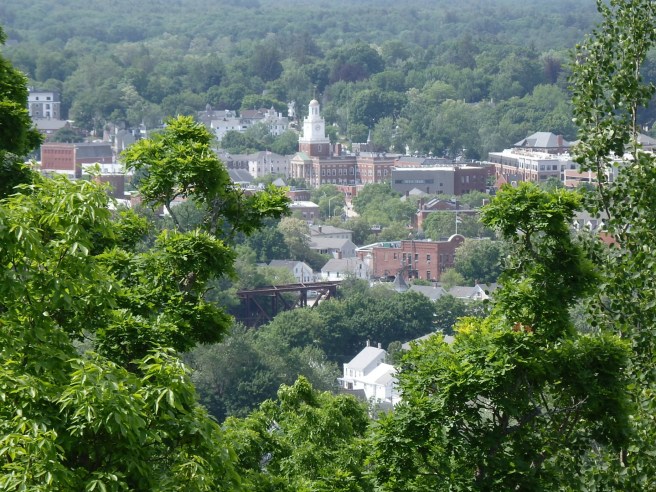
City hall is at the heart of the scene
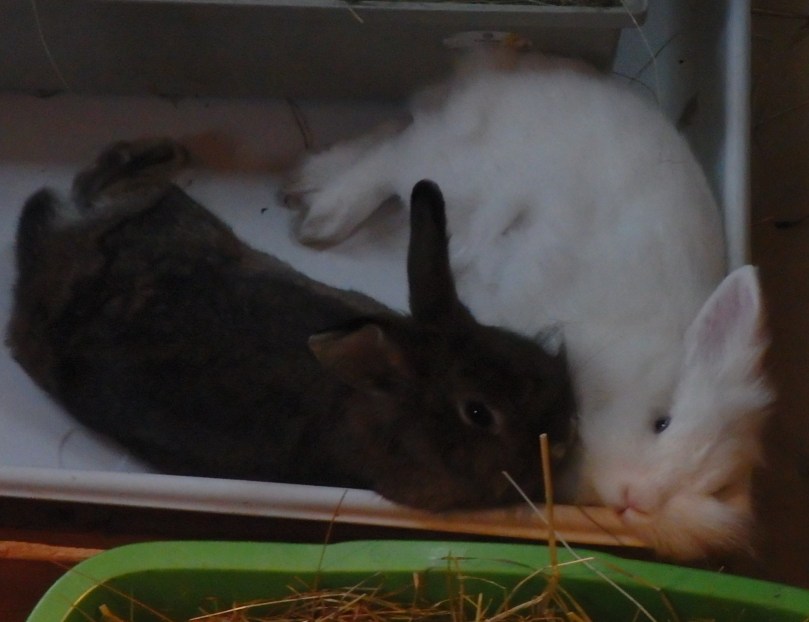
You never know what we'll churn up in cleaning a stall
In my novel Nearly Canaan, Joshua and Jaya settle into a place unlike anything they would have imagined. It’s desert, for one thing, where nearly everything has to be irrigated, for another. Quite simply, it’s a lot like Yakima, in the middle of Washington state.
~*~
What food is special where you live?


When the Quaker movement swept through the English-speaking world and a bit more in the mid-1600s, it saw itself as primitive Christianity restored from before the time apostasy set upon the church – that is, sometime before the Nicene Council of 325 CE.
In theory, nothing could have been simpler or more welcoming than what they presented, an alternative Christianity for all, though in practice what emerged was often more difficult than many could follow, even before the disciplined rules of conduct set in.
I could lay out many of the obstacles to continuing the faith over the generations, even admitting that I wouldn’t have survived the lifestyle restrictions during much of that time, but more recently I’ve been seeing the most insidious impact was in the curtailment of emotion.
Yes, Friends were often seen as gentle and kind, but it came at a price. The Quaker culture that evolved, quite simply, suppressed any expression of anger – which was usually seen as leading to violence, which Friends abhorred – but only in recent decades has there been an acknowledgment that emotions don’t go away, and suppressing the expression of one curtails an open experience of the others. Burying anger, in fact, festers as depression, which can be glimpsed in the memorial minutes of many of the “weighty Quakes” of the past.
While moderation in daily life and meekness were encouraged, they could be performed thoughtfully or habitually without being deeply felt.
I’ve heard instances of old Friends’ reluctance to show emotion.
Greeting a son returned from wartime service with a handshake rather than a hug, for instance. My own family, several generations removed from its Quaker and Dunker (Brethren) roots, was similarly restrained. And, as has been said, the Hodsons didn’t know how to have fun. (When students at one Quaker school asked to have a fun activity, the elders had to withdraw to ponder the peculiar request and then came back with a proposal to paint a widow’s barn. An old Brethren, asked what he did for fun as a child, was perplexed by the very notion and finally replied he guessed it was bringing the cows in each evening.)
Then there’s the sly comment that passed among young Friends in the 1970s, asking if we knew why the old Quakers were so opposed to handholding. The answer? It might lead to premarital intercourse, not meaning sex but rather conversation.
There are also stories, usually told within families, of the individual who would never, ever, express anger only to have an offense fester, leading to deeply hurtful reactions in convolutions much later. You can guess, the baffling ex-mother-in-law, after the divorce, that sort of thing.
Not all birthright Friends, I should add, are so conflicted. Many I’ve known have been among the most loving individuals in my acquaintance.
But in looking at the decline of the faith over its history, I feel an awareness of the psychological undertow needs to be acknowledged, especially as we face the future.
Religion, as I see it, always has work to do to bring each person to a fuller experience of life.

Long ago, I was taught that it was wrong to assert what I want – to accept what was given instead. It’s embodied in a Christian concept of humility, for one thing, and reinforced by poverty, for another. Living in the yoga ashram underscored that as a spiritual lesson, differentiating between wants (or desires) and needs.
My first lover introduced me to the Asian concept of Tao, as taking a path of least resistance. In the long run, that didn’t help much. At least I still had ambitions and kept working toward them, albeit more as a team member or leader than as a social climber.
More recently, as part of some deep psychological work, I’ve instead learned the importance of being able to voice and engage those personal yearnings and preferences – to make them active in a way that’s not selfish, self-centered, but rather an embodiment of my very essence. You know, to give this life a direction rather than a passive reaction.
These days I find myself correcting a phrase from “I’d like” to “I WANT” … as in deciding to do or have such-and-such. It makes a huge difference.
In the jargon, I’m feeling empowered. In doing so, fewer things feel like duties or obligations, which in turn become weights and encumbering .
For instance, I’ll say “I want to mow the lawn today” rather than “I have to.” In this scenario, it becomes, “I want to get it now rather than later, when it’s harder to cut” or “I want the place to look better.” And I can even look closely at the wonder of how it all grows so quickly.
Well, Swami had tried to instill that kind of awareness in the mundane chores and labors we had to do in the ashram.
It comes round to faith, after all.
Prayer can be a time to choose and voice
WHAT I WANT!
As Jesus said, “You do not have because you do not ask.”
It doesn’t mean I can have everything, either. And that’s OK, too. In fact, I don’t want the burdens that so many things carry. And that, too, is liberating.
How about you?
As you revise
acknowledge
THE LIGHT
reaching up from
THE SEED
not just reflecting it
 Jnana's Red Barn