Is this it?

The Covid-19 devastation, already spread around the globe, is poised to inflict even greater damage when it ravages Third World countries, or so we’re reading. The impact is much more than grim death tolls. We’re hearing predictions of the greatest economic depression in a century.

In the United States, the virus is what finally exposed Donald Trump’s house of cards to full view. Not just his own illusions but his party’s, too. You know, the failure to plan. Failure to take responsibility. Endless stream of lies and fabrications. His scorn for fact, truth, scientific reality. Ridiculing and blaming others. Inability to steer a course. And so on. Feel free to add to the list.

For the past three years, I’ve restrained from commenting much on the outrage after outrage being inflicted on our democratic society. With his hooligans and their fellow cultists being so impervious to facts, I sensed anything that might break through their shells had to come from the right. The polarization of the country predates Trump, anyhoo, just look at the Congress dead set on obstructing President Obama from doing the will of the people, regardless of the ultimate impact.

From my viewpoint, what’s seemed obvious is that only something catastrophic might break through their state of denial and bombast. I kept wondering what that would be. What would it take to allow civil conversation again, one based on fact and not bullying and bombast?

In my years in the news business, I saw how difficult predicting public reaction could be. Big issues are commonly greeted with a yawn, while some seemingly trivial account unexpectedly gets everyone stirred up.

So here we are, with a medical crisis Trump arrogantly derided as a “hoax” and then claimed to have “under control” now exploding exponentially before our eyes. As it begins to hit closer to home, even his supporters can no longer poobah the epidemic as “liberal hype” to “discredit” their fuhrer. Not unless they can explain Italy and Spain’s suffering as part of a conspiracy.

Not unless they can explain why GOP senators were informing their super-rich backers of intelligence findings about the brewing virus storm and quickly selling off millions in stock while telling their voter constituents to stay calm. (Isn’t that insider-trading?)

Not unless they can explain why the markets and employers and local and state officials of both parties have independently taken the drastic actions they have, contrary to White House proclamations.

He still doesn’t have a clue, does he? This is the man who offers big aid to China after turning down any help for the most seriously impacted states in America. (Sorry, you’re on your own, guys.) What!

One of the reasons he’s clueless is that none of his incoming staffers who attended a big meeting with outgoing Obama officials eight days before the inauguration took the ebola lessons seriously. At least one future cabinet secretary dozed off during the briefings and their worst-case scenarios. Another reason is that Trump promptly eliminated the emergency preparedness coordinating office Obama had created for cases like this. What Trump touted as streamlining proves to be reckless disregard for reality and an exercise of personal spite. There was no planning, period.

Fellow Republican Susan Collins, a senator from Maine, even prevented epidemic response planning from being budgeted back in 2008. There’s a pattern.

Here we are, after being stuck with Trump’s obsession to spend billions building a useless border wall but do nothing on pandemic prep. Like that wall will stop anything.

I long ago saw that incompetent managers and executives feel threatened by competent people working below them – the very ones who could make their bosses look effective, if given the chance. Do I need to say more?

Smart management is taught to be proactive, not reactive, but that’s not what we’re seeing here.

The illness itself is only the face of the storm as we get glimpses of even bigger economic, political, and social ills that have been long festering.

Oh, yes, high turnover is another sign of mismanagement. Two-thirds of Trump’s team at that epidemic meeting three years ago are no longer part of the administration. Who’s in charge, paying attention to details?

Wall Street may have been soaring, and a “correction” had been long anticipated though not expected to kick in till after the November election, but for many of the country’s working class, full-time jobs – especially those with benefits – have been scarce. Minimum wage rarely covers basic living costs, and health insurance premiums often eat up a third of that income while imposing high deductibles few would ever be able to pay without going homeless or, if hospitalized long, losing their jobs. Many of those minimum wage jobs, by the way, require “reliable transportation” from employees, as if the pay actually covers as much as a clunker to get to worksites far from public transportation. Steps to improve their situation has not been presented from the current administration, even while cutting taxes for the rich and corporations continues.

Well, some of that finally has been acknowledged in the proposed coronavirus aid package, at least for this specific illness. Maybe it’s a start. Those low-pay, part-time jobs are a huge part of the workforce, and if they break down, even for two weeks, watch out.

That’s the real economy.

I could say more, much more, but let’s leave it at that for now. From all indications, this drama’s just starting.

There’s no disputing that bodies are piling up, even in the USA.

Spending nights at the opera on my laptop

When I graduated from college 50 years ago, I expected to wind up living and laboring in a major metropolis like New York, Chicago, or Seattle where nights at the opera or symphony would have been part of the package. As you can see, my life took a much different direction. In fact, working weekends and nights along with the bottom-tier professional wages of my profession curtailed much of my attendance where I was, even for the Metropolitan Opera’s Live in HD showings in local movie theaters.

Surprisingly, now in the midst of our Covid-19 cloistering, I’m relishing in daily free online streaming of past performances from the Met’s series, and what a revelation they are.

Each show gives me a fuller awareness of the stellar productions than I could ever get from listening to the Saturday afternoon radio broadcasts – incidentally, available where I live only by streaming. Well, that’s another rant, though I’ll send out a shout to both Harvard’s student-run FM station and New York’s WQXR for their participation.

The university I attended was acclaimed for its opera department, with a show every Saturday night and, as I recall, seven productions during the regular school year. Each of these was in English, which I found made the experience feel more like going to a Broadway musical rather than an esoteric ceremony. It was pointedly called opera theater, with an emphasis on blending music and showtime, abetted by stage directors like Ross Allen who insisted on historically correct motions for the periods being presented. A woman wouldn’t have shown her ankle while dancing, for instance, or sat in a particular posture, that sort of thing. As for facial expressions or delving into the psyche of a role? That wasn’t widely valued in earlier incarnations of the art form. But today?

Back to the Live in HD.

Imagine a Hollywood movie being filmed straight-through in a few hours like this, rather than gleaning only a minute or two of usable film a day, as is standard in the cinema biz. There’s no room for retakes in a live performance, and yet what I’m viewing is cinematically gripping. The acting is extraordinary, and the stars are visually and vocally convincing – something that wasn’t often the case when I got hooked back in the ’60s. I’m enthralled simply considering the camera work (and planning) behind each of these. (I have a feeling we’re deeply indebted to NFL and MLB technology and practice on this front – think of those crisp facial closeups shot from the other side of the field.) As for the lighting? Wow.

Opera is often discussed as the pinicle of the arts and their muses – vocal, choral, and instrumental music conjoined with drama, dance, poetry, scenery and costumes in the theater itself. It’s a collective enterprise, the way movies are. Well, I often consider it as the movies of the 19th century and, let’s not forget, the distinctively operatic singing style evolved to project into a hall long before electronic amplification existed. The vocal style is not as frilly as you might think but is actually quite flexible and expressive, even if it’s often an acquired taste.

As I was saying about these productions?

Continue reading “Spending nights at the opera on my laptop”

How well are we hunkering down? Here are ten things to do in self-isolation

So here we are, spending too much time online digging for the latest in the Covid-19 deluge. I know I’m not alone there. The mere fact that so many sources for updated reports from around the globe are available only a few keystrokes away feeds our obsessive googling and scrolling – for many, a morbid fascination, for sure.

Having pretty much self-quarantined (in part at my wife’s nudging), I’ve been trying to continue generally as much life-as-usual as possible, which you’ve seen reflected in the posts here at the Red Barn. Admittedly, my life since retiring from the newsroom and turning my attention fulltime to a writer’s discipline has meant generally limited face-to-face social interaction anyway, but even I’m getting a bit antsy without my Quaker gatherings or daily swims at the city’s indoor pool or even dashes to the bank or grocery.

Still, I sympathize with those who have never undergone a discipline of doing without – as in fasting, leaving electronics behind for a backpacking or camping expedition, or even enduring an extended power outage. (As for the toilet paper, don’t get me going. That’s truly a First World problem!)

So while I’m treating these restrictions as an opportunity for reflection and renewal, here are ten things to make the best of it. And remember, if you’re sharing this hunkering down with a mate and/or children, try these together.

  1. Starring in the kitchen: Usually we’re too busy running around to actually take the time to cook attentively. You know, maybe from scratch. So reach into the backs of your cupboards and actually use ingredients you put aside for someday. When you don’t have everything a recipe calls for, be inventive. How does homemade bread sound right now? Pancakes? Your own pretzels? (Oops, I’ve got to check on that pork broth simmering on the stove!)
  2. Guilty reading: Got a pile of books or magazines gathering dust? Kick back and open a page. Don’t overlook ebooks, either. They’re easily downloaded … I have a few I’m recommending.
  3. Arts and entertainment: You might be surprised what’s being streamed, not just on Netflix or Amazon Prime. I’ve been watching a different Metropolitan Opera production for free at dawn every morning. (Often while I’ve been doing one of these other activities.)
  4. Deep cleaning and reorganizing: Revisiting old files in my cabinets or on my laptop and purging many of them is feeling so liberating. It’s allowing me to refocus, too. Think about your closets and drawers. Parts of the barn are going to be next, weather permitting.
  5. Seed planting and yard work: Hey, you can’t stay inside all the time! And when you do, you can get some of those seeds started.
  6. In-house exercise: The gym and indoor pool may be closed, but you can still go for walks or clear a space on the rug for yoga or pushups. I had forgotten we have hand weights, which I found while cleaning. Inhale, one, exhale, two …
  7. Games and puzzles: Get out the decks of cards or a board game. How long’s it been? Puzzles can keep you busy, too, solo or with everyone’s help.
  8. Phone calls and emails: Yes, keep in touch. I’m really behind here!
  9. Rest: What’s wrong with napping or staying abed longer? How often do you get a chance to do THAT? A deep, long hot bath is another soothing option.
  10. Prayer, meditation, and reflection: Many churches have mobilized streaming events on this front. Check out their websites.

Here’s hoping you and yours aren’t showing any virus symptoms.

~*~

What would you suggest adding? What are you discovering … or rediscovering?

The latest on the coronapocalypse from here

Has anyone else noticed how quickly our language has added “coronavirus” to common usage and then, over perhaps a week, “COVID-19” has become equally common parlance?

It started as a synonym, and at first I would have said it made for a shorter word in headlines but now I’m thinking it’s about the same length. When it comes to newspaper columns, the shorter the word, the better, especially in headlines.

Watch for the next step, which is to make the acronym even shorter by going from all-caps to Covid-19, as it’s already appearing in a few places.

~*~

You’ve probably already noticed the panic rush on the supermarkets after the Tom Hanks diagnosis was announced. The shelves of toilet paper, especially, were quickly cleared out. The new deliveries have been limited to one package per customer, maybe two, depending.

My wife just came back from a quick trip to one store (for its special on butter). She noticed the guy ahead of her in the checkout line, a blue-collar type apparently stopping on the way home from an overnight shift and picking up a few more items for the duration. He had a package of toilet paper, not surprising, and a half-dozen cartons of Ben & Jerry’s. How’s that for priorities?


As the pandemic comes into focus

No surprise, everybody’s talking about it. Finally. What can we bloggers even add to the awareness?

In fact, there’s so much coming out, it’s impossible to keep up. My only conclusion is that what we’re reading and hearing is already two weeks behind where the outbreak actually is, thanks to the delay in the appearance of symptoms while an individual is still contagious – and that the spread of infection is already more severe than those in the White House are willing to acknowledge.

On the human level, it’s not just the mortality rate – 2 percent? that’s not the Black Plague, as cynics remind us – but the possibility of so much of the workforce being incapacitated, as well, meaning people with high deductibles in their health care coverage and minimum-wage jobs that preclude them from taking any time away from earning their meager paychecks without being homeless.

On a more abstract level, think about the speed with which it’s precipitated the stock market “correction” that was predicted for sometime after the November elections but now seems to presage recession. End of the bull market that ran through the Obama years and all that. (Glad I closed my IRAs when I did. The last recession cut their value in half, and recovering that took longer than we want to admit.) Now the market’s down roughly 30 percent in a week, nearly wiping out all of its gains during the Trump administration.

In fact, it seems impossible to talk about coronavirus without politics and finances popping into the discussion. I’ll spare you those rants.

In barely a week or two, it seems, the illness has gone from being “out there” in Seattle or even the other side of New Hampshire and suddenly started appearing much closer to home and those we know and love.

It really cut into my consciousness when I did a double-take Tuesday night while listening to a classical program streaming on Harvard’s FM station, just an hour down the road from here. The student program host was thanking her listeners for their four years of support of her on-air work, saying that this would be her last show. What? This was episode two of a six-week Tuesday feature, she had four more weeks to go. And then the words, “with the closure of the university, I’ll be heading home,” meaning New York, which coincidentally was the focus of that particular episode.

What, closing Harvard? Well, by now you know how that decision has already spread to a lot of other schools. Pack up your dorm stuff and be out of town by the weekend. I was standing with a University of New Hampshire student yesterday when his smart phone went off, informing him he was going to have an extra week off after spring break. (At a religious leaders’ gathering an hour earlier I had heard that the governor had overridden the faculty’s plea for a longer closure, like for the rest of the semester.) Is anyone else hearing from some outraged students? (Details for the virtual classrooms to be announced. Ditto, refunds or even housing for kids left in the lurch. And who wants to be confined to boring home?)

Meanwhile, in our faith communities, we’re having to make rapid adjustments. No more handshakes to close Quaker worship, for now, or food and fellowship after. For others, it affects how they celebrate the Eucharist. And what about the Friendly Kitchen’s two dinners a week for an already vulnerable populace, prepared and served by ten congregations on a rotating basis? Do we make the meals takeout to reduce social contact? How do we react to public school closures and childcare issues, especially for working parents?

As for the lockdowns in nursing homes and senior housing? Turn around, and there’s another surprise.

Let’s not overlook the panic runs on the supermarkets, either. Before the outbreak, my wife had started cutting back on our pantry backup, but now she’s feeling we should be able to sustain two or three weeks of lockdown, so we’re stocking up again, just not in alarm mode.

Think I need to get some quinine water, too? Maybe look at this as alternative medicine?

My assignment was to make sure we’d be set for my nightly martini and the rabbits’ pellets, should we go into self-isolation or official quarantine. You know, keep everybody in this household comfy for the duration. Having the state liquor store touting a 16 percent discount on purchases over $150 helped with the decision. The Bombay Sapphire was already on sale. You know, isn’t this stuff we’d be using anyway, eventually?

What I didn’t remind her is that I’m not touching alcohol until April 17, Orthodox Easter – seven whole weeks of abstinence. (Would those beautiful bottles strengthen my resolve to live, should I be afflicted in the coming weeks? Ay-ay-ay.)

So here we are, obsessing with the developments. I wonder what we’re going to learn today.

How about you?

Foreign news can hit close to home

The reports of the Wuhan coronavirus outbreak are disturbing enough, even when it seems so far away. For many people outside of China, the news is mostly curiosity, perhaps even of a morbid fascination.

But then we get headlines of a few possible cases popping up here in New Hampshire, individuals who recently traveled from China. Still, those have been limited to other parts of the state, a distance away from us.

Where it gets personal for my wife and me is thinking of Chinese students we’ve hosted in our home for a month or so apiece while they worked volunteer internships in our community. They’re from that part of China, though not Wuhan itself. In effect, they put a face we know on the event and have us concerned for their health and safety and that of their families.

Yes, sometimes it is a small world.

Standing in our brahmacharies

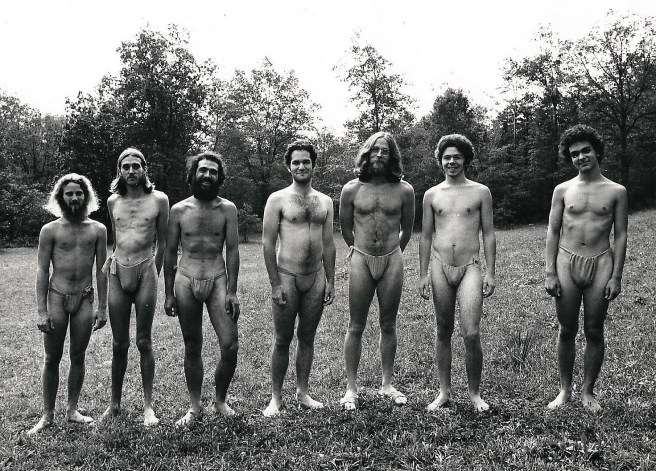
My novel YOGA BOOTCAMP describes the events of being initiated into brahmacharya and being given the two strips of cloth cut from the guru’s robe as our new underwear, supposedly to restrain our male sexual impulses. As a bit of real-life evidence, here we are at the Poconos Ashram in Pennsylvania in mid-1972. The girls found it highly amusing, especially since we were all living under celibacy.

At least I didn’t use the title of an old hymn here, “Blessed Be the Ties that Bind.”


Ten perspectives on yoga in America

My novel Yoga Bootcamp stirs up more curiosity. Here are ten facts.

  1. Number of yoga teachers in U.S.: 52,746 registered with Yoga Alliance in 2015.
  2. Number of centers: 18,000.
  3. Number of yoga practitioners in U.S.: 37 million.
  4. Number over age 40: 14 million.
  5. Percentage of women and men practicing yoga in U.S.: 72 percent versus 28 percent.
  6. Amount spent on yoga classes, clothing, and gear: $16.8 billion.
  7. Most popular reasons for practicing yoga: flexibility (61 percent); stress relief (56 percent); general fitness (49 percent); overall health (49 percent); physical fitness (44 percent).
  8. The highest percentages of yoga practitioners: Found on the West Coast and Mid-Atlantic states (New York, New Jersey, and Pennsylvania). The lowest percentages are in New England, the Upper Midwest and Plains states, and the East South.
  9. Circulation of Yoga Journal magazine: 375,000.
  10. Turnover: Only 25 percent have been doing yoga for more than five years.