Looking for clues about what really happened

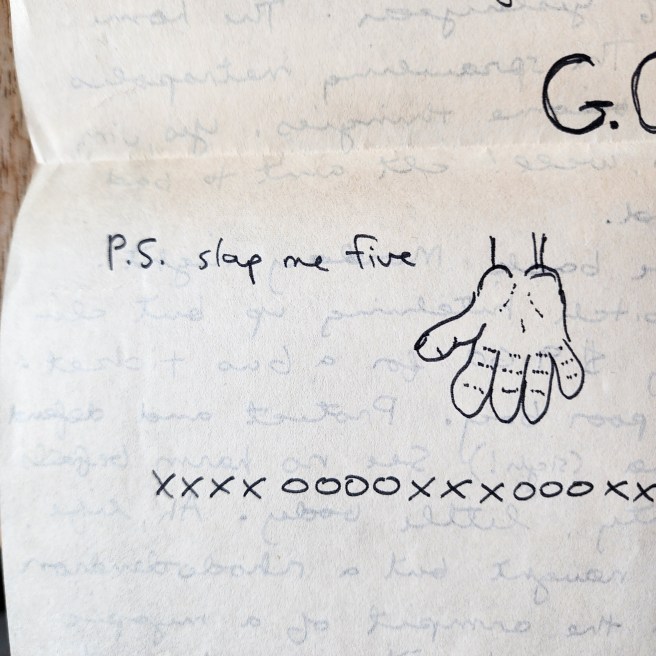
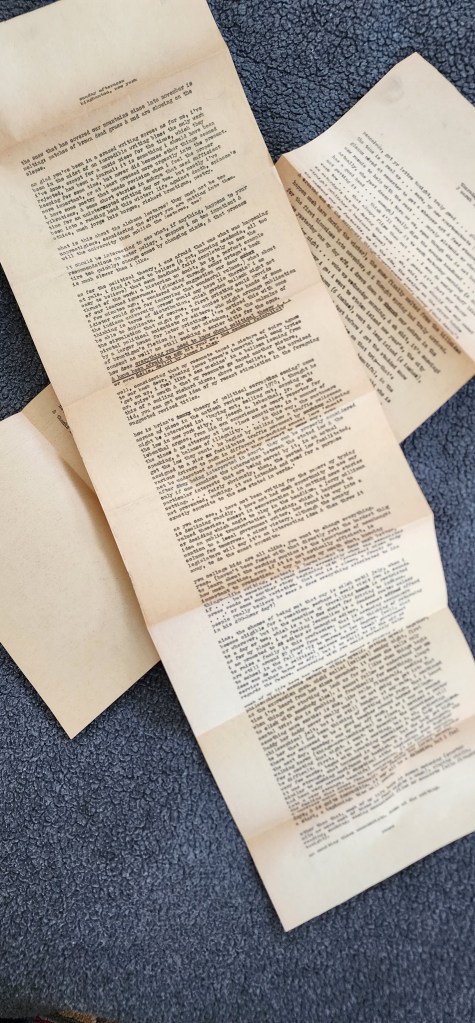
If I had become famous, some unfortunate scholars would likely be poring over my many pedantic, even ghastly, pages of scribbling in personal journals that I’m instead purging. Ceremoniously incinerating, here on the craggy coast, far from my native Midwest, in a pale imitation of a Viking pulling up his ship at the end of a long voyage that landed him or me in what emerged as the mid-Atlantic states and then led, by degrees, to the Pacific Northwest before inching backward and ultimately winding up in this remote island in Maine.

There is, by the way, evidence to argue that Vikings had indeed landed here along Passamaquoddy Bay.

I’m not speaking of my novels and poems, which I do believe need a supportive discovery or rediscovery, but rather my 200-plus volumes of personal journals.

Yipes!

Of course, had I instead become fabulously rich, some poor souls would be tending to these details and making them look brilliant. Vanity, vanity.

Oh, for the dreams, dashed dreams, of youth and a few decades following. I can’t speak for you, but for my part, adulthood has turned out to be quite different from anything I had anticipated.

Trying to understand how it happened is another matter. Even at the time, you might see things and note them but not realize their import. Coming across a detail like that years later can be stunning. What if?

These are, or more accurately, were my personal journals.


MY JOURNALS CULLING is another step in downsizing, one prompted by trying to fit my books and recordings into my new bedroom. At my age, I’m also cognizant of the burden they would place on those who survive me, as the phrase in obituaries goes. Besides, most of my 200-plus volumes haven’t been opened and revisited in years – at least since my novels were drafted and revised. Just what the heck remained in them?

Early on, I had a custom of revisiting the previous year’s notations as part of a Christmas Greetings and New Year’s reflection, but even that fell away sometime around the time of my remarriage. Frankly, everything changed at that point. Everything before became ancient history, abetted by my memory sieve.

One of my goals for the past year was to read through my journals one last time, keyboarding any gleanings that might still be useful and letting go of the rest. For the first dozen-and-a-half years after I graduated from college, my journaling took place in inexpensive spiralbound notebooks, hence the title for the series I’m introducing. The entries cover my moves from Indiana University to Upstate New York, followed by the yoga ashram in the Poconos of Pennsylvania, back to a small rust-belt town in Ohio and then returning to Indiana before leaping to the interior desert of the Pacific Northwest, and then rebounding to a troubled steel town in the Midwest.

There are good reasons I keep seeing myself as a fortunate survivor. We have lived through some wild times.


AS I’VE ANNOUNCED, I’ll be drawing heavily on those early entries in the posts here in the coming year. So much has changed in American life in the past half-century, and not just for me. Readers from elsewhere can weigh in as they will.

As for the remaining decades of journals? Please stay tuned before I strike the match.

We may aspire to be a bit illegible this year

Having revealed my blogging direction for the coming year, please allow me to fill in some of the background.

As we enter the Barn’s 14th year, the merry-go-round concept continues, including Tendrils on Tuesdays and Kinisi on Sunday evenings. With our home renovation on pause, you’ll see fewer entries on that project, though one of its consequences will become the main focus over the year. To wit: As I posted last May, I need to downsize my possessions to fit into our new space, meaning collections, and my 200-some volumes of journaling have become a target. Frankly, I hadn’t opened most of those scribblings aka manuscripts in the past decade or two. Was I likely to do so in the next five years or so? Or would they continue to collect dust? As I was saying? Besides, do I want to burden my wife and daughters with one more burden to clean out when I’m no more? Heavens, no.

Setting forth five months after my New Year’s goal of culling those pages, I expected to find that the earliest volumes had been thoroughly mined in drafting my novels and poetry, and that what remained would be embarrassingly sophomoric. Well, many passages were. But there was enough other material I didn’t want to lose, which led to keyboarding those bits before ceremoniously burning the volumes themselves. More on that later in the season.

So far, I’ve gotten through the first decade after my graduation from college. Far more remained from what I had imagined.

As these appear here, perhaps they’ll work along the lines of Ned Rorem’s Paris Journals, though much less scandalously and thoroughly lacking celebrities. Who knows what morbid fascination you might engage.

I’ll try not to add too much context but rather let them pour forth largely unedited. You might feel something like an eavesdropper that way. Some of the identities may, however, be changed to protect the guilty.

With fewer photos here in the coming year, the Barn will be more word-driven, befitting a novelist and poet, but with a funky edge. As a “gentle reminder” I came across last year advised:

“Let life feel a little illegible sometimes. You’re not a quote. You’re not a theme. You’re a page with scribbles, rewrites, margin notes. Let it stay messy. That’s what makes it real.”

Thanks to YouBook Story at Instagram for that inspiration. Let’s see how it fits.

Onward, then!

Last chance!

If one of your New Year’s resolutions is to get back in shape – or even simply to get more physically fit, period – the characters in my novel Yoga Bootcamp will stand by you as inspiration. Or, as I’ve been confessing of late, as a reminder of what 50 years of neglect can do to you. (Some of the easiest hatha yoga moves are beyond my ability these days, and that’s before getting to my sense of balance. I don’t think I’ll get around to writing that story, though.)

Yoga Bootcamp tells of a back-to-the-earth funky farm not far from the Big Apple and covers a day in the life of its founder and followers as they seek to ride a natural high without tripping over themselves. As they discover, yoga is about much more than just standing on your head.

The humorous and insightful ebook is one of five I’m offering to you FREE as part of Smashword’s annual end-of-the-year sale, which ends tomorrow.

As they say, Act soon!

Get your copy now, in the platform of your choice, and then celebrate.

For details, go to the book at Smashwords.com.

Come on in to Big Pumpkin’s ashram

There’s still a feast awaiting on this plate

As the calendar year ends, it’s fair to ask What’s Left in your own life as you move on for the next round.

In my novel, the big question is stirred by a personal tragedy, leaving a bereft daughter struggling to make sense of her unconventional household and her close-knit extended Greek family.

In the wider picture, she’s faced with issues that are both universal and personal.

For me, it’s somehow fitting that my most recent work of fiction returns to Indiana, the place where my first novel originated before spinning off into big city subways. The state is also home to more Hodsons than anyplace else in the world, as far as I can see, not that I’ve been back in ages.

What’s Left is one of five novels I’m making available to you for free during Smashword’s annual end-of-the-year sale, which ends January First.

Get yours in the digital platform of your choice, and enter the New Year right.

For details, go to the book at Smashwords.com.


There’s even a Summer of Love

The places I lived in the settings covered in my novel Pit-a-Pat High Jinks long ago fell to the wrecking ball, yet the memories live on. The fictionalized story covers friends and lovers, along with near-misses and poverty-line entry-level work life in an out-of-the-way town and surrounding countryside while venturing out on one’s own after college. It had its downs and ups, including a Summer of Love that included a remote mountain lake.

Believe me, you can’t make up details like these, though you can amplify or reshape others.

It’s one of five novels I’m making available for FREE during Smashword’s annual end-of-the-year sale, which ends January First. The ebook comes in the digital platform of your choice. Do note that it includes adult content, so you may have to adjust your filters when ordering.

Think of this as part of my after-Christmas sale, except that these items are FREE! Remember, you risk nothing in acting now.

For details, go to the book at Smashwords.com.

Of housemates, lovers, and friends


You don’t have to stand on your head for this bliss

Some folks actually came to the ashram for their holiday breaks, and now through these pages, you can, too – for free. If you think this means getting away from it all, though, you’re in for a surprise. The real intent is to pare away to essential truths of life and the universe.

The answers, surprisingly, are often more down-to-earth than any mystical platitudes you were expecting.

In my novel Yoga Bootcamp, chaos and humor are essential components of their spiritual quests. The guru is better known as Elvis or Big Pumpkin than by the long Sanskrit formal name he officially goes by. As for tradition? Theirs is essentially American maverick, centered in the hills not far from Gotham.

This may even come as a refreshing turn after all of the frantic ho-ho-ho rushing this time of year.

The ebook is one of five novels I’m making available to you for free during Smashword’s annual end-of-the-year sale. Think of it as my Christmas present to you. It’s available in the digital platform of your choosing.

You may even want a stick of incense when you sit down to read it.

Hari Om Tat Sat and all of that, then. Namaste!

For details, go to the book at Smashwords.com.

Come on in to Big Pumpkin’s ashram

How do you feel about family?

Cassia would have to say she’s in a big happy extended family, but she would disagree with

Tolstoy on his other point. Hers is not the same as any other. As for the unhappy part, she carries a world of grief after the disappearance of her father in a mountain avalanche.

My novel What’s Left follows the bereft daughter in her quest for identity and meaning over the decades that follow. Bit by bit, she discovers that he’s left her far more than she ever would have imagined, in effect guiding her to some pivotal choices.

The ebook is one of five novels I’m making available for FREE during Smashword’s annual end-of-the-year sale. Pick up yours in the digital platform of preference.

Think of this as my Christmas present to you. How can you not be interested in insights about family, especially at this time of year? Even if this one does have some Goth twists, probably unlike yours.

For details, go to the book at Smashwords.com.

When passion gets terribly tangled

Have you ever been in a committed relationship, only to be struggling against what you later learn was a triangle? The third party doesn’t even have to be another person, for that matter, but secrecy does tip the balance.

The desire was still there and burning, hoping for reconciliation and renewal. Just don’t call yourself a victim, OK? Not as long as you were actively engaged in the scene.

As for the evidence? In hearing your side, who knows what was factual or imagined, other than the reality of your feelings.

Move on, then, with the memories. Don’t say it wasn’t love, especially of an adolescent sort. Or maybe even your first time.

Having originally appeared in Thistle Finch editions, this collection is now available on your choice of ebook platforms at Smashwords.com and its affiliated digital retailers. Those outlets include the Apple Store, Barnes & Noble’s Nook, Scribd, and Sony’s Kobo. You may also request the ebook from your local public library.

The move makes the poems available to a wider range of readers worldwide.

Do take a look.

When an interlude becomes pivotal

Rather than being a retreat to the hills, as I initially saw the period between her future father’s leaving Daffodil after college and his return a few years later, I now see him undergoing a major slow-motion transformation amid frenetic surroundings.

For him and for me, this was a personal High Hippie time, pro and con, no longer a mere interlude to a landing somewhere in the future but a rich mix of its own.

And now, thanks to the daughter, Cassia, I had a better sense of where the larger story was headed.

Before writing and publishing my novel What’s Left, I had depicted his situation in two parallel volumes – Hippie Drum and Hippie Love – one full of near misses when it came to new love, while the other (R-rated) more often connected.

As I returned the drawing board with Cassia standing beside me, I had to admit the dual presentation was a luxury that did nothing to advance the overarching story. The two conflicting books, while beginning and ending at the same points, ultimately confused the reader. Still, it was a valuable experiment for me to file away. Thanks, Cassia.

Reuniting them into one book was a bigger challenge than you’d think. Finding the right tone, verb tense, and balance were only a start. More clearly profiling Kenzie’s country and in-town circles plus his workplace required another big effort.

If I ever do another novel, I don’t want more than four or five characters, if that. (Fat chance.)

~*~

Helpfully, What’s Left now gave me a clearer sense of Cassia’s aunt Nita as a central figure. Only a year older than Cassia’s future father, she now expanded from being his guardian angel, as she was in Daffodil Uprising, into something more of a magnet and Wise Woman who came and went as needed as he underwent crucial encounters, many of them emotionally painful.

~*~

In my revisions to what now stands as Pit-a-Pat High Jinks, I also wanted a better integration into the urban parallel to Kenzie’s life at the time, the subway novel, which would undergo its own thorough reconstruction.

My own job hours at the time would have been too constrained to allow the escapes to the Big Apple that I compress into Kenzie’s timeline. I didn’t even have a two-day weekend – only Sunday off after a late Saturday night, and then Wednesday; four of my days I had to be at the office by 5 or 6:30 in the morning, and it was brutal. In one of my later career positions, however, I did have a floating three-day weekend, which I adapted to Kenzie’s situation. Once every month he could head off somewhere, which soon became jaunts to New York City.

Another thread that I strengthened was his introduction to Tibetan Buddhism and subsequent growth in its practice, giving him a good reason to be heading off to the big city as often as possible.

~*~

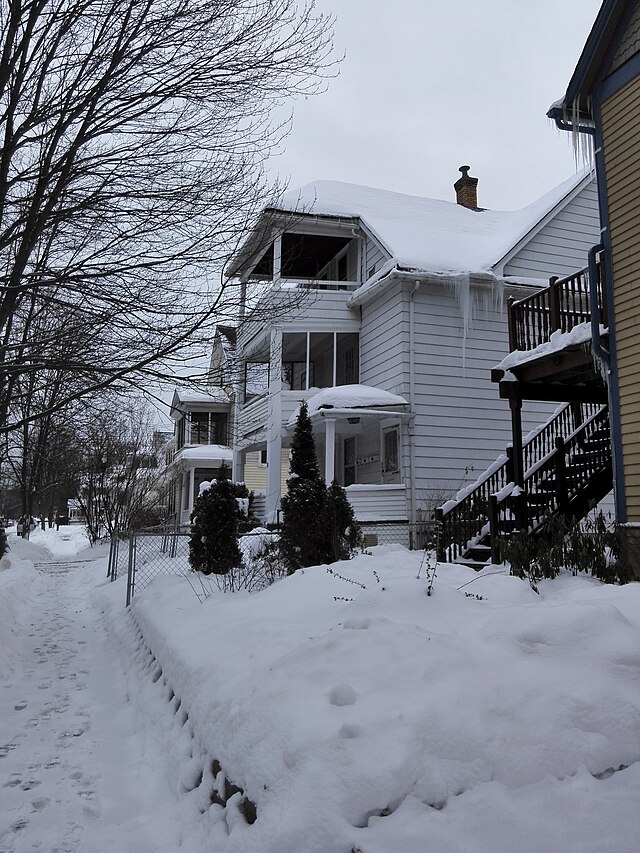
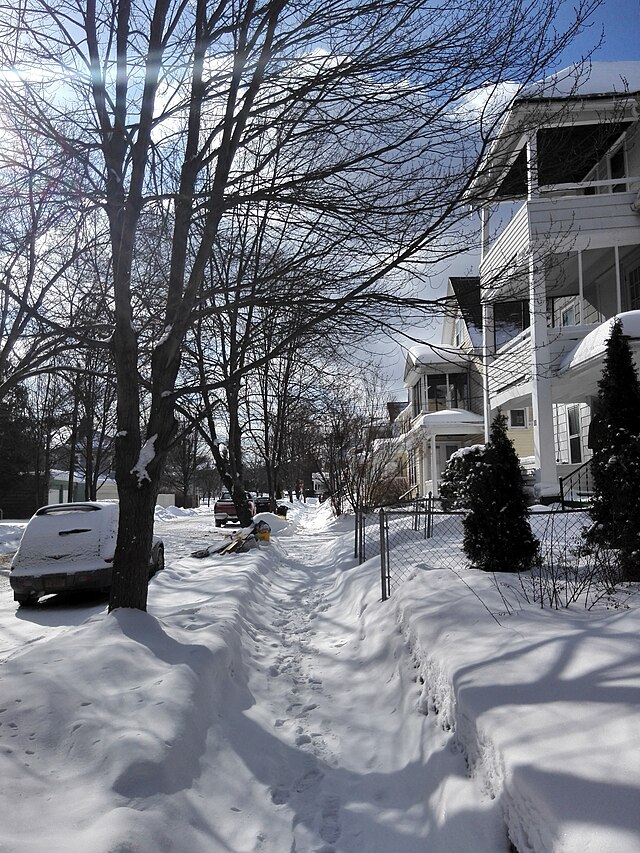
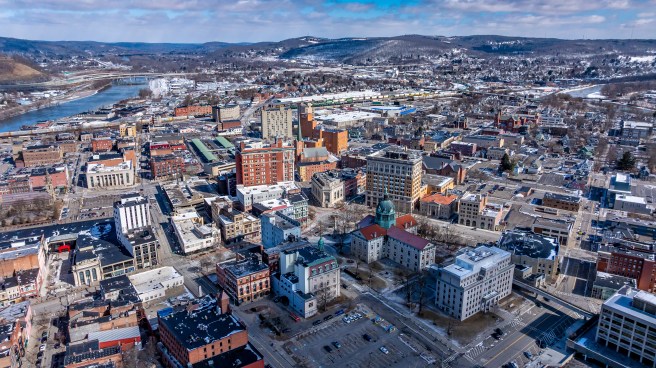
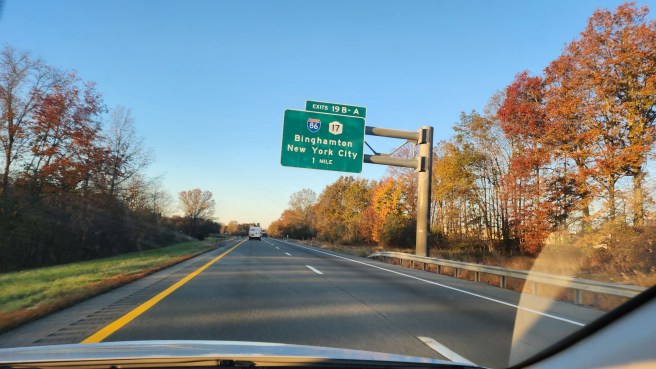
In the years after moving from Binghamton, the scene of the action, and off to the ashram and beyond, I lost touch with all but one person from that period. Well, make that two, but he was an older sports editor who had nothing to do with the hippie scene. The other was a former girlfriend where the parting had been mutual.

As for the rest? I wondered where they all went, though I’ve even forgotten most of their real names. Why couldn’t I have been more snide, like calling a character “fat, stinky Frank” or “gaunt Ellen”? Nicknames were only a move in that direction.

As I revised, though, I now had the Internet at my fingertips.

Satellite maps allowed me to see that two – and maybe all three – of my housing sites there had been demolished. (I’m wondering whether I even tried driving past them in my calls on the newspaper editor when I was with the features syndicate. I don’t recall.)

And then a few ghosts from my past reconnected, first from the ashram years – I hadn’t been ostracized after all – and then my former housemate in upstate New York, the one who forms the basis for Drummer in the story.

He event came up with his wife for a visit in Dover. It was about time I met her. She was a much better fit for him that the Latina who commanded his devotion in the book. (I couldn’t invent a character like her out of thin air, by the way. She really was a center of attention in any room we shared.)

Back in the day, he had gloried in a full naturally blonde Afro back in the day, only now it was shaved bald. His smile and intensely blue Nordic eyes were the same, along with his eternally goofy outlook on life, but that chrome dome was disconcerting.

It was time to catch up.

“Did Jnana really have long hair?” my elder stepdaughter asked.

“Oh yes,” came the reply.

Somehow that was enough to get one of my younger generation to relent from their vow to kill me if mine grew out again.

“If you’re writing hippie novels, you might as well look the part,” she conceded. So I got their permission to grow a ponytail. Maybe she was just tired of what was called a combover for the balding.

He also filled me in on some of mutual friends. One was an OB-GYN in inner-city Philadelphia. Another, a federal attorney in upstate New York. Yet another was a functionary for the United Nations. And the biggest lover of the lot had settled down to raise a large family while working as a social services executive. So much for one of my hippie circles.

I even found a girlfriend, via a Chicago Tribune photo and story, who remembered very little of the time and only vaguely pictured me. She had been much more of a presence in my life, even at our distance, than I was in hers, it turned out. I had even hoped she’d be The One.

In fleshing out the characters in my pages, I now had a second Summer of Love to draw on as well as related experiences. I could ask people about their own hippie identities, and many of the thoughts filled earlier posts here at the Red Barn.

While connecting the dots for one figure whose account to me had never neatly added up, I broke out weeping. Signs of adolescent abuse were abundant. I suspect one of her teachers as a villain, but have no proof, of course. Is he even still alive?

As for the others?

Let’s be honest. We freaks weren’t as close as we’d like to think. I hate to consider that the despised fraternity brothers of college may have had the more solid connection.

So what did happen to those who shared the farmhouse? And most of the lovers?

Not that I’m thinking they’d make another novel. Not unless a unique structure surfaced, say something like postcards.