
the Stephen Tabor carried
64 cords of firewood at a time
back in the day
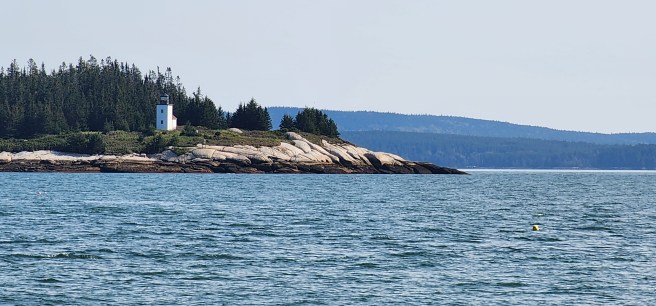
oh, look, another damn lighthouse
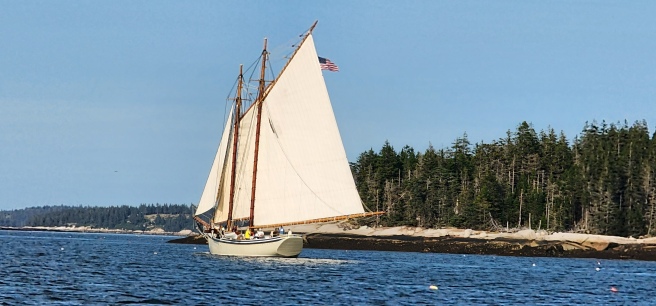
okey dokey
“ready about!”
Preparing to tack
“press it off!”
“well, that’s backwards”
You never know what we'll churn up in cleaning a stall
the Stephen Tabor carried
64 cords of firewood at a time
back in the day
oh, look, another damn lighthouse
okey dokey
“ready about!”
Preparing to tack
“press it off!”
“well, that’s backwards”

Home grown, of course.
Every night, the canopy is spread
every morning, stowed away
how he manages a wood cookstove
eludes me
the galley’s tight and must be a hot space
on a hot or humid day
regardless, he starts at 3 a.m.
and there’s coffee by 6:30 all the same

blueberry pancakes, slice of melon
cod chowder, a biscuit
roasted chicken drumstick, asparagus,
a risotto, Boston cream cake
lunch an excellent beef stew
and a great, crunchy sourdough bread
feeling like I’ve been here forever
in a good way
knowing it’s rarely this perfect
“no matter how much I eat
I keep losing weight on this ship”
sez male crew member
the cook’s apron
a variation on his overalls
the cook never learned wood-stove cookery
in culinary school
‘cuz he never attended one
in lighting a cook fire
the secret’s you have to stack
the firewood in tight
the galley’s quite crowded
the French burns four cords in a season in summer
Zen temple abbot and head cook
two most important personages
the cook also helps with the crew
mans an oar
hauls line, as needed
Tom, an E.R.
surgeon grew up in Camden
southern California now
capable of handling the helm
the concept of “running
the rail down”
meaning skimming the water
yes, surf

I even got a spree there
where he is
how would square-riggers look on these waters?
Lost behind a small island

finally, a shadow
and a tinge of warmth
brought latest Paris Review and Harper’s
as reading along with Vincent Katz pages
maybe stimulation
didn’t read anything, really, apart from some entries
in the free guide to lighthouses I had picked up
nearly a decade earlier


So here’s the official advice before setting forth:
We are very relaxed and informal on board, so bring comfortable outdoor clothes. If possible, use a duffel or collapsible bag to pack your gear. Hard suitcases are sometimes difficult to store in the cabins.
The weather may be cool or warm, so include pants, shorts, long and short sleeve shirts, a sweater or sweatshirt and a jacket. When the wind picks up, things cool off, so think layers when you pack.
Don’t forget your bathing suit, either for sunbathing or a quick plunge in the ocean.
Soft soled shoes are best, and an extra pair may come in handy. Sandals also work well on board or on the beaches we visit.
If you have a rain slicker, bring it along just in case. We do have extra rain gear on board if you can’t bring your own.
Also, if you can, check the weather for Camden, Maine online before you pack. It may give you an idea of the specific weather for your trip. But remember that it is always slightly cooler out on the water.
We provide towels, linens, blankets, pillows, and all the food and non-alcoholic drinks. We have an icebox on board for passengers to use if they would like to bring along their own beer, wine, etc.
Bring a camera with extra batteries, sunglasses, lots of sunscreen, a good book, binoculars, a journal, and your musical talents/instruments (if they are transportable!). If you want to sleep on deck under the stars, bring along a sleeping bag. Some folks bring charts or GPS’s to keep up with our route.
Once we leave the dock, we operate on 12 volt DC power. There are USB outlets for charging phones – please bring your own USB cord. We do have limited 110 volt AC power (like in your house) that can be used for medical machines and for occasional charging of batteries. Please let us know when you book if you will be needing 110 volt AC power to operate a medical machine.
do Fresnel lenses ratings run
up (from lowest)
to top, five (for highest)
or the other way around?
Turn’s out 1 is the strongest
5, the least
what are the others really thinking
or observing under their cheerful banter?
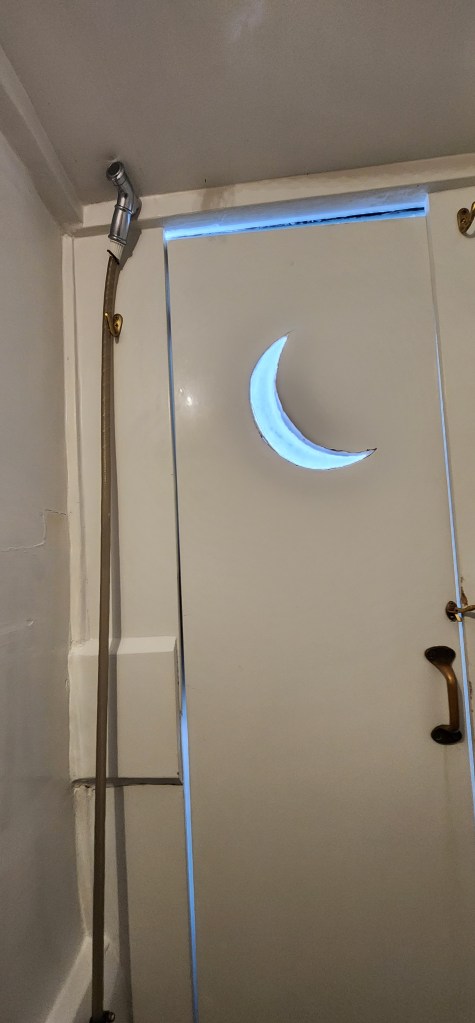
Working the toilet is an art … as for showers?
I’m getting the swing of it.
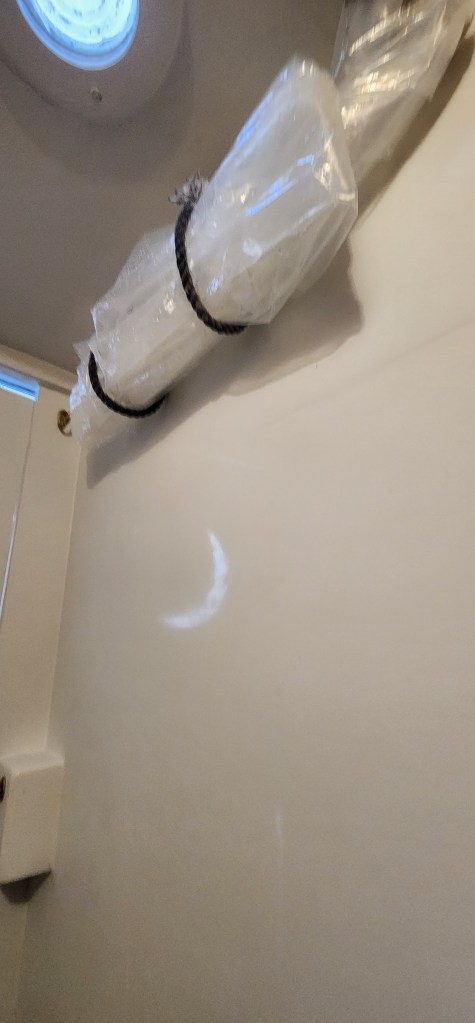
Last leg, motoring toward Camden
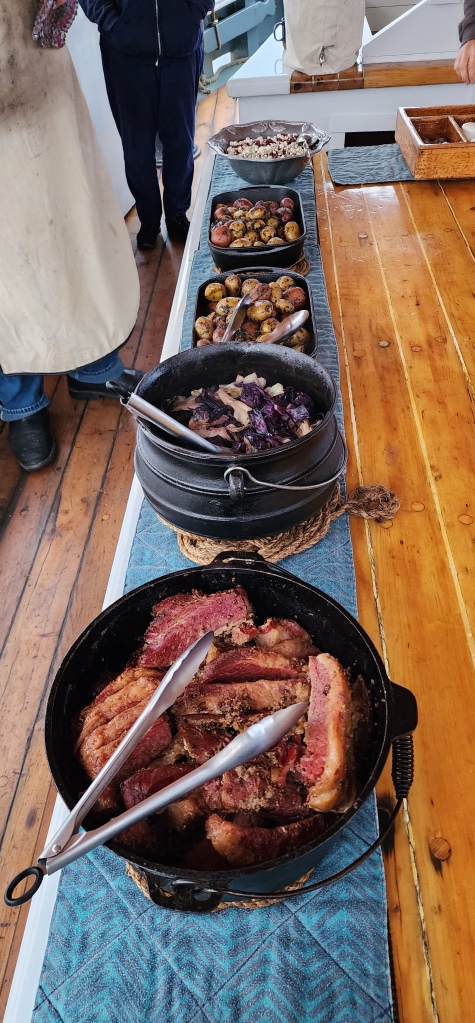
the cabbage with the corned beef last night
has done a number on me
we’re all in the same boat
for now
sleeping with the ocean
a mere foot from my head

the ship at port / anchored creaks, lines grinding / groaning
I hear the neighbors either side
Intimately
have you read
a common topic so uncommon
elsewhere
“I’m dying to be a better reader”
like digging a hole
I like going to bed
or lying on a beach

back below, in my berth
I hear steady breathing a few feet away
only a thin wall separating our heads
her boyfriend’s in crab school
yep, they giggle
unlike the couple with Southern accents
from Florida
the knitting picked up again

I’m going to sleep
[I’m falling asleep]
and so is most of the rest
finally
how many times will I be up
in the middle of the night
the head’s up on deck
I’m glad it’s not raining
or heavily foggy
though we’re sleeping at sea
it’s calmer than a water bed
creaking and thumps
more likely my neighbors
than the interplay of planks and sea
yes, somebody’s bones
now, for that damned mosquito
or some scratching overhead
who just dropped what
on the deck above me?
a shutting door
with a latch
and shuffling
who’s securing the gear
in the dusk?
what a still, calm spot she’s chosen
for the night
3:30 am, a nearly full moon
scattering sound of steady traffic
the other side of Isle au Haut
(the south)
may simply be the water motion
there’s definitely surf other side,
slight breeze, 1 mph?
to the west
can barely see Polaris
light cloud cover
only one plane overhead
on the European flight way
and the flash of a fishing boat
light array
in the gap of Deer Isle
what’s all the noise around me tonight
besides a stray cough
or zipper
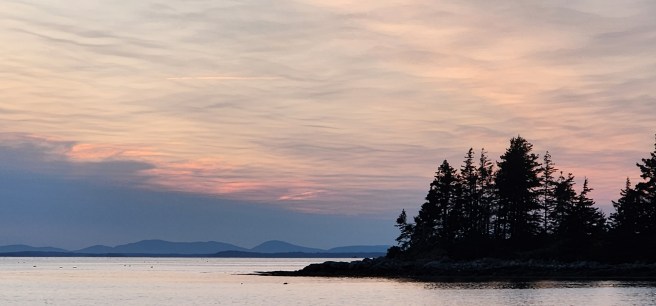
are we really that restless
I have no idea what the Patriots
or Sox
did over the weekend
though they’ve been spiraling downward
light snoring in my ear last night
I had the most erotic dream
of someone who in reality was almost well
This could become obsessive.

Colby College, Waterville.
 Jnana's Red Barn