Look for the witness in the work, too

Cinema critic Roger Ebert was talking of the importance of the witness in every movie and pointing to the places where the character appeared in the film under discussion, mostly in a lower corner. The comment flashed me to the reality of how often the hardest thing to see is what should be the most obvious. It’s not just the elephant in the room, but also smaller things we take for granted.

One way or another, all fiction is built on the observer, who is also to some degree an outsider or misfit, too. (If there are any exceptions, I’d love to hear them.) Four of my novels, for instance, were intuitively built around a photographer, a profession that makes Cassia’s father a well-trained witness. In turn, as she investigates his archives, she, too, becomes a witness, even before she starts commenting on his earlier life.

Of course, as a reader, you also become a witness. Or even a voyeur, as Camille Paglia has contended. It’s almost like every page is a microscope slide to be interpreted.

Curiously, I now see this also at play in a long-term non-fiction project in my life. Forty 40 years ago, seemingly by accident, I became involved in trying to uncover my father’s ancestry. I thought we were simply homogenous Midwesterners who had always been in Ohio from its beginning. What I discovered, though, was that one branch was – but German-speaking and largely akin to Amish. My name-line, however, was Quaker by way of North Carolina and its slaveholding culture. Both strands were outsiders to the larger society and also pacifist. It opened my eyes to alternative histories and to a recognition that stories don’t always have to resolve nicely – three people may record their memories quite differently, and maybe all three are true, if not factually accurate.

Oh yes, the research was often collaborative, with correspondence going and coming from others working on parts of the puzzle. It wasn’t always quite as lonely as drafting fiction or poetry.

To my surprise, as my novel What’s Left was taking shape, Cassia started assembling bits about her Greek-American grandparents, who had died before her birth, and then beyond to her great-grandparents, who brought the family to the New World. Like me, she found valuable clues in the surviving snapshots and formal portraits regarding their personalities, as she also did in the letters and other documents.

None of my ancestors came by way of Ellis Island, and on Dad’s side they were all in this country by the time of the Revolutionary War. I once pondered doing a series of novels on them, but I’m still intimidated by the technical challenges – a realistic language they can speak and we can understand being high among them.

Witness, I might add, has an extra dimension in Quaker thinking. It’s not just what one sees or hears but how one lives. The goal is integrity, as in wholeness or consistency. Is that what others see in us or our lives and work? Or even as our goal and ideal, even when we fall short reaching for it?

And, as a final twist, I’m realizing that the Indigenous perspective of looking back seven generations when making decisions for the future would take me back to the birth of Orphan George in 1701.

I do find that mindboggling.

~*~

You can find my genealogical gleanings on my Orphan George blog.

The novels, meanwhile, are available in the digital platform of your choice at Smashwords, the Apple Store, Barnes & Noble’s Nook, Scribd, Sony’s Kobo, and other fine ebook retailers. They’re also available in paper and Kindle at Amazon, or you can ask your local library to obtain them.

I never realized how much I was surrounded by Greeks

For whatever impulsive reason, I ended my first published novel, Subway Hitchhikers (now revised into Subway Visions) in a Greek family’s restaurant in Indiana. In a town I I’ve dubbed Daffodil, which shows up in the title of the next book in the series., in fact

At the time, I saw it as emblematic of East Meets West, especially apt considering its Tibetan Buddhist twist.

Little did I know, once I picked up the trail again not quite two decades after that publication, of the ways Greek-Americans interacted with my life, even in the Midwest.

Consider these tidbits:

My best friend’s mother was delighted by her neighbor’s repeated explanation, “Athens! She is beautiful. The rest of the country?” A spitting sound I could never ever spell out was accompanied by the open palms of both hands coming down side by side from overhead.

His other best friend was Greek-American, someone of a philosophic outlook who wound up living in my circle in Upstate New York after getting out of the Army. Yeah, some hippies were veterans.

Later faint details of a landmark restaurant passing into a new generation much like the one in the novel, still in Daffodil.

In the Pacific Northwest, discovering souvlaki on our forays to the University District of Seattle.

Back in Northeast Ohio, the Greek bakery in a small storefront surrounded by houses on a quiet street six or seven blocks east of our home.

In Baltimore, “All the pizza’s made by Greeks,” which seemed wrong – where were the Italians? And, in my salesman role on the road, “All the diners are owned by Greeks.”

In New Hampshire, the Athens restaurant downtown – popular but, to my senses, bland and tired – in contrast to one of my favorite takeout places where we ordered for the office – the menu that introduced me to gyros.

Add to that the cathedral’s big Glendi, which sent food to the newsroom in gratitude for our coverage, or the little frame St. Nicholas church I’d pass on one route to and from the paper.

One of our older coworkers, a photo lab tech, was Greek – kind, smiling, though I got to know little else. Later, one of the men I worked more closely with in the composing room was half Greek. His name, Perry, was after his grandfather, Pericles.

All of this fleeting, fragmentary, but coming together in once I moved to Dover and its annual, free-admission Greek Festival. From there, I picked up Greek dancing and the liturgy of the Orthodox faith, not that I converted. It still enriched my Quaker Christian strand.

And then there was Davos, in Watertown Square, a block down the street from my weekly choir practice. The restaurant was expertly run by Hispanics after its founders moved on.

It’s an element I miss living on this end of Maine. The closest Greek restaurants are in Brewer and Waterville, both blissfully satisfying.

For more of what they present, look to the Cassia’s World category here at the Red Barn or to the novel, What’s Left, which is available in the digital platform of your choice at Smashwords, the Apple Store, Barnes & Noble’s Nook, Scribd, Sony’s Kobo, and other fine ebook retailers. It’s also available in paper and Kindle at Amazon, or you can ask your local library to obtain it.


I don’t remember his name

Or much else, for that matter.

He was my introduction to philosophy professor, and then a semester of logic.

I expected to learn pithy bits of wisdom but discovered that philosophy is mostly about bottomless questions. I did find symbolic logic enticing, akin to geometry a few years earlier.

He was young, apparently Greek, as I recognize today – that curly hair and beard resembled any of a slew of statues. Rumors were that he was madly in love with his girlfriend and spent most of his nights talking long-distance to her in Europe.

What fascinated us was his clothing, the same cheap gabardine suit and tie and pair of scuffed brown oxfords every time he showed up for class. We assumed it was the same pair of socks and same shirt, too.

The next semester he wore a different suit but only that one to every class.

Later, hearing of his finals question from the previous year, I was grateful I hadn’t had him then.

The question he assigned for the blue-books scribbles was just one word:

“Why?”

Nothing else.

Most of the students labored away, hoping to chance across an acceptable answer.

The “A” grade went to the one who wrote a one-world answer:

“Because.”

And the “B” went to the one who used two: “Why not?”

How do you feel about family?

Cassia would have to say she’s in a big happy extended family, but she would disagree with

Tolstoy on his other point. Hers is not the same as any other. As for the unhappy part, she carries a world of grief after the disappearance of her father in a mountain avalanche.

My novel What’s Left follows the bereft daughter in her quest for identity and meaning over the decades that follow. Bit by bit, she discovers that he’s left her far more than she ever would have imagined, in effect guiding her to some pivotal choices.

The ebook is one of five novels I’m making available for FREE during Smashword’s annual end-of-the-year sale. Pick up yours in the digital platform of preference.

Think of this as my Christmas present to you. How can you not be interested in insights about family, especially at this time of year? Even if this one does have some Goth twists, probably unlike yours.

For details, go to the book at Smashwords.com.

And then ‘What’s Left’ came into focus and changed everything before it

By the time the ebooks were published, I had remarried and settled into our little city farm on the New Hampshire seacoast, the one with the red barn that gives this blog its name. My life had stabilized and my job wasn’t devouring me alive, unlike my previous lower-level management positions.

But something kept nagging at me. I wanted to know just where the hippie movement had gone. Many of the insights have been posted here at the Red Barn, and I did draft a series of essays – Hippie Hopscotch – for a book competition that was cancelled after I sent my entry off. My conclusion is that the hippie impact is still around in many varied streams, much of the legacy taken for granted in contrast to the mass-media stereotypes or the current teens’ perception of hippie as being a girl thing. My wife and stepdaughters kept asking about the era and were astounded to hear just how much had changed for the better because of it. They were incredulous at the restrictions I had faced. Were things really as bad as Mad Men presented them? Yes, and the show had me retasting the first newspaper I worked for, the one that came closest to major metro. I mean, I could almost smell it.

Could any of this earlier work be salvaged? And what could I do with the searing childhood betrayal piece published online in Hobart?

My first published novel, Subway Hitchhikers, had ended with Kenzie’s return to Indiana. Intuitively, I had him, as a Tibetan Buddhist lama reincarnated into Iowa, marrying into a Greek-American family in Daffodil. I saw it as a way of blending two streams of ancient wisdom – one Asian, the other at the origins of Western culture. Something still felt incomplete in that ending.

Rather than trying to pick up the story with Kenzie himself two decades later, I decided to shift the focus to the next generation, which led me to create a daughter. This would be her story. As an added twist, I decided to have her lose him, not to divorce but an avalanche in the Himalayas, when she was just 11.

Unlike my earlier fiction, this one was undertaken totally in my retirement years. Yes, I had the ending of Hitchhikers as my prompt – and, based on that, some characters and a setting to work from – but this book would be done with fewer external demands than I’d faced in working on the others in my “spare” time.

Surprisingly, this became the hardest of all to bring to fruition, undergoing nine thorough revisions. In one version, there were no quotation marks. Another changed the tenses.

No quotation marks? Since she was relating the story anyway, including what other people had told her, who knows how accurately she repeated them. Blame Cormac McCarthy as a bad influence there. It was one flash of brilliant inspiration that ultimately proved confusing. Now, how many quotation marks did I eliminate in one sweep and how many did I have to insert as repairs? Both times, it involved a lot of keystrokes.

The focus shifted greatly, too.

At first, it was on what she uncovered about her father and his times. He was a hippie, after all, so we would see the hippie scene through her perceptions of his photographic record of people and events. In the next revision the focus turned to what had attracted him to join her extended family, one so different from his own roots. That led me to questions of just what a family is – a pretty slippery concept in today’s America – and then an examination of Greek-American culture in the Midwest itself. Finally, the focus was entirely on her, period, starting with her stages of adolescent grieving and emotional recovery.

I was a bit spooked when she began talking to me through my fingers as I was typing. She was snarky, too. Talking? She was dictating. Even scarier, she sounded a tad like my younger stepdaughter.

And it wasn’t just when I was up in my third-floor lair. Sometimes she talked to me while I was swimming laps or weeding the garden.

At some point this was no longer about a distant past, in her eyes at least, even when those roots impacted the present and its conflicts. By now, I was watching her grow up with each revision as she gained a snide, seemingly cynical tone and a goth appearance. I wish I had answers or at least advice for where she and her generation of the family wind up at the end of the book, but we do know what their options are.

The book also evolved into a multigenerational affair, reaching back to her great-grandparents and later jumping ahead to her nieces and nephews within a large, tightly knit extended family.

How to structure this baffled me until I came upon the way Jonathan Lethem handled a multigenerational novel that built on four sections of four chapters each, like a mosaic. Mine has five generations at play, once you include Cassia’s nieces and nephews, but the structure holds. Somehow it works differently than the traditional chronology of twenty-some chapters.

One of the 16 chapters, the subway ride to the Brooklyn art museum and its Tibetan galleries, comes from a lengthy outtake from a Hitchhikers draft, this time two or three decades later with Cassia, the daughter, rather than her father.

I should also admit that the title remained elusive. One I liked, Cassia’s Quest, got shot down for sounding more like a space journey. Another, in desperation, Diana’s Daughter pushed Kenzie out of range. What’s Left results as a double entendre, addressing both her situation and the manuscript itself.

Finding a suitable cover image was equally challenging. I liked a failing egg yoke as a reference to her being broken open and to her family’s restaurant. Photos of a grieving child or young woman never quite fit the physical description in the text itself and also failed to reflect the span from early adolescence into her 30s.

~*~

The project also had me reconsidering my own experiences.

Was I really ever a hippie? In my promotions for the novels, I contended that we came in all varieties and nobody fully fit the stereotype. That was, in fact, a central thrust of my novels, even when hippies are nowhere to be found, as was the case in Hometown News.

In the background, the local Greek Orthodox church opened the faith and culture to my curiosity. As I’ve discussed in posts here at the Red Barn, what I encountered was quite different from my Quaker simplicity but definitely enriched it, not just theologically but as in the traditional dancing, music, and food.

It was a good thing that I didn’t encounter the novels of the masterful Jeffrey Eugenides until after What’s Left had been published. I would have been too intimidated otherwise.

In addition to Jonathan Lethem, writers of inspiration during this project included Poppie Z. Bright, Anne Rice, and John Irving.

~*~

Not only was this the most difficult of my novels to writer, with deep revisions, but the central character, the snarcastic Cassia, had me rethinking everything that had gone before. She ordered me to revise the earlier books. Or else?

One of the advantages of ebooks is that new versions can be published rather easily. In this case, as you’ll see, she had my hippie books getting new titles, many characters getting new names, and many of the stories themselves being vastly enhanced.

All from what I jokingly called my culminating novel.

And that was before I returned to the others.

Here I had finally found myself in my goal of being free from the newsroom and having time to focus more fully on my “serious” writing. I just didn’t imagine it like this.

I still held a fondness for the hippie movement and its hopes but could clearly admit I had moved on. That part was liberating.

I’m still looking for that better world, though, as you know.

So here I was, back to the drawing board.
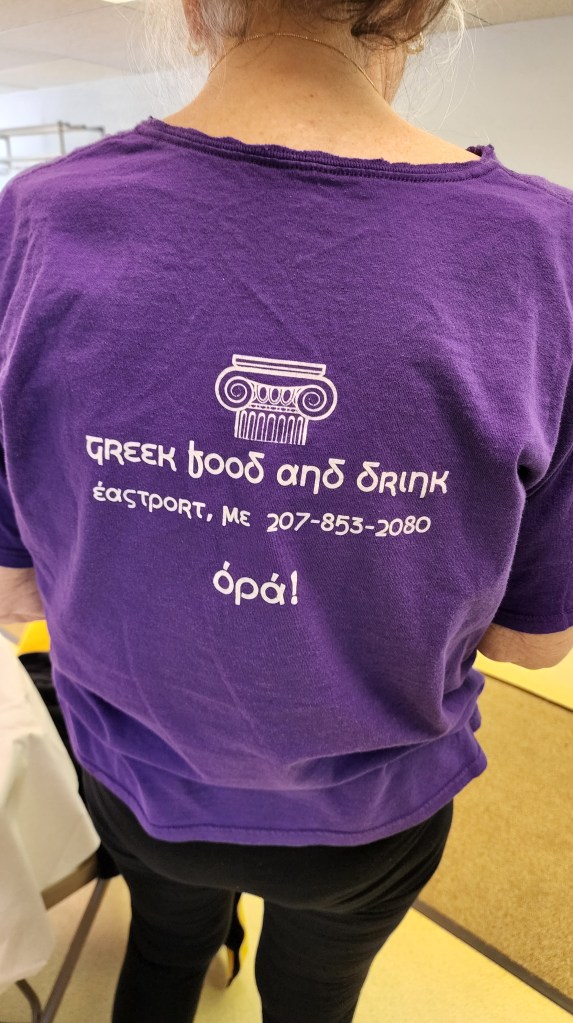
When I saw this tee-shirt, I started drooling

Where, for heaven’s sake, would this place be? We don’t have a lot of options in our remote rim of Maine.

And then I was told the restaurant was a late and lamented site a block from my home, now reincarnated as an echo of the grill and bar next door. Only, perchance, a shade better.

Well, as a reaction, I did have an appropriate Greek slang expression I’d found earlier when researching background for my novel What’s Left, not that I’ll quote it here.

How I slowly became aware of Greek-Americans

Back in high school, my best friend’s mom was buddies with a Greek neighbor who used to proclaim, “Athens! She is beautiful! The rest of the country?” A spitting sound I could never ever spell out accompanied by the open palms of both hands coming down side by side from overhead.

His other best friend was Greek, too. A kind of philosopher, in fact.

My civics teacher was Greek, as was the drama and debate coach.

In college, a landmark restaurant just off campus passed into a new generation much the way the one in my fictional Daffodil did. Somehow, the details stayed vaguely with me.

Off in the Pacific Northwest, I became fond of souvlaki and spanakopita on our forays to the University District of Seattle.

On my return to Ohio, there was a delightful Greek bakery in a small storefront on a quiet residential street six or seven blocks east of our house.

In Baltimore, “All the pizza’s made by Greeks,” seemed wrong – where were the Italians? And out on the road, “All the diners are owned by Greeks.” Little did I know about flatbreads.

In New Hampshire, the Athens restaurant in downtown Manchester – popular but, to my senses, bland and tired – in contrast to one of my favorite takeout places where we ordered for the office – the menu that introduced me to gyros.

Add to that the cathedral’s big Glendi, which sent food to the newsroom in gratitude for our coverage, or the little frame St. Nicholas I’d pass on one route to and from the paper.

One of our older coworkers, a photo lab tech, was Greek – kind and smiling, though I got to know little else.

A sharp-tongued but very competent colleague in the composing room was also Greek. Named Pericles after his grandfather, though it was shortened for us.

All of this was fleeting and fragmentary but came together in Dover and its annual, free-admission Greek festival.

And then confirmed at Davos in Watertown Square, Massachusetts, a block down the street from our weekly choir practice. The food was great, though run by Hispanics.

Now I can tell you there are Greek-Americans almost everywhere. Opa!

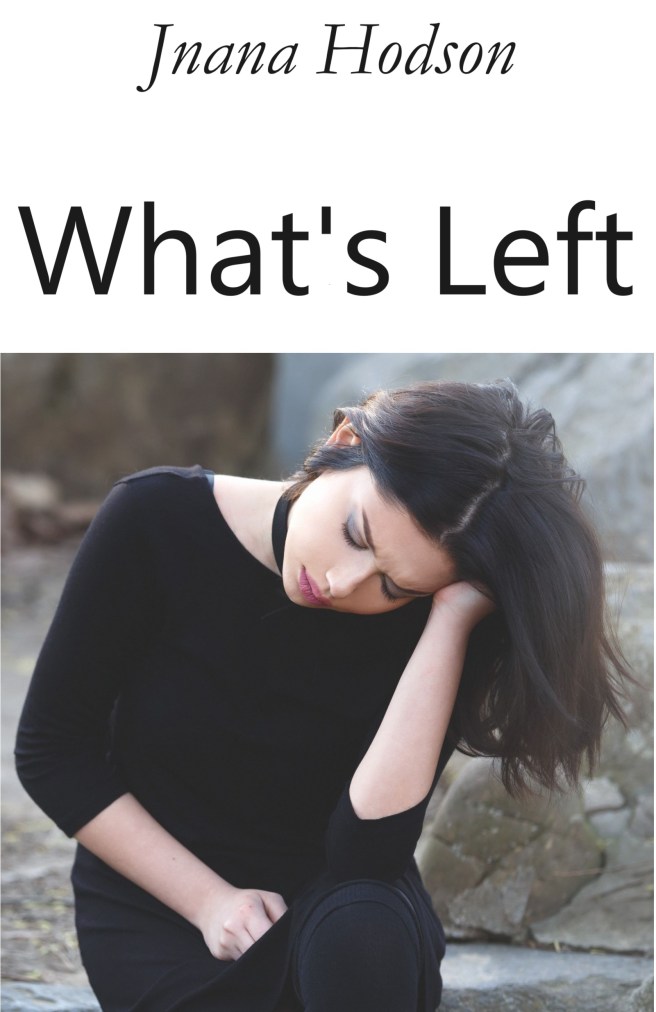
Cover update: One leads to another

After recently tweaking the cover for my Hometown News novel, I found my eyes zeroing in on another volume and once again questioning its effectiveness.

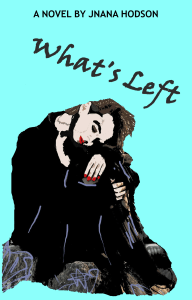
This design continues at Amazon. While Cassia goes Goth in the plot, I suspect this was a bit extreme for her style.

What’s Left: Within a daughter’s own Greek drama had been especially difficult to develop, as I’ve explained in earlier posts, but ultimately ended up following a girl who lost her father in an avalanche on the other side of the globe when she was only 11.  She then continues on into her emotional recovery and growth, rounding out in her mid-30s.

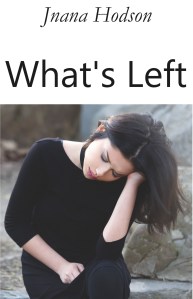
By the time the book appeared in both digital and print-on-demand options at Amazon, the cover image had settled on a photo of a Goth girl.

For technical reasons, she continues at Amazon, while my cover at other digital retailers got updated.

I wanted a better sense of the initial suffering, or even an edginess in her development, but nothing worked perfectly. I am still taken with the daring in her stare at the camera, but is that enough? (I did a post about the earlier covers on December 20, 2019, should you want to explore my archives. I was quite fond of the first cover, the one with its falling egg yoke, but nobody else seemed to get the connection.)

The figure appears more ambiguous in my attempt to do something more in line with some of the Young Adult covers I saw. Ultimately, this was a mistake.

Furthermore, she’s genetically a mix of Greek and American Midwest and a tad on the pudgy side. I hate it when a story follows, say, a brunette but the cover shows an obviously dyed blonde.

Another challenge involved balancing the two words of the title. The second word, “Left,” should have the emphasis, but it’s only half the size of “What’s.” Nothing I tried corrected that. In many of the typefaces I sampled, “Left” simply didn’t read easily, either. It could have been “Lest” or “Lett” on first reading. In making a sales pitch, there’s no time for deciphering the message. “What’s” presented similar challenges in other typefaces.

The text had been difficult enough to nail down in a convincing voice, but the cover was equally problematic – especially finding an appropriate image. How do you summarize all this in a single graphic impression, especially one that works thumbnail size online?

Do note, there’s an ongoing argument about using a facial image on a cover, period. Does it grip a potential reader or does it turn one away? Will it even limit a reader’s impressions of the character at the heart of the book?

At last I had a photo that more or less captures her despair. The title and author presentation never quite matched.

Remember, my budget wasn’t generous enough for a graphic designer, the kind who would create a flowing dust jacket replete with insider clues for a potential reader. I’m not particularly fond of those designs anyway. In general, I think photos pack more punch in a first impression. Just look at magazines at a newsstand. Remember those?

Cassia, or more formally Acacia, goes into mourning after her father’s death and then morphs into Goth dress and appearance through her teenage years, where much of the story develops.

The book doesn’t fall neatly into genres – part of it could be Young Adult, but I’d say the core of it is New Adult and beyond. So how old should she look on the cover?

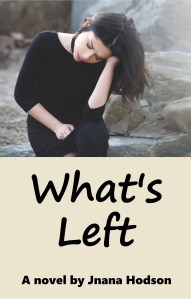
Finally, in the latest stab at this problem, I decided to run with an image I’d settled on earlier. This time, it would bleed off the cover at both sides for maximum impact. I then decided to run it off the bottom, too. Somehow, that left the photo square, a format her photographer father pursued.

At last, we have this.

My reason for cropping the photo tighter was to give it more depth, putting the focus more fully on the girl and her emotion. I’m now seeing that the rocky background I eliminated had actually suggested another kind of story. No more of that distraction now. An artist might have replace it with her extended family, by the way.

In leaving the top open for author and title, rather than separating those elements with the photo in the middle, she has more presence and gravity.

I’m also glad I stuck with an impulsive decision to not fill in the remaining cover with a background color. A new typeface for me, Yu Gothic Semibold, seemed to work best for the title, though I’m not exactly happy with the single-stroke bar apostrophe. But “Left” carries its own weight in the dance of letters.

Book Antiqua, meanwhile, a fallback for me, does nicely in italic for the author.

That’s all – clean, simple, and somehow daring in its starkness. Without an obvious border, the design declares its independence from paperbook constrictions. It’s also quite contemporary, in a confident way. It even pops out on websites. And there’s no question that it comes together more harmoniously the one it replaces.

This one’s now available on your choice of ebook platforms at Smashwords.com and its affiliated digital retailers. Those outlets include the Apple Store, Barnes & Noble’s Nook, Scribd, and Sony’s Kobo. You may also request the ebook from your local public library.

Do take a look.

It’s not really taboo, is it?

Is a writer really expected to explore deep matters without including the hot subjects of religion and politics? Here I’ve been writing about the hippie movement, which had a strong anti-materialism streak, at least on the surface, as well as a strong anti-war stand, though I’m sensing it wasn’t quite as anti-violence as well. Early drug use was often described in religious terms pointing toward a union with the divine or transcendental wisdom.

For some of us, at least, spirituality and religion (shorn of religiosity) were a big part of the era. Not that that many others wound up there by now, from what I see.

As for politics? What a disaster.

~*~

In my journey, the time in the ashram was the ultimate of hippie. We were a tight-knit community (think of the ideal of tribe), vegetarian, back-to-the-earth (though not off the grid), sitting in meditation twice a day (the best way of getting high). The celibacy ran counter to the broader movement, but we did have a better balance of the sexes than elsewhere. We were focused, after all, on changing ourselves first before trying to change society.

So that’s the basis of my novel Yoga Bootcamp, humor and all.

I tried to walk a line between guru adulation, which I saw in books about various religious leaders of all stripes, and an expose about their shortcomings, mostly sexual and financial. While there were problems after I moved on, I had learned and grown much during my residency. To turn on that for larger readership would have been a betrayal.

~*~

I wasn’t so considerate with the churches in Hometown News. What I saw in the industrial city that modeled Rehoboth was rivalry, and I never got to know the ministers. I was worshiping with Quakers an hour to the south.

~*~

The subject became more nuanced in Nearly Canaan, where Jaya ventures forth to spread yoga-based spirituality along with her progressive social service. Having her become close friends with an evangelical pastor’s wife, which evolved in the final revision, is one of my favorite strands in my fiction, along with the middle novella in the Secret Side of Jaya, with its more primitive Baptists.

~*~

Let’s return to my first book, where a third leg of the original saga was Tibetan Buddhism. Memories of a documentary I’d seen in childhood about the flight of the Dalai Lama had taken root in my psyche, and my yoga ashram residency included teachings about karma and reincarnation. Even my fundamentalist mother had been impressed by some of that. Well, and maybe the fact that they were fighting the evil Communists.

Once the seemingly absurd premise of a lama being reincarnated in Iowa, I was off running. And then, a few years after publishing the book as Subway Hitchhikers, news stories presented claims about such an occurrence actually happening. For me, though, the prompt fit a personal sense of being born into the wrong place and time.

After the book was drafted, I returned to Indiana as a research associate and found myself taking the bus to work some days with the Dalai Lama’s brother as one of the passengers. I was too abashed to try to converse with him, but he was on the university’s faculty and, as another coincidence, a Tibetan Buddhist center took root in Bloomington, something I was already anticipating in the story line that finally jelled as What’s Left, springing from the ending of the subway story.

Drafted a quarter century after Hitchhikers was published, What’s Left picked up with the Greek-American family the lama married into, except that I felt I needed to tone down the reincarnation possibility. Besides, I was exploring dimensions of Greek-American culture and Orthodox faith, which I’ve presented here at the Barn.

This has me thinking about the original scope of my subway novel. What if I had envisioned it as a graphic novel sans the graphics but one where each encounter somehow builds toward his establishing a temple somewhere in the Catskills or Berkshires or other high point near the big city? Instead, I intuitively had him zoom back to Indiana, a reflection, I thought, of how far Manhattan’s tentacles reach.

Tibetan Buddhism was a way of abstracting my Hindu-based yoga training, and my Buddhist tastes leaned toward Zen.

After moving to Dover, though, I got to know a deeply committed woman who was on her way to becoming a Tibetan Buddhist nun slash teacher. Some of her insights have been woven into the revised story as it stands today in Subway Visions.

Opa!

In relocating from Dover, I do miss its annual Labor Day weekend Greek festival – the food, conversations, dancing with live music, and overall happy vibe. What they call kefi.

For Greek Orthodox congregations across North America, these events have become a traditional way of celebrating their culture, welcoming the surrounding community to sample it, reenforcing the bonds of their membership, and conducting some needed fundraising, sometimes for local charities as well as the church itself. The deep commitment of the volunteers and the overall organizational skill always amaze me, and it has been fun to be part of the food-serving line some years.

Earlier in the summer, neighboring Portsmouth usually has its own, similar but also with differences, and both weekends draw big crowds, jammed parking, and partisan comparisons. Dover’s has free admission, unlike Portsmouth, which has more dance addicts.

The festivals closet to Sunrise County are in Portland and Lewiston, downstate five or so hours away. Or, for variety, Halifax, Nova Scotia, which has a four-day schedule but is a six-hour drive away – or seven if you take the shortcut ferry ride across Fundy Bay.

~*~

For the Labor Day weekend, Eastport has a much more low-key observance, the Salmon and Seafood Festival.

Things get wilder the following weekend, then the pirates invade for what’s our blowout to the summer tourist season.

What are you doing special for the holiday weekend?