GREAT TASTES FROM NEARBY SOURCES

There are some things we’ve decided not to grow. Sweet corn, for example, requires more space than we’re willing to allocate.

Part of our decision reflects the reality that we have some fine farm markets nearby, and we welcome the exchange of a local economy. The same-day butter-and-sugar or all white ears are unbeatable, especially when accompanied by our own tomatoes. Who says a feast has to be expensive?

A pick-your-own orchard presents another example. We have fond memories of family journeys to Butternut Farm in Meaderboro for peaches and apples. For me, of course, the visit reminds me of living in the orchard in Washington state’s Yakima Valley, so many years ago, now, though I welcome its many varieties other than Delicious. A Gala, anyone?

The annual trek to a Christmas tree farm here in the city feels related – first, to pick out our choice, and then, a few days before Christmas Eve, to harvest it and somehow fit it into the car. We still treasure the bird nests we’ve found in ours some years.

PYRAMID OF VINING BEANS

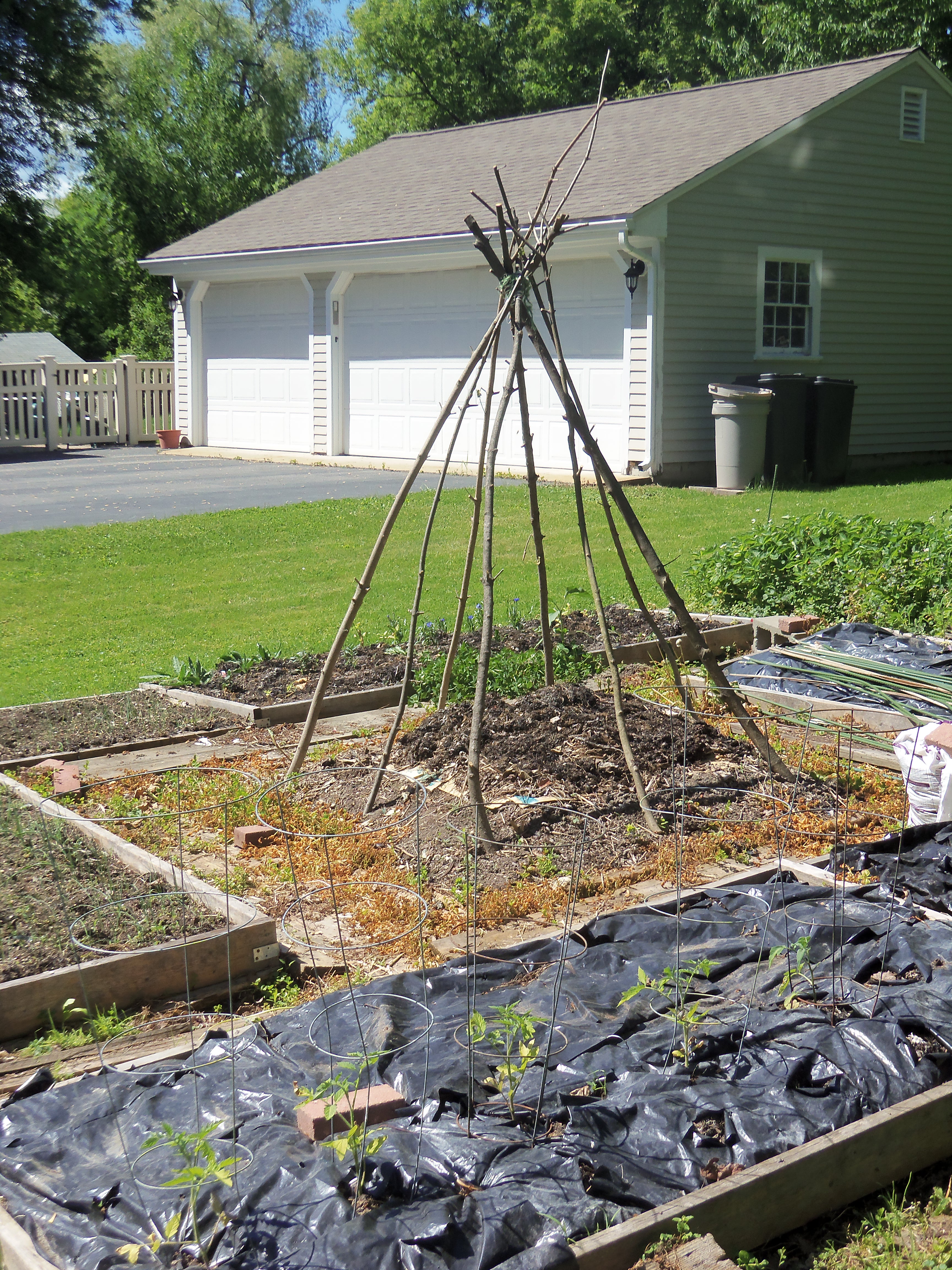
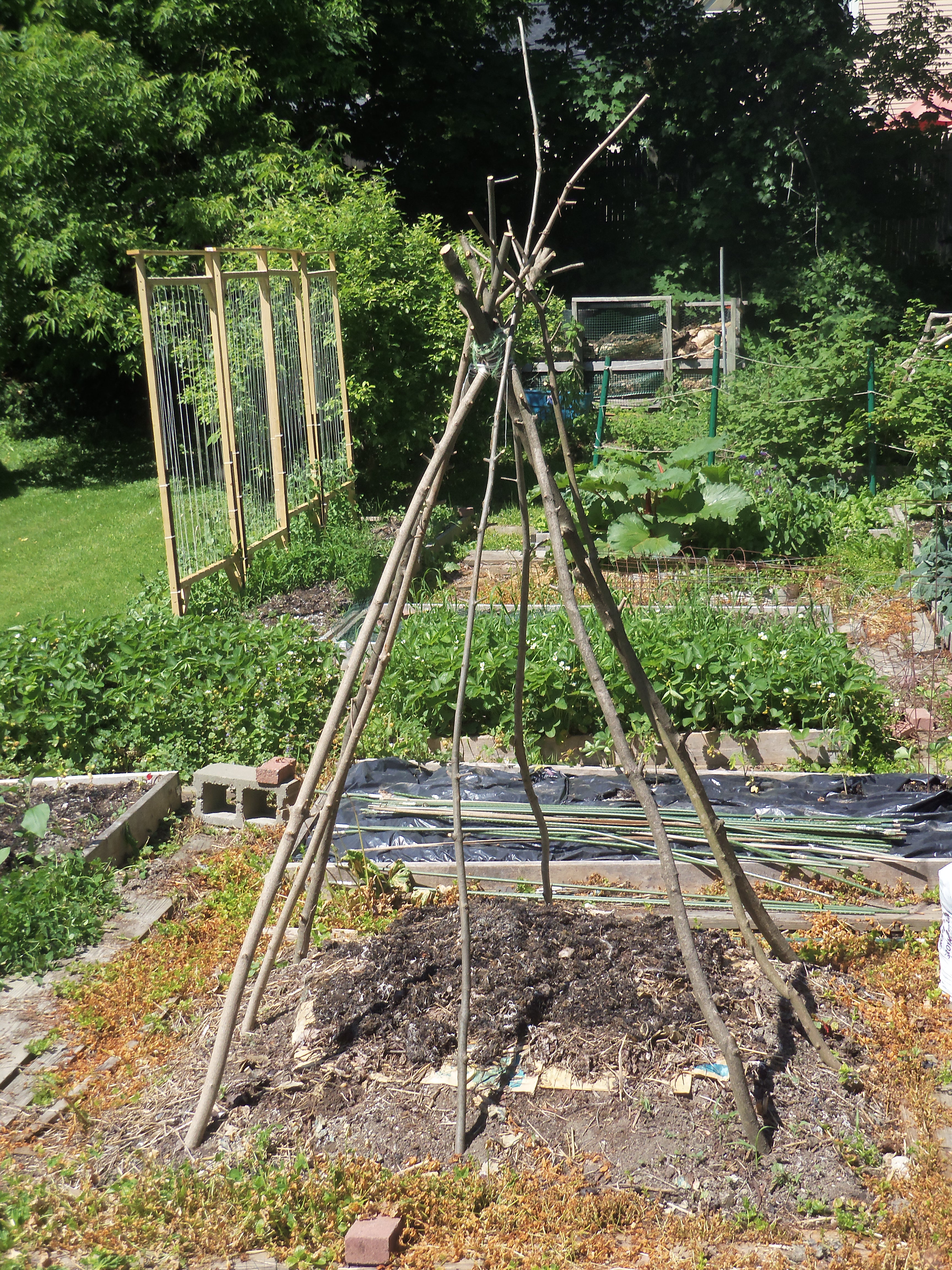
Back on June 14, I posted a photo of our newly erected tepee for the pole beans. Now that they’ve sprouted and taken off, here’s how it looks.

The vines have climbed to nearly seven feet tall. I'll need a stepladder for picking.
The vines have climbed to nearly seven feet tall. I’ll need a stepladder for picking.

If the plants produce as well as our first round of sugar snap peas did, I’ll be feeling like a pharaoh of beans. (I hear the groans in our household already. So, she might ask, did that make me a sugar-snap daddy?)

NATURALLY, SHE HAS REASON TO WEEP

You may remember my writing of the wildlife we have in our yard, even though we live in a city. Maybe I was even bragging, a tad.

Meanwhile, our garden was looking better than ever. Some of it was likely a consequence of all the seaweed we’re using for mulch, plus the compost. Some of it a matter that we got just about everything transplanted on time, and some a reflection that my being free from the office has allowed a little more help with the weeding and harvesting.

On top of everything, the weather has been uncommonly cooperative. There were no late frosts in May, though there were nights we had to bring plants under cover as they “hardened off” before transplanting. We largely avoided a wet June, which kept the garden slugs under control and meant the strawberries didn’t get waterlogged. (They’ve been very tasty. The berries, that is.) July has brought rainfall as needed and also stayed out of the tropical range of oppression.

And then, about a week ago, disaster struck. A groundhog (apparently dwelling under a shed three houses down the street).

We had some near misses in the past, but nothing like this. One year, in fact, a band of possums evicted the groundhogs from their burrow. My wife’s always like opossums.

Overnight, half of our Brussels sprouts and a half-dozen heads of lettuce were obliterated. The rest were wiped out a day or two later, despite our efforts to fight back. Without the possums coming to our rescue, my wife’s taking this personally. For that matter, so am I. What about all that teaching about peaceful coexistence, anyway? What if the other side just doesn’t care?

Living in the city, we can’t resort to the usual line of defense, either, the one many vegetarians no doubt practice. No, a .22 is not an option here. You can run down the list of other weapons and strike them off one by one. Children and pets, after all, live in the neighborhood.

So here we are, mopping up and hoping the cantaloupe slices in the Hav A Heart trap do the job. And wiping our tears.

At the end of Round One, the big trap came out, along with some impromptu fencing. The Brussels sprouts at top right had been capped, which means they're done growing for the year. The lettuce, as you see, was leveled. What we did discover is that groundhogs can read, when they want. Mark's garden was also hit.
At the end of Round One, the big trap came out, along with some impromptu fencing. The Brussels sprouts at top right had been capped, which means they’re done growing for the year. The lettuce, as you see, was leveled. What we did discover is that groundhogs can read, when they want. Mark’s garden was also hit.


THIS OLD HOUSE DISILLUSIONMENT

One of the downsides of owning an old house is an awareness of just how expensive any repair is. (And it’s always more than you’ve planned.) Add to that just how many repairs are needed. (Remember, most of them are for things you don’t even see.) And that’s before we get to any upgrades.

The awareness has also afflicted many of my dream-house observations, especially when I’m nearing the ocean. Where I would have admired a stone retaining wall under construction or a long pier from a private boathouse or deck to the mooring, what I now see is dollar signs. Often, more than I would have made in a year. It’s crushing.

It can make you wonder what people do for that kind of income. Or what kind of wealth they were born into. Or how long it will last.

One thing I know is that fishermen used to live in some of these coastal communities. But not anymore. Not by a long shot. Some of them live closer to me.


PEAS, PLEASE

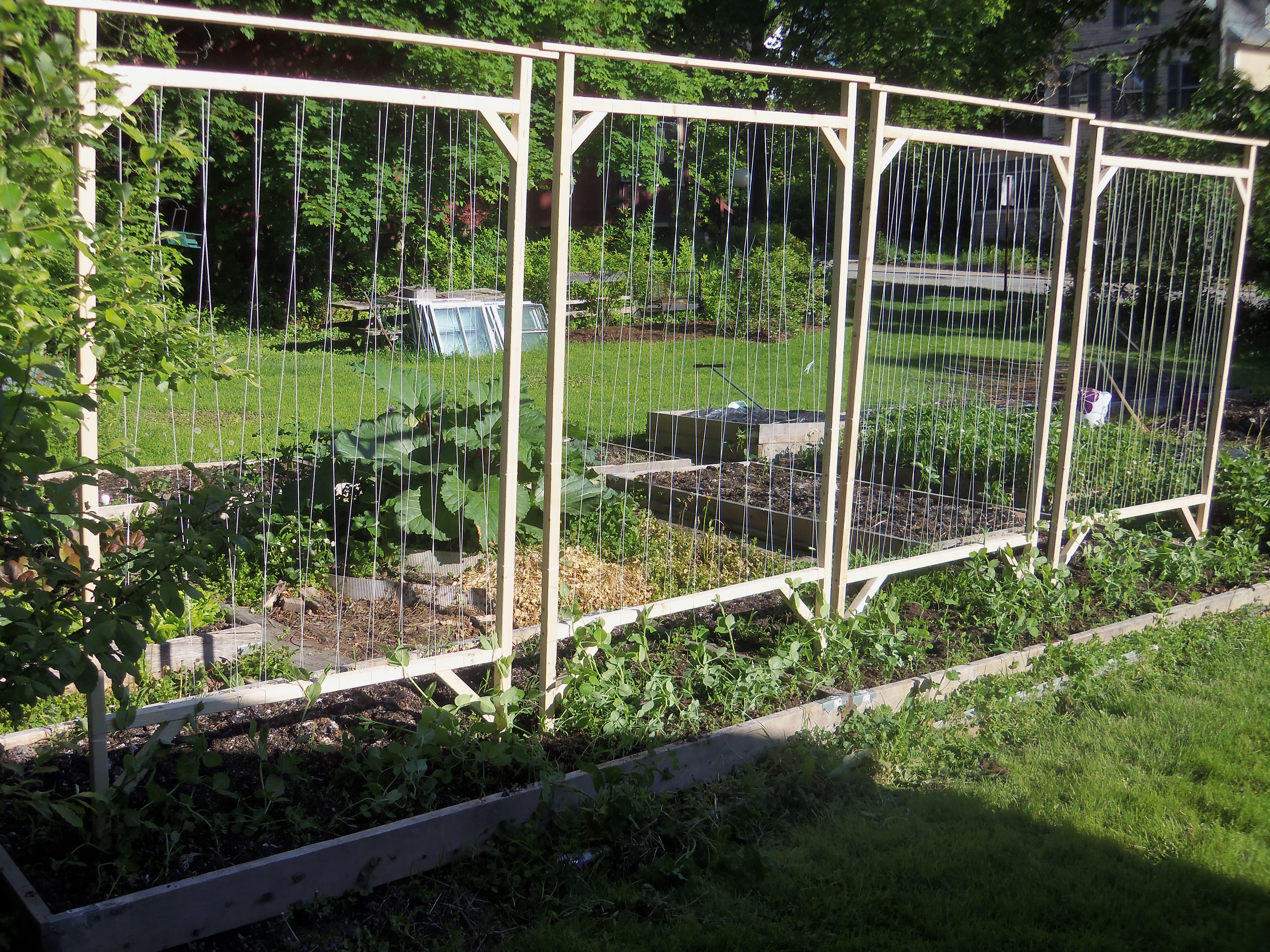
As gardeners know, growing peas can be a challenge. The vines like to climb and tangle ... and they get heavy. This year, thanks to elder daughter, a new design has appeared in our beds. It's quite elegant, I think.
As gardeners know, growing peas can be a challenge. The vines like to climb and tangle … and they get heavy. This year, thanks to elder daughter, a new design has appeared in our beds. It’s quite elegant, I think.
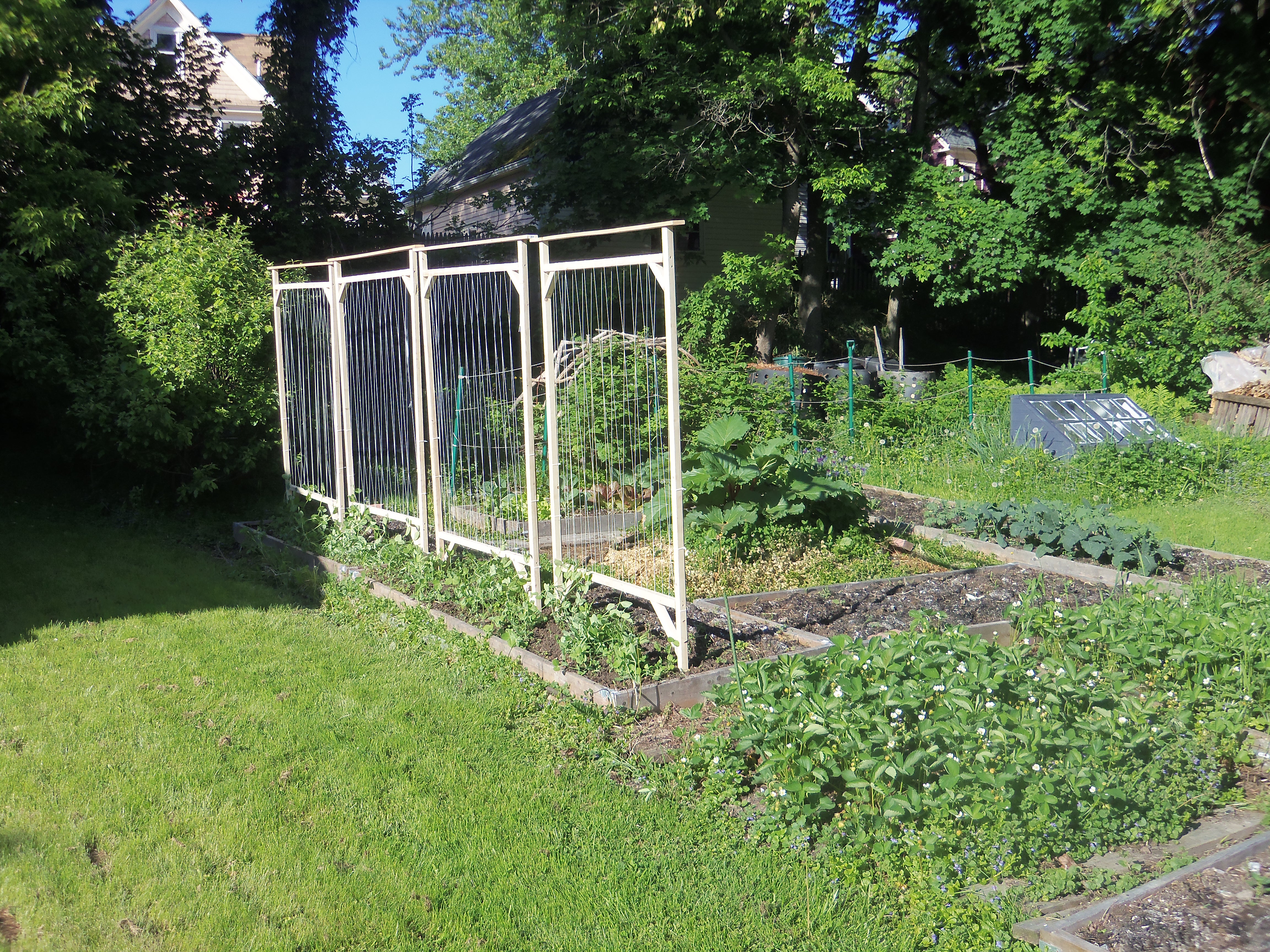
Here's a little perspective.
Here’s a little perspective.


ESSENTIAL HELPERS

Asked what I consider the most essential tool for the yard and garden, I’d answer “my wheelbarrow.” A six-cubic foot wheelbarrow. Even more than my heavy-duty loppers.

100_8378

It’s not just because we have gardens on either side of the house, either. I use it to move newly delivered firewood as well as shrubbery cuttings. Compost. Harvests. As well as trash. Building and filling the raised beds for square-foot gardening. Spreading seaweed and mulch. The list goes on. And on.

It even serves as a platform for working. Or, in the past, for giving the kids rides.

HIERARCHY OF WEEDS

There’s an abundance of stealth maples, of course. Should we want the yard to revert to maple forest, we’d leave them untouched. Otherwise, they’ll overrun – and overshadow – everything we intend to garden. This is New England. Our yard has too little open, full sunlight as it is. Just ask my wife.

Each spring, we get thousands of these maple sprouts as they race to establish themselves around our yard and garden. Often, they pop up in the middle of plants you want, where they like to hide until it's too late, so eradicating the maples early is essential.
Each spring, we get thousands of these maple sprouts as they race to establish themselves around our yard and garden. Often, they pop up in the middle of plants you want, where they like to hide until it’s too late, so eradicating the maples early is essential.

Unless one is a truly dedicated weeder, a triage sets in: aim at the most damaging species and go after it, rather than everything at once. Thus, the maple seedlings, before they establish deep roots that are impossible to pull up. Or concentrate on specific beds each year: the asparagus and ferns, for instance.

There’s a list of common invasive species. We have them all.

Others that are welcome, within limit: honeysuckle, on the cyclone fence; mint, at the back, for mojitos and iced tea. Maybe even poison ivy, tolerated to ward off pedestrians or to establish boundary.

Dandelions (tooth of the lion) are no longer a weed now but daily greens for our rabbits and our own table, at least at the beginning of the season. After that requires vigilance.

The wild rose hips are becoming another matter altogether.

A FEW THOUGHTS WHILE SIFTING COMPOST

Come springtime every year, there’d be a predicable domestic spat. I’d say the compost was ready. She’d look at it and retort, “No, it’s not: you can still see bits and tell what it’s made of.” (Actually, two shes – mother and daughter.) “Then you’ll have to wait another year for it to finish to your specifications,” I’d shoot back, only to be told we couldn’t wait that long. And so on.

Part of this seemed to question my very manhood. I was, after all, the one doing all the work, from collecting the bags of leaves around the neighborhood and dumping the kitchen garbage in the covered bins to changing the rabbit cages, in large part for their precious, nitrogen-intense pellets.

Well, most of the work. The red wigglers would also do a large share.

Still, I suspected that if we waited as long as they wanted, all of our organic matter would evaporate.

At last, I had a flash of genius. I’d slowly sift the pile, trowel by trowel, and whatever came through the screen turned out beautiful. They approved and used buckets of it on the square-foot garden beds as fast as I could provide them. The part that didn’t fit through the screen was also beautiful, along the lines of woodland detritus with flecks of brown eggs.  I put that aside to decay further, perhaps to be spread as mulch in July or August.

100_8405

The motion of sifting itself can become a kind of Zen practice as you admire the material before you and the thoughts flitting through your awareness.

This movement’s like panning for gold, as I found washing my dishes in the glacier-fed river below Mount Shuksan. Back and forth, back and forth, with all that matter getting smaller and sparkling more in each round of swirling.

All the peach stones are tokens from our cheap peach bonanza after Hurricane Irene ruffled nearby orchards.

The squirrels plant a lot of our wild black walnuts.

Listen to all the cardinals and mourning doves.

Plastic, in flecks, is inescapable.

How loud, those geese overhead! Me, I’d be more stealthy.

We eat a lot of eggs.

EAT YOUR WEEDS

OK, the title’s a cross between the classic “Eat your greens,” as grandmothers used to advise, and the once ubiquitous “Eat your Wheaties,” as the Cheerios folks used to advertise. But this time of year, I’m doing something that gives me a sense of being simultaneously virtuous and hedonistic.

Here’s what you do. Pick the dandelions before they blossom, hopefully uprooting them while you’re at it, and then wash the early greens before the plants turn altogether bitter. (Toss the roots aside; that’s the weeding part of the equation.) You then use the tiny leaves as the basis for salads or, I suppose, anything Florentine. Yes, food writer Angelo Pelegrini (a decade before Julia Child) was right in his praises: dandelion greens in season can be glorious. If you like spinach, you’ll understand.

We’ve been delighting on them both as cold salads and as quickly blanched greens, especially with hard-boiled eggs and/or thick, crisp bacon on top. A fried egg works nicely, too, with its runny yolk. Top your dish with grated cheese if you want. Salt and pepper to taste. Can anything be simpler?

And that’s as close as you’re going to get to a recipe on this blog. I’ll let others point to the fancier variations. For that matter, they can even match it with the right wine … or beer.