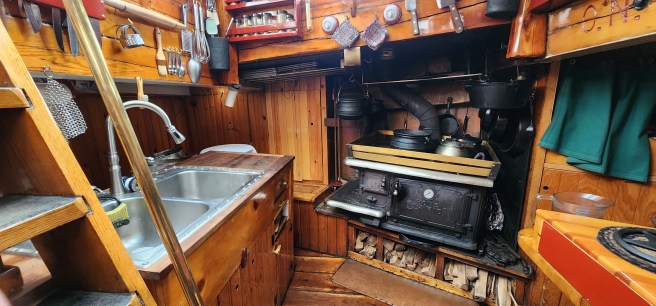
Wooden sailing vessels traditionally had only one fire onboard, the cook’s stove. I can’t imagine how cold sailors, much less passengers, were through most of the year.
Windjammers hew to that tradition.
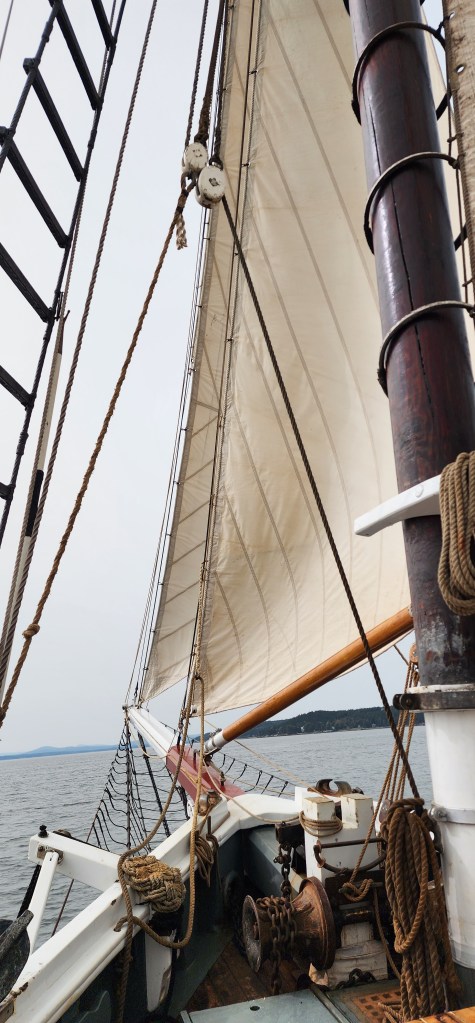
a wooden sailing vessel
with a wood-fired cook stove
and kerosine lanterns
two iceboxes
Smoke from the cookstove goes
into a T-shaped chimney vent
We’re fast approaching Read an Ebook Week, an opportunity that encourages readers to pick up the digital device of their choice and download a new book or more to own and read.
I’m excited to announce that three of my books will be available as part of the promotion on Smashwords to celebrate Read an Ebook Week 2024, March 3-9. Yes, starting Sunday. This is a chance to get these books, along with books from many other fine independent authors, at a discount so you can get right to reading.
“all on the bowline, we sing that melody
like all good sailors do when they’re faraway at sea”
a song our Dylan doesn’t know
in his impressive repertoire
a generational gap
116th Street Blues, starts out with Captain Ahab
then more nautical lines
So who was Louis Robbins French?
Father of the three sons
who built this in South Bristol, Maine
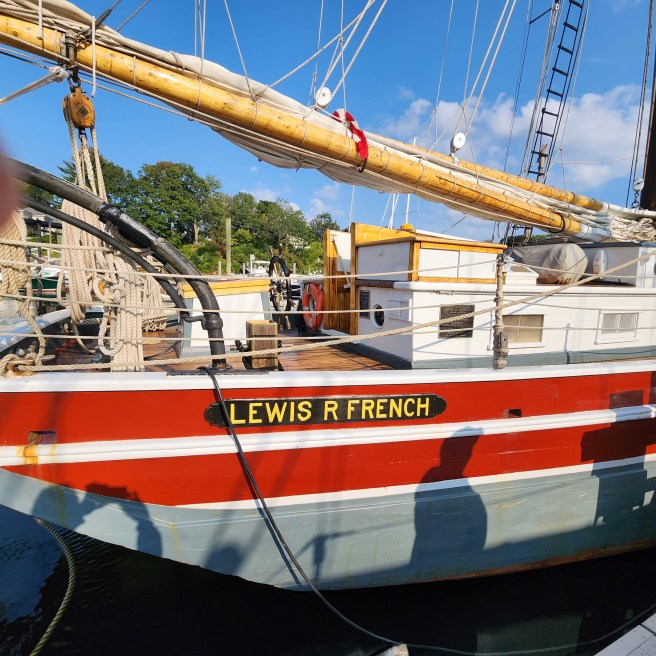
The French is docked at the left of the Mary Day in Camden, Maine.
The French is 101 feet overall, 65 feet on deck, with 19 feet of beam, as the brochure proclaims. She draws 7.5 feet with a full keel. A proven vessel in all conditions, she is a nifty and quick sailor, having won the Great Schooner Race many times. The French has also participated in recent Tall Ships gatherings in Boston. It spent part of its life based out of Lubec just south of Eastport.
The quarterboard carries the name proudly.
the French was largely stripped and gutted
and rebuilt for passengers
what’s left?
As my buddy Peter grinned at me at the end of our week:
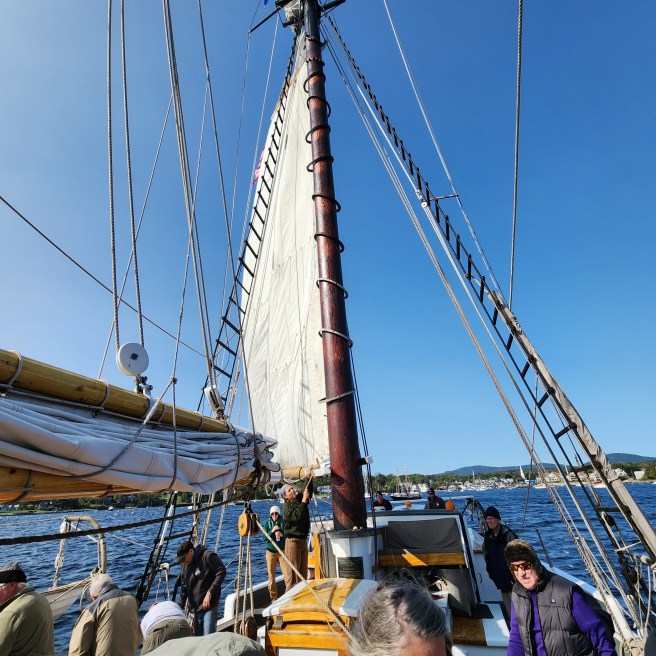
It’s like camping, with the canvas over your head rather than a tent.
Peter tried to brace me for the, uh, unique quarters. And the pause when I mentioned taking a shower.
I had a snug berth, as you’ll see later. The only electricity on board came from some strong batteries and a small solar array.
Rather than a floating night club and hotel of a typical cruise ship, a Maine windjammer is small and laid-back. You even have to wash your own dishes.
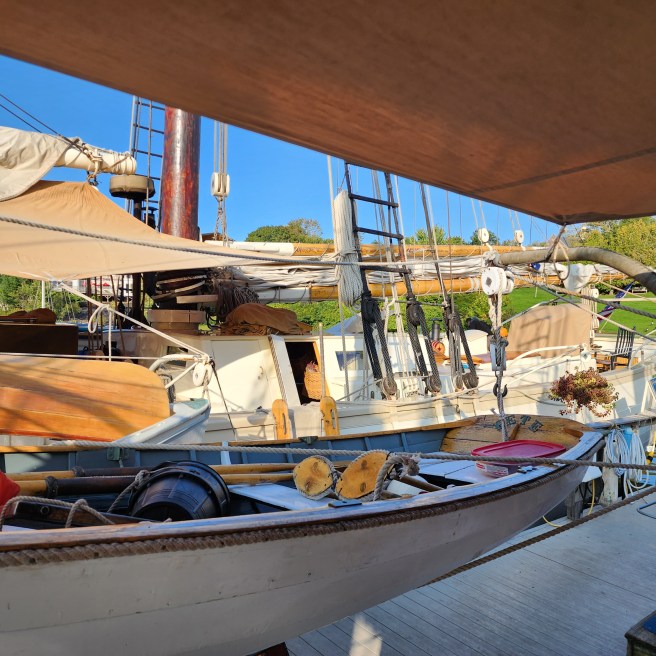
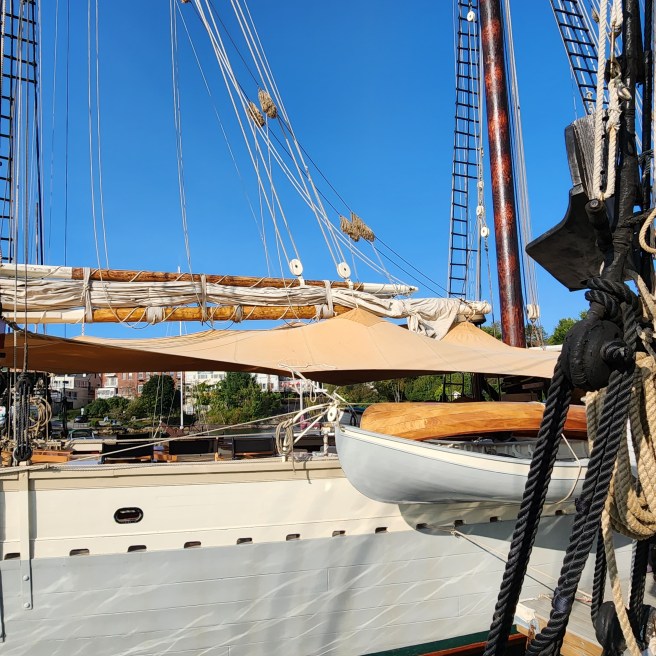
We were docked next to another schooner before departing.
As the windjammers’ association brochure says:
Unlike large cruise ships, windjammers have bunks and cozy cabins, not monster staterooms and 24-hour buffets. Windjammers are woody and compact below decks. Crew and guests live and work in close quarters. The ship’s galley and dining areas are like your kitchen at home – everybody mingles there.
The Maine experience dates from 1936, when Captain Frank Swift started offering adventurous passengers sailing opportunities formerly only available to private yacht owners.
Last summer I got to be one of them. It really was memorable.
 a wooden sailing vessel







 Jnana's Red Barn