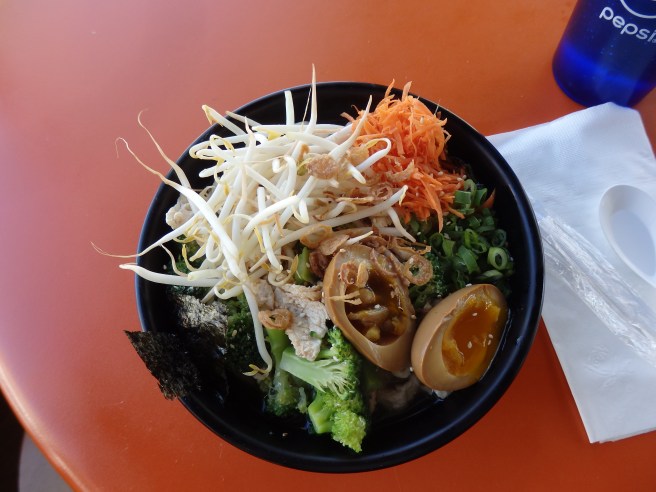
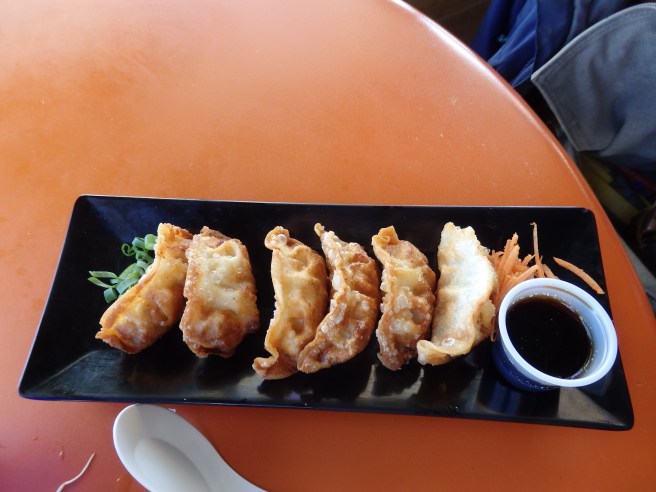
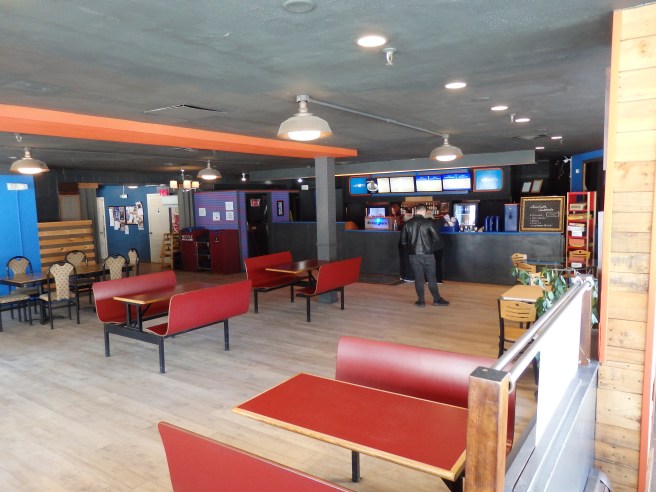
Have I mentioned I love Japanese cuisine? This is at the ramen soup restaurant in Bangor.
You never know what we'll churn up in cleaning a stall
Have I mentioned I love Japanese cuisine? This is at the ramen soup restaurant in Bangor.

As fresh and sweetly tender as it gets.

This one’s with basil.
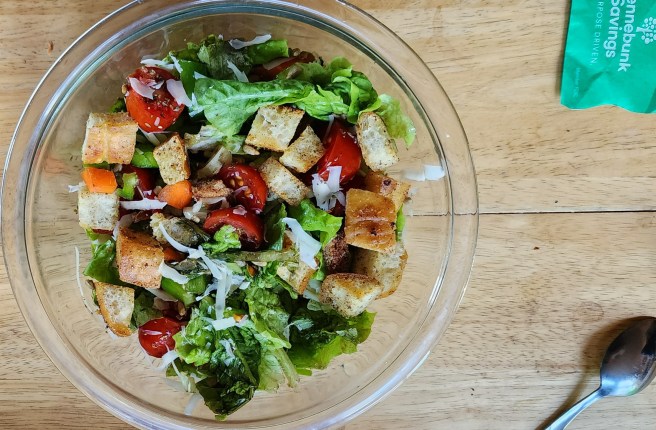
Even the croutons were homemade. Not so, the cheese or sunflower seeds.
Sardi’s in Manhattan?
A legendary bartender, being quoted in his retirement story in the New York Times, was amazed.
I have always been shocked by prices in the City, but for once it doesn’t seem so far out of line. Not that I go out that often.
Lee blew down
all
the wild apples
to ferment
for crows
and deer
to turn tipsy

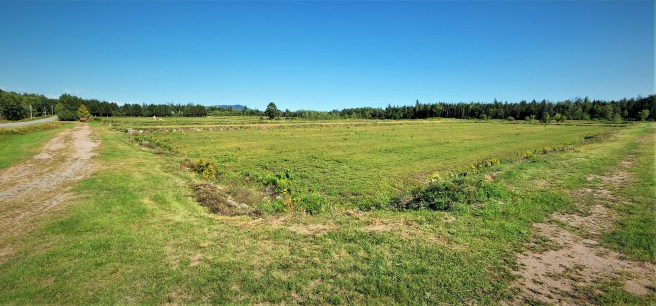
Cranberries are often grown in enclosures like this, which are then flooded. The berries then float for harvest.
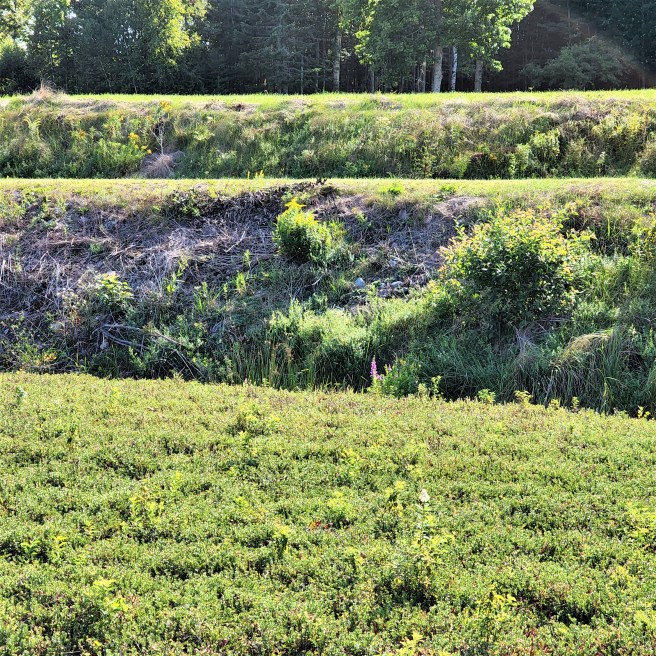
One bed stands above the other.
This is Mingo’s in Calais, not the only one in eastern Maine.
Not everybody loves them, but they are a Thanksgiving tradition, jellied or stewed or otherwise.
Here’s some background.

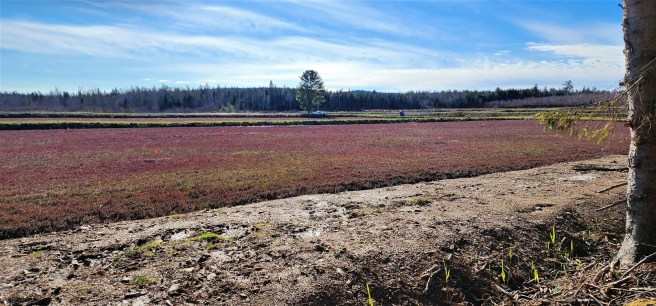
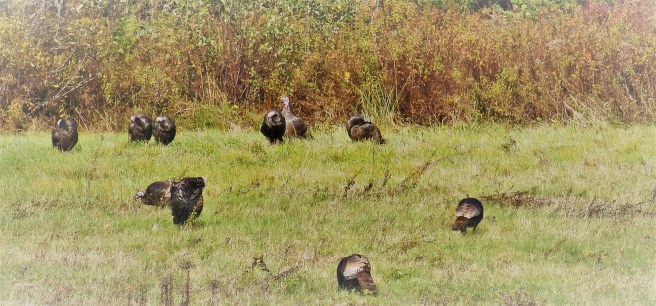
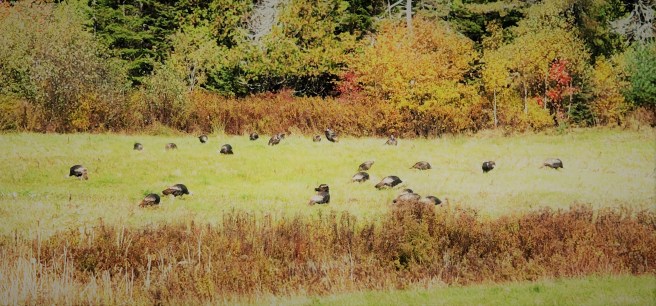
Here’s how they look much of the rest of the year around here. And there are a lot of them who surprisingly disappear this time of the year.
I had been wanting to introduce my wife to Aroostook County, which borders ours to the north. If we timed it right, we’d make it a spud run, purchasing newly harvested potatoes from roadside stands. Who cares if the bags are culls offered at bargain prices, right? The skins on fresh are much more tender, and the texture inside is smoother, more buttery, because many of the sugars haven’t yet converted to starch. For many but not all recipes, those are tasty pluses.
I posted my experience of that introductory trip, Off to Aroostook County, September 25 last year. Take a peek, if you wish.
This time, the driving would be shared, meaning I could more freely view much of the passing scenery. In addition, she insisted on a game plan rather than my more casual trust of luck or fate for the unexpected.
After juggling schedules and moving the target date back a few weeks, we finally hit the road with a feeling of threading a needle – if not now, it would likely keep getting delayed until next year. Still, we left Eastport two hours later than anticipated. That part, missing a deadline, can drive me nuts. This time, though, I was pretty calm.
~*~
Maine’s largest county – often known simply as The County – is a sprawling wonder. To me, it often feels more like Pennsylvania than New England, and its potato farms and homesteads are generally tidier than the don’t-throw-anything-away grounds (or junkyards) seen throughout much of the remainder of the state.
This outing reminded me of the fact that the potato farms are buffered from our corner of the state by more than an hour of driving through forest, frequently miles between houses. The highway itself seemed to be all ours, without a vehicle in sight in front of us or behind and only the rare traffic in the opposite direction.
Our day began with thick fog that left the deciduous leaves glistening wet as the gray lifted. Low-angled sunlight illuminated the colors magnificently, intensely red trees prominent among them.
Shortly before Houlton, where the potato country begins, my wife’s route via Google Maps had us taking lefts and rights through farmland westward to Smyrna and its small colony of Amish – perhaps 20 families.
The quest was their general store and a farm market featuring doughnuts. The interiors of both buildings were darker than what we’re accustomed to in retail outlets, but you do get adapt to the realities of natural lighting augmented by a few compressed white-gas lamps (what we used to call Coleman camping lanterns).
The produce was gorgeous, but, as my wife noted, it wasn’t cheap. Quality carries a premium and perhaps some sharp marketing, humility aside.
The doughnuts, I should add, were heavenly, though heavy on the cholesterol. Cooked in lard, we presume.
Amish customs and regulations can vary from community to community, but this was the first time I’ve seen men wearing mustaches in addition to the beards. And this was the first time I’ve seen their homes painted anything but white – a café au lait was prominent but also common among the the non-Amish throughout The County. Not to be judgmental …
~*~
From there, my wife’s route headed northward to the west of U.S. 1, about 30 miles of largely unpopulated, corporately owned forest principally along State Route 11. The fall foliage was stunning and at its prime intensity.
We still weren’t in the distinctive potato country until we approached the outskirts of Presque Isle, the county seat.

We did stop at a roadside, honor-system potato stand – they’re prominent throughout the farming districts. We picked up a 50-pound bag of russets for $10, a steal, as we would see on later stops. Potatoes sold along the route are generally culls, sometimes damaged in harvesting. The ones in the bag, however, were mostly irregular sizes and shapes the supermarkets don’t want. No problem for us.
Over a leisurely lunch at a window table, we watched downtown traffic that included unique potato-hauling tractor trailers – one half of the top taller than the other, perhaps for pouring out the spuds at their destination. There were also the occasional Amish carriages, this time with men without mustaches – presumably from the other colonies in the county.
And then, after a perusal of a few shops, we were off on our return through the potato country itself.
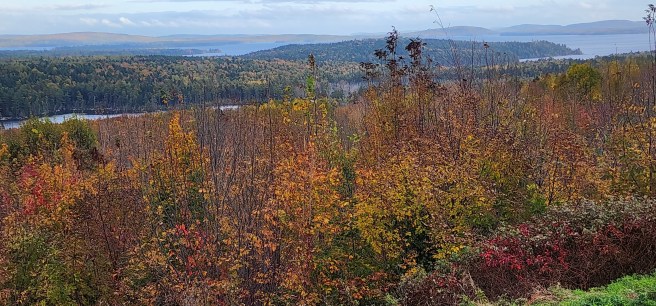
This time, our run included hazy, soft light on the panoramas of forests and distant blue mountains under varied clouds. The large, endless lakes, too. The air was too dense to see Mount Katahdin or the other tallest peaks, but we aren’t complaining. The views were still breathtaking.
The final legs home were in the early night.
Does she read a cookbook
the way I read poetry?
At least in New England, pumpkins have become a ubiquitous autumn flavoring, from bread and doughnuts to muffins and classic cheesecakes and pies. I still balk at beer.

Here are some more facts to chew on:
 Jnana's Red Barn