Popular fish caught around Eastport

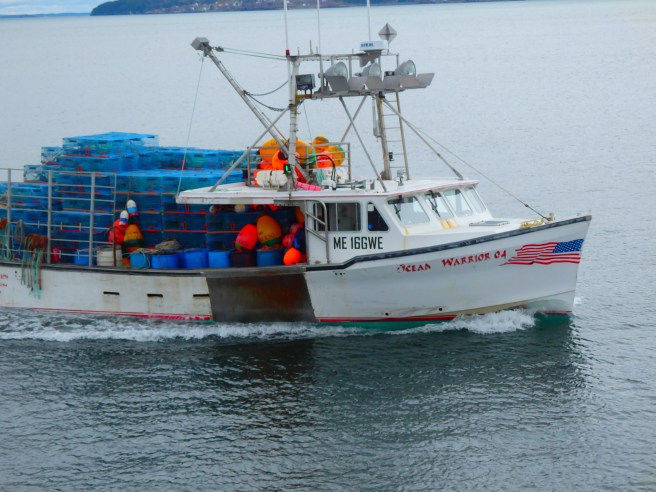
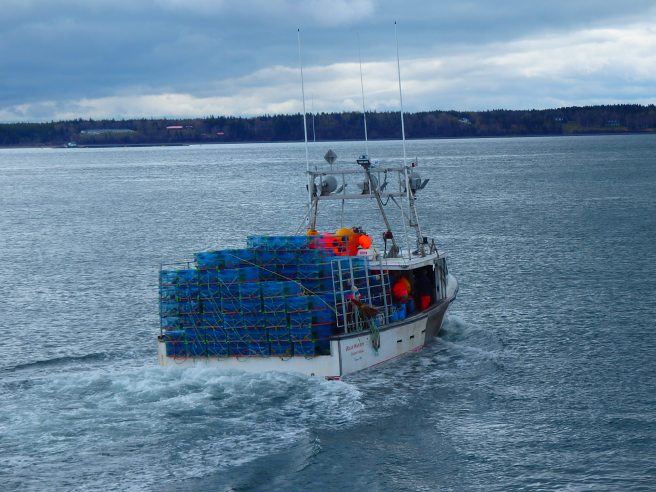
And not all of it’s meant for human consumption. Some of it’s used for bait, usually for lobsters.

  1. Along the coast we have mackerel. It’s a small fish and oily, one that doesn’t keep well, but cooked promptly or smoked for storing, it’s a lot like salmon. For sports fishing here, seems everybody’s catching ‘em, sometimes six on a line. Some folks even trade buckets of them for lobster.
  2. Alewife. Migrates from the sea late every spring. Another small fish that needs to be cooked promptly or pickled for canning. Also used as prime lobster bait.
  3. Herring. A century ago, these were the basis of Maine’s sardine industry.
  4. Smelt. They’re small, often dip-netted, and can be pan fried and eaten whole. Pacific Northwest Natives called them candlefish, for their oil. Around here, they often show up on the line when casting for mackerel.
  5. Flounder. The species includes fluke, and they like to hang out around pilings and docks – the kinds of places where many folks fish.
  6. Halibut. Now we’re getting to the kinds of fish you might recognize on a restaurant menu or at the grocery.
  7. Haddock. Ditto.
  8. Turning to freshwater, we have several species of trout.
  9. And bass. or perch.
  10. Plus landlocked salmon. Migratory salmon are off-limits, however.

Clamming is also big when the tide’s out. Not that they’re actually fish.

When the alewives run

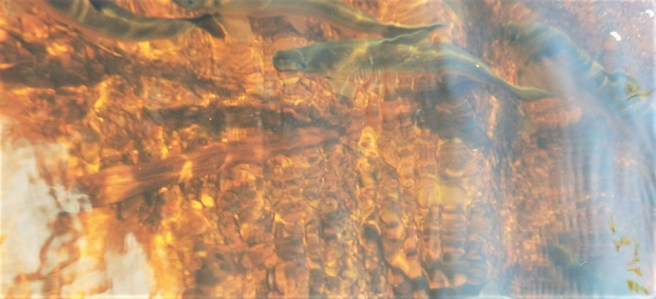
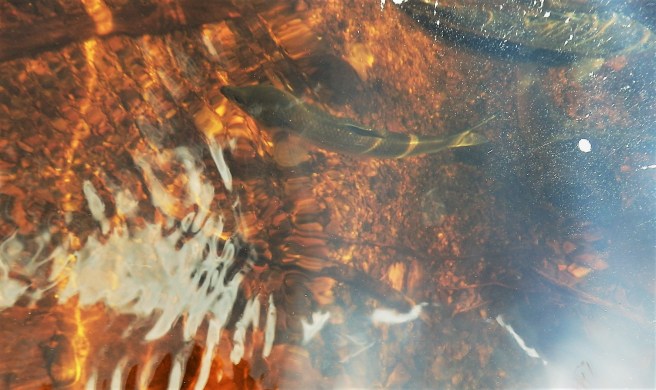
Around mid-May across the New England coast, the alewives migrate en masse upstream to freshwater breeding grounds. Sometimes identified as river herring, they have played a role in the region’s heritage, from Indigenous peoples on.

They’ve made it halfway up the ladder. They’re also quite strong, considering the speed and force of the rushing water.

They still attract fishermen to the riverbanks and bridges, as well as eagles and osprey overhead.

And here’s a bald eagle that’s about to catch another of them. The osprey weren’t about at the moment.

And though bony, many folks consider them a seasonal delicacy, often worked into an appetizer. More commonly, they’re a common lobster bait.

Brisket and a hunk of binge viewing

Somehow, this past winter I got struck by a sustained sense of cabin fever. Should that be “stuck”? To my thinking, that’s not necessarily a “bad” thing and was not unexpected, given my relatively isolated situation combined with the continuing Covid precautions and the usual northern New England long nights and winter snow, ice, sleet, and unassisted general deep cold. I do believe there’s value in periodically clearing some of the clutter from one’s life and regaining a sense of direction, and I have found a huge difference between solitude and loneliness, so here I was.

Mostly, I was feeling a bit directionless, having completed a big revision of the Dover history and wanting to move forward with its publication but not yet having clarity on exactly how that would go. I mean, as books go, this was one more niche item, not likely to hit the bonanza list, no matter how original the findings. Emotionally, then, I was feeling stuck, not my best mental state. It even leads to fidgetiness.

Breaking that up was a visit by family – or should I say invasion – that included time with movies and TV series on the 40-inch screen I usually leave dark. Me? I’d usually read and listen to the radio. I’ve tried to avoid television series, seeing them as addictive couch-potato time-sucks.

A year ago, though, they hooked me on the first season of Mad Men, which we had on DVD. Whew! I was free only after admitting there is some quality writing and performing available and losing a full weekend in full immersion.

This Christmas, they hooked me with Murders Only in the Building, which again fortunately had only one season.

But during a return visit a few weeks later, we shared a phone conversation with the daughter in California who had just made our son-in-law his favorite meal for his birthday, and that mention of brisket led to my memories of being introduced to the cut as a Jewish tradition by my almost parents-in-law, if only, and those stories now had us sitting down in front of streamed episodes of The Marvelous Mrs. Maisel. The fam scooted off, leaving me to catch up on all of the available seasons, and I’m now miffed I have to wait for more on the way. I hate being left dangling. Worse yet, I was told Prime had the remaining Mad Men episodes – so I caught the final six seasons in a bit over a week, how many hours did I squander there? And the last two of Mozart in the Jungle plus all but one season of the Secret Diary of a Call Girl, which was quite sassy but not nearly as hot as touted. There may have been another series I’m overlooking.

Said family was highly amused by my engagement with works they deeply appreciate, but I am still appalled the hours I lost and by one more manifestation of my obsessive side.

For the record, I’m blaming the younger daughter and her brisket for this latest outbreak. Now, just when is the last time I’ve had a slice of one?

What do you suggest I stream next?

Pantry items I consider staples

No, not the usual listing of milk, bread, eggs, butter, potatoes – those are givens. Rather, the things special to me you’re not likely to pick up if you’re doing my grocery run.

  1. Olives. Big green stuffed ones, though I love ripe ones as well, elsewhere.
  2. Gin. Where did you think those green olives were going?
  3. Bagels. Or breakfast pastry.
  4. Craisins. They go well in yogurt or on a salad.
  5. Sunflower seeds. On that salad, too.
  6. Cookies and pretzels. Something to snack on.
  7. Garlic. Rather than onion.
  8. Lemons. And limes, for someone special.
  9. Orange juice, or grapefruit. Perk me up in the morning.
  10. Not as frequently but all the same: miso, sesame oil, rice vinegar, almonds.

What’s on your hidden list of essentials?


Food as religion

Perhaps you know the counsel, “’Eat to Live,’ rather than ‘Live to Eat.’”

Still, a big change has occurred in America in the past half century. While the impact of organized religion has declined, a quest for a rich, even exotic, cuisine has flourished. As I posted a few years ago, dining out became the major fine art form of our time, rather than music, theater, film, or dance.  It’s the ethereal experience, the sensual transcendence, that’s the goal – ultimately, subjective rather than objective, heightened by long exposure to the field. Examples? Just look at the restaurant and wine reviews, along with their arcane or cryptic dialect.

Well, that also takes it into the realm of spirituality and religion, too, although that might also temper the feasting with periods of fasting. Maybe all of the limitations that have popped up, usually for health reasons or weight control, fit in here. It has been said that you can’t read the life of Jesus without getting hungry – there’s food or a food event at nearly every turn. (As a rabbi told me, that’s because Jesus was Jewish and in social settings, you always wind up with something to nibble in your hand.)

I’m left wondering how this translates to the home kitchen. Cooking skills, by and large, seem to be less universal than in the past, and time to devote to food preparation usually comes at a premium. Is takeout a kind of sacrificial nod to the food gods?

One thing I will say in all of the transformation. Thank God for the microwave oven.

What you can do with a banana

They do come in bunches. Here are some fine uses.

  1. Make a sinful split for dessert.
  2. Or banana bread.
  3. Or a smoothie.
  4. Daiquiris!
  5. Or, with the peel, become a pratfall comedian. (Are they really that slick?)
  6. You can also soak the peel in water to use as indoor plant food.
  7. Or rub it over bug bites, poison ivy, or rashes to relieve itching and promote healing.
  8. Or use the peel to polish leather and silver.
  9. Now, back to the full fruit, we won’t go into what can happen in private.
  10. My favorite? Feed ’em to a bunny! Which gives us more peels.

As an example of the kind of excellent journalism we’re missing these days, let me offer this modest example

My wife forwarded me a link to a Washington Post article about the ways international supply-chain problems impacted a small, family-owned, dairy north of our place in easternmost Maine and its signature product, a chocolate milk with a passionate following.

For me, it’s a great piece of journalism, or as I told her, my ideal of reporting.

In fact, it fit into the aspirations I present in my novel Hometown News.

Personally, I favor longer pieces that take a long-range view, as this one does, especially when they encapsulate a much bigger, more difficult, issue in ways that hit home.

In contrast, the trend has long been for shorter, faster, less complex dispatches that move on to the next sensational blast. You know, the 24-hour news cycle. Or less. Most of it is forgettable, puff in the air, hit-me-with-what’s-next superficiality.

Instead, what we have here is a consequence of assigning a reporter full-time to the Northeast, as the Washington Post does, in one of those expenses that might seem superfluous to the bean counters who fill too many executive positions in too many industries. In fact, we can blame them for much of the supply-side issues that plague us. Prestige, after all, is rarely seen as a quantifiable asset.

Moreover, I doubt the Post would have found this story without that marginal investment. (The nearest daily newspaper, fine as it is, finds itself way too overwhelmed by everyday issues to dig into something requiring an investment of time like this. In fact, one of the things I that drew me to working at the New Hampshire Sunday News was the opportunity to assist similar projects, where we might have a week to dig into the dimensions and then display the findings properly.)

I also love the fact that the Post hired an excellent photographer to pursue the story, too, and paid for his time to look beneath the obvious surfaces. Again, it takes time to get a feel for what’s beneath the surface and come up with something fresh and expressive. His shots tell a full, parallel, story of people dedicated to their seemingly commonplace employment. What emerges is almost like a film score underpinning a movie.

Better yet, in this case, the difficulty encountered was about chocolate – who couldn’t love that! As well as the schoolchildren who loved the dairy’s chocolate milk as part of their lunches. You can’t build a better connection than you do with kids, except maybe through the words of their parents, as this report does.

My kudus to reporter Joanna Slater and photographer Tristan Spinski – and their unnamed editors for publishing this.

If only we could see much more along this line of journalism!