Henry Miller, quoting his grandfather (in fiction, Nexus, at least):
Why are the dead so stiff?
Because there’s no joy in them anymore.
(Do I file that under Jewish Humor?)
You never know what we'll churn up in cleaning a stall
Henry Miller, quoting his grandfather (in fiction, Nexus, at least):
Why are the dead so stiff?
Because there’s no joy in them anymore.
(Do I file that under Jewish Humor?)
Preparing my collections of poetry for release, as well as the shorter chapbooks appearing at my Thistle Finch editions blog, has been eye-opening, especially after spending so much time concentrating on the novels.
A lot has changed in my half-century at this. At first glance, my work has seemed to shoot off in every direction. But then, in spite of that, commonalities appear. Some of them, to some extent, apply to both the prose and poetry.
Despite all of the changes in my life and the differing approaches of my writing that accompanied that, I believe some underlying qualities run through my output.
Here goes, mostly from notes to self from way back and up:
And the fiction? You can add:
Well, that’s how I’ve defined my efforts over time. Sometimes the results do startle me, all these years later. And some of my results come closer to my ideals than others, not that I’ll fault those, either.
~*~
You can my works in the digital platform of your choice at Smashwords, the Apple Store, Barnes & Noble’s Nook, Scribd, Sony’s Kobo, and other fine ebook retailers. Or you can ask your local library to obtain them.
In support of that statement, let me offer Long-Stem Roses in a Shattered Mirror, my collection of poems released to the public today.
Think what happens when a hot relationship goes belly up and everything you trusted turns painful.
These poems arise in a brutally honest reevaluation of those interactions, as one of the lovers insisted on at the time, as well as the larger hopes and desires.
Many of the poems appeared in small-press literary magazines around the globe, but this is their first outing complete.
I have come a long, long way since, perhaps because of lessons I learned in these earlier relationships. The poems remain intense, vivid, and powerfully moving, even at my age.
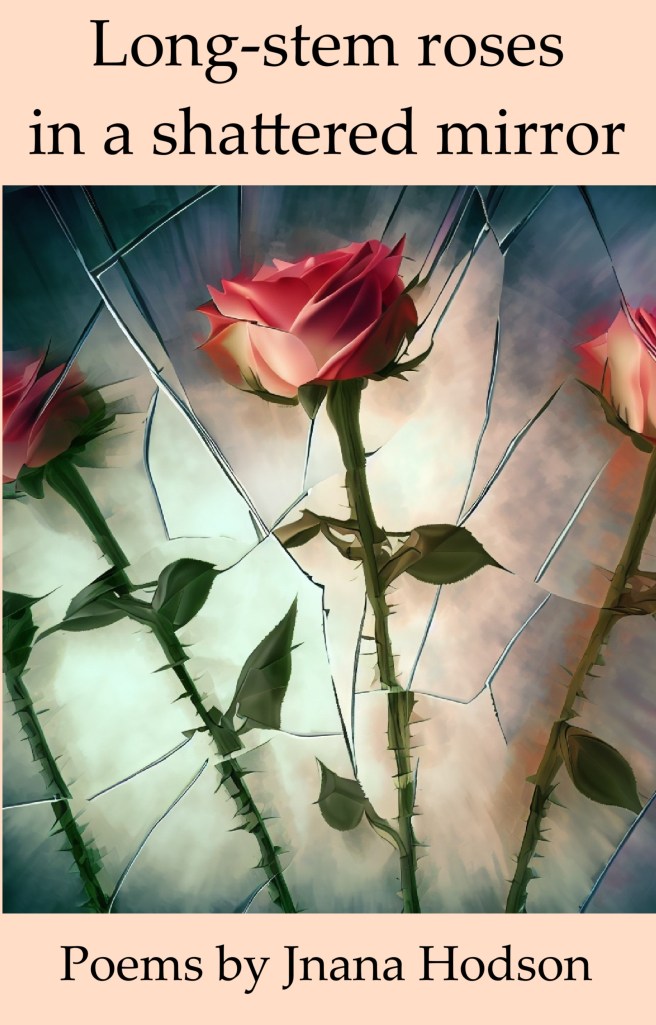
For my series of passionate roses, check out my collection in the digital platform of your choice at Smashwords.com and its affiliated online retailers. Or ask your public library to obtain it.
I’m excited to announce that my lineup of ebooks is available as part of a promotion on Smashwords for the month of July as part of their Annual Summer/Winter Sale. This is a chance to get my novels, poetry collections, and Quaker volumes, along with volumes from many other indy authors, at a discount so you can get right to reading. Some of mine are even free, as you’ll see.
The sale begins today, so save the link:
https://www.smashwords.com/shelves/promos/
Please share this promo with friends and family. You can even forward the news to the avid readers in your life.
Thank you for your help and support.
And happy summer reading!
In my revisions of the novel Daffodil Sunrise into a more sweeping Daffodil Uprising, I added backstory involving Indiana politics and efforts to extract personal wealth from one of its state universities.
Considering the current effort of the governor to seize control of the school’s board of trustees has me realizing my dark imaginings were all too naïve.
We know what one-party rule did in Germany and also in the Soviet Union.
In my book, the administration had little interest in listening to the students, much less in responding to their needs.
You can bet that will be a renewed breakdown ahead.
So here you have 51 of my favorite writers. Looking back over them, I recall one girlfriend who, on entering my apartment the first time, burst out with the question, “Have you read all these books?”
I was equally startled by her question, realizing that this romance wouldn’t be going very far. Of course I had read them. Well, most of them. The others were simply biding their time.
Now there’s also the startling question of just how I found the time to read them, considering I was working fulltime and also writing and submitting to journals intensely on the side. On the other hand, it’s been more than 50 years since I graduated from college, so if I devoured just one book a year, it would add up.
Long ago I discovered that if you ask a classical composer for his favorite composers, or a painter for favorite painters, or writers for their favorites, the list will be filled with names totally new to you. I suppose actors and playwrights and photographers and architects will be just as quirky.
I hope this weekly list of writers has turned up some new names for you in that manner.
I can think of some bad influences, like William S. Burroughs, Hunter Thompson, and Cormac McCarthy.
And think of others who didn’t make my list, though I’ve admired and enjoyed them – Rilke, Rumi, Bill Stafford, Wallace Stevens, Hermann Hesse, Saul Bellow. It could go on and on.
And a few more who are coming into focus as a to-be-read pile. Ursula LeGuin, Cynthia Orzick, Philip K. Dick …
It even has me pondering the question, Does a writer ever read for mere pleasure?
Who wrote the copy on all those cereal boxes I read as a kid, anyway?
The clock’s winding down on my offer of a free ride on my novel, Subway Visions. Who knows when, if ever, you’ll have another opportunity on such a deal.
The surrealistic story presents an adventurous ride in its flashes through underground culture. Some of it even erupts into verbal graffiti.
It’s one of five novels I’m making to you for free during Smashword’s annual end-of-the-year sale, which ends just a few hours from now on January First. Remember, the ebook comes in the digital platform of your choice.
Step aboard promptly, then, before the door closes. There are good reasons I see these mass transit rails as an urban amusement park. Check out the ebook and you’ll discover why.
For details, go to the book at Smashwords.com.

The four years covered in my novel Daffodil Uprising brought about tremendous change in the nation and around the globe. In the light of recent events, a fresh overview of the period may provide some essential perspective on current events. For some readers, it may even be a stroll down a Memory Lane of an activists’ protest march. Maybe you remember or maybe you’ve just heard of it as ancient history. In my story, the Revolution of Peace & Love unfolds at the crossroads of the America, where it never got the attention it deserves.
This week, you can still get the ebook for FREE during Smashword’s annual end-of-the-year sale, which ends January First.
Act now, before the deal ends, and you’ll have Daffodil Uprising to read in the digital platform of your choice for as long as you like.
For details, go to the book at Smashwords.com.

All those hours away from family and friends or at least video viewing or home repairs or whatever writing I intended weren’t like sitting there simply yet pleasurably reading. No fault to other authors, by the way.
As for riches, I would have been better off financially by investing those savings I had back in Baltimore and later by working an overtime shift once every week or two, back when they were still available, an option that had vanished by my last five years in the newsroom, a time when I had instead thought I might indulge in fattening the nest egg for retirement now that the kids were off on their own.
Back to that urban studies certificate. I loved big cities, at least the ones I had visited. Museums and classical music, especially, were the big draw for me, along with the kinetic buzz of a place. I might not be able to afford all the fashion and bling, but I could admire. Binghamton afforded repeated opportunities to hit Manhattan and its other boroughs.
What New York City had new for me was the subway, an initially terrifying underground that turned into a kind of amusement park, once I acquired a few ins and outs for navigating it. So much for a prompt.
How ironic, then, to think that I’m now living in a very small city where the entire year-‘round population would fit aboard a single NYC subway train.
By the time Hitchhikers appeared in print, I was living in New Hampshire and had added the subways of Boston, Chicago, Philadelphia, and Washington plus the Seattle monorail to my rail mass-transit rail checklist.
I had even lived in Iowa, not far from where I had placed Kenzie’s childhood.
For the most part, my creative writing focused on poetry, which fit around my paying and crazy work schedule better.
An intense round of editing reshaped the book to its original scope and produced a lacy air, something that reminded me of the Robert Rauschenberg pop art collages of the period. But it also left me with many pages of outtakes. Could I salvage them? I believe I did and then some.
For half of my life now, I’ve felt the time for literary success was running out, both on the project at hand and my own life. I could start with one apartment’s neighbors and a fire and the new owners in bankruptcy. After that, just as I was moving across town, I got a nibble. But no sharp editing help.
In terms of writing fiction, I’ve been solo. Believe me, I would have loved to have had an editor, someone to guide me through the ropes and help me see what I was really hoping to develop. Instead, I worked on a manuscript, put it aside to season, and came back to it months or years later, usually on a vacation week dedicated to the project.
Curiously, working in that role that guide for a friend who has a truly amazing concept, I recently got a look at an evaluation of his manuscript by a literary agent and her two associates. While they were passing on the book, their reactions fit in that old-fashioned close combing of the manuscript and pointing us toward a right pathway for the next steps on transforming the opus. I’d be envious if I weren’t so impressed and grateful.
~*~
Much of this series of posts has reflected the role of deep revisions.
An insight I haven’t yet mentioned is what I’ll call “finding the zipper,” a perspective that pulls everything into place – a new, better place. A big book might have several.
In What’s Left, the zipper appeared when Cassia’s childhood black clothing of mourning evolved into goth during her adolescence and then Eileen Fisher when she starred as a young adult high-finance exec. That move also spurred some crucial scenes in her teen years and helped bring her oldest cousin to the fore as a character. Another zipper came in peppering the dialogue between Cassia and her best friend with texting slang. WTF, but I feel it works.
Another helpful approach is the use of photo prompts, especially when a stretch of dialogue falls flat. Online searches are helpful in building look books, which in turn can provide sharp details I would otherwise overlook in real life. Just how does a particular character look in contrast to another? It definitely stretches my thinking.
Satellite photos have also helped me reconstruct physical locations and also revealed how many of my residences in my moves across the country have been razed. Health hazards? Fires? Condemned? Mine really has been a tenuous journey.
One other technique I’ll mention is editing from the last chapter forward, especially in a later revision. We tend to put most of our effort into the opening chapters and then peter out toward the ending. Reversing that provides some extra sharpness and also encourages foreshadowing in the earlier parts of the work.
~*~
In the old days, when I began, newspapers had copy desks, which was where I wound up working. They were usually U-shaped, with a chief editor, called a slot man slash copy-desk chief, sitting in the middle surrounded by the rest of us. A lot of serious editing and rewriting still took place, especially at the first paper I interned at, but already I was hearing the laments of how standards were declining. I can’t help picturing Harry Perrigo, sucking on his pipe while evaluating a headline and story before sending them up the pneumatic tube to the composing room or casting them back to the rim editor for another try. Once computers replaced typewriters, that physical configuration generally faded from the newsroom. Still, I now see that as my introduction to intense revision. A story had to go through a series of hands and eyes to make it into print, even on tight deadlines.
In contrast, in my literary efforts, I was working solo. As I’ve said, the best I could do was work intensely on a piece, put it aside for a while to season, and sometime later to return to it afresh.
Much of my work fell under the label “experimental,” along with the accusation that I’m more of a poet than a novelist, as I heard from one of the best novelists.
Whatever the case, having something of my own in hand still feels good.
Today, for many Americans, is defined as After-Christmas Sales rife with “big savings.”
The one I’m opening to you is even free.
Smashword’s annual Year-End ebook bonanza is into its second – and final – week, and I’m offering you five of my novels at no cost. Pick one or all or something in-between. They’re all different.
It’s your chance to pick up these ebooks at no risk. If you like the stories, perhaps you’ll leave a brief review and five stars at the website, just to encourage other readers who come along in the future.
The titles are Daffodil Uprising, when youth across the country went freaky; Pit-a-Pat High Jinks, with lovers and friends setting forth in premature adulthood; Subway Visions, with wild rides through the Underground; What’s Left, as a bereft daughter tries to make sense of her bohemian parents and close-knit Greek family; and Yoga Bootcamp, where Asian spirituality sizzles in a back-to-the-earth funky farm not far from the Big Apple.
It’s still a good time to give yourself a present. This one carries my blessing. For details, go to Smashwords.com.


