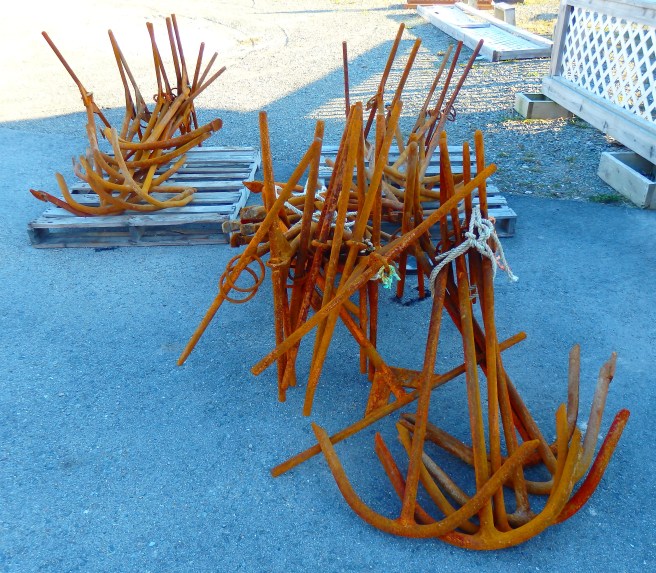
There they were, down by the lobster pier. I’m assuming they’re used in the new system of stringing traps in a row along the bottom, rather than lines going straight down from a buoy, to reduce the possibility of entangling whales.
You never know what we'll churn up in cleaning a stall
There they were, down by the lobster pier. I’m assuming they’re used in the new system of stringing traps in a row along the bottom, rather than lines going straight down from a buoy, to reduce the possibility of entangling whales.
The catalyst of re-envisioning Eastport is the Tides Institute and Museum of Art, founded in 2002 by director Hugh French. Its mission has been in acquiring and presenting wide-ranging collections of artworks and historical documents reflecting the coastal region, as well as educational and preservation efforts that include eight significant buildings in the town – four of them in the downtown district – and guest artists residencies each summer.
The leadership is rounded out by French’s wife, Kristin McKinlay, who is director of exhibitions and the StudioWorks residency program, and by Jennifer Dolanski, Artsipelago/program specialist, plus eight trustees, only one of them living in Eastport. The others reside in places like Boston and New York City.
There are also concerts in its 1818 church that housed the Free Will Baptists, plus other events at its 1828/1829 Seaman’s Church, which housed the Congregationalists.
Oh, yes, every New Year’s Eve there’s the maple-leaf drop at 11 pm Eastern – midnight for our Canadian neighbors – followed by the giant sardine an hour later. Both the maple leaf and sardine were commissioned creations.
I suppose TIMA was inspired in part by the Island Institute, founded in 1983 to help Maine islands from Portland to Acadia tackle pressing environmental and socio-economic issues. The Rockland-based organization’s impressive publications include the annual magazine, Island Journal, as well as data analyses to guide public policy. Its focus is on sustainable livelihoods and communities in changing times that include rising sea levels, bringing together marginalized communities, and economic survival.
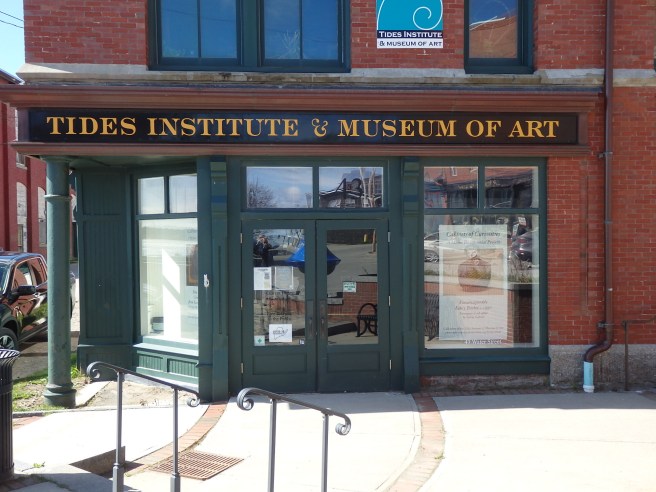
In contrast, for now, TIMA’s focus seems to be more on art and architecture, principally – especially the small downtown on the National Register of Historic Places.
In essence, it’s building a future rooted in the past but not stuck there. It’s really the way every art moves, too, no matter how revolutionary some of the leaps may seem.

I do have to wonder whether TIMA has taken on too much. The restorations appear to have stalled, perhaps before Covid set in, and both of the churches need significant repair, inside and out. The institute has, all the same, helped distinguish Eastport as a fine arts center in a visually stimulating setting in Maine, an identity that may attract new residents in a time of national population change.
Frankly, it was one of the things that lured me here, as well as my wife and elder daughter.
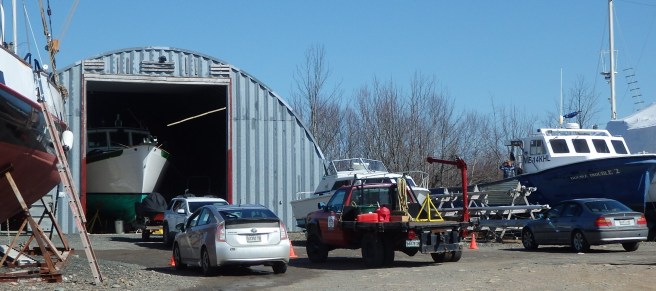
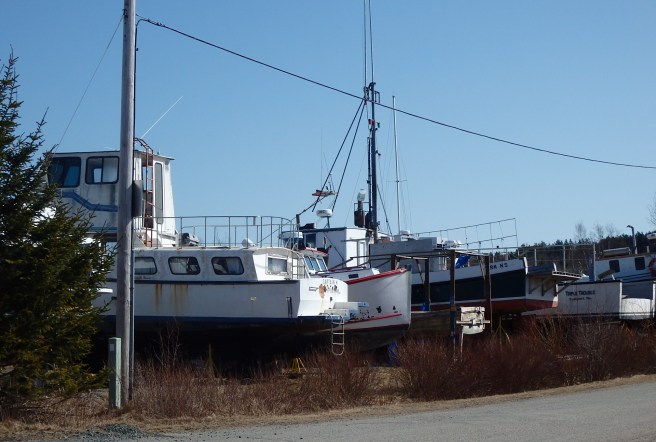
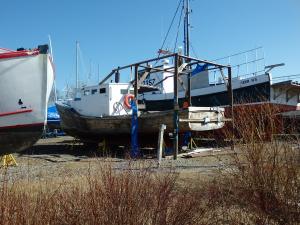
Around here, you know spring has arrived when you see your first boat riding a trailer down the street. An uncovered boat, free of its shrink-wrap or tarp. Behind a battered pickup, of course.
And you can bet yourself that by the end of the day, you’ll have seen a second, if not more.
Who cares if there’s still ice on the lakes?
This place is windy 360 days a year.
The way Yakima was sunny, ten months out of 12.
In fact, there used to be a windmill across the street from my house.
What’s unique about the weather where you live?


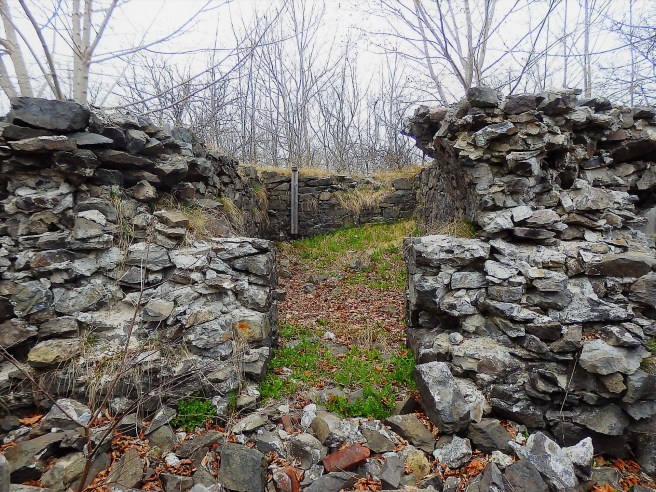
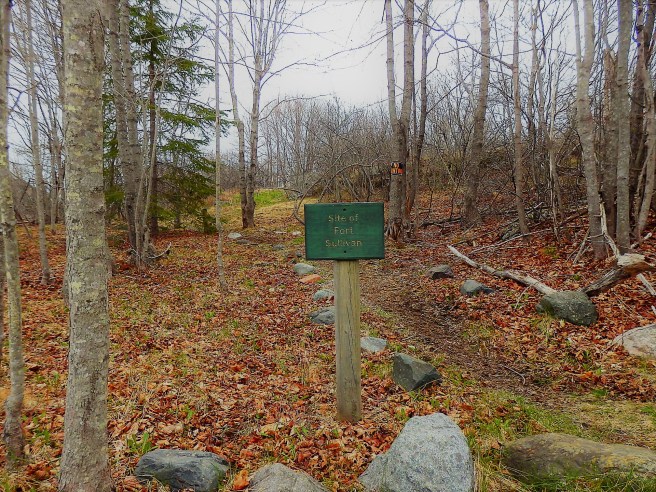
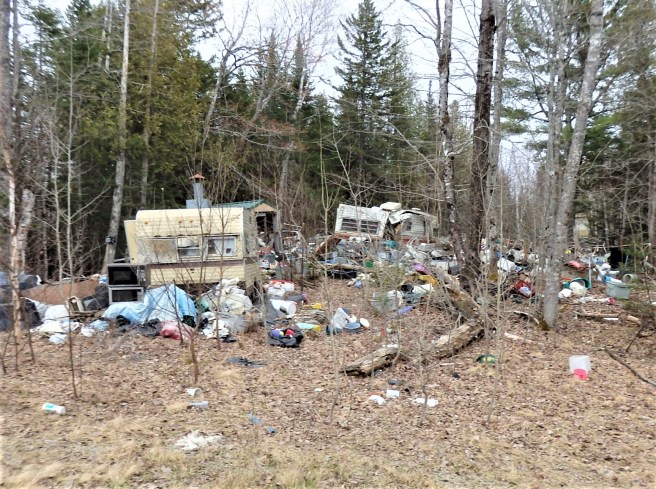
My initial visits to eastern Maine back in the early 1990s shocked me with the prevalent poverty. I thought I was in West Virginia. A harsh reality is often overlooked between the picturesque coast and the wilderness adventures in the north.
That awareness has been amplified after moving Downeast. Many rural homes are surrounded by debris, everything from boat hulls that will never sail again to earthmoving equipment that has gone to rust to a row of cars that would otherwise qualify as a junkyard.
Here’s an extreme case.
The keel is all that’s left of the four-masted schooner “Dorothy.” It makes a puzzling figure in the waters of Shackford Cove, regardless of the tide. I had supposed it might have been a section of a rail track used at one of the four shipyards that once lined the shore. On a really low tide, this is how it looks up-close.
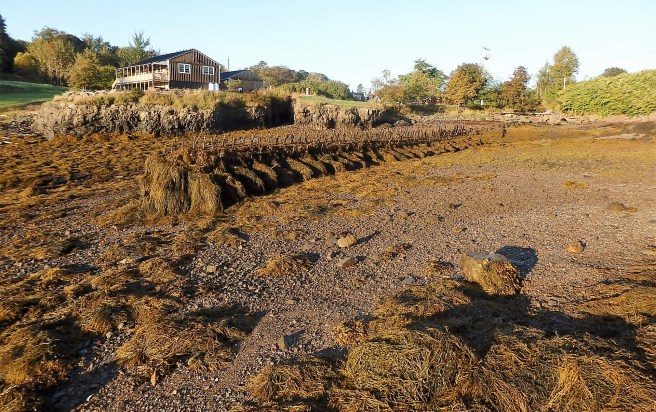
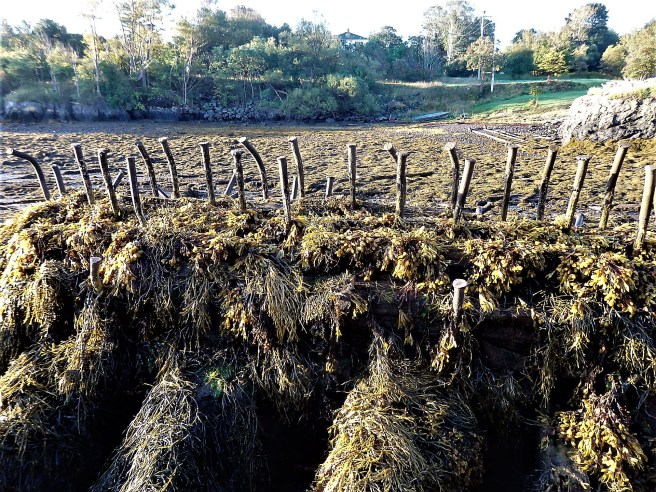
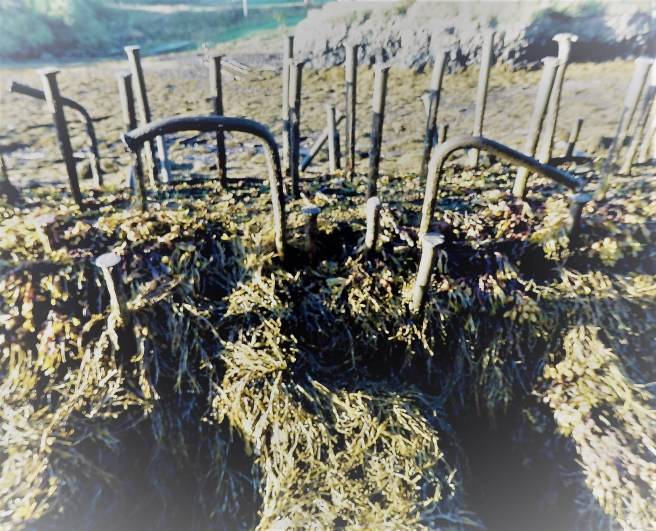
I’m guessing the keel flipped over, yet all of the iron rods are still impressive. The work of blacksmiths, no doubt.
Been in the same position at least as long as the old-timers around here can remember.
 Jnana's Red Barn