Tiger Radio, named for the school mascot

Our local radio station is licensed to the high school. Seriously. And it’s as quirky as KHBR-AM 570 in the legendary TV series “Northern Exposure,” even without Chris Stevens as the DJ. Or I’d contend, even more.

The television show never got into young people, for one thing, but there aren’t many in Sunrise County, where the seven public high schools together have about 200 graduates a year, half of them from just two schools. A private academy adds another 100. It’s a long stretch, by the way.

Pointedly, Eastport’s Shead Memorial High has only about a hundred students, down from 300 a few decades earlier, and a faculty of 11, some of whom also teach at the junior high or elementary. The principal serves all three. The school proudly proclaims its emphasis on personalized education, which I applaud. What’s obvious is the incredible student-faculty ratio.

One big challenge is in trying to find ways to lure more of the younger generation into staying put here. Maybe the economic tide is changing in that direction.

In the meantime, the radio station gives them an opportunity to learn production skills. In fact, the station started out as a school club in 1983 and took off from there. Throughout the day, the station’s IDs feature the different kids, however bashfully, and it’s charming.

Much of the programming is a stream of music, a mix of blues, jazz, rock, country, bluegrass, and more, I’m assuming streamed from somewhere. Yes, and there are public service announcements as well as the honor rolls and other local touches. Truly. And then the DJs kick in, including some of the kids, with surprisingly sophisticated tastes.

They’re not the only ones.
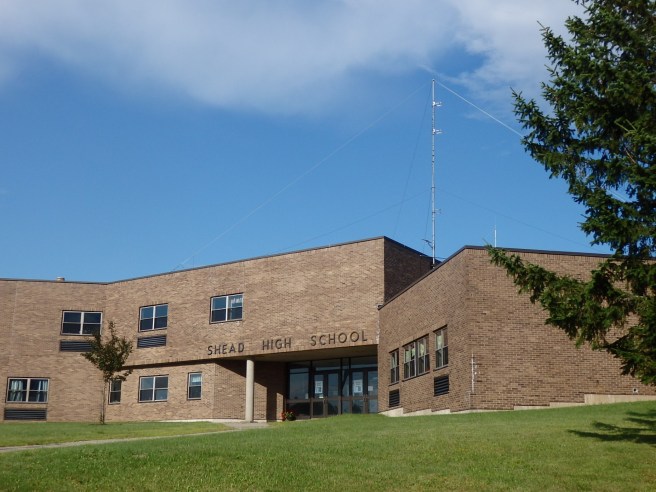
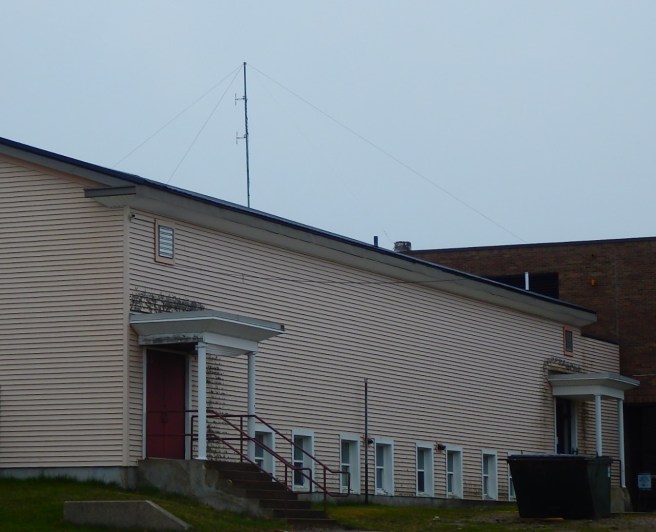
The station’s modest tower sprawls over the high school. Here it’s seen from the front.
And from the back, by the gym.

The local demographics skewer sharply upward, and volunteers at the station are welcome. In fact, they create much of its most distinctive programming. As I was saying about do-it-yourself participation?

There’s Cracklin’ Jane, with only 78 rpms, a weekly theme, and radio dramas from a golden age, including commercials for brands that no longer exist. And others like Sam’s Caffeine Café, yes, it’s redundant, but mostly acoustic Americana two mornings a week; the Bass Lady’s informed insights into anything with a bass line, Chloe’s folksy Friday afternoon transition; Firedog’s Electric Doghouse, Boldcoasting; and the like.

Well, this is a town filled with eccentrics and geezers. Its low-power radio station reflects that. And to think, it all started as a school club in the ’80s!

I think of it as Radio Free Eastport, broadcasting to the free spirits on and around our islands.
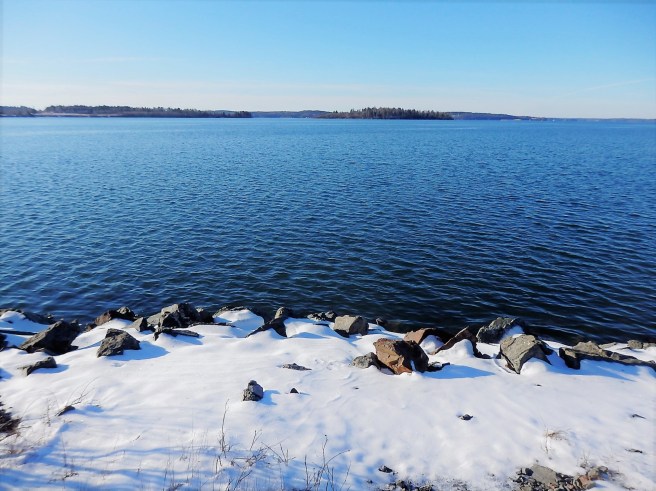
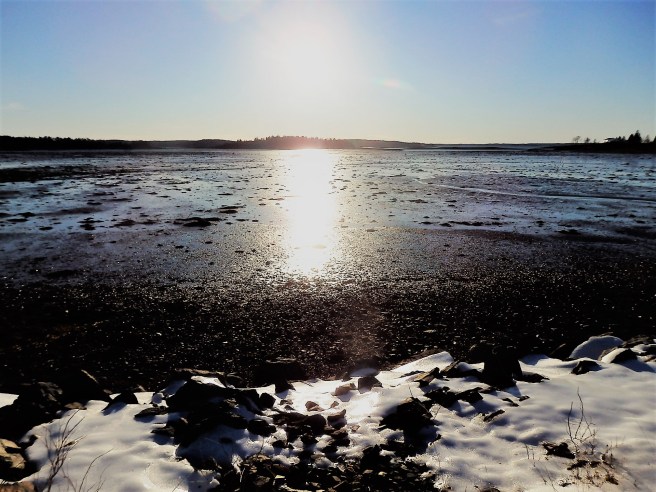
In just six hours, day in and day out

Our tides vary between 15 and 25 feet, depending on the moon cycle, and half of that change occurs in just two hours, halfway between high and low. It still amazes me.

This is what you expect to see at the ocean, right? Just stick around another six hours to see what happens to our high tide.
At Carrying Place Cove, if often looks like somebody pulled the plug on the tub and let all the water out.

Remembering those lost in the waters

Fishing is dangerous, hard work, done in all seasons and kinds of weather. It’s also an inescapable source of livelihood for many families along the Maine coast.

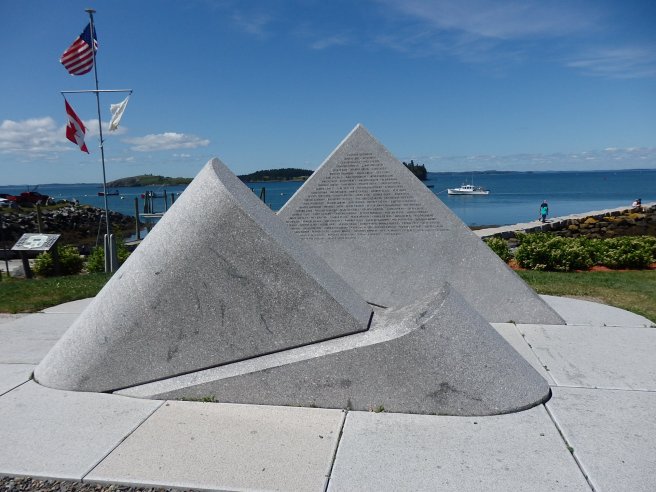
The two stones in the Lost Fishermen’s Memorial in Lubec rise like waves beside each other, one representing fishermen from the Canadian side of the channel and the other, from the American side. Three flags fly over the site – Old Glory, the Maple Leaf, and the Passamaquoddy Nation’s.
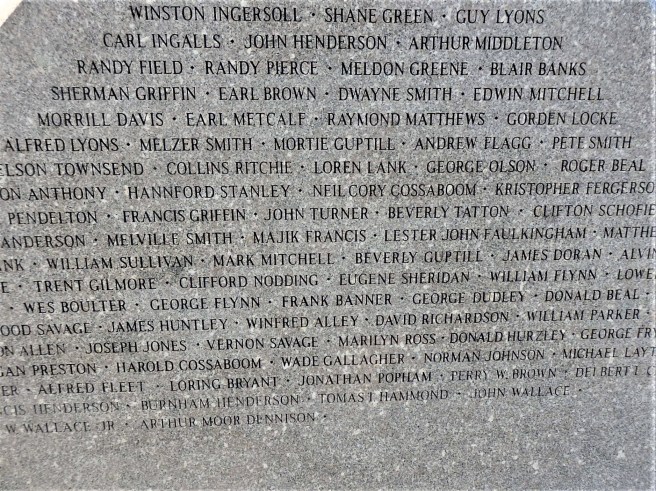
The inscribed names of those lost since the year 1900 are mesmerizing – women and men, some of the surnames repeated. As people say respectfully, so-and-so has the sea in his blood, and it seems to run in families.
Maine granite sculptor Jesse Salisbury created the monument in 2016, and names have been added since.


Ways this move was easier than others in my life

I’m not counting the few times I relocated across town. I mean the big moves, from one state to another, even from one part of the country to another.

You already know my fondness for Dover – and I have been intensely loyal to some of the locales I’ve made home but not others – yet this transfer of fidelity has been rather startling in its speed.

Dover? That was the address I had longest anywhere, edging out my native Dayton. Yet the 300-mile leap from Dover to Eastport was a breeze in comparison to the others I’d done. It’s rather perplexed both my wife and me.

Here are a few factors.

  1. We needed to downsize, and our house and garden and stuffed barn were more than we could keep up with. Quite simply, they were weighing on us, not just emotionally but especially when we looked at our bank balance.
  2. I had been to Eastport. Apart from Dover, where I had been worshiping as a Quaker, the previous moves had dropped me in as a total stranger. I hadn’t even visited Indiana University until showing up as a student in the middle of my sophomore year. Well, there was my return as a research associate, this time with a wife and a duplex rental on the other side of town. I hadn’t even been to Binghamton, New York, for a job interview.
  3. Eastport had a few things I was anticipating. Quoddy Head State Park had rekindled a sense of wilderness I’d left behind in the Pacific Northwest 40 years earlier. And the local choir had a repertoire much like our Revelsingers in Boston. Plus, I had been to the small Quaker Meeting and worked in projects with one of its outstanding members.
  4. I wasn’t alone. Eastport started out as my elder daughter’s wild dream, soon supported by my wife. Where else could we afford to live so close to the ocean? Back to downsizing, but as a whole-family venture. No more Lone Ranger sans Tonto, even if I was coming up as the vanguard. Their visits were festive occasions.
  5. We weren’t doing it all in one fell swoop but rather in stages. For the first four months, I was commuting back to New Hampshire almost weekly as we prepared our old house to market – meaning largely decluttering and cleaning. On this end, we still need to make renovations before filling this place with goods now in storage. Frankly, I’m enjoying doing more with less.
  6. Emotionally, Covid had already distanced me from many connections. I wasn’t swimming daily, for one thing, so that part of my routine wasn’t severed. I hadn’t even seen my pool buddies or the lifeguards for the better part of a year. We Quakers were worshiping and conducting business by Zoom, and I could keep that connection going a while longer. I was even getting together monthly online with Dover’s religious leaders and a Seacoast writers’ schmooze.
  7. Being in the middle of a big writing project gave me a crucial focus and meant the solitude on this end was welcome. Normally, access to libraries would be essential to what I was investigating, but I found rare resources in my computer searches and downloads. Yes, times have changed.
  8. There was no accompanying sense of failure or betrayal. My job hadn’t been terminated or taken an unacceptable turn – gee, that could lead to another Tendrils! (You know, the modern American workplace – see my novel Hometown News for examples.) I didn’t even have a new job to confront – what a relief! My lover hadn’t just dumped me or failed to reconnect when I arrived, and I wouldn’t be searching for love, either. Nor had I left paradise for an industrial or suburban wasteland.
  9. I’ve enjoyed exploring with an eye for what I’d introduce to the others on their visits. And meeting some fascinating new folks, likewise. I still feel I’m living in a real-life Northern Exposure.
  10. Well, there were moments of feeling exiled, like “What have I done wrong,” but they were soon countered by reclaiming some of my independence. I’d gotten spoiled, as far as food goes, and not really cooked anything for two decades, other than lighting the grill or popping something in the microwave. (Well, there was a fried rice that impressed one of our Chinese guests.) But now our morning phone calls have included cooking advice and insights. That sort of thing. I’ve been pleased with my dinners, even the ones I wouldn’t serve anyone else, should I have to. As for exile? Nah, I’ve never felt more comfortable anywhere.

They called it Assault and Battery, or just Sodom

Some people and places just get bad raps for no reason. That used to be the case for the neighborhood just south of Battery Street. Or Assault and Battery, as the ditty went.

Or, in the more salacious version, Sodom and Gomorrah.

You can read the street sign yourself.

Residents of the allegedly more reputable North End of town, meanwhile, got dubbed Dog Islanders, after the tiny island at its tip, one that once had a lighthouse nobody in town could see.

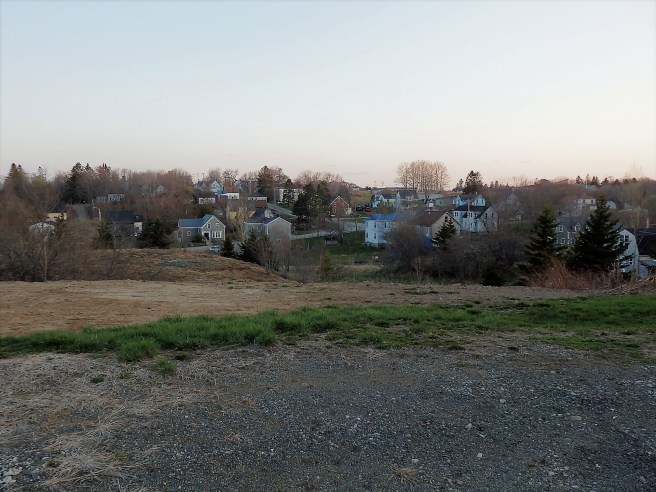
The neighborhood viewed from South Street.

Definitively, the two parts of the village were separated by Shackford Cove (aka Huston’s) , which ran further inland than it does today, as well as a seemingly nameless stream at the bottom of some steep banks. And the cove did have four shipyards at one time as well as the world’s largest sardine cannery a bit later.

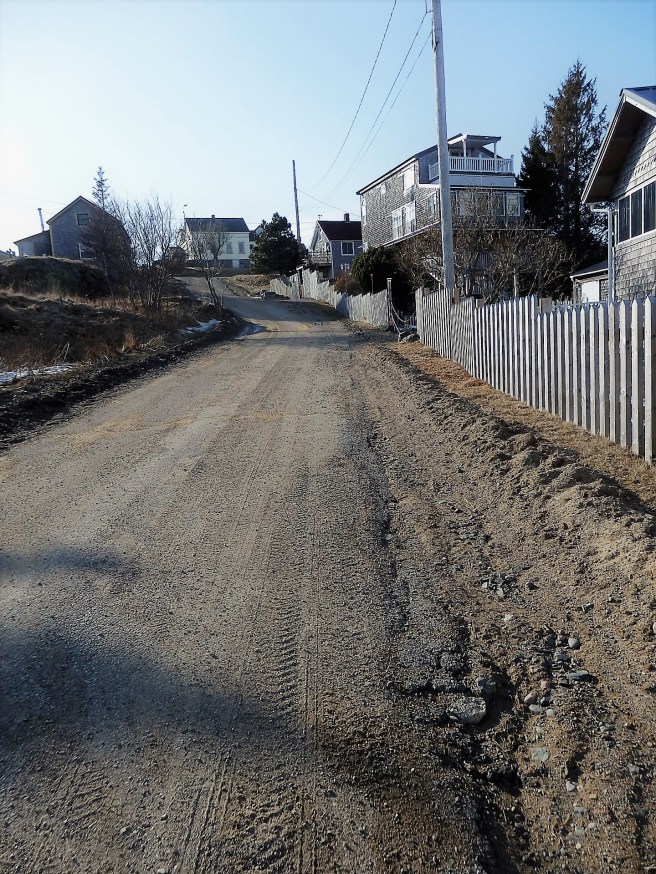
There are also some steep streets that end in the ocean.

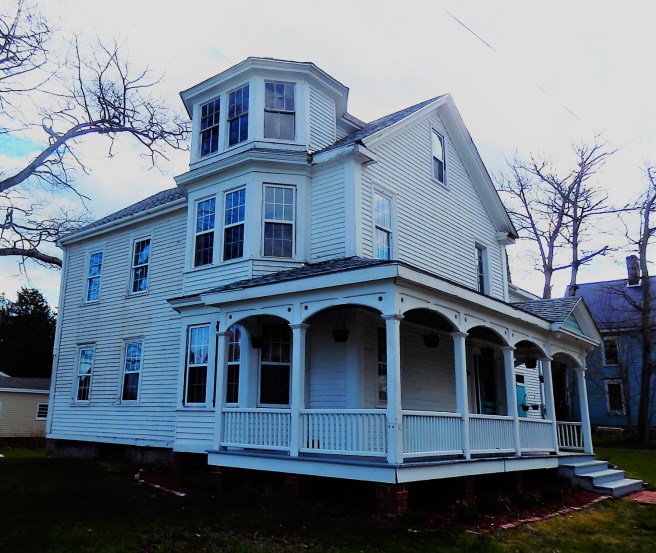
Today, though, it has some fine homes mixed in, a few with some of the most spectacular views in town.


Am I the only blogger working from Downeast Maine?

I don’t mean broadcasters or newspapers reissuing their material online, nor do I mean Facebook or Twitter snapshots and quips. Blogging, as you know, is more varied, personal, and I’d say engaged than that. It requires a special focus.

At the moment I’m finding it difficult to locate anyone else posting anywhere in the Pine Tree State, apart from gloating visitors and a few writers sharing a site based elsewhere.

It’s not that folks hereabouts are aloof, not by any means, as I’m discovering in my new locale. I’m fascinated by the stories they tell as well as the unique landscape we share, but I’m still new on the scene.

Welcome to my workstation, for now.

Our little city stretches from heads to coves

When it comes to finding your way about town, you need to know more than just the names of the streets.

Eastport’s a city of islands, with Moose Island the biggest and most inhabited. It’s roughly six miles long and three wide, at the most, but that still adds up to 20 or so miles of shoreline, I’m guessing.

So people will refer to Buckman Head or Estes Head or Todd Head or Kendall Head or, for variety, Harris Point, punctuated by coves.

Harris Cove and Harris Point at low tide. Deer Island, New Brunswick, lies beyond.

So there’s Broad Cove or Deep Cove, which flank Shackford Head, or Prince Cove, for instance. As well as Carrying Place, Half Moon, and Johnson coves. Plus a few more. And that’s before we get to the neighboring towns, up and down the coast, which also name places this way.

Welcome to my new world.