I’m sold on Maine’s crab

Ours are smaller than the glorious Dungeness of the Pacific Northwest or Chesapeake Bay’s popular Blue delicacy, named for the color of their tips.

But that’s not to say Maine doesn’t have crabmeat that’s as sweet. Ours comes from two species.

Here’s some perspective.

  1. Jonah crabs are the slightly larger and more celebrated of the two. They’re reddish with large, black-tipped claws, and found primarily in deep waters offshore.
  2. The meat comes from the claws. When Jonahs show up in a lobster trap, a fisherman typically removes one claw and throws the rest of the crab back. The crab, we’re told, can survive on one claw while the other grows back.
  3. Jonahs are regulated by an interstate commission that places a 4.75-inch minimum size on keepers and prohibits the retention of egg-bearing females.
  4. Atlantic rock crab, or “peekytoes,” live in bays and tidal rivers closer to shore. These measure just five inches across and are the most commercially caught crab in the state.
  5. Peekytoes cannot be shipped live, presumably because they’re too delicate. Instead, they’re cooked and hand-picked before shipment.
  6. Both commercial and recreational crabbers require a license from the state and must observe strict limits on their take. At least, those specifically going after them. See the lobstermen, above, for a clue to exemptions.
  7. Locals in the know say that picking the meat from a crab is a nearly lost art. They admit they can’t avoid getting hard bits of shell in the tender flesh, no matter how carefully they try. Instead, as they advise, go to Betty’s in Pembroke or Earle’s down in Machias for your supply.
  8. Favorite dishes around here are crab rolls, crab salad, and crabcakes. Our house also celebrates a heavenly crab imperial. Others make them into a dip or spread. And, in some circles, Jonah crab claws make an appetizer served like a shrimp cocktail.
  9. They can be harvested year-‘round, though fall, when crabs are most packed with meat, is the peak season.
  10. Smaller, invasive, nasty green crabs have been proliferating as Maine waters warm, decimating other marine species and their breeding grounds. Some enterprising chefs, though, see tasty opportunity in some dishes to counter that.

Me? I haven’t yet had to complain of having too much. Now, please pass the Old Bay.

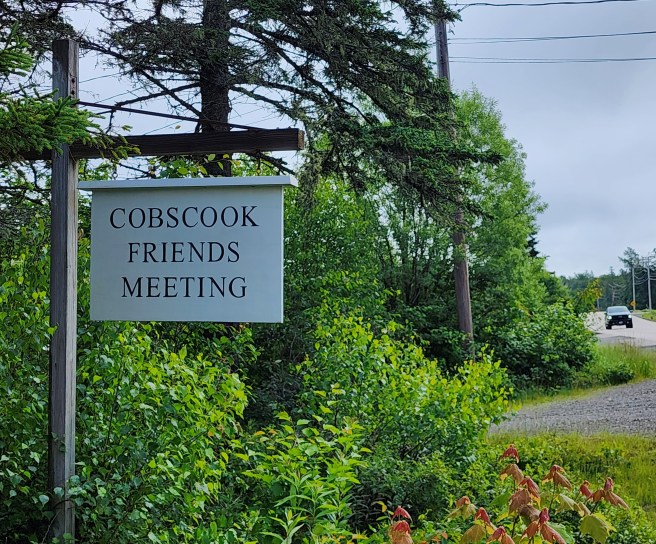
Welcome to Cobscook Friends

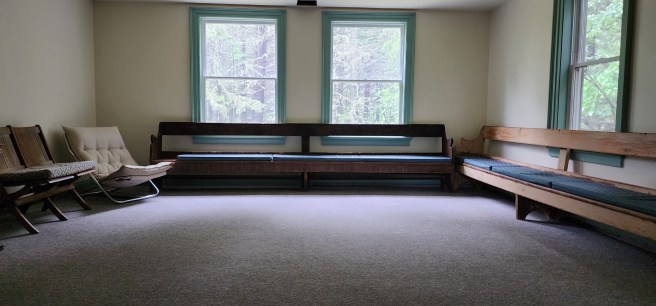
As a small, rural Quaker fellowship, we’re especially happy to be worshipping together in one space every Sunday again, at least through the summer and early autumn.

Covid, of course, had us connected only by Zoom through much of the Covid onslaught and after that, coming together in a physical space on alternative weeks only. We do live at distances from the meetinghouse, so winter weather can often be a challenge.

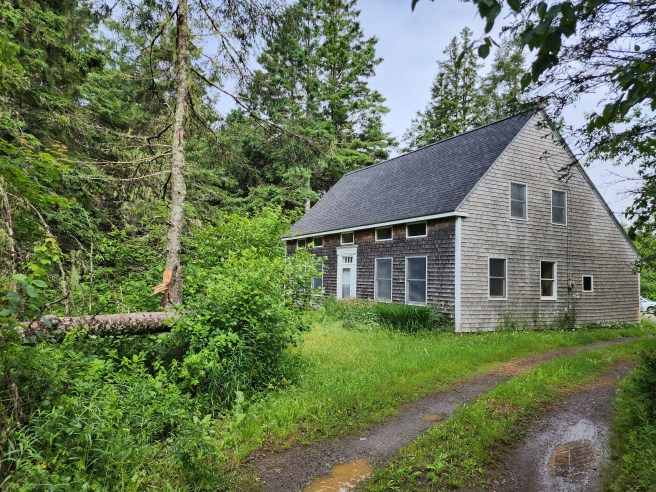
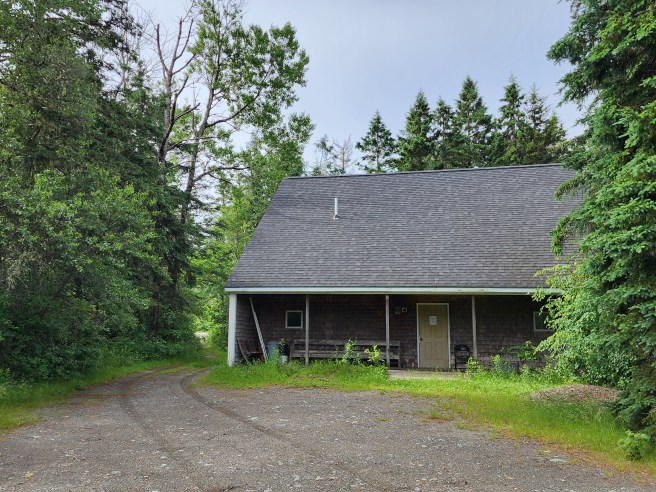
Not so summer. We’d love to have others join us in our hour of mostly silent centering, beginning at 9:30 on Sunday mornings. The meetinghouse is in the woods along Maine Route 189 in Whiting – on the way to Lubec and many great outdoors trails.

If you meditate in some practice, you’ll fit right in – and if that seems foreign, it’s still a great time for personal reflection. I always find it renewing.

Finally, a decent seafood selection Way Downeast

Even though we live a block from the ocean, we’ve been perplexed by the selection of local seafood available in the region’s markets. Or more accurately, it’s lack.

The bigger supermarkets have been a disappointment, and the smaller ones, quite limited.

The best overall selection we’ve found, especially for local catch, is Earle’s SUV that shows up on U.S. 1 down in Machias on selected days. That’s an hour away.

For crab, clams, and scallops, it’s Betty’s seasonal shack in Pembroke, about 20 minutes from home.

Other than that, it’s meant going directly to the fishermen, if you know where they are.

Finally, we’re feeling upbeat. The reopening of Quoddy Lobster’s dining operation, just a block from us, includes a fresh seafood counter.

New owner Look Lobster, a fifth-generation family company in Jonesport, has already invested heavily in the Eastport site by rebuilding the pier for straight-from-the-boat deliveries. Last summer it became my go-to place for fresh retail lobster, especially for anything over a pound and a half.

Now that the end-of-the-street site is serving traditional lobster plates for the first time since Covid, it won’t be long before the outdoor picnic tables by the sea are soon packed with devoted fans. The place, a very popular destination both among tourists and locals, was much missed.
Now, for our big whirlpool

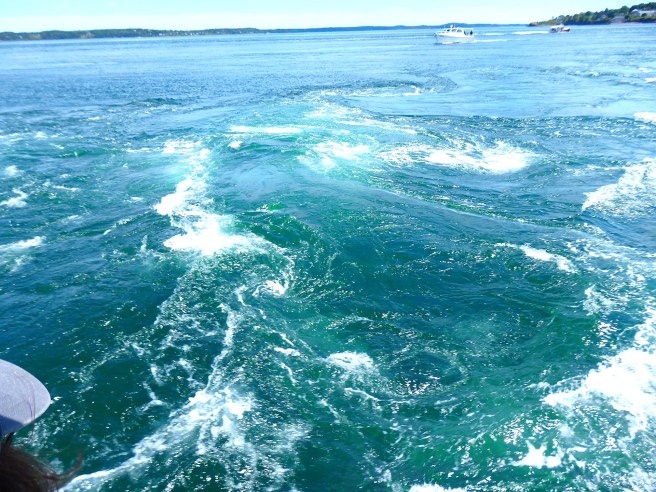
One of Eastport’s travel attractions is the “Old Sow,” the world’s second biggest whirlpool or the biggest one in the Western Hemisphere.

~*~

Before you make reservations to come see it, let me point out a few things.

  1. Its intensity varies greatly, depending on the gravitational tides cycle. It’s best about three hours before high tide, especially around the new and full moons when 40 billion cubic feet of water flood through the half-mile-wide passage to Passamaquoddy Bay.
  2. Its swirling diameter can reach 250 feet or drop 12 feet into its vortex, but it’s also likely to appear as a series of boiling countercurrent piglets and eddies.
  3. Most of the time, it’s not particularly visible from land. It is, however, a regular feature on Butch Harris’ whale watch runs. And even then, it will likely be a disappointment if you’re expecting to see a big hole in the water.
  4. It remains, nonetheless, a hazard to small boaters and has claimed lives, most notably in 1835 when a mother watched from shore as a two-masted schooner was sucked down with her two sons. The young men were never seen again.
  5. Another account, from the late 1800s, tells of two men with a barge loaded with logs, that went under and the bodies never found.
  6. It’s closer to Deer Island, New Brunswick, than Eastport, Maine, in part a consequence of public works construction of a causeway to the north during the Great Depression that pushed the current eastward.
  7. The name likely derives from the mispronunciation of “sough” as “sow” rather than “suff,” reflecting a “sucking noise” or “drain.” Or even “grunting.”
  8. The phenomenon arises from a unique funneling of powerful currents over a sharp trench on the seafloor, with water rising abruptly from 400 feet to 119 feet. It then intersects other trenches to thicken the action.
  9. The upswell brings nutrients and small sea creatures from the depths to the surface.
  10. The channel’s ferocious currents can run six to seven knots, a special hazard for divers as well as small boats.


A 17th century herb garden

Well, this is how it looked last September.

The English colonists knew their herbs and spices, as shown in the Pemaquid state historical site’s garden. The selection includes bee balm, betony (lamb’s ear), celandine, chamomile, chives, clove pink, crane’s bill, dill, evening primrose, feverfew, Johnny jump up, lady’s mantle, lavender, lemon balm, mint, parsley, sage, savory, tansy, tarragon, thyme, and yarrow. Many of these were grown for their medicinal applications.

We never had much more than salt and pepper back in the ‘50s, at least as I recall as a kid.