WALKING AROUND TOWN, MOSTLY

A typical New England neighborhood will mix a range of architectural styles and history. Dover is no exception.

One of the joys of living where I do comes in the variety of architectural periods you can encounter even within a block or two. While little in Dover remains from the first half-century of settlement here – a consequence, in part, of King Philip’s War along the Colonial frontier – that still leaves three centuries of development. Because my community was spared the ravages of big-city development, housing filled out neighborhoods over time as owners one by one sold side lots and pastures where new houses were then built. This makes for a rich tapestry, especially while strolling down a side street.

Throughout this year, the Red Barn will feature snapshots of some of these distinctive touches, especially in the housing styles. Hope you stroll along.

January2 046

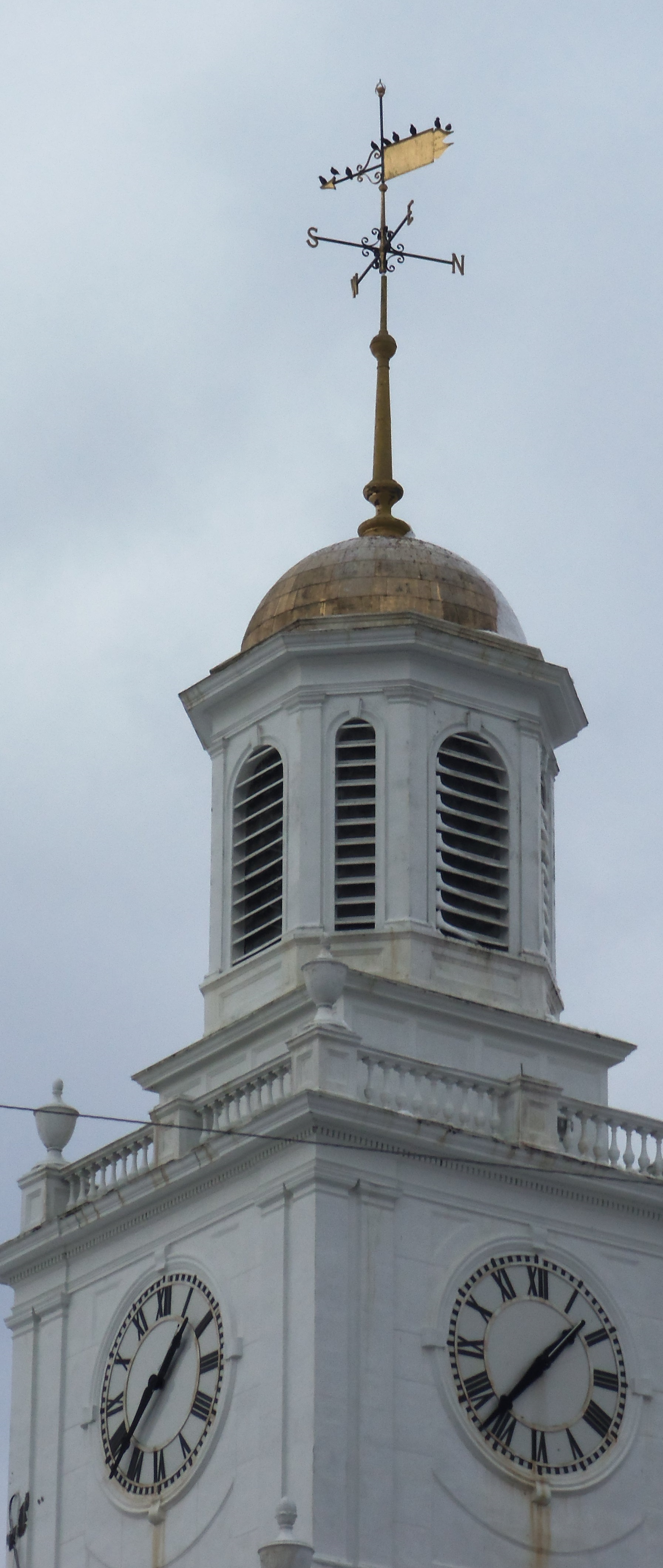
FLOCKING TO CITY HALL

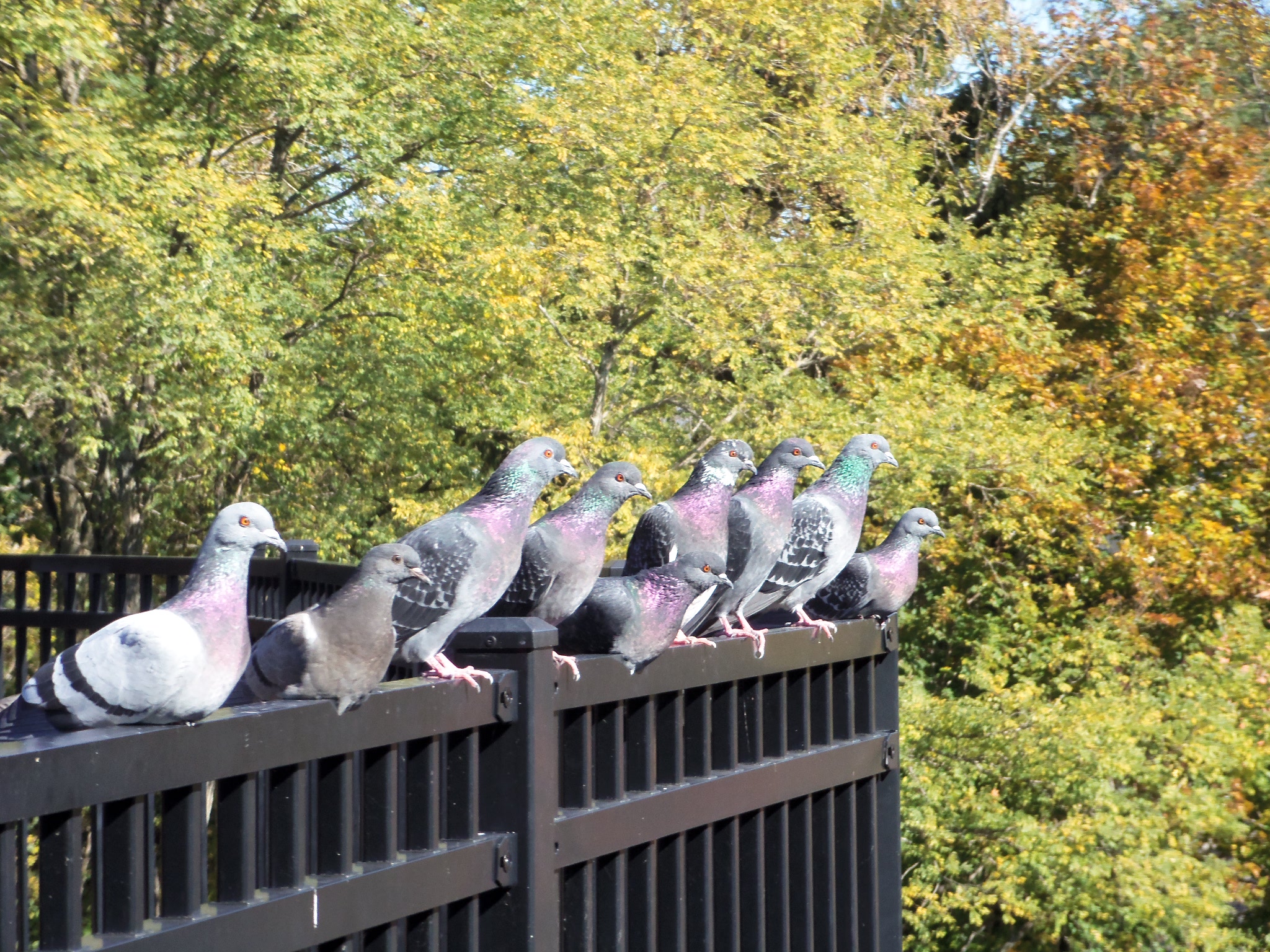
I love seeing birds perched atop a prominent weather vane.

The previous building included an opera house that would have been the largest auditorium in New Hampshire, if it hadn’t burned down. Rather spectacularly, at that.

Numbers 122
Without the birds, too. Once a month, folks flock to a contradance on the top floor.


STEP BY STEP WELCOME

These days, the Greek Orthodox community has much more substance – and influence – in Dover than do the Friends, even though Quakers once formed a third of the population.

Our plumber, our wine retailer, our favorite meat store, the downtown seafood restaurant … the list goes on. Add a daughter’s boyfriend, one-half of his genetic pool. The local congregation’s participation in the ecumenical Thanksgiving service. Or its annual Labor Day weekend festival and traditional food and dancing.

Even so, it’s a largely invisible presence … and quite a legacy, as I’ve been discovering, step by step. Let me add, a very tolerant circle, too, as they’ve welcomed me to the line in dancing. Oh, my, have they!

REACHING FOR A HEADLINE

Being employed as a newspaper editor meant I had to be scrupulous about avoiding the slightest appearance of partisanship in public. Too many people assume bias on any pretext and extend that to an assumption you cannot hear their position fairly. In reality, these are the ones who want you to be actively in their group rather than neutral in reporting both sides.

Admittedly, I’ve long felt a tension between avoiding any appearance of having a position and upholding moral values. Can you be objective without any sense of what’s true or how it all fits together?

For many of us, there are unwritten rules about what’s acceptable and what’s not, and the code I followed came largely from the Kansas City Times, where your community participation is limited largely to your church. I wonder how it would have handled my joining a denomination known for its social justice witness – one where I could gently encourage others in the congregation to activism, even if I could not act with them.

Early on, as a cub reporter, I learned you cannot wear a candidate’s button or apply the bumper sticker, even if you can distance yourself in critical thinking. Some fine journalists refrain from even voting in elections, which in turn raises some questions about democratic responsibility in the aftermath.

Retirement, though, is allowing me to slowly move away from that, and this is the first time in my quarter-century-plus in the Granite State I’m attending presidential primary events – on both sides of the political divide, at that.

It’s been eye-opening.

My wife, on the other hand, is an old-pro at these things and often explains nuances to me, the one with the degree in political science. (OK, my focus was on political theory and policy analysis rather than the nitty-gritty of campaigning, elections, and legislative maneuvers.) And one daughter, seasoned in the behind-the-scenes work of running a candidate for office, has convinced me of the importance of organization, planning, and staff discipline.

It’s still early in the fray – a wonderful opportunity to observe, actually. And it’s as much fun to watch the crowd, large or small, as it is the candidate or staff. They cover the range.

One thing I notice, though, is the working press and the video crews. CNN, C-SPAN, and, I’m guessing, MSNBC News have a trio of cameras side by side staffed by college-fresh crews just about everywhere. Just in case? Who knows. The metro reporters, in their suits and loose ties (if that), are looking for the telling detail, likely for a wrap-up later, while the frumpier local papers just want a story for the next edition, daily or weekly.

And that’s had me wondering just how I would cover the typical event. Most of these appearances, after all, are pretty standard repetition of policy positions easily available online. There’s nothing new there – and thus no news.

Well, the Q-and-A portion in what many bill as a town meeting can be interesting, if the questioners are actually from the public and not just campaign plants.

We got a flash of that yesterday at Dover City Hall when Hillary Clinton was heckled by a juvenile but orchestrated ban-fracking group. From everything we saw, she responded admirably, calmly, professionally – and got a loud, standing ovation in response. Not that you’d know that part from the headlines or news stories.

The strident outburst seized the coverage and nearly hijacked the event. But it was also allowed to remain, standing silently, with its banner, in one corner of the hall. Did it advance its cause?

I doubt it. We come to these appearances to hear positions, not to dictate their answers. We want honesty, not pandering.

As we heard Ohio Governor John Kasich say earlier in the week, in front of a much smaller gathering, New Hampshire voters serve as an X-ray machine, looking at both a candidate’s outer and inner qualities. He’s right. It’s not a responsibility we take easily. Just consider standing more than an hour in a long line snaking through the steamy summer confines of a city hall corridor before standing another hour-and-a-half through the event itself, as the audience did for Hillary.

I’d urge the protesters, by the way, to take their banner and voices to stand outside the Republican hopefuls’ events and see where that goes.

In the meantime, I’m reminded of the gap between what is often experienced in a situation like this and what we read of it in the news story. What I experienced and what I read aren’t the same. And, no, I wouldn’t accept a campaign sticker – I was there to watch and listen.

As for that public responsibility? We’d hoped to get up to Laconia later in the afternoon, where the Donald was to appear at a rally – no Q-and-A, I presume. But we agreed, we’d had enough for one day. You can absorb only so much at a time. And, as I search for that coverage this morning, apparently there was nothing newsworthy to report there.

OF FIREWORKS AND FLOWERS AND MY SHORT FUSE

A well-designed fireworks display can be a thing of beauty. No matter its scale – whether vast as Boston over both banks of the Charles River – or small-scale like Portsmouth, New Hampshire, around its old mill pond or Needham, Massachusetts, assembled on the long lawn of its high school, the intelligent use of an imaginative palette and the use of the sky as a canvas canopy reaching from the ground to its zenith can turn into a piece of breathtaking performance art, a combination of fleeting painting and wordless theater.

What too often turns up, unfortunately, is largely senseless bang-bang-bang without any subtlety of timing and proportion. Think of a standup comic who can’t tell a joke. No pauses, no phrasing.

In contrast, I think instead of the revelation of a single burst of color – perhaps a small tulip, in the terminology of pyrotechnics – followed in the same spot in the sky by another and then another. In the process, the shots run through the color wheel like slivers of rainbow. And then it’s repeated, with two identical bursts side by side – red turning to orange turning to yellow turning to green turning to blue turning to purple. Simple, elegant, commanding.

Do that right and you’ve announced that what follows will be amazing. You’ll lead the eyes all over the sky – up and up, out, back down, just over the crowd, and back up again. Small that expands beyond the ability to take it all in — or the opposite, leading your eyes to a vanishing point. You’ll create movements the way a symphony or sonata does – each one distinct yet playing off the one before. (Well, Boston’s was traditionally designed to fit music – each section, a song or overture or dance. Now that’s impressive! Oh, and we’d listen along with our radios — everywhere, tuned to the classical station.)

Think, too, that many of the traditional fireworks are named for flowers – blooms that open and then fade, often into another. Hyacinths to chrysanthemums to … well, to see how it works the other way, try this link to flowers arranged to look like fireworks by Sarah Illenburger. Pretty amazing. I appreciate her illustration of how fireworks don’t have to be gaudy greens, reds, and yellows. The more sophisticated designers blend colors into dark brooding as well as shimmering pastels. One memorable show consisted largely of silvers and golds. What was I saying about imaginative design?

A pyrotechnics show works in another dimension as well – it’s a time of public gathering and celebration. Apart from whatever’s happening on your blanket in the dark, there’s nothing private about it. (And we’ll assume you’re jammed in with others.) You can’t do it in your house, at least safely. So it’s a time of community spirit. Even pride. And in the United States, that means the Fourth of July. (The northern half of the country’s just too cold during much of the year to assemble outdoors at night, so this one comes at a perfect time of summer. Not that we don’t try.)

For Dover, where I live, though, the event points up one of the geographic shortcomings of my city. We just don’t have the right spot to mount the event, much less to design it to do much more than the old bang-bang-bang honky-tonk.

Some years, it’s launched from the top of Garrison Hill, where the shots can be seen from much of the city – if trees, houses, or other obstacles don’t block your view from below. Some years, it’s at the high school, but that’s not centrally located. Since few people can walk there, that creates a traffic problem and erodes much of a small-town feeling befitting its scale. Dover’s not an unfocused suburb the way this site suggests.

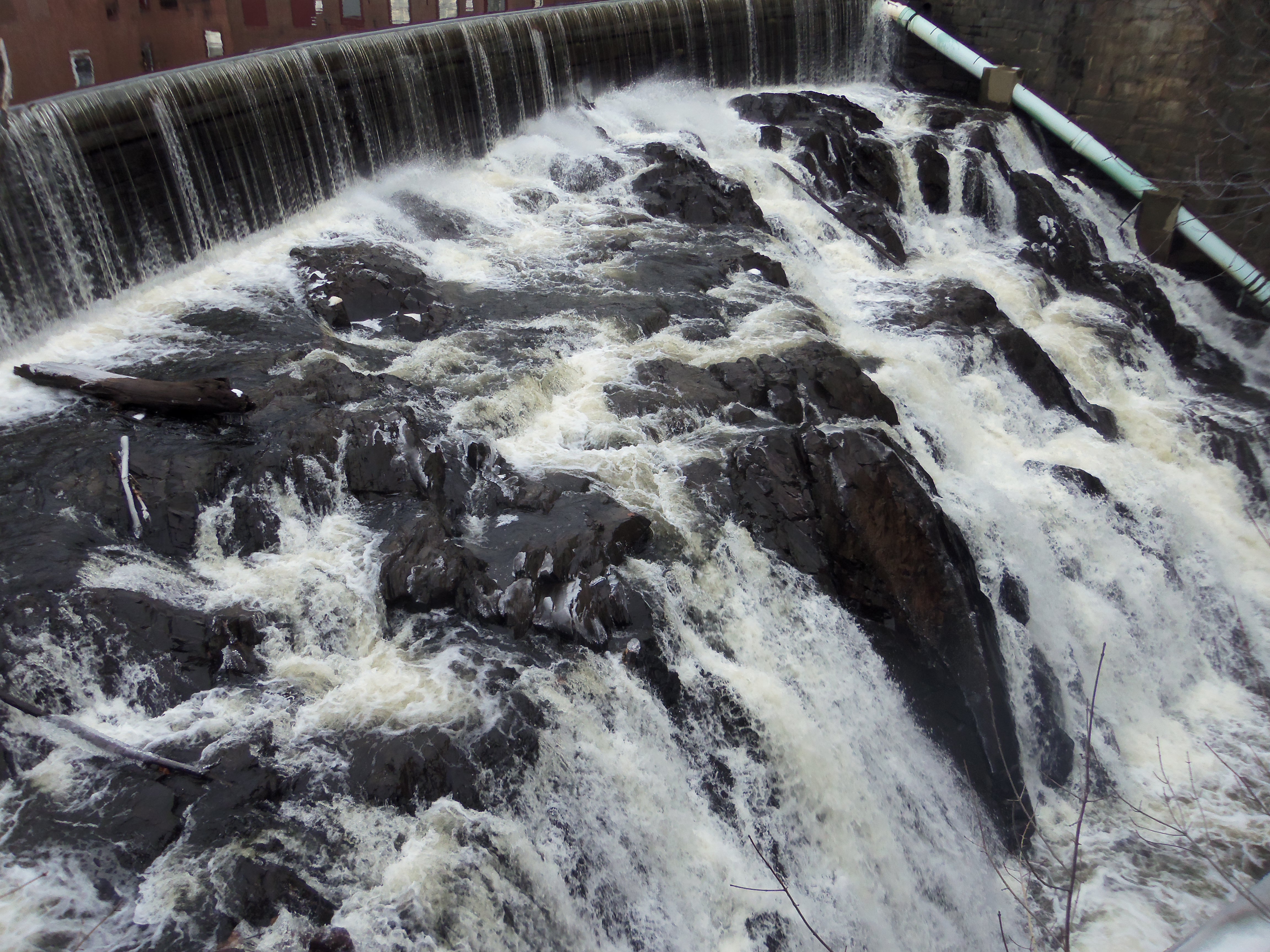
Downtown along the river would be ideal, if there were only a proper spot. The riverfront park is narrow, though, and too near the old mills, the nearest one once the scene of a disastrous fire. One possibility a little downstream is a gravel-strewn lot awaiting development, but it has little easy access. One elementary school that might do is in a residential area that would not welcome a crowd.

So here we are. If I watch the show, I’ll just get angry, knowing what could be done with the resources in the right setting. As I was saying about the single tulip? It needs the right setting to be appreciated.