Here’s a local example of the Queen Anne style, which flourished 1885-1910.
New England housing got comfy with this expansive style reflecting the region’s prosperity.
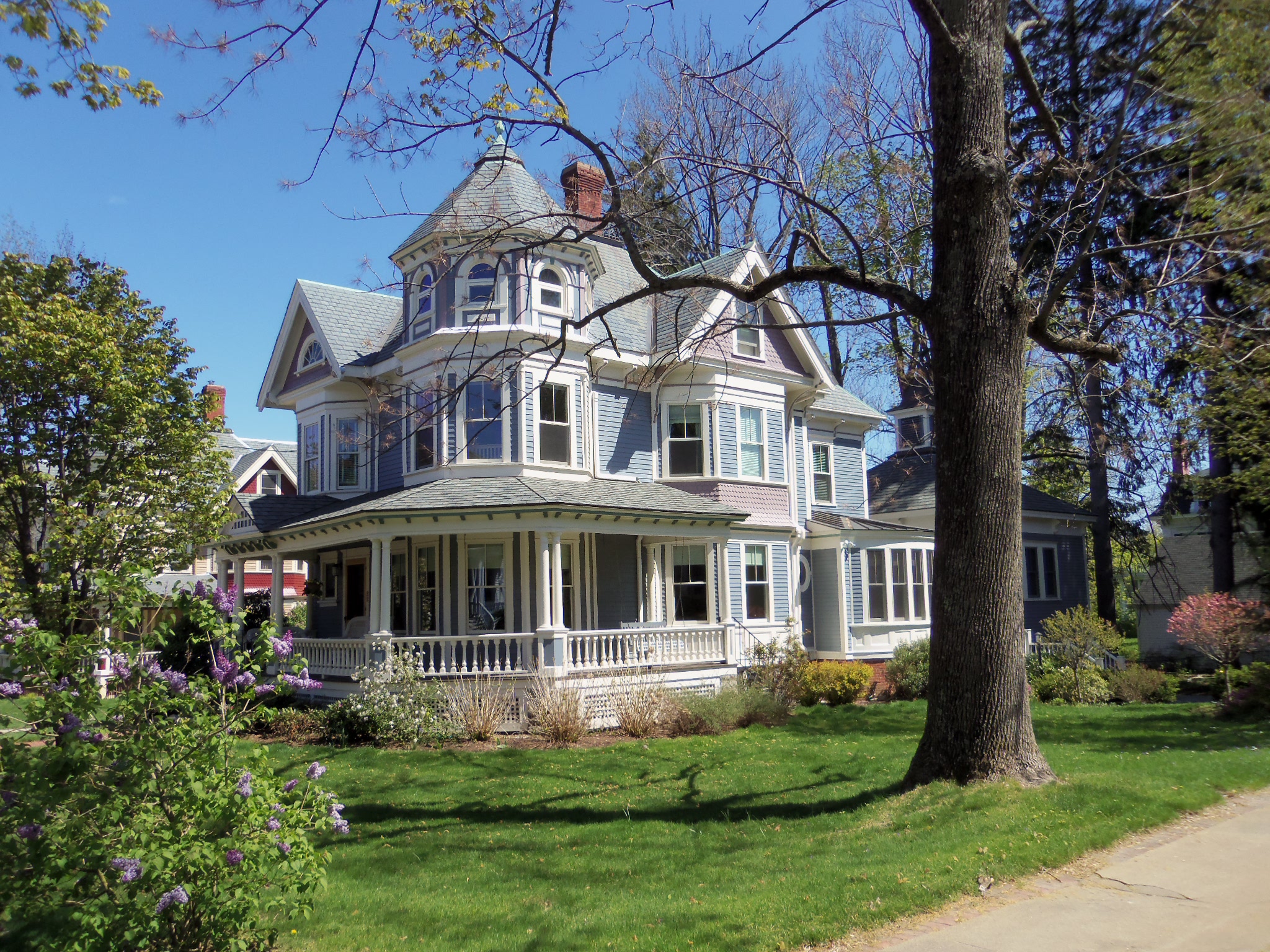 Strolling Dover: for more, click here.
You never know what we'll churn up in cleaning a stall
Here’s a local example of the Queen Anne style, which flourished 1885-1910.
New England housing got comfy with this expansive style reflecting the region’s prosperity.
Strolling Dover: for more, click here.

Our driveway and yard have been neighborhood shortcuts long before we moved here. We couldn’t refuse them, now, could we?
The kids, especially, still use it to get to the school bus in the morning and home again in the afternoon. We know some of the posse. Others, we’ll ask about.
One winter, with snow piled high in the Swamp, I learned to cross-country ski in the loop I carved around the periphery – including the precipice I finally more or less mastered.
The rest of the year, I can recognize pathways we maintain through the various beds and plantings.
I think there’s a bit of excitement in cutting across the grass or through a hole in the fence, compared to a sidewalk. Or for playing a variation of tag at dusk.
you could build boring straight lines
or else add curves or maze-figures
~*~
with the neighbors hosting Soupa
girls squealing kick-the-can
scurry amid carnival sounds
look, there’s a flurry, along the bushes
poem copyright 2016 by Jnana Hodson
~*~
 For more on my home and garden poetry collections, click here.
Here’s a local example of the Second Empire style, which flourished 1860s-1880s.
Here come the Mansard roofs.
 Strolling Dover: for more, click here.
Here’s a local example of the Italianate- style, which flourished 1850s-1860s.
Lavish, if possible. Why stick with rectangular windows?
 Strolling Dover: for more, click here.
Selecting the examples of historic architectural styles that are running in the Red Barn’s Strolling Dover series on Wednesdays, I have to admit one thing.
Often, more impressive houses can be found in some of the neighboring cities and towns, meaning those a bit closer to the ocean.
Unlike more prosperous settlements around nearby Atlantic harbors – Portsmouth, New Hampshire; York, Maine; and Newburyport, Massachusetts, all spring to mind – Dover was essentially a blue-collar mill town. Or, as the ditty went,
Portsmouth by the sea;
Dover, by the smell
referring to the tanneries needed to keep the mills supplied with leather belts that conveyed power from the falling water to the looms and related machinery above.
Rich merchants and sea captains didn’t retire here, and even though we were a seaport, we were a dozen or so miles from the open ocean downstream. As a result, our housing was more modest, less refined than some of the magnificent specimens found clustered overlooking the prime wharves and customs houses of our tonier neighbors.
That doesn’t take away from my pleasure of strolling through Dover or of sharing details observed along the way. Just want to put it all in perspective.
Here’s an example from Amherst, Massachusetts, of the Georgian style, which flourished 1750s-1820s.
 For more, click here.
Here’s an example from Kittery, Maine, of the Georgian style, which flourished 1750s-1820s.
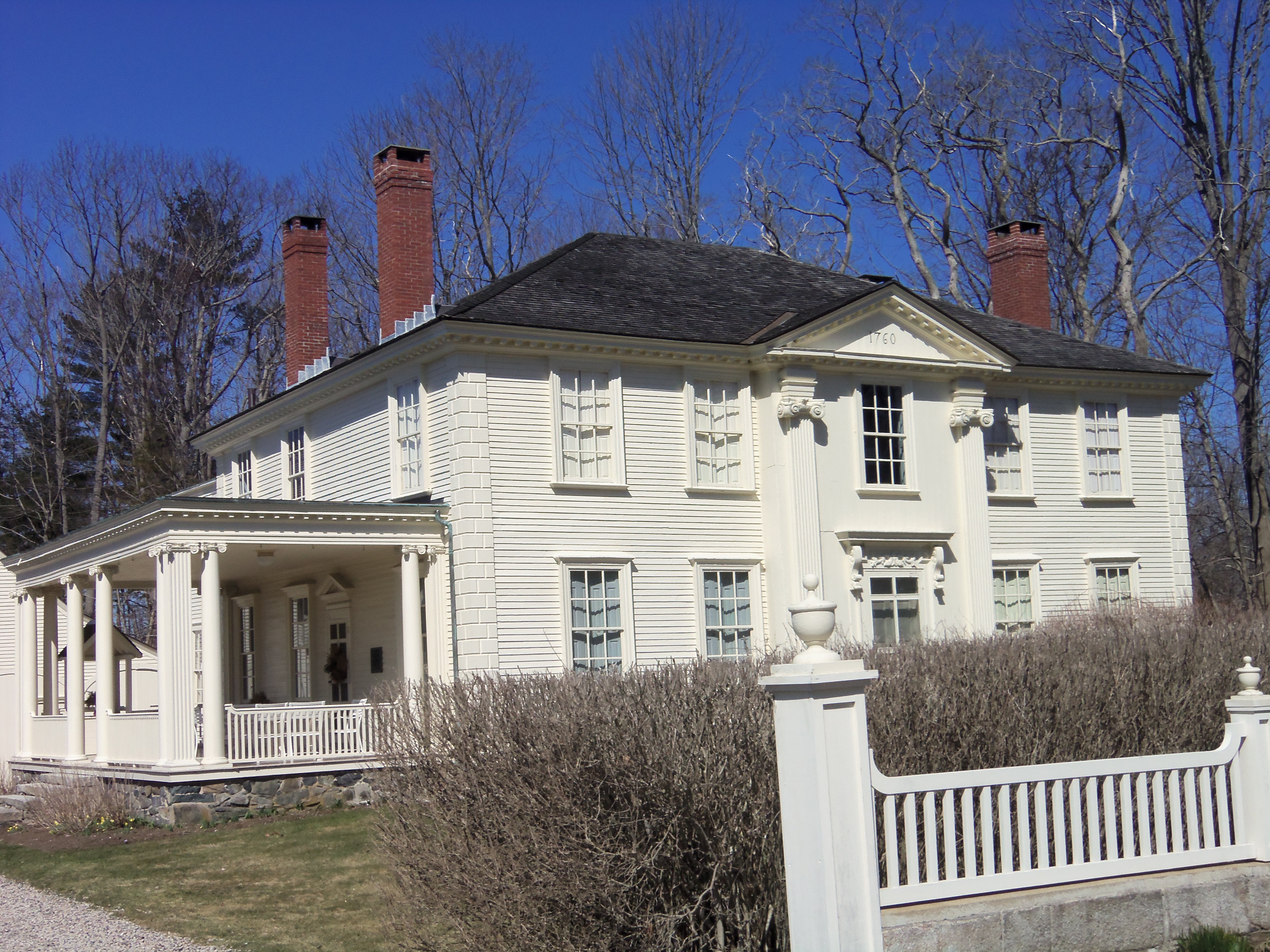 For more, click here.
Peterson Toscano, an extraordinary “Quirky Queer Quaker Performance Artist and Scholar” with bizarre and wonderful stories to share, is coming to my corner of New Hampshire next weekend — and it’s good reason to be excited.
I’ve heard him present the Bible half-hours at Friends General Conference and New England Yearly Meeting and can say he’s both insightful and original in his exploration of Scripture. It’s a matter of encountering a passage for the first time, no matter how often you’ve read it or heard it or think you have. I’ve also seen him delivering his comedy routines to teenagers, not the easiest of audiences, and he’s had them hanging on every word.
His topics will likely range from climate change (from a social justice point of view) and environmental awareness to human rights and gender outlaws in the Bible to coping with privilege or our most tragic losses – and back again. He’s both outrageously funny and a delightfully original thinker. Who would want more?
He’ll appear in the Dover Friends Meetinghouse Saturday at 4 p.m. with his “Everything Is Connected (a collection of stories – many weird, most true)” as a late-afternoon event that’s free to all. We’re hoping this fits in between busy rounds earlier in the day and those of the evening to come – giving folks a shot of humor and hope along the way.
Other performances are at 6:30 p.m. Saturday in Portsmouth, and Sunday at noon in Rochester and in the evening in Concord.
If you can attend any of them, great! Obviously, I’m a big fan. But why not amuse yourself and sample him in his own voice? For starters, let me suggest:
Hope to meet you there, if you can. Meanwhile, we need to get him back from Wisconsin and Maine … en route to Massachusetts.
 Jnana's Red Barn