The Shapleighs of Maine have an impact on Dover, too

Alexander Shapleigh, an eminent merchant, sailor, shipowner, and shipbuilder from Kingswear in Devon, knew the New World coasts early. For instance, on September 20, 1610, he was recorded as master of the Restitution of Dartmouth when it was seized by the pirate Robert Stephens while returning from a fishing voyage to Newfoundland and bound for Portugal.

It wasn’t the only ship he owned. The largest was the Golden Cat, of 450 tons – twice as large as most of the ships of the time, such as the Mayflower, and three times as large as Sir Francis Drake’s Golden Hind.

Alexander and his descendants were soon pivotal in the founding of Maine. His son-in-law, James Treworgy, served as his principal agent.

Treworgy was instrumental in the purchase of five hundred acres at Kittery Point in 1636 and the erection of the first house in today’s town of Kittery – one that would later be occupied by William Hilton when he moved from Dover Point. Under the agreement, he was “to pay annually 100 of Merchandable Codde dride & well conditioned as Acknowledgmt to the Royaltie of Sir Ferdinando Gorges Knight … to be payd … uppon the Feast of St. Michaell ye Arch Angell. Moreover if hereafter there shall be any Profitt to be raised for Keeping a ferre within the sd Limmetts yt then Sir Ferdinando Gorges Knight … is to have One Halfe of the Benefit & Mr John Treworgy … the other Halfe.”

Perhaps the Hiltons had a similar agreement with Mason and his heirs.

On January 10, 1637, Shapleigh also obtained another eight hundred acres in today’s Eliot, where the next year he built a large dwelling known as Kittery House, named after his manor of Kittery Court overlooking the River Dart in Kingswear and lending the Maine town its name. The new house was two stories that included a kitchen, cellar, and garret – ten rooms in all, plus a brewhouse, barn, and outbuildings. It is said that the first cup of tea in this country was brewed here.
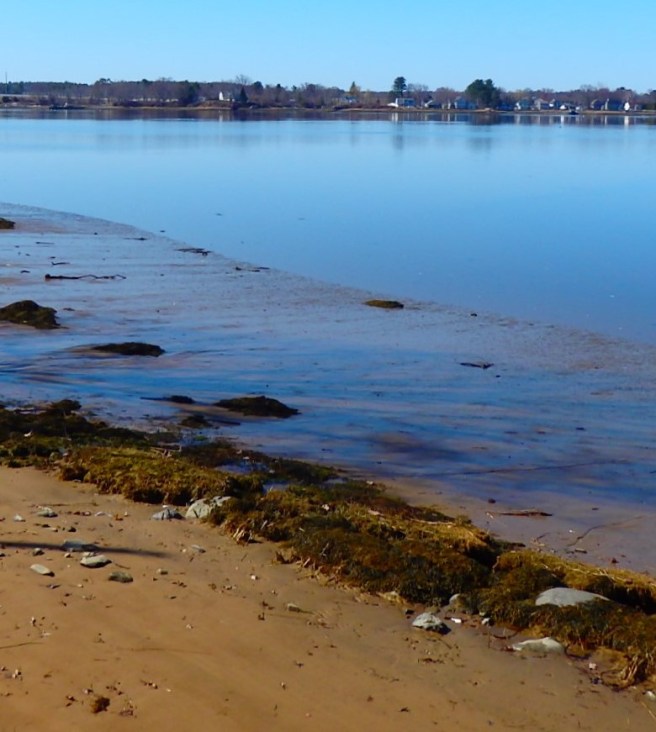
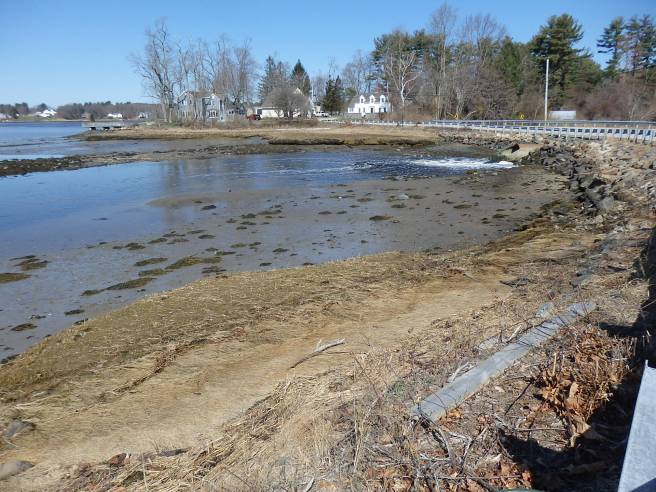
A stretch of Hilton Point, where Dover was first settled, is seen from the Maine site where Alexander Shapleigh erected his Kittery House and mills.

The Eliot site was on Sandy Hill straight across the Piscataqua from Hilton Point, at what’s sometimes referred to as Watts Fort or Point Joslyn. Here he also built a sawmill and another mill both powered by the tide at today’s Shapleigh Old Mill Pond, which adjoins the river. Tide pouring into the pond in one direction ran the mill, as did the release of impounded tidewater on its release. The Eliot estate soon emerged as the base of Shapleigh operations rather than the property at Kittery Point downstream from Portsmouth.

The proximity to the Hiltons across the river underpins a much different understanding of early development of the region than I’d previously imagined. Barely a mile separated the two settlements. The importance of today’s Eliot and the three Berwicks in those years turns out to be greater than the conventional histories convey when they refer to the locations as Kittery, the town that encompassed them, suggesting that those events took place far downstream in the shadow of Portsmouth. Not so.

Quite simply, the development Dover – and later, its Quakers – was closely intertwined with that of Eliot and the Berwicks along the river, and more flourishing than assumed.

~*~

Treworgy appears to have still been in the area in 1647 but disappeared sometime before July 1650, when his wife is described as a widow. As one genealogy notes tersely, “like other males of the family, he vanished early and without record.” Or, by another account, he was killed by Indians.  Or a third, with him in Nova Scotia in 1650, where he had gone in the interests of fishing.

Nothing is known of Alexander after 1642, other than he, too, was deceased by 1650.

~*~

Treworgy’s widow, Catharine Shapleigh, then wed Dover founder Edward Hilton sometime after the death of his first wife. You could say it was an example of “marrying the girl next door.” They then relocate to Exeter, where their children marry eminently.

William Hilton, meanwhile, moved into the Kittery Point house after relocating from Dover, and then less conspicuously on into Maine. Makes me wonder about the nature of the brothers’ relationship – or how their wives interacted.

~*~

The figure who most interests me is Alexander Shapley’s son, Nicholas.

In 1641 Treworgye sold his holdings, including his boats and other fishing trade equipment as well as his real estate, to his wife’s half-brother, Nicholas, for 1,500 pounds, to pay off creditors.

Just north of the Kittery House compound on the Piscataqua riverbank is Sturgeon Creek, an impressive inlet at high tide and about two miles downstream from Newichawannock, or South Berwick, and it was soon attracting inhabitants. The neighbors dwelling around Sturgeon Creek even convinced the elder Shapleigh and Treworgy to enlarge the house into a garrison for protection against Native raids.

~*~

Once Nicholas Shapleigh arrived for good in his own vessel in 1644, he quickly amassed great wealth as a lumber merchant, building a sawmill and gristmill and gaining great influence. During the troublesome times of the changing governments in the in the Province of Maine, he was either elected or appointed to most of the offices in the hands of the government or the people. He was one of the first three selectmen of Kittery after its incorporation.

He managed to balance forces. He was a loyal follower of Gorges and his King, yet was among the first to take the oath of allegiance to Massachusetts after it took control of Maine in 1652. Despite being a leader of the Royalist movement that opposed Puritan rule, as Provincial Councilor, he nevertheless accepted appointment by the Massachusetts authorities to be treasurer of the Maine province and be the major in command of its militia. Nor did his strong royalist views prevent him from becoming business partners with Puritan merchant Humphrey Chadbourne, his niece’s husband.  A staunch Anglican, he sheltered Quakers and yet owned slaves. As a soldier, he and Richard Waldron were appointed on February 21, 1676, to treat with the Indians for peace during King Philip’s War. (In September, however, Major Waldron shattered any hopes for ending the hostilities.) In 1678, with Captain Francis Champernowne, once of Dover, and Captain Fryer of Portsmouth, he was appointed by Massachusetts to settle a peace with Squando and all the Sagamore upon the Androscoggin and Kennebec rivers. They met the Natives at Casco and entered into articles of peace on April 12, 1678. This treaty put an end to the distressing wars which had existed three years and had greatly reduced the number of inhabitants in Maine.

Nicholas was sympathetic to the itinerant Quakers, so much so that he, too, was often considered one.

In 1663, for instance, when he was accused of favoring the Quakers, the town constable was ordered to go to Shapleigh’s house on First-days to prevent the holding of meetings there. In 1669, he and another selectman plus the town clerk were all accused of being Quakers and removed by the county court. The town then had to elect others.

In 1674 he was imprisoned in Massachusetts but released on the plea of his half-sister Catherine Hilton and the payment of two hundred pounds.

Nicholas Shapleigh died in 1682, age sixty-four, killed by a falling mast at a ship launching at John Diamond’s, across the river from Portsmouth.
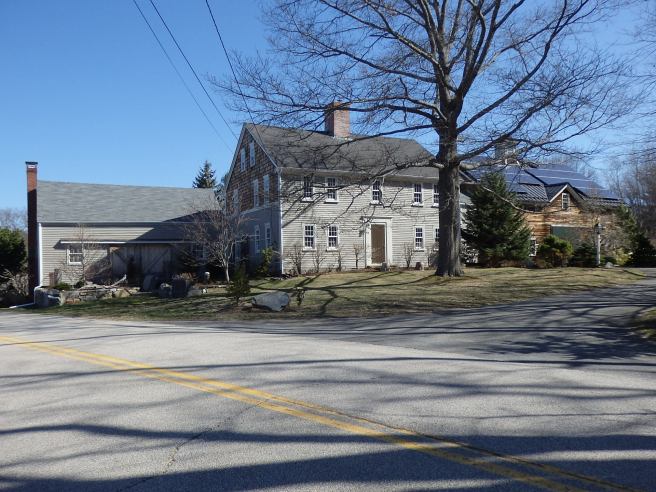
The third house erected in the early 1800s on the site of the original Shapleigh manor still stands.

As I look at the many purchases and sales of lands by the Shapleighs and others, it appears unlikely they were planning to settle long there themselves. I’m left wondering if the real purpose had to do with shipbuilding – waterside sites where the vessels could be launched, as well as proximity to lumber. That would also explain the many sawmills we find mentioned, for more than just houses or barns.

~*~

Check out my new book, Quaking Dover, available in an iBook edition at the Apple Store.

Welcome to Dover’s upcoming 400th anniversary.
 

The celebration should range far beyond today’s city limits

As Dover gears up for its big 400th anniversary next year, folks need to be alerted to the fact the early history spills far beyond today’s city limits – and that includes both sides of the state line.

While much of the settlement is along Dover Neck and then grows around the Lower Falls of the Cochecho, the town itself sprawled across today’s Durham [but then Oyster River], Newington, Madbury, Lee, Barrington, Rochester, Somersworth, and Rollinsford. That’s a lot of geography.

It’s sparsely populated, at least by Europeans, as is reflected in the 42 signers of the Dover Combination, essentially all of the freemen in the town even if a number of them are soon living elsewhere in the watershed or even returned to the mother country.

When the itinerant Quaker troublemakers arrive two decades later, the town has maybe 60 households. There are perhaps no more than a thousand English total all in New Hampshire.

In 1679, when New Hampshire is separated from Massachusetts and becomes an independent provincial government, Dover has just 61 qualified voters; the remainder of the province, 148.

The picture magnifies when we look at the Piscataqua watershed.

The tiny outpost at Hilton Point becomes the center of settlement in 1630 when Captain Walter Neale arrives to settle Strawbery Banke, today’s Portsmouth, downstream on the Piscatauqua, the same year Newichawannock, a fortified trading post, was established at today’s South Berwick, Maine, upstream from the Hiltons. Some accounts have the parties arriving on the same boat. I’m not getting into those intricacies.

Besides, it leads to an argument over whether Newichawannock or an hermit who stayed the winter at York was Maine’s first permanent European settlement.

What is clear to me is that Hilton Point is the center of development, more than the other three towns in New Hampshire – Exeter, Hampton, and Portsmouth – by 1638. Yes, only four towns in the entire colony until New Castle is admitted, and nothing in New Hampshire’s Merrimack Valley until the next century.

As emphasis, a 1631 observer reports only three houses or settlements in the entire Piscataqua watershed: today’s Dover, meaning Hilton Point; Portsmouth; and South Berwick.

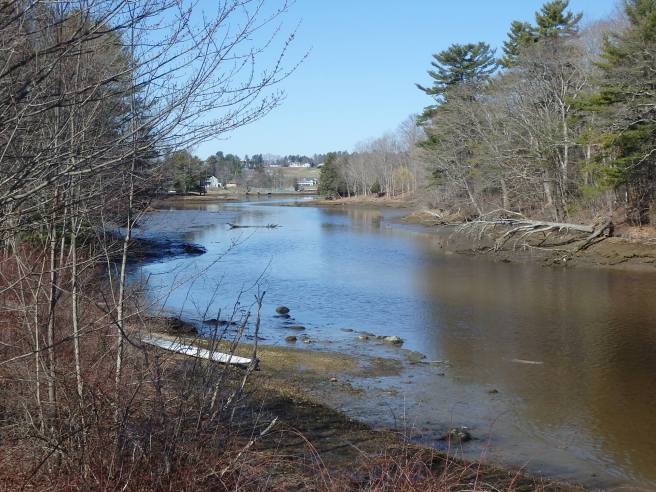
Sturgeon Creek in Maine, looking at Dover Neck, New Hampshire.

The history gets more interesting when there’s mention of Sturgeon Creek, which is straight across the Piscataqua River from Dover Neck and in today’s Eliot. We’ll get into that later.

At the time, all of the Maine side of the Piscataqua is considered Kittery – but as it turns out, the first settlement is Newichawannock, not Kittery Point on the Atlantic. That is, much further inland than folks assume today.

During many of the early years, settlements on both sides of the river are often called Piscataqua. Many of the legal cases from the Maine side wind up in the courts of provincial New Hampshire, and the other way around, adding further difficulty in determining exactly where certain activities occur.

That, too, indicates how closely both sides of the river interacted with each other, with the center of gravity for “upper Kittery” being Dover.

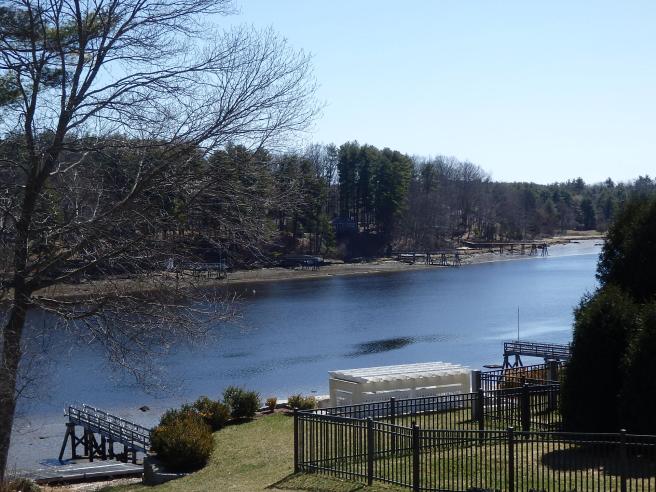
Maine, as seen from Dover Neck in New Hampshire. Not so far by boat as we’d think today.

Even more, it’s hard to envision a feudal society with Edward Hilton on Pomeroy Cove. Or even later, with Captain Wiggin’s troupe of Puritan settlers along Dover Neck. Not that we really know their names – there’s controversy when it comes to listing them.

The more I look at these early situations, the more I’m amazed that any of it actually survived.

~*~

Welcome to Dover’s upcoming 400th anniversary.

The physical fight for the town pulpit

As I ask just what made Dover so ripe for the Quaker message, I see how much earlier conflicts over the town’s official church open the way for an alternative congregation, once itinerant Friends visit town.

Dover’s first minister, solidly Puritan William Leveridge, arrives in 1633 and conducts the first religious service in New Hampshire, but he’s gone in 1635, leaving “for want of adequate support,” meaning salary, which he then finds around Boston and on in Long Island. His surviving scriptural notes are in Latin.

Perhaps two years later, maybe earlier, George Burdet shows up in the pulpit, while also taking over as “governor,” the proprietors’ agent, overseeing the northern half of the New Hampshire province. He feigns sympathy with the Puritans but secretly corresponds with Church of England Archbishop William Laud, who will eventually be executed by the Puritans. Before Burdet flees in adulterous disgrace in 1639 – or a year or two later – things get really interesting, though I’ll spare you the details now. Among other things, he gives the settlement the name Dover, not reflecting the famed English town with the white cliffs but rather an anti-Puritan wit and attorney who also founded the notorious Cotswold Olimpick Games, which included horse-racing, coursing with hounds, running, jumping, dancing, sledgehammer throwing, fighting with swords and cudgels, quarterstaff, wrestling, and gambling.

In contrast, the main sports New England Puritans accepted were hunting, fishing, and the mock battles the militias used for military training.

Dover’s first church probably resembled the one at Plimoth Plantation in Massachusetts. (Photo by Swampyank via Wikimedia)

How did Burdet become the pastor in Dover, in the first place? Specifics are often lacking or blurred in the available records.

The Puritans organized their churches on a congregational structure, where the members themselves managed the affairs, including the selection and dismissal of ministers. The concept also grew into the New England town meeting system for managing secular affairs. It’s about as democratic as you can get.

The Church of England, in contrast, relied on an episcopal hierarchy, where the Archbishop of Canterbury and subordinate bishops ruled.

The differences between the Puritans and the Anglicans go far beyond organization and polity. They include baptism, marriage (a civil contract for Puritans at the time), funerals and burial, prayer (the Anglican Book of Common Prayer versus extemporaneous), liturgy (hocus-pocus, as some Puritans would say) or none at all, rituals and genuflection (superstition to the Puritans), the Virgin Mary and saints (ignored by the Puritans), Christmas (no holiday for the Puritans), and, especially, eternal salvation or damnation (the Puritans being certain that at least some of their brotherhood will be among the Elect God had chosen at the time of Creation). I’ll venture that the Church of England offers more creaturely comforts to its faithful than do the Puritans.

Quite simply, there are tensions within Dover and beyond. The Massachusetts Bay colony has just banished Roger Williams, Anne Hutchinson, and Samuel Gorton, who all scoot off to the new refuge of Rhode Island – and Hutchinson’s brother-in-law, John Wheelwright, heads north to found Exeter, New Hampshire, near Dover. They’re all major figures in American dissident history.

Two mysterious figures then approach a newly arrived minister in Boston and lure him to Dover.

As a young Anglican priest in England, Hanserd Knollys had suffered a religious crisis that led him to resign from the pulpit and begin a quest that brings him to a Mr. Wheelwright, “a silenced minister,” near Lincoln, England. Yes, the same one who founds Exeter. Something in their discussions rekindles a flame within Knollys, liberating him to preach again but with such an intensity that he’s soon imprisoned in Boston, England, until he somehow escapes and sails in 1636 during a difficult voyage with his wife and only child, who dies en route, to Boston, Massachusetts. While living in impoverishment there, and prevented from preaching because of his antinomian theological views, he’s met by “two strangers coming to Boston from Piscattuah, hearing of me by a meer accident, [who] got me to go with them to that plantation, and to preach there, where I remained about four years.”

The only problem is that Burdet is still minister or at least physically present, but the governor’s role has been handed to John Underhill, himself in flight from Massachusetts after leading the militia in the Pequot massacre and running his mouth off.

Burdet forbids Knollys from preaching in Dover but is countered by Underhill.

Within this backdrop, Knollys is credited with formally organizing in 1638 the First Congregationalist Society, now known as First Parish, United Church of Christ (Congregational), and out of its longstanding worship together from 1633, it is regarded as the oldest church in the state.

If only it were that easy.

Hanserd Knollys

Adding to the conflict is Knollys’ evolving theology which will lead to his becoming a founding father of the Particular Baptist denomination, though he’s not yet quite there during his time in the Piscataqua parish. Otherwise, Dover might have been the first Baptist church in America, rather than the one in Providence, Rhode Island, founded in 1639.

From a later Baptist perspective, Knollys “preached with much acceptance upwards of three years. … However, his church in New Hampshire was split on the issue of infant baptism. This brought persecution on him by the Congregationalists. He, with others from his church, fled to New Jersey and eventually back to England.”

To put it mildly.

More directly, from a Baptist point of view, “America does not seem to have been a peaceful place for … Hanserd. While in New Hampshire, conflict arose between Hanserd and another minister, Thomas Larkham, who had arrived in New Hampshire in 1640. Larkham had wealth and influence, and had very lax standards for membership. This produced much division within the congregation, and Larkham at one point had Knollys removed from the pulpit. Many congregants then removed Larkham and restored Knollys as pastor. Larkham had armed men march up from nearby Portsmouth [still known as Strawbery Banke], conducted a trial which found Knollys guilty, fined him, and ordered him to leave. During his time reports circulated that Knollys was also censured for having a ‘filthy dalliance’ with some young females living in his house. Records indicate that this was a false report as other ministers spoke of Knollys with respect. There is also a record that Hanserd had filed suit with a claim of slander. It was never prosecuted, as the Knollys did not stay in the colonies.”

There were even reports of an armed skirmish between factions of the church.

But Larkham, too, suddenly departed from Dover in 1641 and returned to England.

There’s more, as Jeremy Belknap’s History of New Hampshire, reveals:

Larkham “came to Dover, and being a preacher of good talents, eclipsed Knollys, and raised a party who determined to remove him. He therefore gave way to the popular prejudice, and suffered Larkham to take his place; who soon discovered his licentious principles by receiving into the church persons of immoral characters, and assuming, like Burdet, the civil as well as ecclesiastical authority.” Except that Larkham was never “governor.”

Belknap continues: “The better sort of the people were displeased and restored Knollys to his office who excommunicated Larkham. This bred a riot in which Larkham laid hands on Knollys, taking away his hat on pretence that he had not paid for it; but he was civil enough afterward to return it. Some of the magistrates joined with Larkham, and forming a court, summoned Underhill, who was of Knollys’s party to appear before them, and answer to a new crime which they had to allege against him. Underhill collected his adherents; Knollys was armed with a pistol, and another had a bible mounted on an halbert for an ensign. In this ridiculous parade they marched against Larkham and his party, who prudently declined a combat, and sent down the river to Williams … at Portsmouth, for assistance.

“He came up in a boat with an armed party, beset Knollys’s house where Underhill was, guarded it night and day till a court was summoned, and then, Williams sitting as judge, Underhill and his company were found guilty of a riot, and after being fined, were banished from the plantation. The new crime which Larkham’s party alleged against Underhill was that he had been secretly endeavouring to persuade the inhabitants to offer themselves to the government of Massachusetts, whose favor he was desirous to purchase, by these means, as he knew that their view was to extend their jurisdiction as far as they imagined their limits reached, whenever they should find a favourable opportunity. The same policy led him with his party to send a petition to Boston, praying for the interposition of the government in their case: In consequence of which the governor and assistants commissioned Simon Bradstreet, Esq. with the famous Hugh Peters, then minister of Salem, and Timothy Dalton of Hampton, to enquire into the matter, and effect a reconciliation, or certify the state of things to them. These gentlemen travelled on foot to Dover, and finding both sides in fault, brought the matter to this issue, that the one party revoked the excommunication, and the other the fines and banishment.”

Yes, once again, religion and politics mixed.

George Wadleigh, reviewing the events, adds an extra element to the conflict. Larkham and Knollys “fell out about baptizing children.” Remember, Baptists would insist it was for consenting, informed adults only.

Let it not be said that Dover was a sedate fringe habitation.

Dover’s second meetinghouse was something like this, surrounded by a palisade. It was erected in 1654, before the Quakers further stirred things up.

And I’m certain these events all lead up to the faction that welcomes itinerant Quakers a decade later. After all, Dover would have a ready audience and prime examples for the Quaker criticism of “hireling priests” who saw the position as a rewarding salary more than as utter discipleship.

Until then, lingering tensions simmer.

~*~

Check out my new book, Quaking Dover, available in an iBook edition at the Apple Store.

Welcome to Dover’s upcoming 400th anniversary.
 

Negative environmental impacts quickly followed

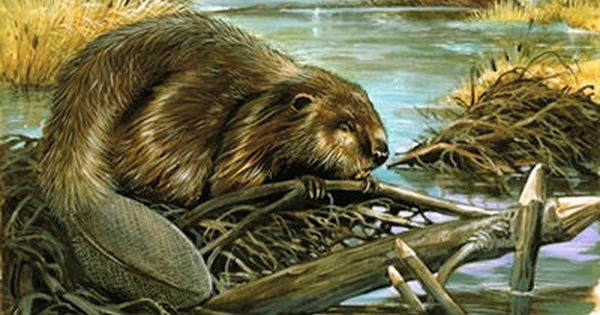
The fur traders’ hot market for beaver pelts in colonial New England soon reduced beaver populations, and fewer beavers meant fewer beaver ponds, an important source of the local Native diet, including roots and waterfowl.

Beavers were only the first of many species afflicted by European settlement in the Piscataqua watershed.

That was followed by the construction of mills, which were powered by water, and that meant dams. Some impounded incoming tides for release a few hours later. These were tricky to operate, though, and changed speeds depending on the strength of the incoming tide or the level of the water during its release.

Dams at the waterfalls became more common.

Either way, dams impeded upstream migrations of fish trying to return from the sea to their spawning grounds. These included salmon, sturgeons, eels, and river herring. Their reduced stocks afflicted both the Natives and the English inland fishing industry.

The mills also produced copious amounts of sawdust that choked river bottoms, reducing and killing off additional species.

The demand for timber itself cleared land all the way back eight to ten miles from the riverbanks, further eliminating wild game. The wood was needed not only for the sawmills but also as fuel for brickmaking, domestic cooking, and warmth through winter. Heating a house commonly required 40 cords of wood a year – no small feat of labor.

And runoff muddied and silted the streams.

Let’s not get too sentimental about the bucolic nature of the era, OK?

~*~

Welcome to Dover’s upcoming 400th anniversary.


Be among the first to read my new book … for free!

If you’re a reader of ebooks and fascinated by history, I’d love for you to get an advance copy of my new book, Quaking Dover.

In fact, as a follower of this blog, you’re getting a limited-time invitation to pick up a copy of the book for free.

Check it out at Smashwords and its associated digital ebook retailers.

All you have to do is speak up in the comments section of this post, and assuming that your address includes an email (visible only to me) or other contact info, I’ll send you a coupon to download the book in the digital format of your choice within the next 30 days.

It’s one of the advantages of ebook publication at Smashwords.com.

In the world of commercial book publishing, a printed edition typically appears in an Advanced Reading Copy run that allows reviewers, bookstore dealers, and other insiders a chance to hop on before the official publication. In the meantime, the author and editor have time to make fixes and set the stage for an auspicious opening day, one boosted by the buzz of the ARC readers.

So what I’m doing is the equivalent for a digital edition.

The release date on this book isn’t until September 8, but folks who preorder now can get in the front of the line at half-price. That strategy is one step for boosting the book in the crucial first-week sales algorithm.

Today’s offer, however, gives you a chance to own a copy now. In a way, you’ll even be getting involved with the preparations for the tiny city’s upcoming 400th anniversary.

My hope, of course, is that you’ll be excited by my story and happily post a brief review or two in response. If you don’t like it, of course, you can tell me directly and we’ll still have time to rectify that. It won’t even change my perception of you (insert Smiley Face.) From your end, it’s a no-risk proposition.

From my end, I might even gain a fan.

Now, who’s first?

Sawmills, before those for grain

One of the first thing the colonists typically built was a sawmill. From what I’ve seen to date, it always came before a gristmill. I would have thought food would have been the priority, but there are suggestions they imported their flour or even bread instead.

That raises questions of just exactly what their meals were. The Puritans were devoted to their beer and tobacco – and that extended to even their children.

For that matter, how early was Beantown a synonym for Boston?

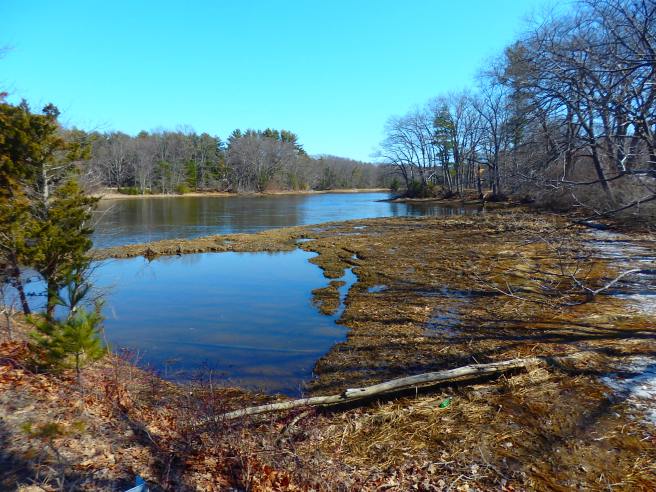
More than a dozen years after the settling of Hilton Point just across the river, Alexander Shapleigh built the first of two tide mills at his Kittery House estate. Water from the incoming tide was impounded and released later in the day to power the mills. Here’s the site today.
The mill pond remains in today’s Eliot, Maine.

So why sawmills? The early settlers along the Piscataqua apparently erected log cabins, along with fortifications. For that matter, the sole surviving garrison house, preserved at the Woodman Institute, was essentially a log cabin built around 1675.

But flat boards were needed for shipbuilding, wharf planking and bridges, and barrels – for shipping dried fish, especially. Perhaps lumber itself was also an export to Barbados, the Bahamas, and the West Indies.

Let’s remember, too, the construction of dams and mills and their operation required sophisticated skills.

I’m guessing that few of the early English settlers along the Piscataqua were menial day laborers.

~*~

Welcome to Dover’s upcoming 400th anniversary.


Take a sneak peek at my next book’s cover

For several months now, you’ve been getting tastes of my upcoming book, but I have kept much of project under wraps, including the title.

The curtain goes up on that right now.

So roll the drums, please, and take a deep breath of anticipation. Here’s what I’m rolling out:

Do the title and image intrigue you? Pique your curiosity? Hold you for more than a split-second?

As I’ve discussed in previous posts, book covers – and magazines, too – are a specialized design challenge.

The ebook version has to work as a postage stamp, sizewise.

Print editions often get cluttered with pitches of all sorts, just in case one hooks a reader.

An effective title, of course, is a huge consideration, but not the only one.

~*~

Creating a compelling image that matches the content has been especially difficult in this case. The book spans more than 400 years, and I couldn’t find anything that quite reflected the place or its people, now or then, or that extended an appropriate emotional appeal.

A seismograph didn’t do it, though several geometric zig-zag patterns looked cool.

One design that excited me featured a portrait of John Greenleaf Whittier’s mother, but others saw her as forbidding. What I saw calm and collected they viewed as sorrowful and inhibited. Oh, well.

But then, while going through my own photos, I came across a late-autumn photo of the Cochecho River, scene of much of the action. I loved its timeless mystery and beauty and the fact it didn’t look generic to just about anywhere else in the world.

One of my earlier posts pointed out that the cover should promise the reader something rather than mirror the story. It’s a matter of eliciting a gut-level attraction.

Somehow, I hope you feel this cover leads backward into time, with the drama of a storm on the way. Just what is around that bend, anyway?

~*~

Please stay tuned for the release details in the days ahead.

Those who lived here for millennia need to be acknowledged, too

One of the things the Dover 400 project is doing is raising an awareness of the Indigenous peoples who inhabited the region for millennia before European colonists arrived.

The tribes were far more varied than the generic “Indian” label conveys. Sometimes they were in open conflict with each other, and there were many differences in language, culture, and lifestyles. There were also alliances with other tribes, creating subtle but significant relations across the region.

Some lived in permanent villages, often along streams. Others ranged from ancestral site to site through the year in a cycle of fruit, vegetable, and animal fare.

As hunters and fisherfolk who often traveled by water and lived in villages along the shores, many of their names for places are often translated as some variation of “water,” with distinctive nuances that are lost to Western ears but still hint of sharp observation of the character and advantages of each site.

Their name for Hilton Point, for example, is something along of the lines of “place encircled by water,” while Cochecho is more like “foaming falls,” each one, however, unlike other points or coves or waterfalls.

As for our own names applied to these places? I doubt we give them a second thought other than perhaps their spelling.

And, to our loss, we have none of their mythopoetic stories in their original richness – narratives rooted in their unique environment. At least we can begin to listen to those told by surviving tribes in neighboring Maine.

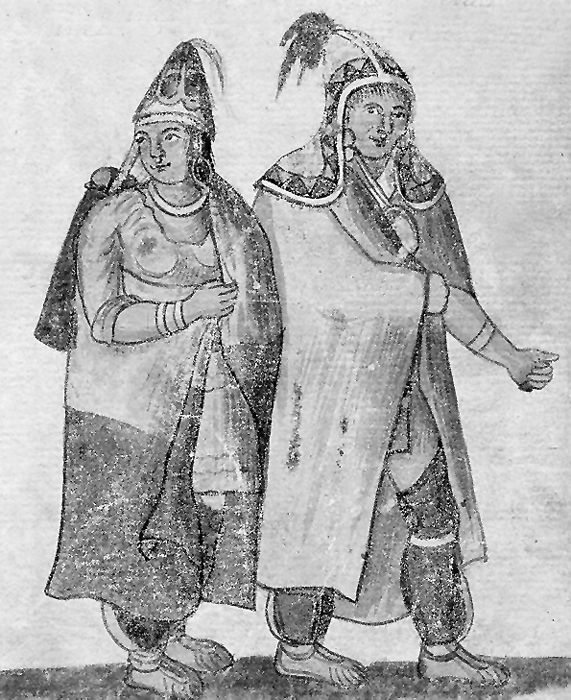
There are good reasons the Abenaki and other New England tribes didn’t dress like the High Plains Natives far to the west.

  ~*~

WHEN THE ENGLISH ARRIVED in New England, most of the tribes had been decimated by pandemics, many of the illnesses resulting from contact with earlier explorers and traders. The sharp loss of population gave the Pilgrims an opening in their settlement at Plymouth.

The first traders brought items the Natives appreciated as useful – metal pots, knives, blankets – that could be obtained in exchange for furs.

As we know, the dynamic changed. We’ve rarely heard the Indigenous voices tell their side of the struggles. The English, French, and Dutch all have barbaric actions to atone for.

The marker at Ambush Rock on Route 101 in Eliot, Maine, for example, makes it sound like the victims were an innocent party on its way home from church one Sunday in 1697. There’s no mention that the prime target, Major Charles Frost, was Richard Waldron’s cohort in the notorious “games” of 1676 that ended up in the arrest of nearly 400 Natives who were then executed or sold into slavery. The Natives waited 21 years for revenge. Frost was the highest-ranking militia officer in Maine.

For me, the missing details change my view of the event entirely. It’s not an isolated instance.

~*~

DOVER WAS IN PENNACOOK COUNTRY, a tribe closely related to the Abenaki – the identities are sometimes merged, suggesting change over time. The Pennacook spanned over much of New Hampshire, neighboring Maine, and parts of Massachusetts. The English jurisdictions didn’t match theirs.

Another consideration is how many of the English settlements occurred at earlier Indigenous villages, as seems to be the case both at the falls in today’s downtown Dover or neighboring Exeter, Newmarket, Durham, Rollinsford, Somersworth, and South Berwick.

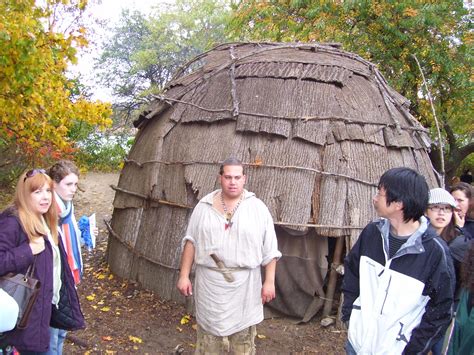
A wigwam at the Plimoth Plantation living history museum allows visitors to explore a typical Indigenous winter dwelling. The interior is bigger than you’d expect. (Photo by Swampyank via Wikimedia Commons.)
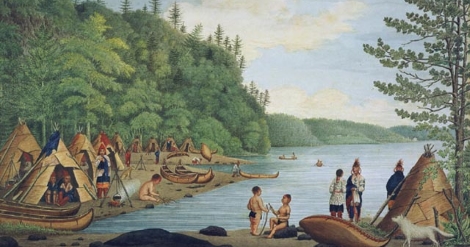
A Pennacook encampment much like those in the Piscataqua watershed.

~*~

ONE THING THAT WAS OBVIOUS TO ME in a visit to the Plimoth living history museum in Massachusetts was how superior the Wampanoag’s communal wigwams were for living through winter compared to the Pilgrim’s drafty cottages of 1630.

I’m sure the same can be said of the shores of the Piscataqua.

~*~

Welcome to Dover’s upcoming 400th anniversary.

A map is seen much differently from the water

One awareness I’ve gained living in New England is that when you’re out on the water – say in a sailboat, fishing boat, whale watch, or ferry – the geography fits together quite differently than it does on the land.

For example, where I now live in Maine, it’s only four miles or so from our downtown to the one just south of us. That is, if you’re just looking, going by water, or a bird. To drive, though, you have to head north and loop around Cobscook Bay, a distance of 38 miles and about 46 minutes. At least it has no traffic lights.

The water perspective is especially important in understanding the dynamics of early Dover, centered as it was at Hilton Point and Dover Neck between the Piscataqua River and Great Bay. For example, the heart of the town of Kittery was in today’s Eliot, just a mile away by water but 18 miles by land. And today’s Kittery was ten miles downstream or even longer by land.

Hilton Point was just to the left of the “cat” in Piscataqua, while the Shapleigh Kittery House was just to the cat’s right. Getting there by land, though, means going all the way up to the Salmon Falls River. Even finding a map like this of the watershed can be a challenge. Usually, it’s divided by the state line that runs up the river.

Oyster River, or today’s Durham, was only four to eight miles to the west, depending whether you were stopping at wharves along the way or going all the way to the Lamprey River’s falls and the landing.

A trip by boat between Eliot/Kittery and Oyster River/Dover was – and still is – no big deal.

In fact, by water they were closer to Hilton Point than was the village at Cochecho Falls, today’s downtown Dover.

For perspective, I’ve read that a man on the Isles of Shoals thought nothing of rowing ten miles – six of them on the open ocean – for an evening in Portsmouth and then ten miles back in the dark.

In comparison, the relocation of families from Eliot/Kittery to Oyster River becomes much more sensible than a land-based movement would suggest, and much less puzzlingly.

Also, the boundary between New Hampshire and Maine largely dissolves. The watershed becomes the defining perspective.

In terms of understanding history, “Piscataqua” can mean not just the original settlement at Hilton Point but also the expansion across both sides up and down the river. That seems to be the case when Portsmouth, Kittery, and New Castle all claim a 1623 founding.

You might even say it muddies the water.

~*~

Welcome to Dover’s upcoming 400th anniversary.
 

Selling Natives into slavery was not an isolated instance  

One of the more disquieting things my examination of early Dover and New England stirred up for me is an awareness of a prevalent expression of white supremacy.

It starts out as fear, expressed in the emphasis on fortifications. The Plymouth settlers, for instance, spent much of their first year on building palisades rather than farming, which led to a nearly disastrous shortage of food through the winter. The defenses were apparently intended against Native raiders more than the Spanish, French, Dutch, or pirates.

Later, Puritans required palisades around their houses of worship as well, as happened at Dover’s second meetinghouse, and ordered that all men carry arms, which were lined up against the wall during public assemblies such as religious services.

~*~

THE PREMISE OF WHITE SUPREMACY COMES THROUGH CLEARLY embedded in descriptions of the Indigenous as savages or pagans and is intensified in the resolution of legal conflicts in an unjust system of jurisprudence. Natives always came out on the losing end, with no means of appeal.

Especially telling is the reaction to the killing of John Stone and seven of his crew in 1634 in retaliation for his kidnapping and murder of the Pequot sachem Tatobem. Even though Stone had previously been banned from Boston for drunkenness, adultery, and piracy, and news of his death brought outright joy to some residents in the city, officials demanded the Natives turn over the warriors responsible to face trial. The Pequot, however, refused, even after paying atonement.

Simmering tensions erupted in 1636 after the killing of trader John Oldham and several of his crew on a journey to Block Island, Rhode Island. Even though Oldham was a troublemaker banished from the Plymouth colony, his death caused sermons across Massachusetts and prompted military action that quickly escalated into war.

Telling of the implicit racism is Roger Williams’ line of congratulation to John Winthrop in 1637 for disposing of “another drove of Adam’s degenerate seed.”

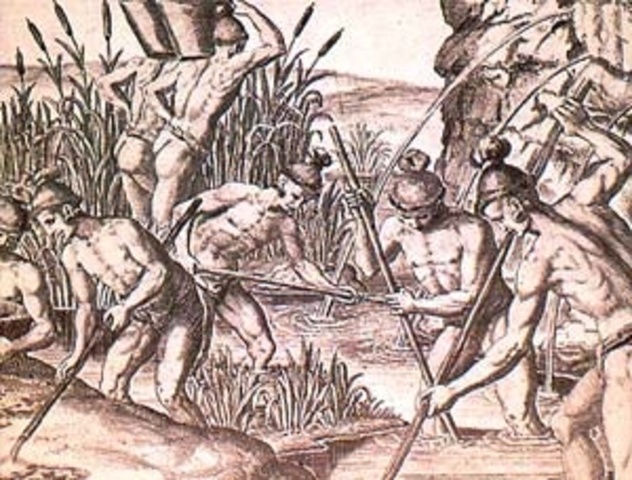
Natives being hunted down and captured.

~*~

BY 1638, MOST OF THE PEQUOT had been massacred or sold into slavery in Bermuda or the West Indies. An estimated 1,500 warriors had died in battle or been hunted down. And what followed was a landgrab by the colonists.

Military leader John Underhill, responsible for the massacre of Pequot women and children fleeing their burning village, then came to Dover, where he was briefly governor of the upper province, meaning Dover.

Bluntly? From the colonists’ perspective, a bad white man was worth more than a noble Native.

~*~

SLAVERY WAS PART OF NEW ENGLAND from the beginning.

When David Thomson settled at Pannaway in 1623, he had a Native as a slave, presented to him by an Indian leader. Yes, there was slaveholding among the Indigenous, too.

And whites could be enslaved as well, as was seen in threats to sell Quaker children in the late 1650s.

A key turn in the emergence of Merrymount in 1625 was the sale of some of the project’s indentured English male servants to Virginia and the impending sale of more to the tobacco estates, where death within a year was likely. Thomas Morton used the situation to rally the remainder to resist and stay put, leading to his libertine colony south of today’s Boston.

The origins of African slaves in New England are murky, but Pequots were exported so that they could not escape and return to their families or be freed in retaliatory raids. Instead, they were exchanged for Blacks, who could be held at less risk.

Natives labored in Barbados and the West Indies after being exchanged for Africans as slaves.

In 1637, during the Pequot War, the first American-built slave ship, the Desire, was constructed in Marblehead, Massachusetts, outfitted with leg irons and bars, and armed. She set sail to the British West Indies carrying Boston rum, dried fish, and captive Pequots, and returned seven months later with tobacco, cotton, salt, and enslaved Africans from the Caribbean plantations.

Thomson’s friend Samuel Maverick bought two Blacks as slaves in 1638. Another prominent slaveholder was John Winthrop.

In 1641, the Massachusetts Body of Liberties document included a formal recognition of slaveholding.

~*~

UP TO THE AMERICAN REVOLUTION, despite opposition, some Quakers held slaves, and Dover was not exempt. Up to ten were manumitted, likely with the equivalent of a year’s wages. There’s more on this in my book.

~*~

Welcome to Dover’s upcoming 400th anniversary.