I wasn’t expecting to have the plumber in this early in the game

As I said, the best place in the house for our new woodburning stove was occupied by a large cold-air intake duct for the furnace. We needed a plumber to move the vent over a few feet. “Piece of cake,” as we were told. Well, he needed a carpenter, too. We were already covered there. Ditto for the electrical.

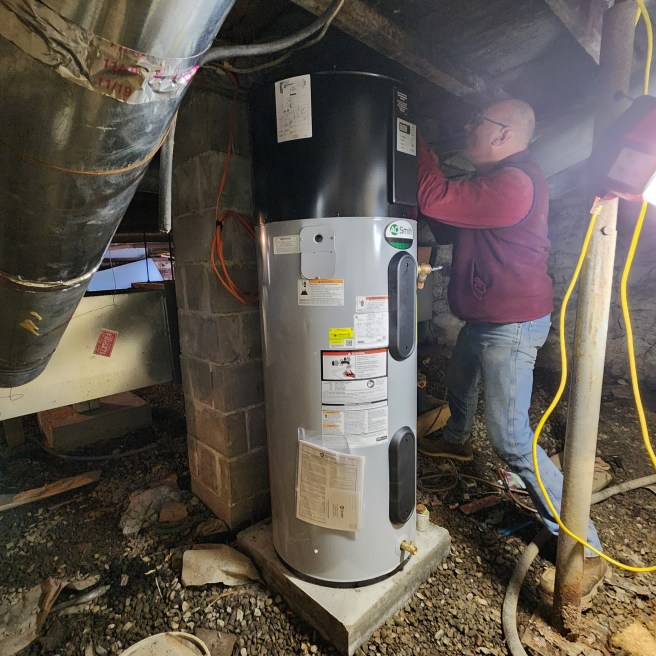
In addition, as I’ve explained, the best pathway for the wood stove’s metal pipe chimney ran right through a cubbyhole where our water heater sat. We were already intending to replace the unit for a more efficient heat-exchange model anyway, so we bumped that up in the timeline. As long as the plumber was in, right?

And while Thomas was at it, the float on our old, jerry-rigged sump pump had begun sticking, causing the cellar to flood, so that could go, too. No problem, he’d replace that at the same time.

If we like him, there’s a lot more ahead – a kitchen remodel, a new bathroom upstairs, and then remodeling the little one downstairs that’s way too outdated. Oh, yes, and the outdoor faucets.

Its pad was installed earlier.

So that’s how the heat-exchange water heater was installed in the cellar, under the old, inefficient water heater. Adam, our contractor, handled the new concrete footer and the electrical wiring. We’re told it should also dehumidify our cellar. Now that’s a happy bonus!

And all this was wrapped up the day before Christmas Eve.

As an added complication, we were getting a woodburning stove

Considering the frequency and length of electrical outages in Maine, having an emergency heat source in place was a high priority. I’ll explain later what derailed us from going directly from an emergency generator. Wood heat was the more obvious answer for us, but the big obstacle was that we didn’t have a usable chimney. We couldn’t just run up to Tractor Supply or Tru-Value, pick out a cast-iron stove, plug it in, and breathe a sigh of comforting relief.

Instead, we needed some professional advice, and that’s where we were stymied. Local inquiries led nowhere. The nearest wood stove and fireplace dealers were 2½-hour drives away.

Since Ellsworth has two, that’s where we headed. The smaller dealership was far more helpful than the other – and it referred us to a nearby chimneysweep who, after we approached him, did agree to install a stove for us as well as, more crucially, addressing the chimney situation.

While a previous woodburning cook stove in the kitchen had vented into the same flue that the furnace uses, that’s now contrary to building code.

Tim confirmed that our best smoke-venting option was to run an insulated metal chimney pipe straight up next to the existing brick one. At this point, with our upstairs about to be torn apart and the rafters exposed, we wouldn’t be disrupting anything there. Our ultimate placement of the stove itself would require moving a water heater and a cold-air vent in the floor. Not that big of an issue, now that we had a contractor. Glory be!

As for the existing but inefficient hot water heater? That advanced our planned acquisition of a heat-exchange water heating unit, but just where?

That’s when Adam, our contractor, lined up a license plumber, Thomas. You’ll be meeting more of him later.

~*~

Back to the central decision, which stove?

From my days in the Pacific Northwest, I was impressed with the pioneering Norway’s Jotul brand, a view reenforced by our purchase and intensive use of a small model in New Hampshire two decades ago.

Still, looking for maximum efficiency of our new stove, I was pressed to research other available options. After all, a lot has happened in the interim. And how, as I discovered.

Since our stove was also for a power-outage alternative and not just supplemental heat, wood pellets were out of the question. Alas, perhaps. A pellet fire isn’t quite the same when it comes to simple repose.

Two new considerations for me were cast-iron versus straight metal. The former takes longer to warm up but holds longer. The latter, the opposite.

Since much of our usage Way Downeast involves offseason chilly mornings and evenings in spring and autumn, the metal models gained an advantage over cast iron. We’ll see how that holds.

A complicating factor was catalysts, which would require attention every few years – and, more critically, by whom? By this point, Jotul slipped from the picture.

From my book Quaking Dover, I knew that soapstone and other heat sustainers worked as efficiency boosters, but in this round, the added cost and weight didn’t fit our setting.

Vermont Castings, which had been our principal rival to Jotul, fell from consideration over quality control issues, as other, newer, brands came to the fore: Ambiance, Blaze King, and HearthStone, among them.

We did have to quibble about how our stove would look and function in our situation, but in the end, after a thorough review of the efficiency specs, sizes, and prices, we went with a Lopi model, one from an enterprising Pacific Northwest outfit.

Alleluia. We even got it installed before deep winter kicked in.

Second floor.
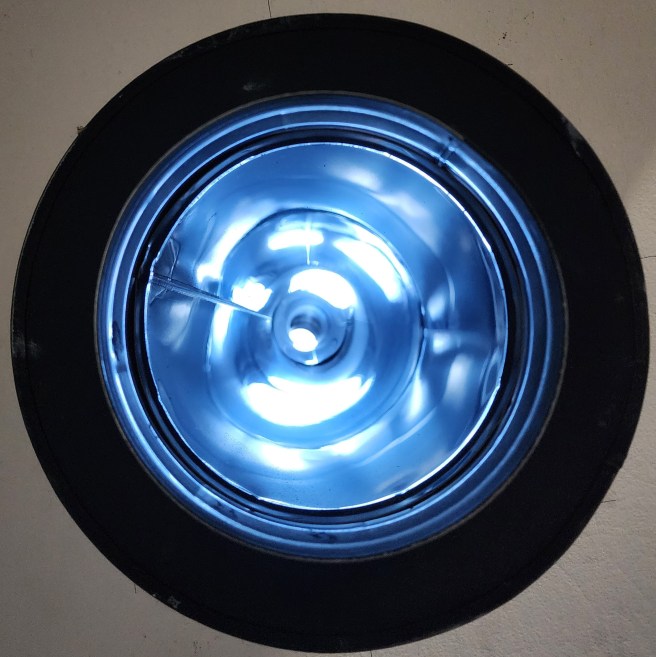
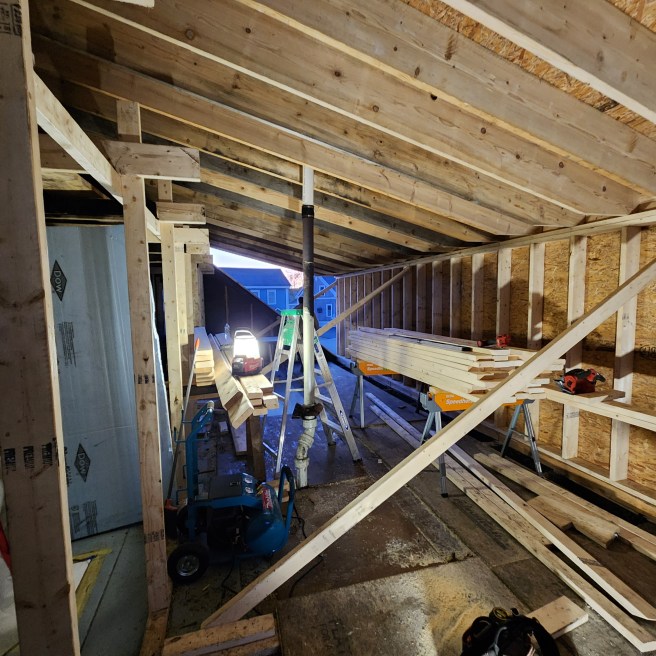
A view up the pipe before it was capped.
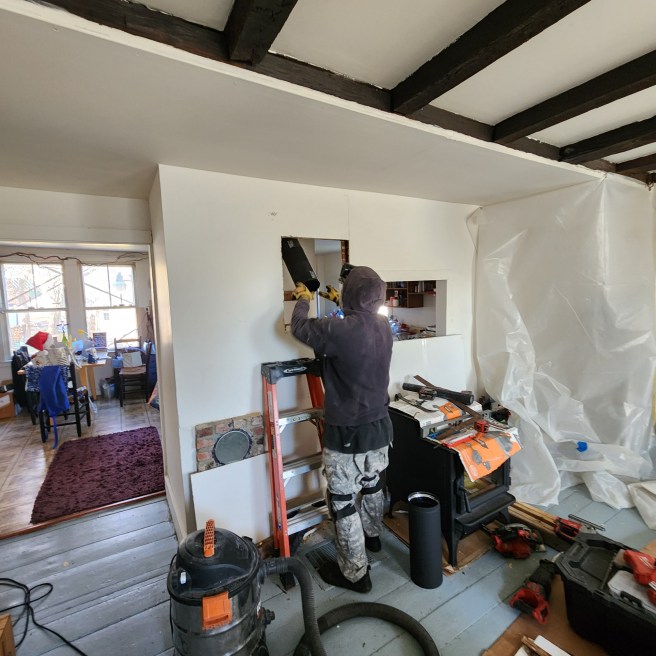
Meanwhile, on the ground floor.

And there it was, just in time for Christmas.

~*~

Let’s be honest. The new stove wasn’t entirely about emergency heating. It was mostly about having the utter pleasure of wood warmth. It was even about reducing our onerous fuel oil bills, even before we add heat-exchange units upstairs.

After waiting three years to get the renovations underway, the unfolding events sometimes felt chaotic. So much happened at once.

Still, looking at the glossy brochures, I’m left thinking there’s a much bigger picture left to be presented. Sitting back against the unrivaled comfort of a wood fire and reading in my favorite chair is an unsurpassed pleasure in my book. This was a definite improvement over our previous winters.

As a slide flash, as a writer I’m reminded about the adage, “Write only about what you know.” Is there anything like this in a novel? Or even a movie? Maybe the bearskin rug in front of a fire as a photo?

By the way, we never heard back from the other stove dealership. The bigger one. We do have an affinity for smaller is beautiful, especially when it’s family-centered.
Next up, a set of chain-reaction decisions

The roofing wasn’t the only thing taking place. We had to make some more key decisions regarding the next steps.

First was settling on the size and shapes and placement of windows in the back half of the house. We’ll examine those later. The glossy catalogues had a wide range of types and sizes, but no prices. For now, Adam needed to know where to frame them.

To do that much, we had to finalize our upstairs layout, at least roughly. A new bathroom and laundry room were part of that, details to come later.

Getting that far included electrical outlet placements along the exterior walls.

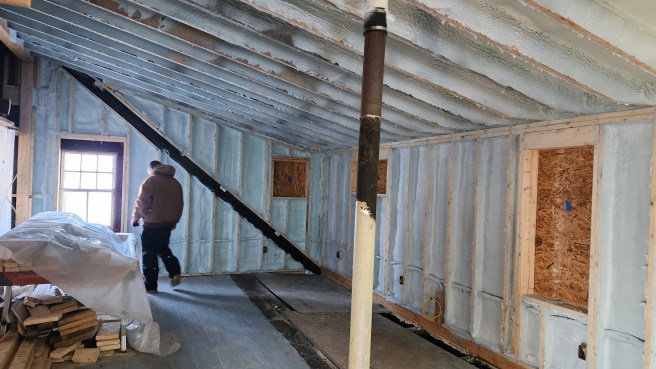
Those were steps that had to be taken before the spray-foam insulation crew showed up – which they did, two days after promised and leaving us with a nonrefundable Airbnb reservation. On top of that, we were required to be out of the house for 24 hours after they finished. Back to the Airbnb reservation. The crew’s deadline here was also contingent on a bigger job they were doing downtown – the two brothers live an hour-and-a-half from Eastport. We were second in line.

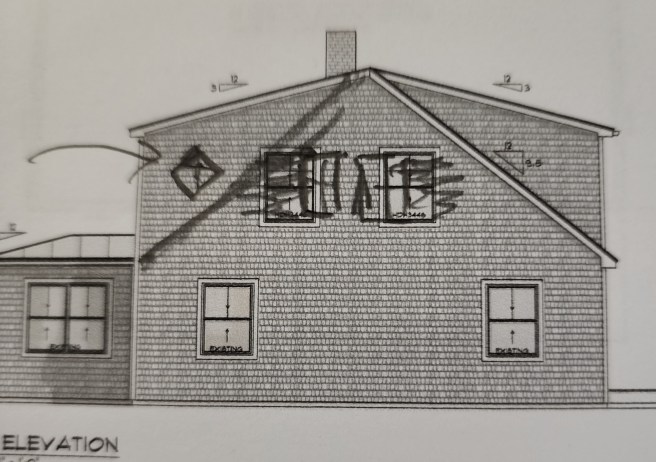
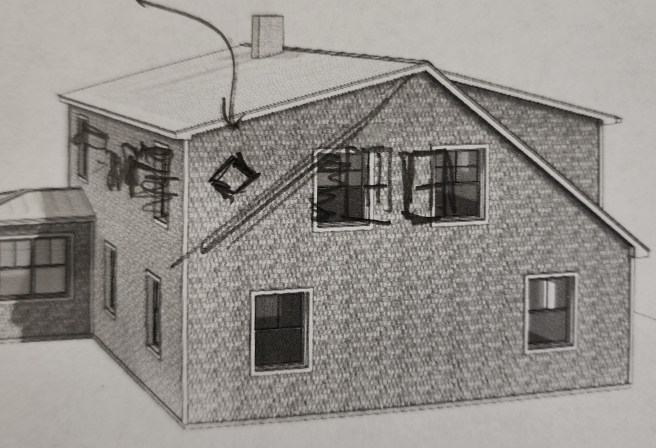
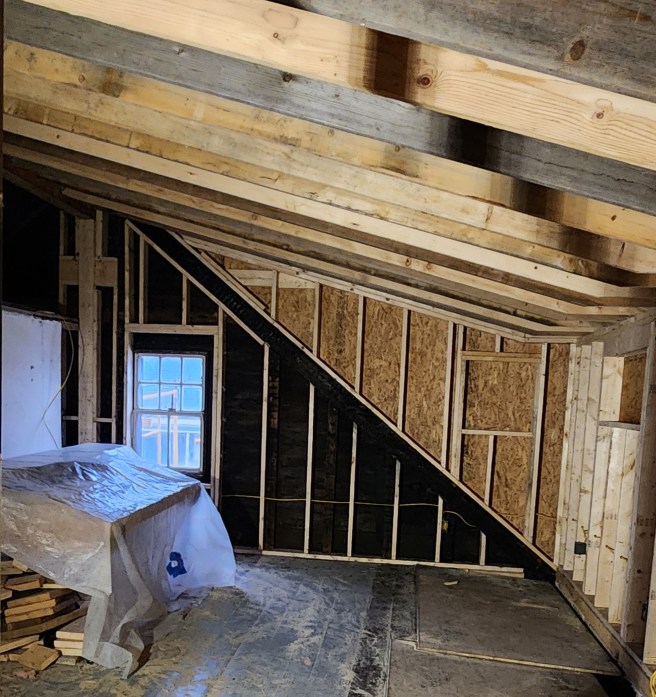
Before.

And after. Note that a diamond window in the corner is no longer in the plan.

Weatherproofing the new exterior came next

We now faced some related decisions, beginning with the kind of roofing.

Our preference was for standing seam metal, but we were concerned about the price. It would, however, allow for a lesser roof pitch, and that would give us more headroom, and that was in addition to its added durability.

Asphalt shingles may be less expensive, but we live in a heavy winds-prone town. The forecast seems to have gale warnings every other day, at least for small craft out on the water. After a strong storm, the streets and yards are littered with blown-away shingles, even from new houses.

As I said, living beside the sea exposes us to a lot of wind.

~*~

The next decision involved the color. There were more standard color options than I’d thought from casual observation.

We liked bright red and the bold cobalt, at least for homes out in the country, but ours is tucked into a tight neighborhood and we wanted to continue to blend in. Our goal was something subtle but still classy. The color of the metal would also determine the shade of trim we would be applying later, maybe around the foundation, too.

We settled on a pale blue, which we find is common around the neighborhood.

There was far more to do up there than we could see from the street, and far more steps than simply putting the metal sheets down.

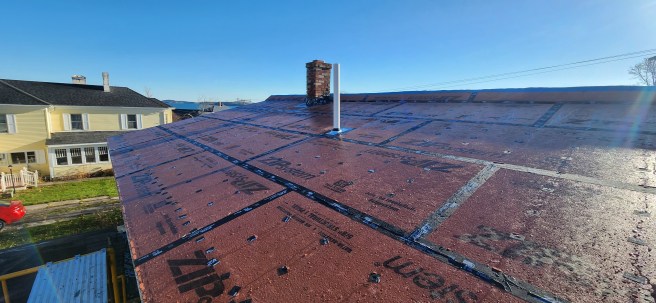
With condensation as a consideration, a vapor barrier went up. Strapping and rigid-foam insulation boards were fitted and secured. A weather-resistant fascia went around the trim. As did flashing.

And finally, we had the metal roofing itself.

After several setbacks from bad weather, Adam and Keith worked like maniacs over the weekend to have it securely in place before a hurricane-force storm – and then Christmas, a storm of a whole other nature.

~*~

As for the exterior walls, new cedar shake shingles were a given.

Extending the back wall, at last

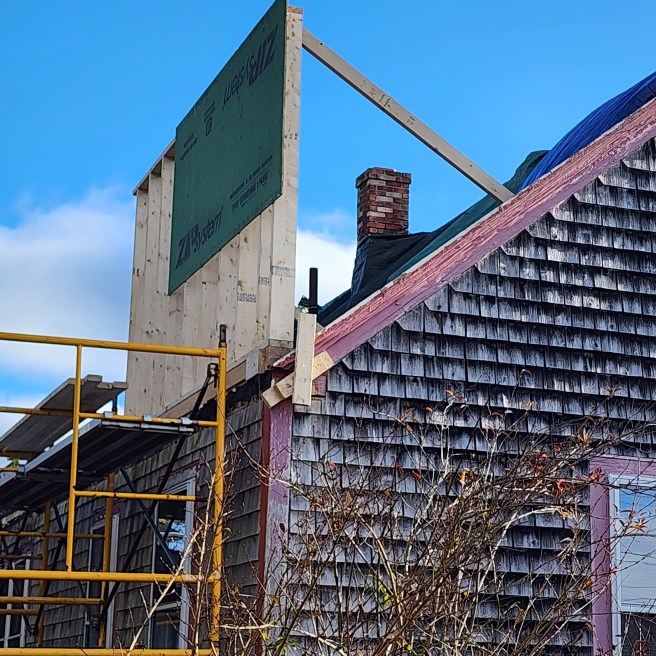
Week 7 brought the dramatic steps that would be seen from the street. This is a small town, after all, and people would talk. Fortunately, all we heard was approval and admiration.

As another plus, the weather turned in our favor, a week without rain.

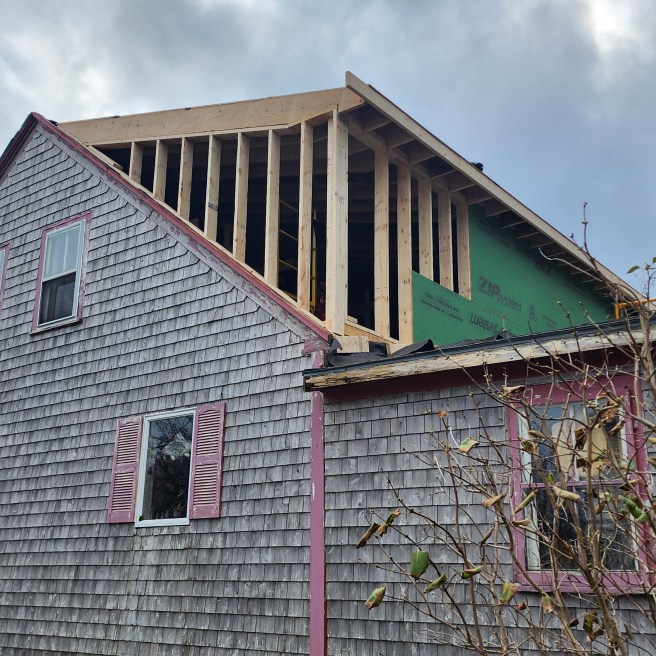
As an added blessing, Adam, our exacting contractor, was joined by Keith, a simpatico master carpenter (even mediocre ones are hard to find around here). Fortuitously, they melded into a relentless team that raised the back wall, crafted new rafters, and encased the roof like clockwork.

Doing that precisely to an old freeform house like ours required many adjustments akin to sculpting, which these two performed with great understanding and patience.

The new wall would be sitting atop an old wall that was serpentine in length and height. It required a lot of precise correction.

The week ended with the thrill of seeing back half of our greatly expanded upstairs actually buttoned up days before Thanksgiving and the wintry weather to follow.

The front half will have to wait till spring, but there’s plenty to do before then. Much more, actually, than I wanted to consider.

So far, no lipstick. And then? Zip, zip, zip!

After a week or more of finetuning the ridgepole and columns, Adam was ready for more drama. It was time for the old roof and rafters to go.

By now, much of the time the work was mostly loud reverberations punctuated by pounding and thuds within the top half of our house. Most of it mystified me. It often sounded like a war zone, especially when the air compressor kicked in. Not that I’m complaining.

Here we were, six weeks and thousands of dollars later and nothing we’d done was of the sort that would appear on a flip-this-house kind of a video streaming channel – the superficial changes that one local inspector we know dismisses as “lipstick.”

You do have to love an old house. Or, for perspective, an old lover.

Now we faced the decisive moment. Off with the back half of our upstairs!

A large, “rolling” dumpster was in place.

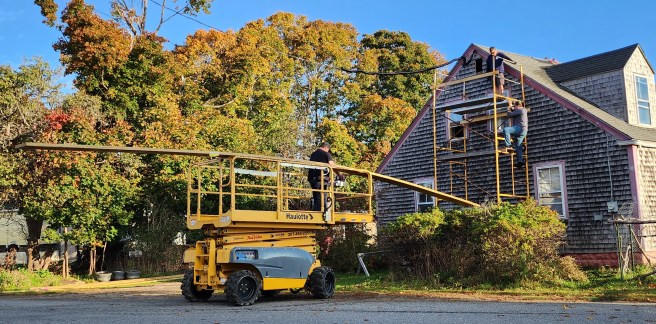
That saw appeared like the fin on a shark.
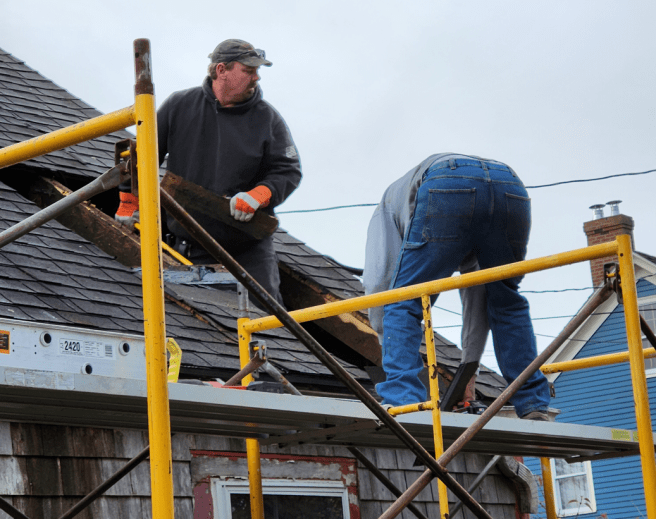
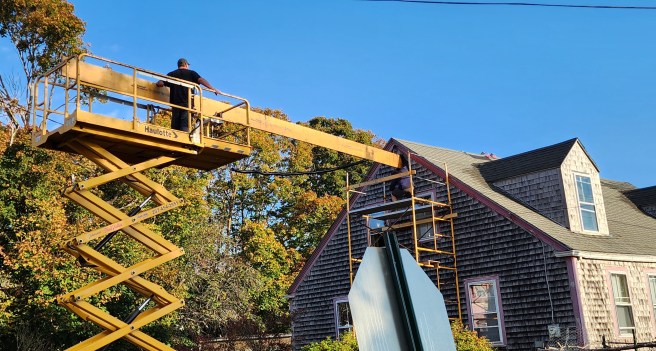
And then the roofing was removed in panels.

We got an idea of what a deck up there would be like.

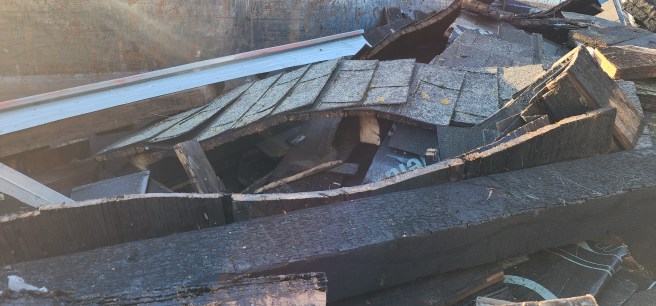
The dumpster quickly filled.


Our home’s new backbone was surgically inserted

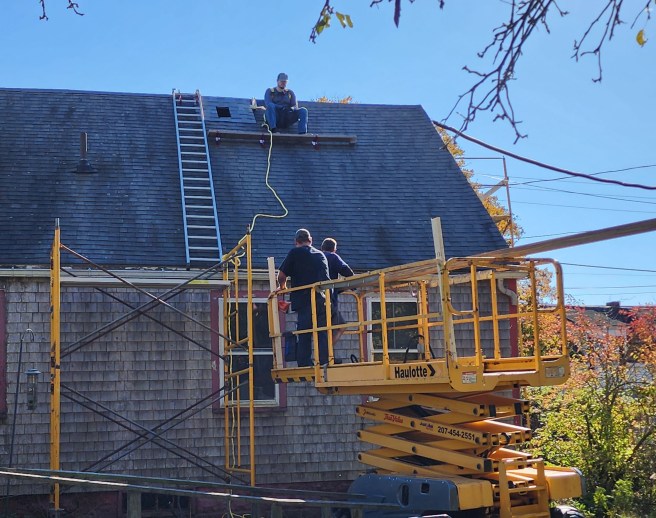
The last Saturday in October arrived clear and cool. We were now officially a month into the project, and Adam showed up with a crew of three for the dramatic operation of inserting a ridgepole. It was rather like laparoscopy, if you want to consider the small incision he made near the top of a street-facing gable.

Here’s how it went.

There was also the column to insert.


There was no anesthesia.

As for a big hole in the middle of our house

While waiting three years for our big renovations to transpire, I often joked that living here was like camping. I won’t go into the list now, but I did accept defects that could have greatly raised my blood pressure if they weren’t already on the to-be-addressed list.

I could even go into the pro-gentrification argument that if big repairs weren’t being undertaken, these dwellings were well on their way to collapse.

Our renovation, daunting as it is, remains a minor effort compared to a few others in town, including true mansions being brought back from the brink. One is a fussy restoration project to keep the place as close to historic accuracy as possible, apart from wiring and a kitchen upgrade. Another is to improve its Victorian social showcase qualities.

I’m also finally understanding why so many old houses out in the surrounding countryside have been left to fall in. They simply weren’t worth the cost of upgrading, not when you could build newer, better, even closer to the world for less.

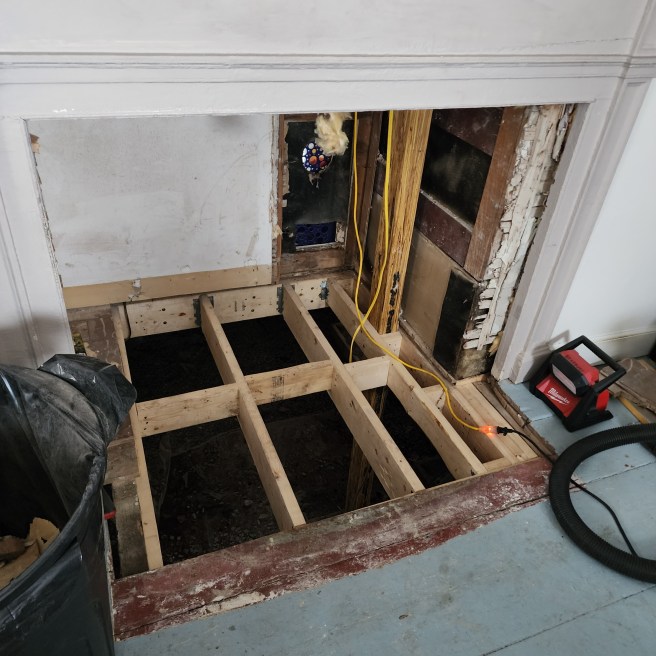
One of the annoyances we had tolerated was the big cavity where the second chimney had stood – the one that was about to collapse when we bid on the house.

We had passed on an offer to rebuild the brickwork, no matter how charming a working fireplace would have been. The chimney would have limited our remodeling options on the second floor, or so I argued, and without it, we do have a 2½-by-5-foot space to develop into a closet or something on the main floor. Patching the floor itself would be a huge improvement, as well, rather than having a light covering that couldn’t bear weight.

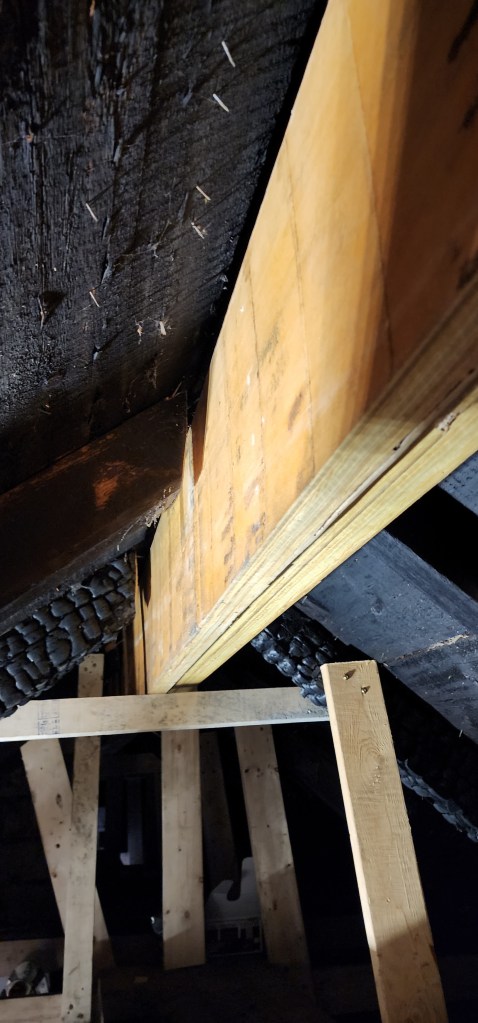
The cavity now provided a place where that 28-foot-long LVL column could run down through the house, as well as some new electrical wiring.

And, during a later break, Adam even fixed the holes.

Yes, step by step, it was all coming together.