You never know what we'll churn up in cleaning a stall
You might think it’s a minor thing, deciding whether your new book should be 9-by-6 inches or the usual trade paperback 8½-by-5½ inch dimension, but the smaller trim size does look and feel more professional, even elegant.
It’s easier to retrieve from some of my bookshelves, too.
It comes at an added cost, though – an additional $1.40 or so, out of my royalty.
You wouldn’t expect that for the smaller size, would you?
At some point, that might be the swing factor in raising the cover price.
For now, I simply want this one to be just right. Besides, it will still take a lot of sales for that difference to add up, and we are dealing with the story of a small faith community which just might not have that much interest for anyone else unless this takes off like, well, something about covered bridges in Iowa.
One big difference between paper books and ebooks is the back cover. The digital versions simply don’t have one – the blurb has to go on the retailer’s website instead.
Yes, the two formats have their differences. An ebook is more like a scroll, but one that can be easily searched and rewound.
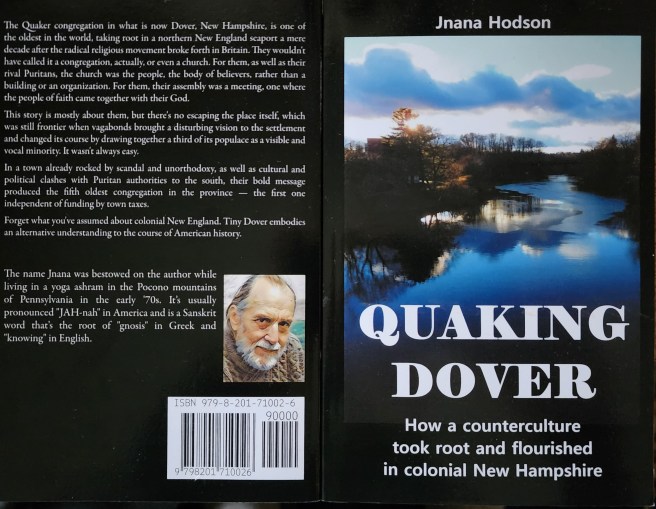
A paper book, on the other hand, is more like a box, with the covers working like the wrapping on a present, full of enticement. Even the lettering on the spine can work that way.
Better yet, the back cover can start talking to you even before you open the pages. “Come on in,” you can hear it address you, even in a crowded bookstore.
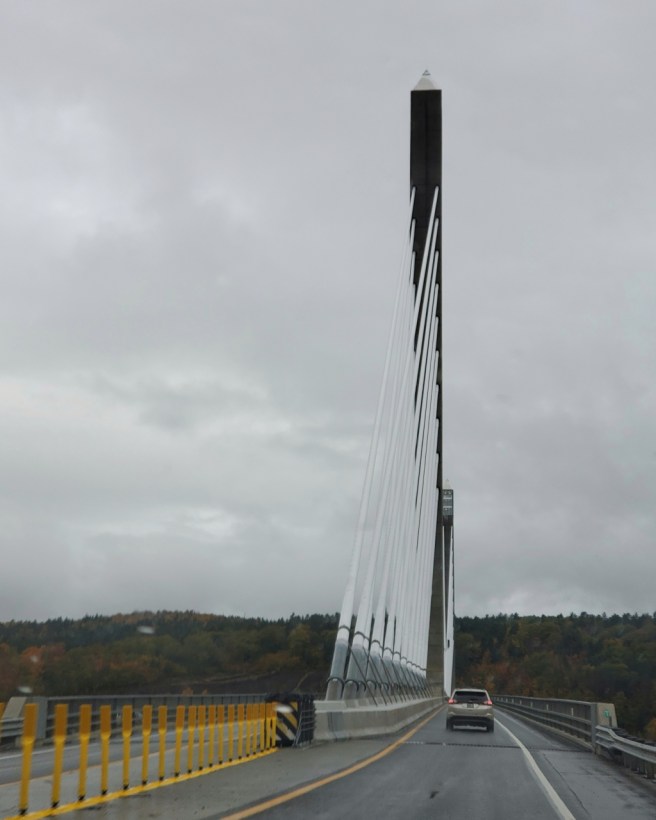
For many people, the dramatic wishbone bridge at Fort Knox, Maine, is the welcome to Downeast Maine, the portion of the Pine Tree State that sits east of Penobscot Bay and its river.
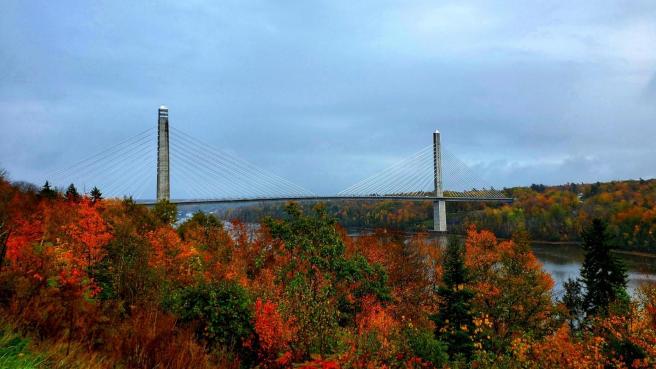
The big span carries the major highway to Acadia National Park, for one thing, and allows shipping to continue upstream to Bangor and Brewer. It’s also the slighter slower of the two routes from our home to the rest of America.
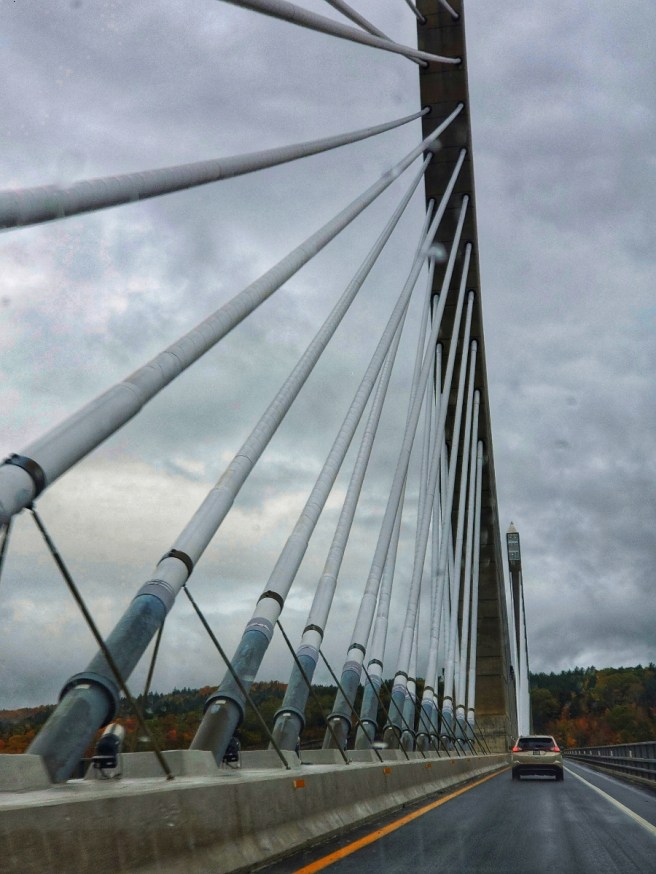
The glass pyramid atop the one pillar covers a public observation deck. It’s on our to-visit list.


Don’t know about where you live, but in New England, the front door typically is rarely used.
That insight was confirmed when I was canvassing for the Census and we had to leave a notice behind when nobody was home. Often, the real door is the one at the rear of the house.
It’s a curiosity that reminds me of something I once read about Zen temples in Japan, which were initially copies of ones in China.
The Chinese loved symmetry, which the Japanese detested, and so when the imported designs were expanded, they grew to one side or the other. Many old New England houses also have many additions, most famously the connecting barn.
Well, for the record, our back door is where the action is, and it runs through a mud room addition from the kitchen.
Now I’m starting to think about trying to enter by the right door as a metaphor for life. Like maybe there’s a hidden key, even. The one others know about, but not you or me?

The petals had fallen from a vase and got me thinking.

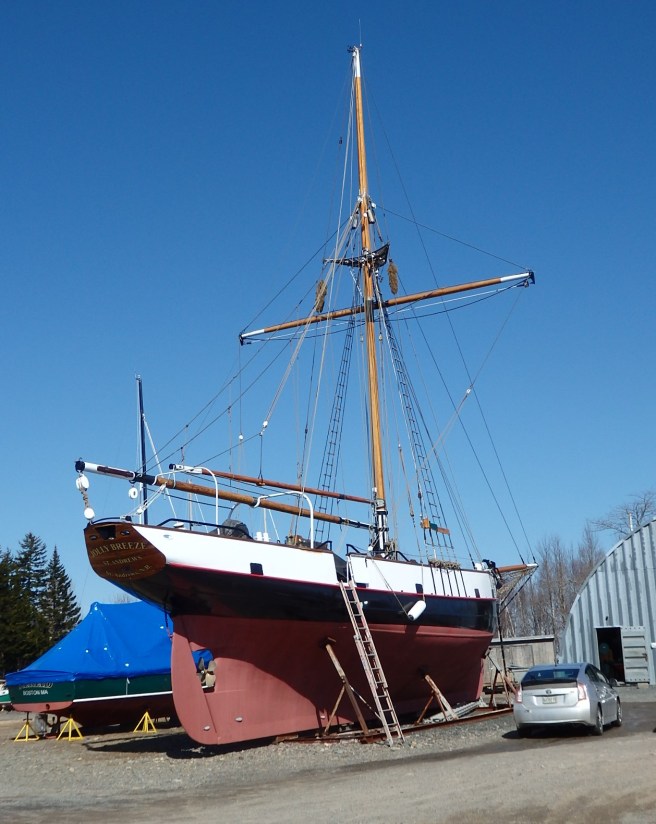
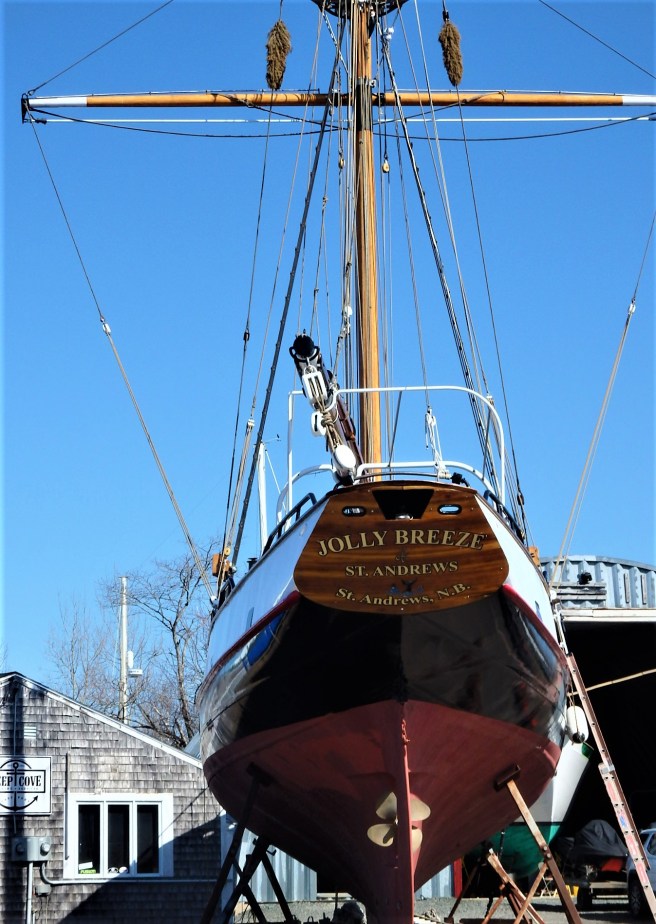
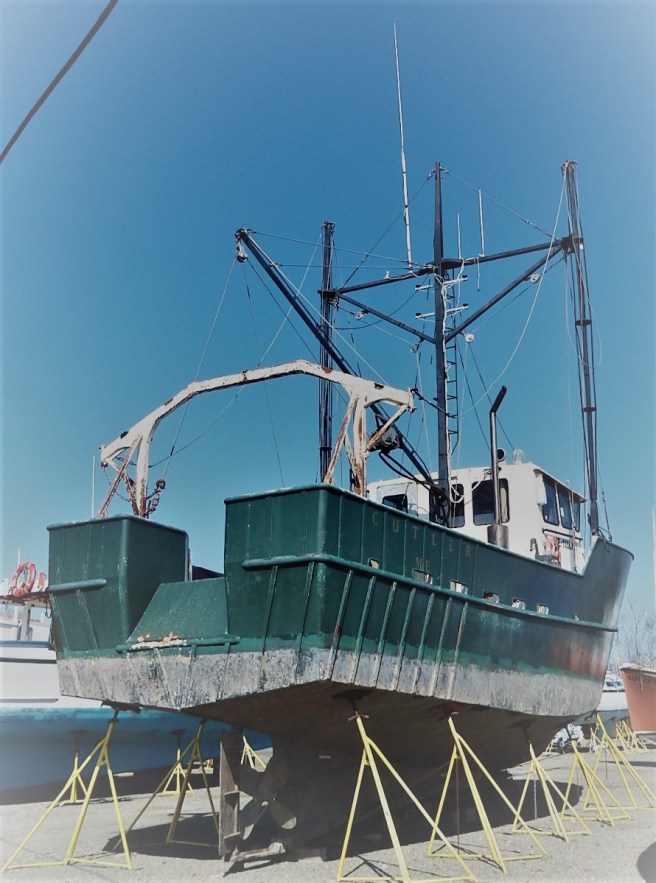
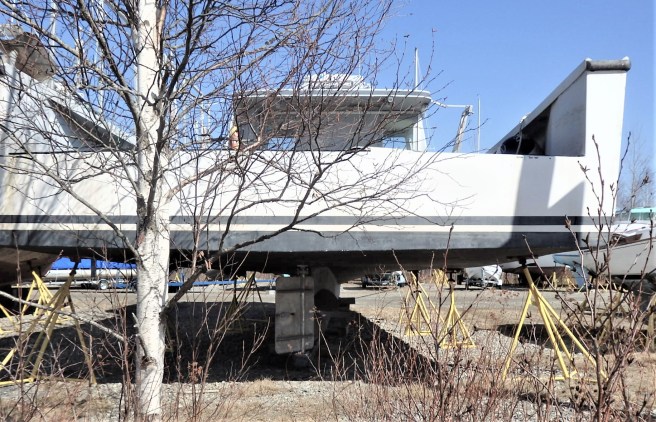
I was driving down this little dead-end road and this popped up dead ahead. Not that I was expecting a shipyard.