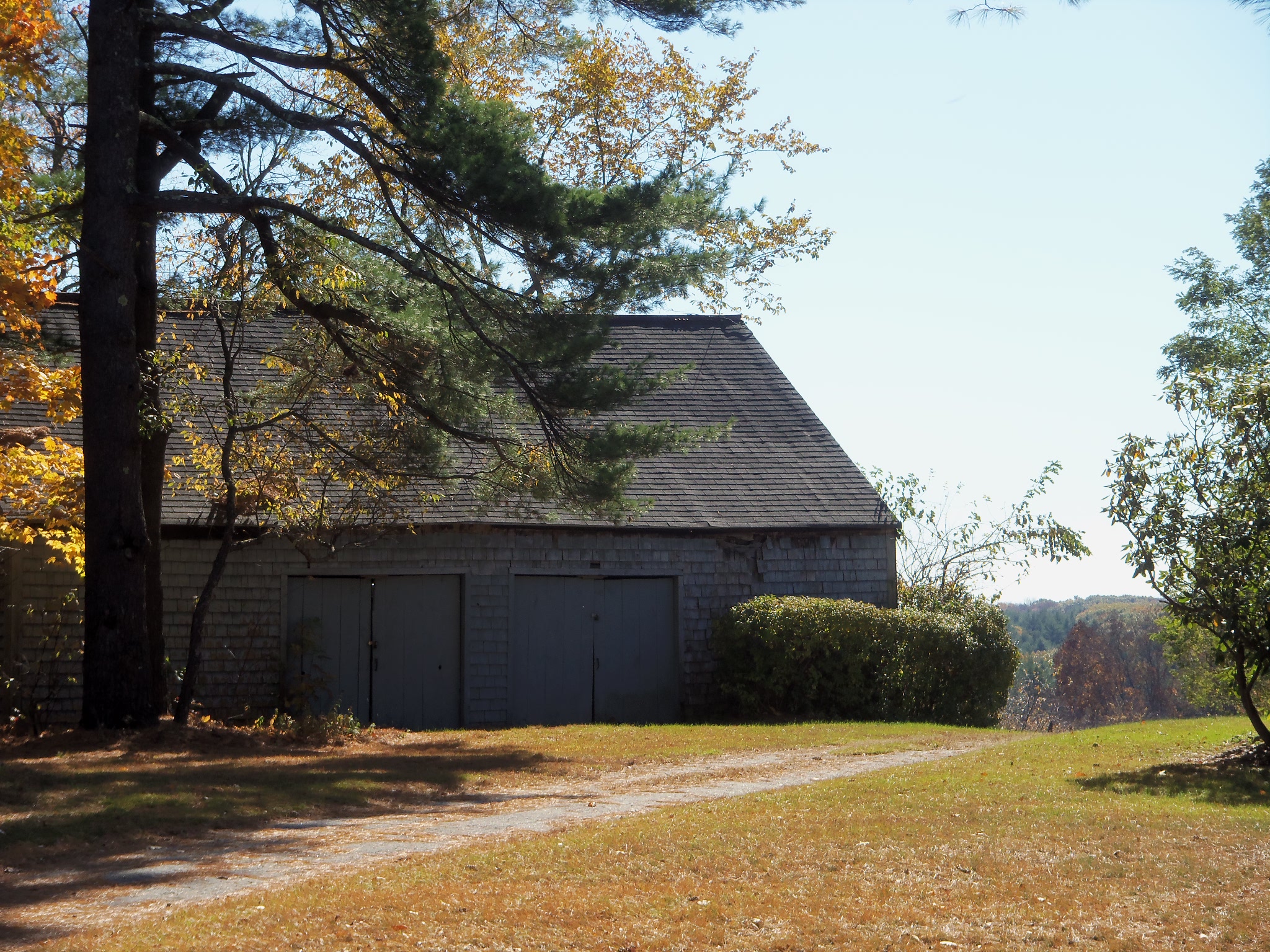
A PROPER GRAY
You never know what we'll churn up in cleaning a stall
As I said at the time …
Looking back through the yearbooks, I’m surprised to admit how few of the girls were as sexy or mysterious or genuinely attractive as they’ve remained in my memory. This is not what I would have thought earlier.
I can also wonder why I didn’t move on KK or why nothing connected with MM, despite the youth pastor’s encouragement. What were the astrological factors? Anything else I might have noticed later?
Of course, most of us guys, well, that was another matter. Some things never change.
Once, as I was being escorted around the Detroit Free Press newsroom, we bumped into a nationally syndicated columnist who was being given the VIP treatment.
Since I, too, was a guest, I had to bite my tongue.
A few weeks before, he’d ripped off the opening paragraph of our copyrighted lead story in the Yakima Herald Republic and opened his own column with it, nearly verbatim, without attribution.
As you know, that’s plagiarism – intellectual theft.
Despite heightened efforts to stem it, I suspect it’s long been part of the public information stream, to one degree or another.
Once, for instance, a small-town radio personality read my published concert review word for word over the air as if he had been there. Again, no attribution.
Or a Monday TV newscast read a photo page, without the photos, as if it was theirs.
More recently, we’ve had to shake our heads each time a certain television station says “W*** has learned,” because we know it’s code for “W*** read in this morning’s Union Leader.” At least they’d rewrite the story.
And then there were all of the charges and countercharges between the wire services and the big city papers, each accusing the other of taking stories and putting new bylines at the top.
But that could lead me to tell of my experience as a cub reporter at the Cop Shop (police station), where the rival newspaper ran my piece as its lead the next day. The reporter whose name appeared at its beginning had taken my carbon paper draft from the waste can.
So that’s how you learn.
I know, as I said at the time, it was all done with the best of intentions, naming such a pristine state after our first president. And then they went and picked out all the Indian names that would resonate with it … like Seattle, Tacoma, Yakima, Wenatchee, Wapato, Spokane, and so on.
The problem is, outside of the Far West, everybody thinks of the smaller Washington, the nation’s capital, rather than that sprawling and varied land of whales and volcanoes. It makes for a real identity problem.
Of course, some of the natives (not to be confused with Natives) prefer it that way. After all, if nobody can remember it’s there, maybe they’ll all stay away and keep the place, well, just as natural as ever. I mean, the only reason for living so far away from the rest of the nation … living way up there in that isolated corner of the country … is to live away from everybody else.
But there are some holes in that argument of a fortress empire. For one thing, the migrant workers have certainly discovered the orchards, and they’ve discovered the state is clean pickings when it comes to job opportunity. If those mighty native-born and all the newcomers who consider themselves native, which is almost the same thing, don’t wake up soon and let the rest of the United States know they exist, why they’ll soon be required to take Spanish lessons. Quien sabe?
Worse yet, Californians know about the Evergreen State and, realizing what they’ve already done to the Golden State, they’re now anxious to do the same to the north. Before folks say, why, yes, I know, but there’s a barrier between us and them … the whole state of Oregon … let me reply, Just wake up and smell the coffee, buster. Why, everybody says Seattle’s just like San Francisco was before it became too big. And we know southern California wants to get its tubes into the Columbia River to pump real water all the way down the continent. I mean, that’s like Boston having to go to Minneapolis for its water, just about the same distance. And the mountains between Minneapolis and Boston would be far less of an obstacle, believe me.
No, sir. That Columbia River water ought to be generating electricity for the Pacific Northwest and nurturing the endangered salmon stock and watering orchards in the deserts of Oregon and Washington State before it goes on some movie star’s lawn in Brentwood. Sooner or later, southern California is going to have to learn to do without water. I say, the sooner, the better. They can buy icebergs from Alaska, for all I care.
So, if Washington State is going to save itself and keep everyone but the California congressional delegation from thinking it was giving away Potomac River water to its water greedy constituents, it’s going to have to come up with a new name.
I know, I know it will be an inconvenience. But it’s that or something far more dire.
So what do we have? Ecotopia has been suggested. I see you feel about the same way on that one as I do. Although, to be candid, “Seattle, Ecotopia,” doesn’t sound all that bad. Except that it raises a specter of starving Africans.
We could try renaming the state for another United States president. But Adams, Jefferson, Madison, Jackson, Lincoln, Roosevelt, Wilson, and Eisenhower for starters fall flat on their face. I mean, Seattle Roosevelt sounds like a forward for the Lakers, now that the Sonics are gone. Let’s face the facts.
My favorite is Tahoma, which is the Indian name for the tallest mountain in the state. But Seattle, Tahoma; Tacoma, Tahoma; Yakima, Tahoma; Wapato, Tahoma; Walla Walla, Tahoma; Wenatchee, Tahoma; and even Spokane, Tahoma, will never fall easily on the American tongue.
So what’s to be done? Let us consider the obvious choice: Apple. I mean, two of every five apples sold in the United States come from this state. (Remember, we’re talking about fruit, rather than computers, Microsoft notwithstanding.) This would be advertising at its best. Not only that, but the apples come from a generally neglected part of the state, its central desert. Listen to this, now: Seattle, Apple; Tacoma, Apple; Yakima, Apple; Wapato, Apple; Wenatchee, Apple; Walla Walla, Apple; Spokane, Apple . . . and so on. Even Olympia, Apple, rings right.
What? You say it sounds too much like the nickname for a decrepit Eastern port?
Well, then. How about . . . Evergreen? As in Seattle, Evergreen; Tacoma, Evergreen; Yakima, Evergreen . . .
~*~
Now I’m wondering how long ago I wrote this bit found in my files. Many tell me Seattle long ago fell over that tipping point of small-town innocence. There are the tales of terror regarding immigration enforcement. I’m told even the orchards look different, thanks to trellis-based apple trees. Still, I’d opt for a new name, as long as it’s not based on the high-tech upsurge.
Back during the presidential election cycle, I remarked on the failure of the left to apply right-brain thinking to the message. Fortunately, as the season unfolded, a few savvy managers got it right.
Now, as things calm down, I should note one fine practitioner of the weaving the emotional and reasoned lines together: Charles P. Pierce, with his daily blog for Esquire. Yes, he’s acerbic, caustic, witty, righteous, and very well informed, driving news home – major stories most newspapers are tiptoeing around, if they mention them at all. The Tea Party seems to think it has a lock on criticizing Washington, without realizing how much of the current mess comes from their side of the aisle. Now for the corrective blast. And how!
In a short space, Pierce delivers all the content of a good lecture with none of the preachy sermon. He’s delightfully entertaining and uplifting, for the good-hearted believers, or highly annoying, for the philistines and heathens.
Now, back to cranking out bumper stickers.
Amen and hallelujah.
As I said at the time: It’s power. As well as status.
There, we’ve said it. The crux of the matter. Power is always dangerous and needs to be curbed, or at least channeled. Dynamite. Gasoline. (No smoking around the pumps, ma’am.) Nuclear fission. Story of all Greek mythology, for that matter. With sex, it’s something that everyone – or nearly everything – has, in theory at least. In reality, well, we could start with one great mystery: why we are attracted to certain people but not to others. And then there are all of those mysteries involving male/female differences, as well as the daughter-father bond and the son-mother bond and the natural growth of struggling into freedom – the classic Oedipus Construction and its parallel Electra Construction. And I want what you won’t give me. Rape. Or don’t want your advances. Frigid. Or what you now threaten to take away from me. Story in the newspaper every day. Bang, bang. Especially when the balancing mechanisms break down – the commonly shared values, the commitment, spirituality, whatever. Or the out and out growing apart.
Even the religious foundations of sexuality and marriage itself can be quite different. In the Catholic and Episcopal mode, it’s procreation, pure and simple. You’ve seen the papal edicts. The best man and groomsmen in the ceremony as a vestige of forcibly seizing the bride. The ring itself as an emblem of possession. Which is why we have neither in traditional Quaker ceremony. In contrast, in the Quaker and Congregationalist/Unitarian strands, marriage embodies the sense of helpmeet or soul-mate in which Adam and Eve were created as suitable opposites for each other: deep companionship, with full equality and mutuality (no, eating the fruit is not Eve’s or the Serpent’s fault, no matter how Paul of Tarsus interprets the matter – it’s the beginning of human awareness and freedom, actually; and if God hadn’t wanted them to eat it, he wouldn’t have put it in the middle of the garden in the first place or told them, in the second, not to touch it!). (A point one of my fifteen-year-old Religious Education students argued convincingly. Kids can see through some of this stuff.) And then there’s the Song of Songs, or Song of Solomon; look up the Marcia Falk translation and explanatory notes – passion, overriding all convention.
As a sister (younger? older?) asks, as we turn the phrase, “Are you a slut?” I suppose a lot of it has to do with one’s perspective – long-term, or short? Immediate gratification, or something in which every experience builds into a sustained, shared history? Put another way, will the Other still be there when your raw physical beauty isn’t? When your health has you in a wheelchair and needing the committed partner? Or when the care of children requires joint sacrifices? The fear, of course, is that once the pleasure’s gone, so is that other person. And we both know that we have down days – bad hair or lack of it, whatever – often for long periods. Period.
My last girlfriend also used to accuse me of having been promiscuous. Of course, when you add up the numbers and divide them over the years – plus all the time in between – it really becomes rather monkish. As I said, it’s perspective. And what the others’ values come out as.
Conflicts, conflicts.
If others express their fears about your adventures, there are many reasons. For one thing, your feelings are on the line. Often your deepest feelings and desires and needs. Out of which can too easily arise the How On Earth Did It Come To This you write of. The epithet of “bastard” itself. The protectiveness of keeping predators away from Mine. Hence, all of the taboos. It’s not always “moralizing,” especially if you watch the matrons at poolside closely. And the rules aren’t always written by a patriarchy, but by the matriarchs. They know a good thing when they have it. Queen Bee, Queen Bee, one per hive. One of the most difficult things about trying to date women my own age, in fact, was that most of the available ones are so bitter. There’s no lightness in their dancing, either – and I link those two. Maybe it was that the ones who can make a relationship function successfully were in faithful marriages.
* * *
How much of this, fortunately, now stands as ancient history!
In newspaper reporting, you try to observe an event as invisibly as you can without intruding into its action. Yes, you may need to interview individuals, but you quote what they say without inserting yourself into the dialogue.
But the appearance of television cameras and their glaring illumination, especially, tips the equation. Too often, they’re not neutrally observing a natural event but rather turning all of the participants into actors and the scene into a stage. Who knows what’s real as a consequence?
I remember one reporter coming back from a county commission meeting and saying that the commissioners had already voted before the TV crew showed up and pressured them for a revote. The second time around, the tally was different.
So just what was the valid decision? The moral questions multiply.
Equally offensive to me is the canned shot of the TV “reporter” standing in front of the courthouse or floodwaters or crash or fire and talking into the microphone and camera. Look closely and you see the story is more about “we were here” than what really happened. That’s not news, friends – it’s hype, usually accompanied by editorializing rather than just the straight facts.
Here, I had enough trouble about reporters doing interviews over the telephone, rather than face to face. You miss much when you’re not a direct observer, believe me.
So what do we do now about Skype?
It didn’t take very long for my philosophy class in college to realize our professor was wearing the same outfit all the time – suit coat, tie, pants, and Hush Puppies. We wondered about the white shirt, his socks, and underwear, and presumed he was changing those. The second semester, he did the same thing, but with a different outfit. (This was the same teacher whose final the previous year had a single question, “Why?” – which led most students to write profusely in their blue books, hoping to somehow hit the answer by accident. A succinct “Why not?” turned out to be the B+ answer, while “Because” earned the A.) Maybe he was just too lost in thought to be concerned about attire. On the other hand, some in the class repeated rumors that he had a girlfriend in Sweden and was spending most of his income on long-distance bills. (Why not?)
When I’m grabbing the same set of clothes for, say, the third day in a row while getting ready to dash off to the office, that recollection flits through my mind. Sometimes the thought connects with the concept of Plain dress, too, and how we’ve made things more complicated by switching to the less tightly defined “simplicity.” For old Quakers, the question of “What will I wear today?” was much easier than it is for us.
Of course, Plain dress was also a uniform – a symbol of belonging, and belonging to a cause, at that. There are all kinds of uniforms, and not just for the military – mail carriers, retail clerks, priests, mechanics, utility workers, many of them today wearing embossed T-shirts. You know what to expect from them.
There are many reasons I’m not suggesting we return to Plain dress. For one thing, such a move would have to express a unified community; otherwise, we would just appear to be quirky along the lines of my philosophy prof. In addition, putting the focus on the outward appearance ignores what exists within. Still, such a move would be a public rejection of the fashion industry. And it was said that Friends who had taken up Plain dress became more aware of individuals at the fringes of society – and more responsive to their needs.
As for the philosophy prof, I guess the biggest lesson he taught me was the importance of questions in the logic of life. The dressing’s purely secondary.
 The Cocheco Arts and Technology Academy, a public charter high school, has begun its new school year in a fresh location after moving from the Washington Street mill where it had resided the past five years. In its location on the top floor, CATA looked more like a lively arts colony than a high school, but the lively part had a downside, I suppose, especially when it came to music.
One of the things I’ll miss is the quirky fire door that had been painted with a wonderfully succinct set of English grammar and syntax rules. In fact, I can think of a number of people who think they’re writers (and have even been paid for their efforts) who could definitely benefit by taking these to heart.
There are parts I love, such as the “helicopter” concept for commas that close a phrase. Although I’ve had to live with newspaper style for much of my career, I’ve long preferred to use the closing comma in a series of three or more items, and from the door I’ve learned the technical term is the Oxford Comma. My!
But I will dispute the claim that dashes shout. I think they breathe. Exclamation points shout.


Mentioning this to one of the students on moving day, I was told she had penciled the rules on the door and then other students painted them. Since their brushes ranged from thin to thick and their abilities varied, the lettering is hardly uniform. I think it adds to the charm.
In the meantime, thanks to Vikki for getting this started. Now the whole world gets to see it.

